Money
Building the Single Page That Shows Everything
Most households have no single document showing what they own, and assembling one changes every subsequent conversation.

Widowhood arrives with a queue of decisions that all look equally urgent. Most households have no single document showing what they own, and assembling one changes every subsequent conversation. They are not the same task, and treating them as one is how good decisions get made badly.
Financial information arrives institution by institution, which is precisely the wrong shape for making decisions. A single consolidated view is the foundation for everything else.
You cannot make a good decision about a portfolio you have never seen on one page.
What you are really being asked
These are the points the rest of the decision rests on, so it is worth being sure of them before going further. Statements arrive separately, which obscures both concentration and total cost. Account type determines tax treatment, so it belongs on the same page as value. Beneficiary designations belong on the same view, since they direct the assets.
A single page makes duplication, gaps, concentration, and deposit protection breaches immediately visible in a way that a drawer of separate statements never will. The same page is what an adviser, an attorney, and eventually an executor will need.
The sequence that keeps options open
Take it in this sequence. Reversing the order tends to create work rather than save it, and occasionally forecloses a choice.
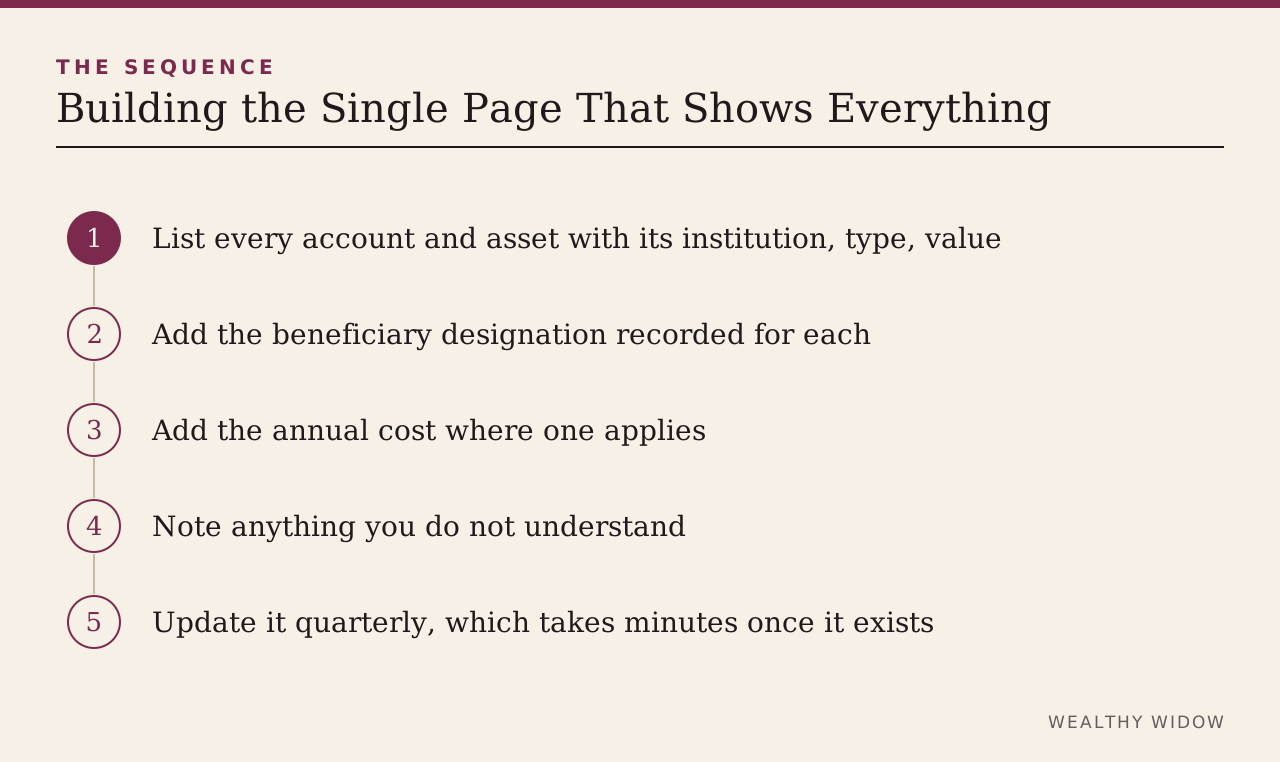
- List every account and asset with its institution, type, value, and purpose.
- Add the beneficiary designation recorded for each.
- Add the annual cost where one applies.
- Note anything you do not understand, and ask the provider about it.
- Update it quarterly, which takes minutes once it exists.
The failure modes to plan around
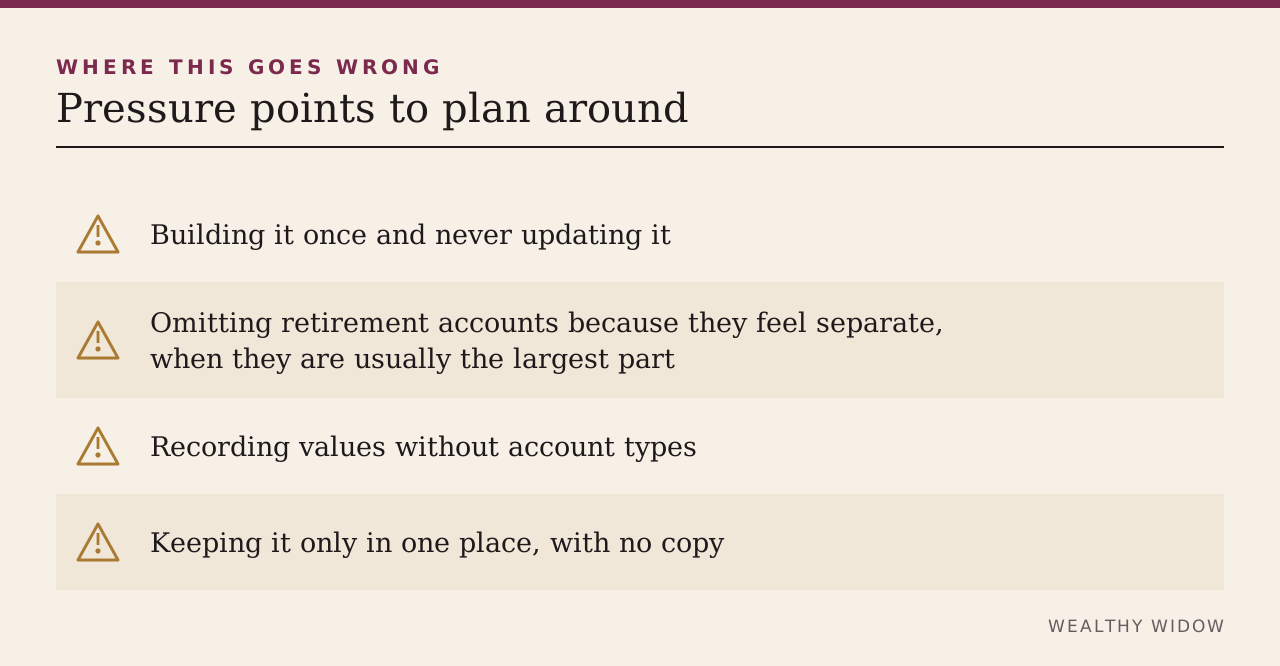
Watch for the following, and treat each as a reason to slow down. Building it once and never updating it, so it quietly becomes wrong.
Omitting retirement accounts because they feel separate, when they are usually the largest part. Recording values without account types, which removes the tax picture. Keeping it only in one place, with no copy.
Assemble the file
Having the file complete before the first call removes most of the back and forth that follows.
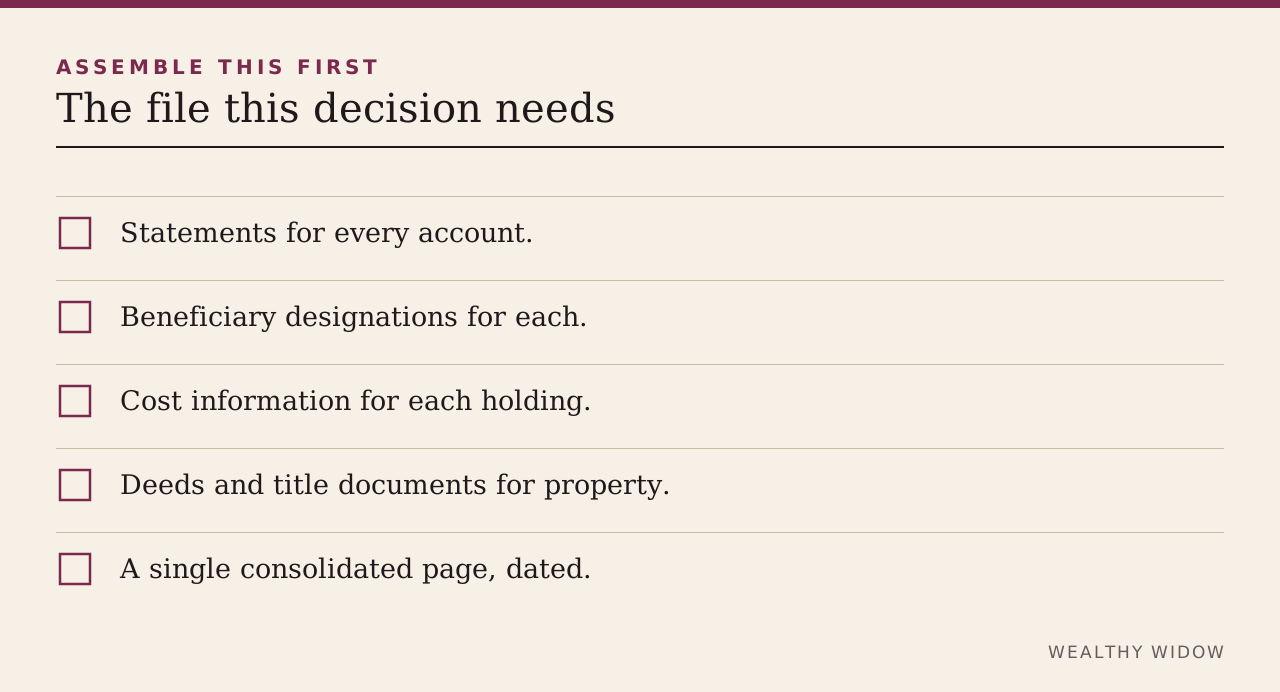
- Statements for every account.
- Beneficiary designations for each.
- Cost information for each holding.
- Deeds and title documents for property.
- A single consolidated page, dated.
Ask for this in writing
Each item below should exist somewhere other than your memory, because memory is not evidence in a dispute.
- That every institution is represented.
- That account types and designations are recorded.
- That total cost is visible.
- That a copy exists somewhere else.
The questions to bring to the meeting
Take these to the attorney, tax professional, or planner handling this work.
- What am I missing from this picture?
- What is the total annual cost across everything here?
- Where is my concentration risk?
- What would you want to see that is not on this page?
Confirm this against the rule
Do not take this guide as the authority. Each source below states the current rule for the part of this decision it covers.
- U.S. Securities and Exchange Commission — Investor.gov
- Federal Deposit Insurance Corporation — Deposit insurance
- Internal Revenue Service — Retirement topics, beneficiary
- National Association of Unclaimed Property Administrators — Search beyond your state
What is outside this
What follows is outside anything written for a general readership. It cannot assemble the page, and the assembly is the work; the page itself takes an hour once the statements are gathered.
The short version
One page, with type, value, cost, and designation recorded for everything you own. It is the single most useful financial document you can produce, it takes an hour once the statements are in front of you, and it makes every subsequent conversation with an adviser, a lawyer, or your own family shorter and considerably better.
Read Deciding Alone When You Always Decided Together next; the two decisions interact.
Primary sources
- U.S. Securities and Exchange Commission — Investor.gov
- Federal Deposit Insurance Corporation — Deposit insurance
- Internal Revenue Service — Retirement topics, beneficiary
- National Association of Unclaimed Property Administrators — Search beyond your state
This article provides general education, not individualized legal, tax, investment, insurance, or benefits advice. Rules and deadlines change; verify the current requirement with the agency and a qualified professional.