Money
Forgotten Accounts: Searching Rather Than Remembering
Dormant accounts, uncashed cheques, and old policies pass to state unclaimed property offices, where they wait indefinitely to be claimed.

There is a version of this decision that takes ten minutes and a version that takes a season. Dormant accounts, uncashed cheques, and old policies pass to state unclaimed property offices, where they wait indefinitely to be claimed. The difference is whether the facts were assembled first.
Over a long life, accounts are opened, employers change, and policies are forgotten. Where those assets go dormant they are typically transferred to a state office rather than absorbed, which means they remain claimable.
Assets are not lost so much as unsearched, and the searches that would find them are free and take an afternoon.
Name the decision before you make it
These are the points the rest of the decision rests on, so it is worth being sure of them before going further. Each state operates an unclaimed property office holding dormant accounts, uncashed payments, and safe deposit contents. Property is generally reported to the state of the owner’s last known address, so multiple states may need searching. Unclaimed pension benefits may be traceable through the federal pension insurer rather than a state office.
Lost life insurance policies have their own regulator-run search route. There is generally no time limit on claiming, which means an old search failure is not final.
How to work through it
Take it in this sequence. Reversing the order tends to create work rather than save it, and occasionally forecloses a choice.
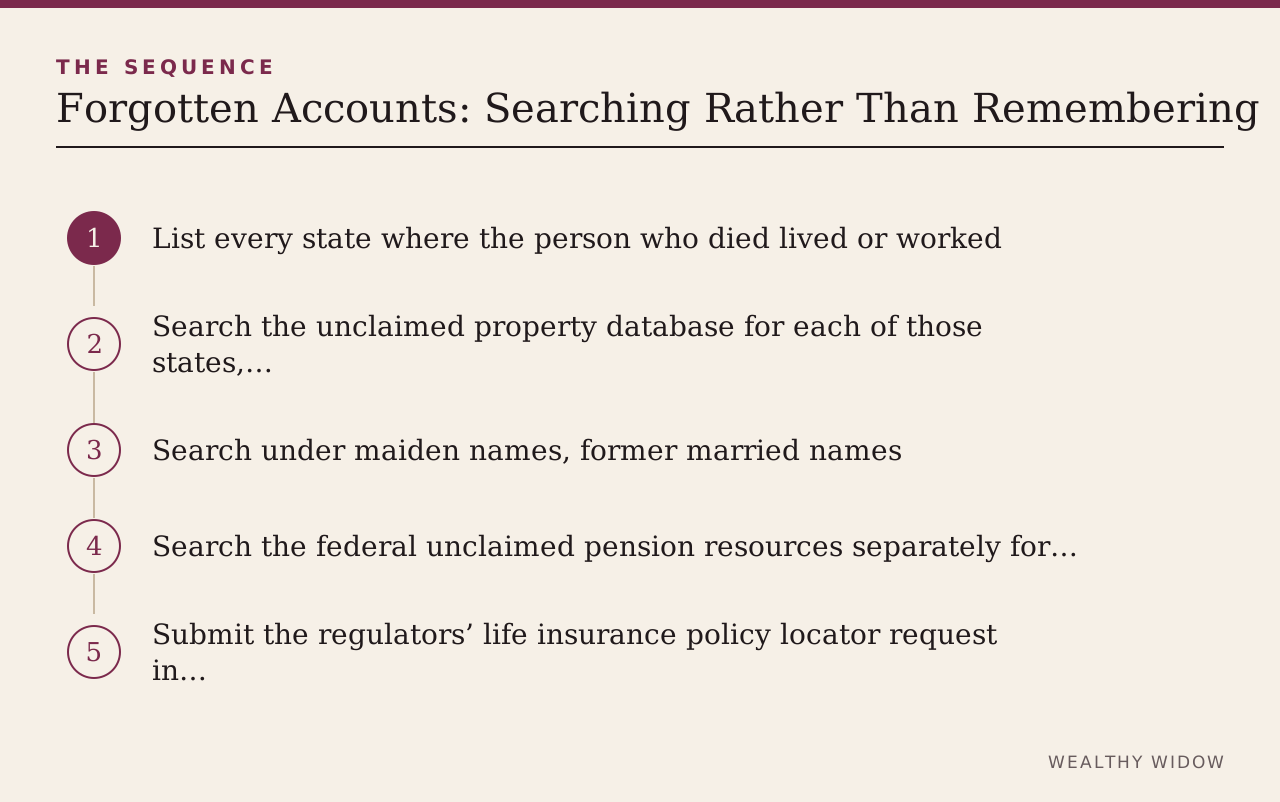
- List every state where the person who died lived or worked, and where you have lived.
- Search the unclaimed property database for each of those states, under every name variant used.
- Search under maiden names, former married names, and common misspellings.
- Search the federal unclaimed pension resources separately for retirement benefits.
- Submit the regulators’ life insurance policy locator request in parallel.
Known hazards
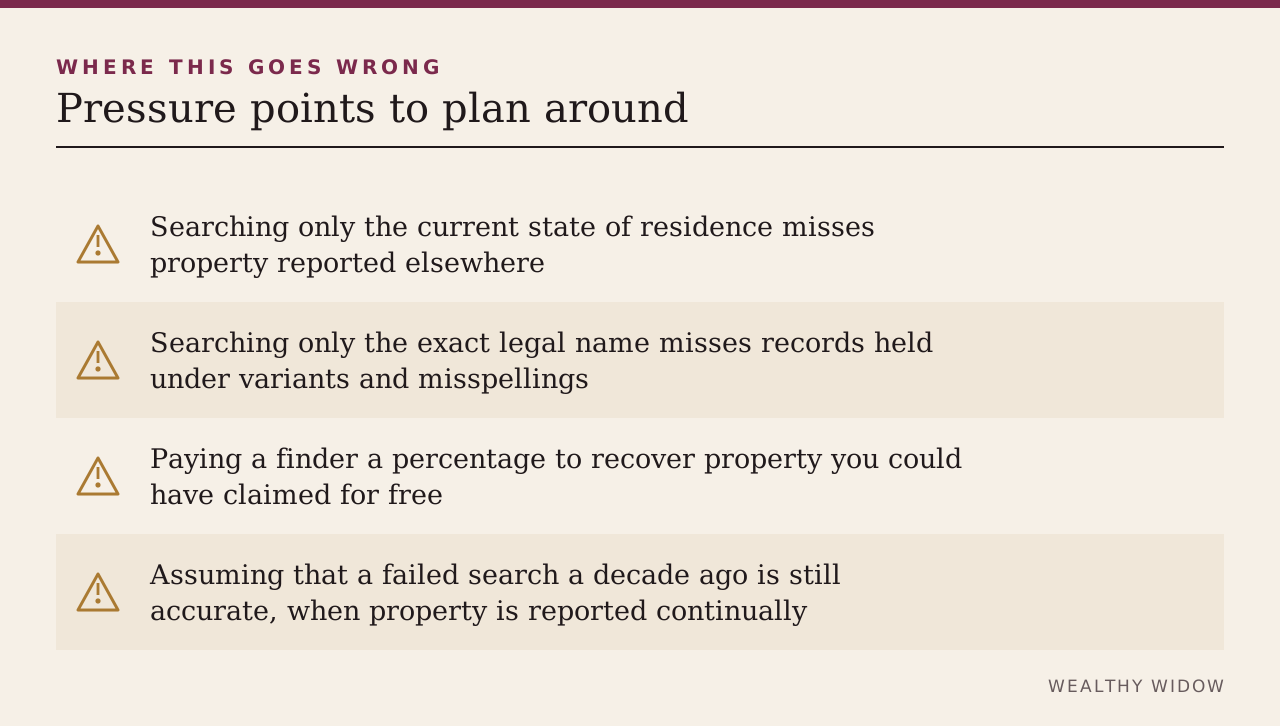
Watch for the following, and treat each as a reason to slow down. Searching only the current state of residence misses property reported elsewhere, which is where most of it sits.
Searching only the exact legal name misses records held under variants and misspellings. Paying a finder a percentage to recover property you could have claimed for free. Assuming that a failed search a decade ago is still accurate, when property is reported continually.
Assemble the file
Having the file complete before the first call removes most of the back and forth that follows.
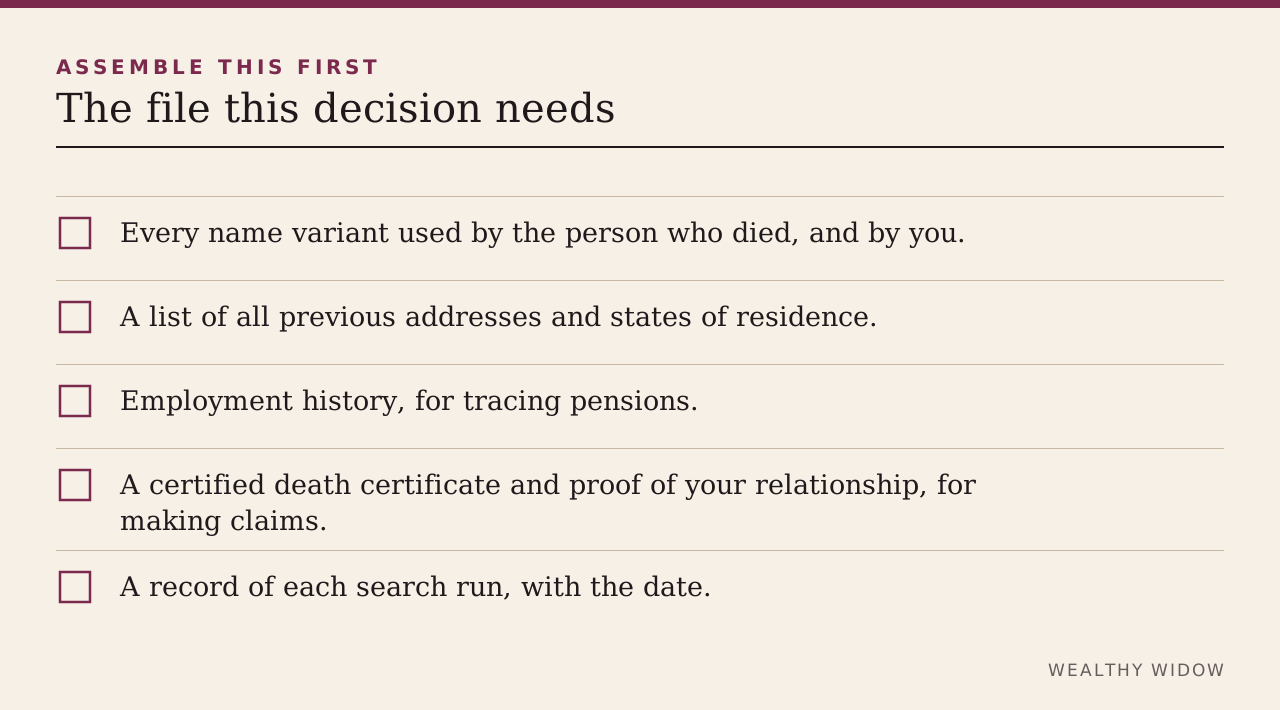
- Every name variant used by the person who died, and by you.
- A list of all previous addresses and states of residence.
- Employment history, for tracing pensions.
- A certified death certificate and proof of your relationship, for making claims.
- A record of each search run, with the date.
Confirm these in writing before you act
Written confirmation is not distrust. It is ordinary governance. Ask for each of these.
- That every relevant state has been searched, under every name variant.
- The claim process and evidence requirements for anything found.
- Whether any pension benefit is held by the federal insurer.
- The result and date of each search, kept on file.
What to put to your adviser
Take these to whoever is advising you, in writing if you can.
- What evidence do you require from a surviving spouse making this claim?
- Is this property held in the name of the estate or of an individual?
- How long does a claim of this type take to process?
- Are there other states where property of this person may have been reported?
Where the current rule lives
Read the source directly for any figure, date, or threshold that will actually drive a decision you make.
- National Association of Unclaimed Property Administrators — Search beyond your state
- Pension Benefit Guaranty Corporation — Find unclaimed retirement benefits
- Pension Benefit Guaranty Corporation — External resources for locating benefits
- National Association of Insurance Commissioners — How to use the life insurance policy locator
What this cannot decide for you
General guidance sets out the shape of a decision. Your documents settle it. It cannot tell you whether anything is waiting. It can ensure that the free searches which would find it have actually been run, in every relevant state.
Before you move on
Run the searches once, properly, across every state and every name variant. It is free, it is finite, and it periodically produces genuine assets that no document in the house would ever have revealed.
Our related guide Why the Approaches Increase, and How to Recognise Them covers the adjacent problem.
Primary sources
- National Association of Unclaimed Property Administrators — Search beyond your state
- Pension Benefit Guaranty Corporation — Find unclaimed retirement benefits
- Pension Benefit Guaranty Corporation — External resources for locating benefits
- National Association of Insurance Commissioners — How to use the life insurance policy locator
This article provides general education, not individualized legal, tax, investment, insurance, or benefits advice. Rules and deadlines change; verify the current requirement with the agency and a qualified professional.