Estate
Becoming Trustee: Duties That Are Higher Than You Expect
A surviving spouse is frequently the successor trustee. The role carries legal duties enforceable by beneficiaries, including your own children.

There is a version of this decision that takes ten minutes and a version that takes a season. A surviving spouse is frequently the successor trustee. The role carries legal duties enforceable by beneficiaries, including your own children. The difference is whether the facts were assembled first.
Successor trusteeship is often accepted informally, on the basis that it is family money. The legal position is quite different, and the duties are enforceable by beneficiaries who may include your own children.
A trustee is not the owner of trust property. Acting as though you are is the most common route to a claim.
What you are really being asked
These are the points the rest of the decision rests on, so it is worth being sure of them before going further. A trustee holds property for beneficiaries and owes duties of loyalty, prudence, and impartiality. Trust assets must be kept separate from personal assets, and accounted for separately. Beneficiaries generally have rights to information and to an accounting.
The trust deed sets the powers; a trustee cannot simply do what seems sensible. A trust may need its own tax identification number and its own tax filings.
The sequence that keeps options open
Take it in this sequence. Reversing the order tends to create work rather than save it, and occasionally forecloses a choice.
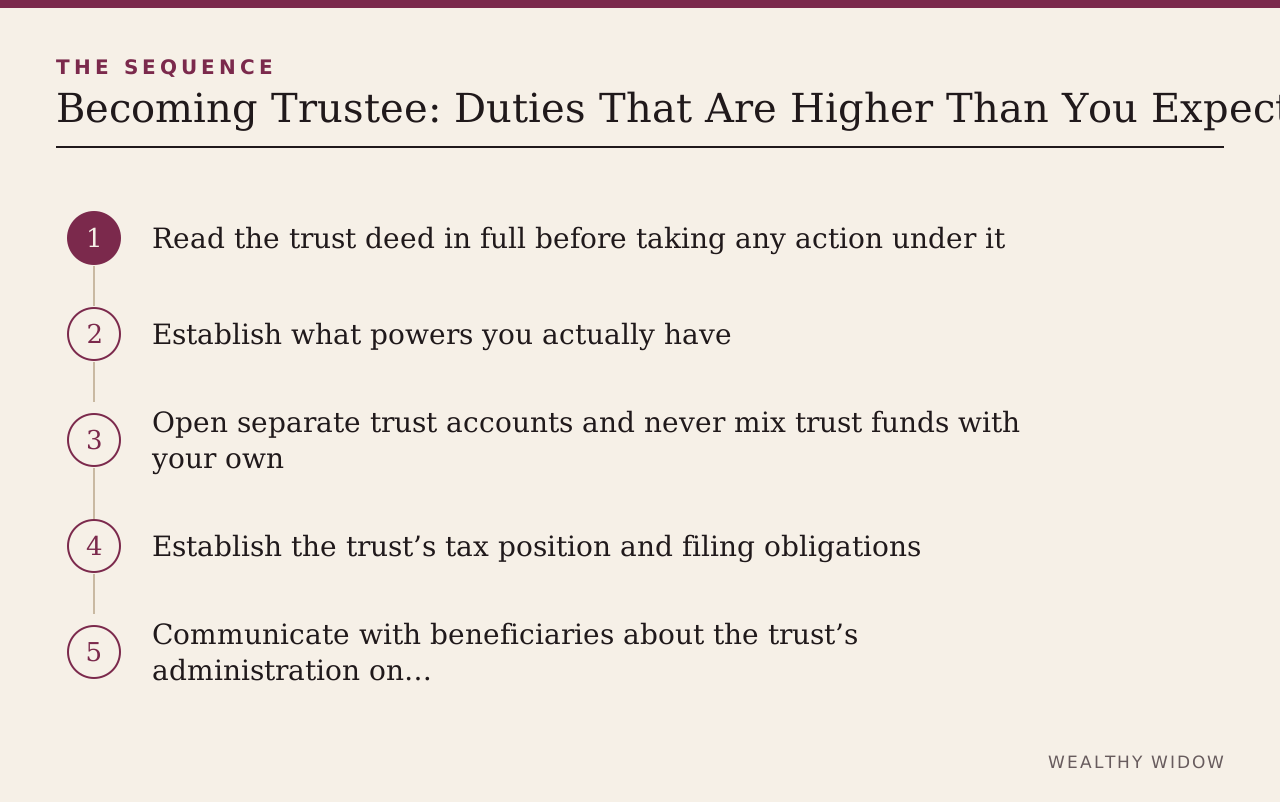
- Read the trust deed in full before taking any action under it.
- Establish what powers you actually have, and what requires consent or court approval.
- Open separate trust accounts and never mix trust funds with your own.
- Establish the trust’s tax position and filing obligations.
- Communicate with beneficiaries about the trust’s administration on a regular basis.
The failure modes to plan around
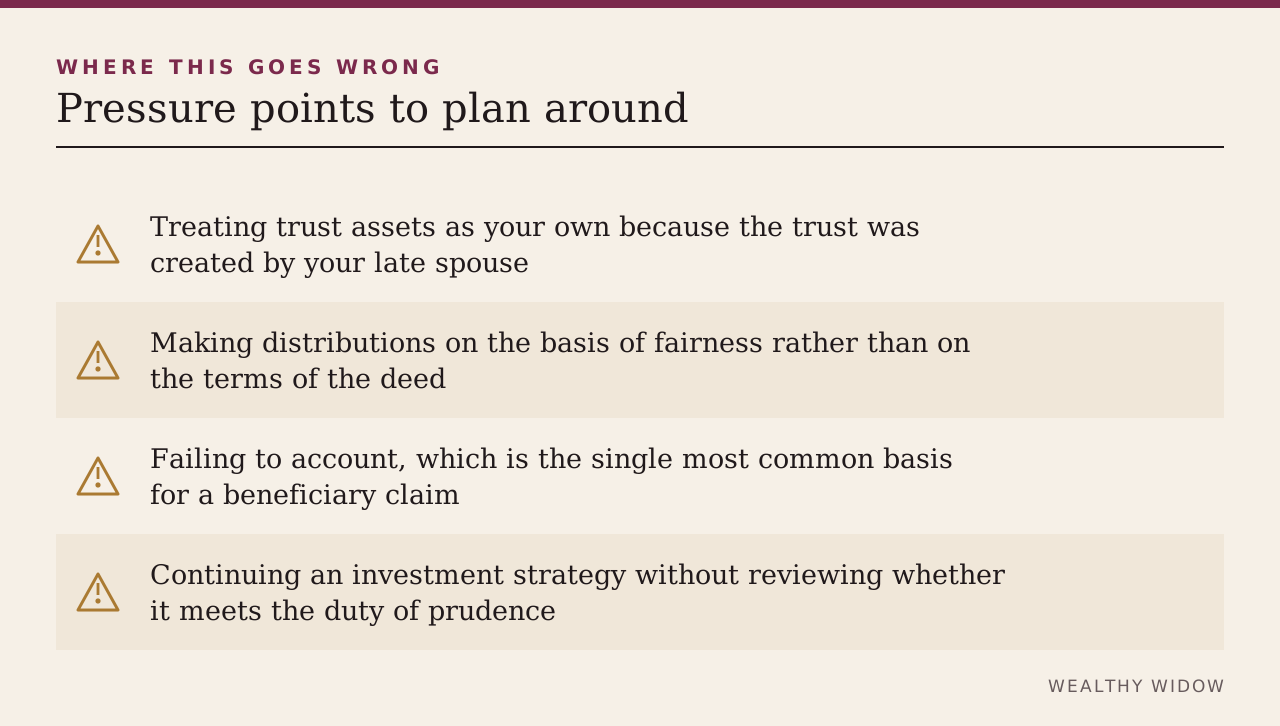
Watch for the following, and treat each as a reason to slow down. Treating trust assets as your own because the trust was created by your late spouse.
Making distributions on the basis of fairness rather than on the terms of the deed. Failing to account, which is the single most common basis for a beneficiary claim. Continuing an investment strategy without reviewing whether it meets the duty of prudence.
Assemble the file
Having the file complete before the first call removes most of the back and forth that follows.
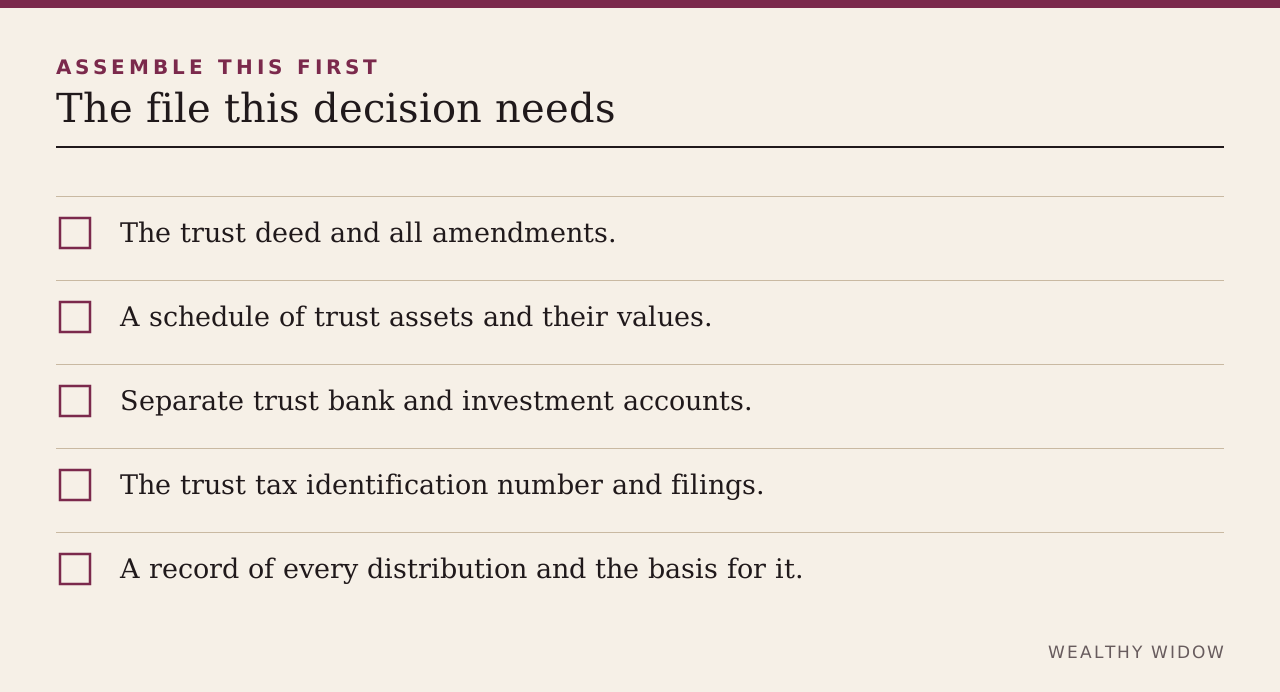
- The trust deed and all amendments.
- A schedule of trust assets and their values.
- Separate trust bank and investment accounts.
- The trust tax identification number and filings.
- A record of every distribution and the basis for it.
The written trail to keep
Written confirmation is ordinary practice, not suspicion.
- Your powers under the deed, and their limits.
- The trust’s tax filing obligations.
- What beneficiaries are entitled to receive, and when.
- What accounting is required, and how often.
Questions to take to a professional
If an answer to any of these is vague, that is your answer about the adviser.
- What are my duties and my personal exposure as trustee?
- What does the deed permit me to do without consent or approval?
- What accounting must I provide to beneficiaries, and how often?
- Should a professional trustee be appointed alongside or instead of me?
Confirm this against the rule
Do not take this guide as the authority. Each source below states the current rule for the part of this decision it covers.
- Internal Revenue Service — Information for executors
- Legal Services Corporation — I need legal help
- American Bar Association — Find legal help
- Internal Revenue Service — File an estate tax income tax return
What is outside this
What follows is outside anything written for a general readership. It cannot interpret your trust deed, which governs, and whose wording determines almost every question you will face.
The short version
Read the deed before you act, keep the money separate, and account regularly. Trusteeship is manageable when treated as a formal role and hazardous when treated as ownership.
Read Where the Originals Live, and Who Can Reach Them next; the two decisions interact.
Primary sources
- Internal Revenue Service — Information for executors
- Legal Services Corporation — I need legal help
- American Bar Association — Find legal help
- Internal Revenue Service — File an estate tax income tax return
This article provides general education, not individualized legal, tax, investment, insurance, or benefits advice. Rules and deadlines change; verify the current requirement with the agency and a qualified professional.