Home
When the Mortgage Becomes Unaffordable
Where income has fallen, options exist and almost all of them work better early. Waiting until arrears accumulate removes most of them.

Some decisions after a death are reversible. This one deserves more care than most. Where income has fallen, options exist and almost all of them work better early. Waiting until arrears accumulate removes most of them.
A drop in household income after a death can make a manageable mortgage unmanageable. Servicers have defined loss mitigation processes, and free counselling is available, but both work best when engaged early.
Every workout option available to a homeowner is easier to obtain before arrears than after them.
Start by naming the decision correctly
Take the ground facts first, because most of the difficulty here dissolves once they are stated plainly. Servicers are generally required to have loss mitigation procedures and to evaluate complete applications. A confirmed successor in interest can generally be evaluated for assistance without assuming the loan. Free housing counselling is available through approved agencies.
Options may include forbearance, modification, repayment plans, or a managed sale. Protections exist around the timing of foreclosure relative to a loss mitigation application.
The order of operations
Take these in order. Reversing them tends to create work rather than save it.
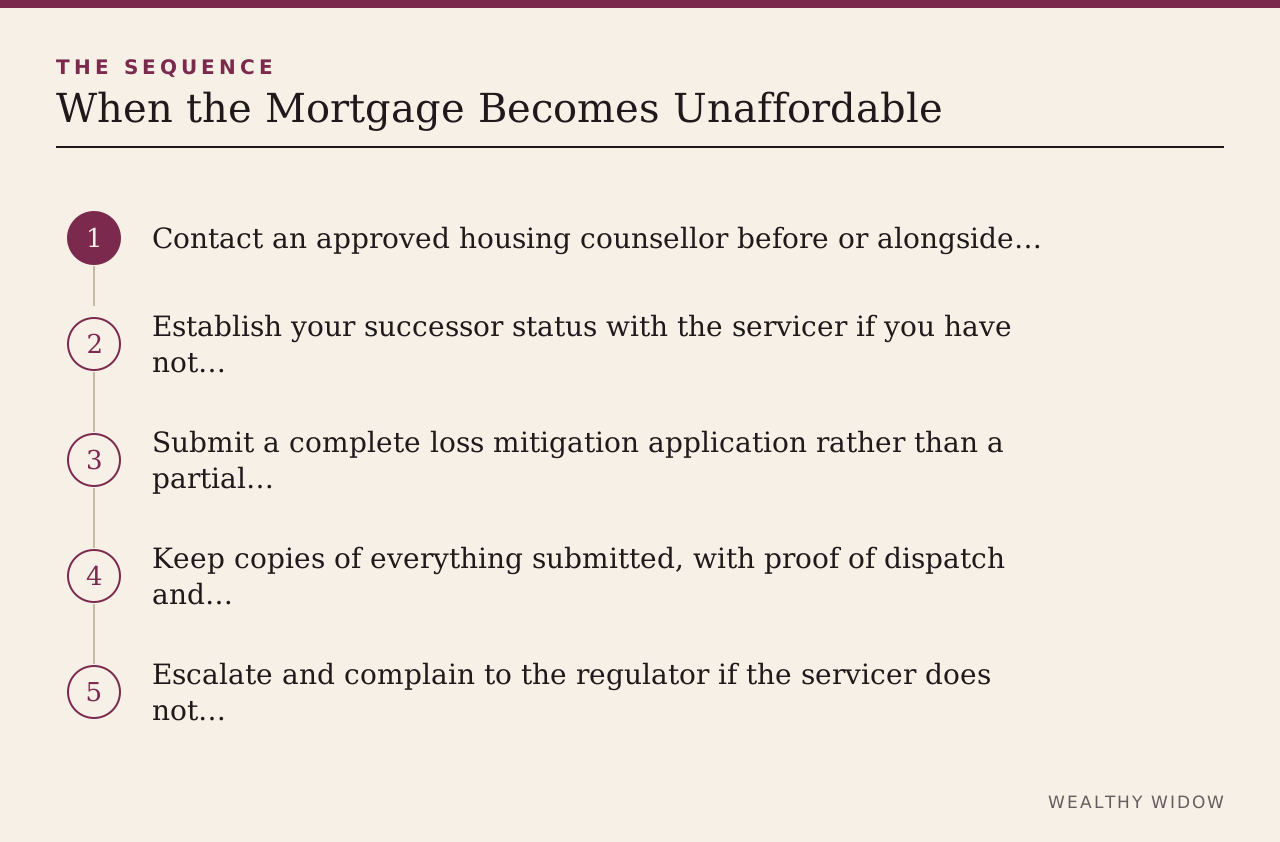
- Contact an approved housing counsellor before or alongside contacting the servicer.
- Establish your successor status with the servicer if you have not already.
- Submit a complete loss mitigation application rather than a partial one.
- Keep copies of everything submitted, with proof of dispatch and dates.
- Escalate and complain to the regulator if the servicer does not evaluate a complete application.
Where readers most often get hurt
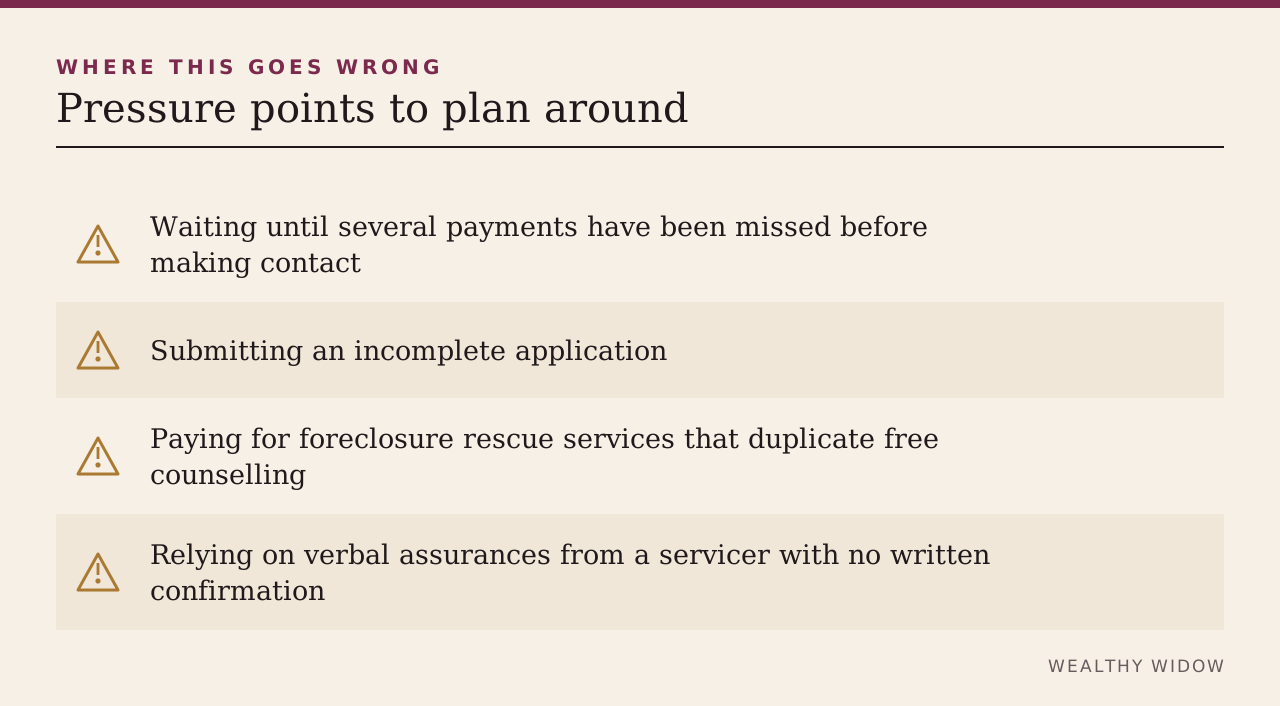
The failure modes below are predictable rather than unlucky, which is precisely what makes them avoidable. Waiting until several payments have been missed before making contact.
Submitting an incomplete application, which may not trigger the servicer’s obligations. Paying for foreclosure rescue services that duplicate free counselling. Relying on verbal assurances from a servicer with no written confirmation.
Gather these before the first call
Every organisation involved will want some combination of the following, and several will want it more than once.
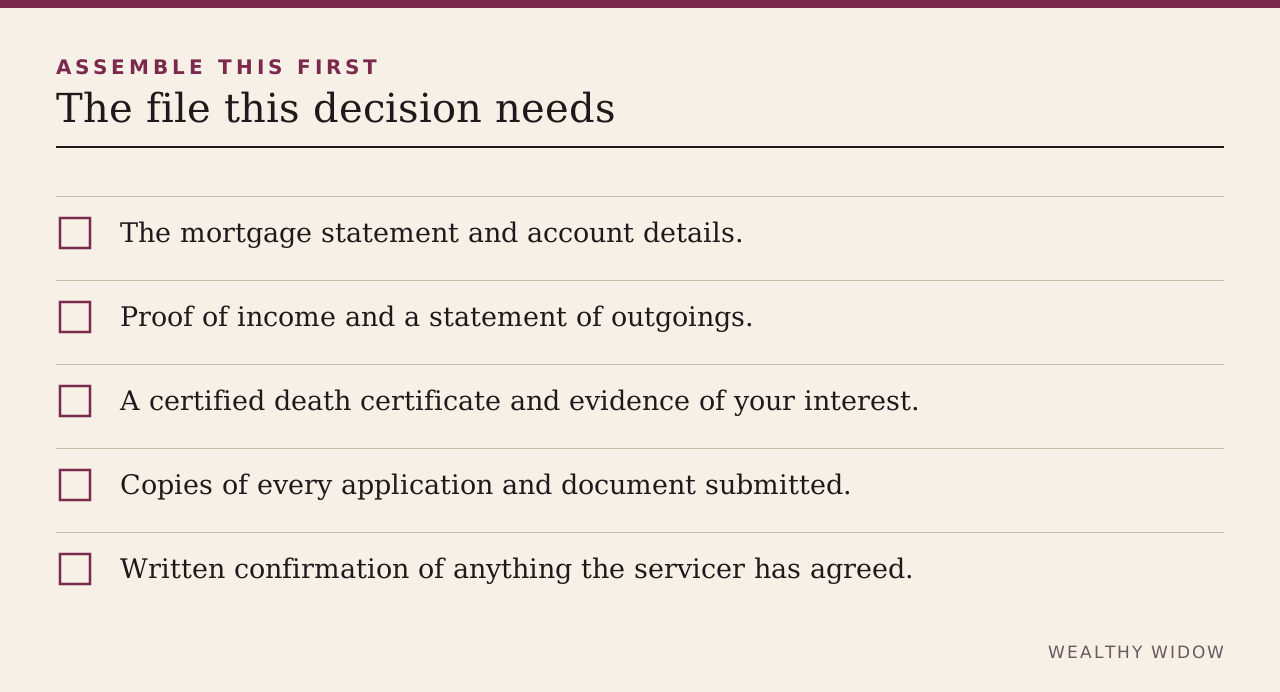
- The mortgage statement and account details.
- Proof of income and a statement of outgoings.
- A certified death certificate and evidence of your interest.
- Copies of every application and document submitted.
- Written confirmation of anything the servicer has agreed.
Written confirmation to insist on
Before you act on what you have been told, hold written confirmation of each point.
- That your application has been received and is complete.
- What options you have been evaluated for.
- Any decision, in writing, with reasons.
- The timescales that apply to the servicer’s response.
Take these questions to your adviser
Ask these before an engagement letter is signed, while you still have every option open to you.
- What loss mitigation options am I eligible to be evaluated for?
- Is my application complete, and what remains outstanding?
- What protections apply while my application is under review?
- What is your written timescale for a decision?
Where to verify this
Every load-bearing point above traces to one of the following. Where a figure or deadline matters to you, read it there.
- Consumer Financial Protection Bureau — Homeowners face problems with mortgage companies after death of a loved one
- U.S. Department of Housing and Urban Development — Find a housing counselor
- U.S. Department of Housing and Urban Development — Housing counselor locator
- Consumer Financial Protection Bureau — Expanded foreclosure protections
What a professional still has to decide
The limits of a guide matter as much as its content, because acting past them is where the cost sits. It cannot negotiate with a servicer, and an approved housing counsellor is better placed than any article to do so.
What good looks like here
Call an approved counsellor early, submit a complete application, and document everything. The options narrow steadily with each missed payment, and the counselling costs nothing.
If this raised a further question, A Property Inherited Jointly: Deciding With People You Cannot Fire takes it further.
Primary sources
- Consumer Financial Protection Bureau — Homeowners face problems with mortgage companies after death of a loved one
- U.S. Department of Housing and Urban Development — Find a housing counselor
- U.S. Department of Housing and Urban Development — Housing counselor locator
- Consumer Financial Protection Bureau — Expanded foreclosure protections
This article provides general education, not individualized legal, tax, investment, insurance, or benefits advice. Rules and deadlines change; verify the current requirement with the agency and a qualified professional.