Estate
Transfer on Death: The Quiet Instructions Attached to Accounts
Accounts can carry transfer or payable on death designations that override the will entirely, and families frequently do not know they exist.

Institutions will describe this as routine. For you it is not routine, and the stakes are not symmetrical. Accounts can carry transfer or payable on death designations that override the will entirely, and families frequently do not know they exist.
These designations are quick to add, rarely reviewed, and completely effective. They are one of the more common reasons an estate does not distribute the way the family expected.
A designation completed at an account opening desk years ago outranks a will drafted by a lawyer last year.
Separate the label from the decision
Take the ground facts first, because most of the difficulty here dissolves once they are stated plainly. Payable on death and transfer on death designations pass an account directly to a named person. The asset passes outside probate and outside the will. Designations can be added or changed at any time by the account holder, often without formality.
Where no designation exists, or the named person has died, the asset may fall back into the estate. Some states permit similar designations for real property and vehicles.
A working sequence for this decision
Take these in order. Reversing them tends to create work rather than save it.
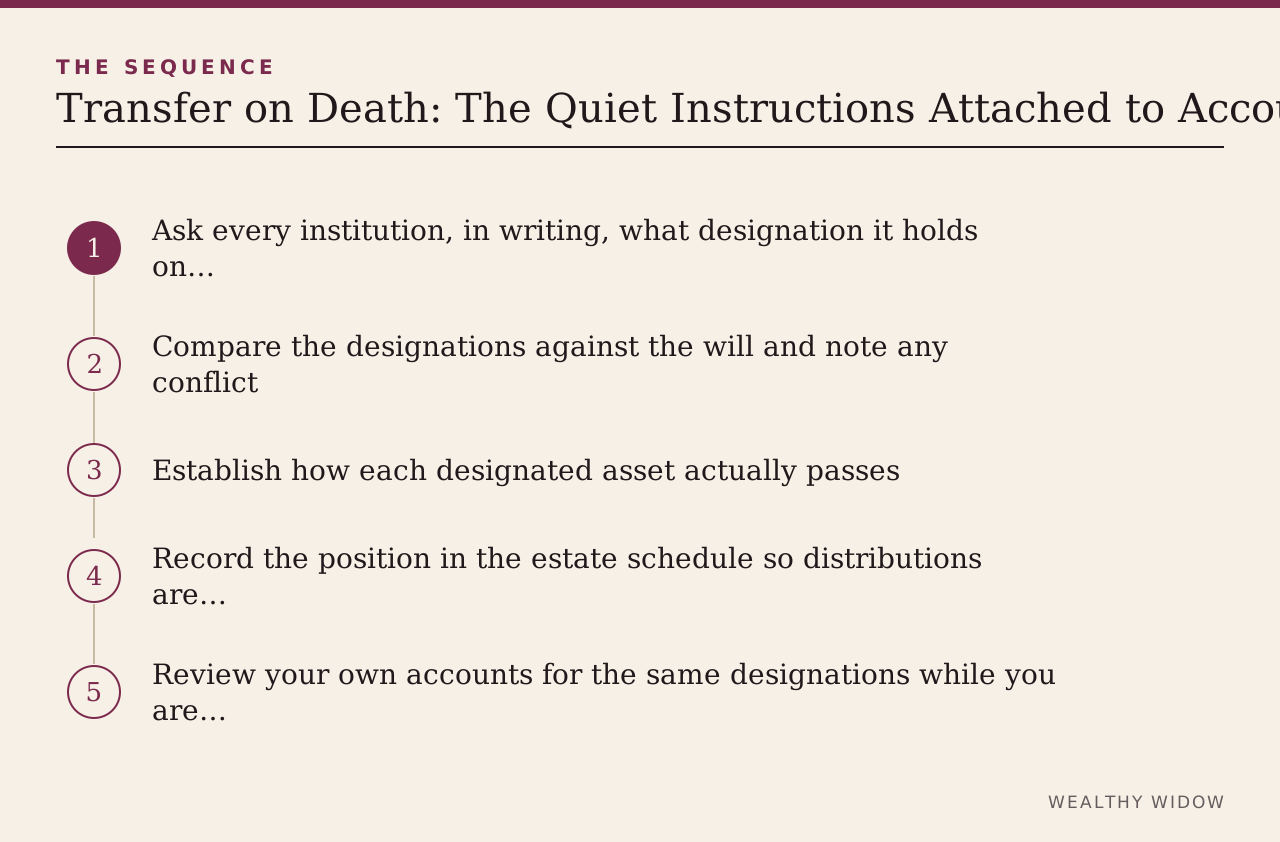
- Ask every institution, in writing, what designation it holds on each account.
- Compare the designations against the will and note any conflict.
- Establish how each designated asset actually passes, and to whom.
- Record the position in the estate schedule so distributions are calculated correctly.
- Review your own accounts for the same designations while you are doing this.
The predictable errors
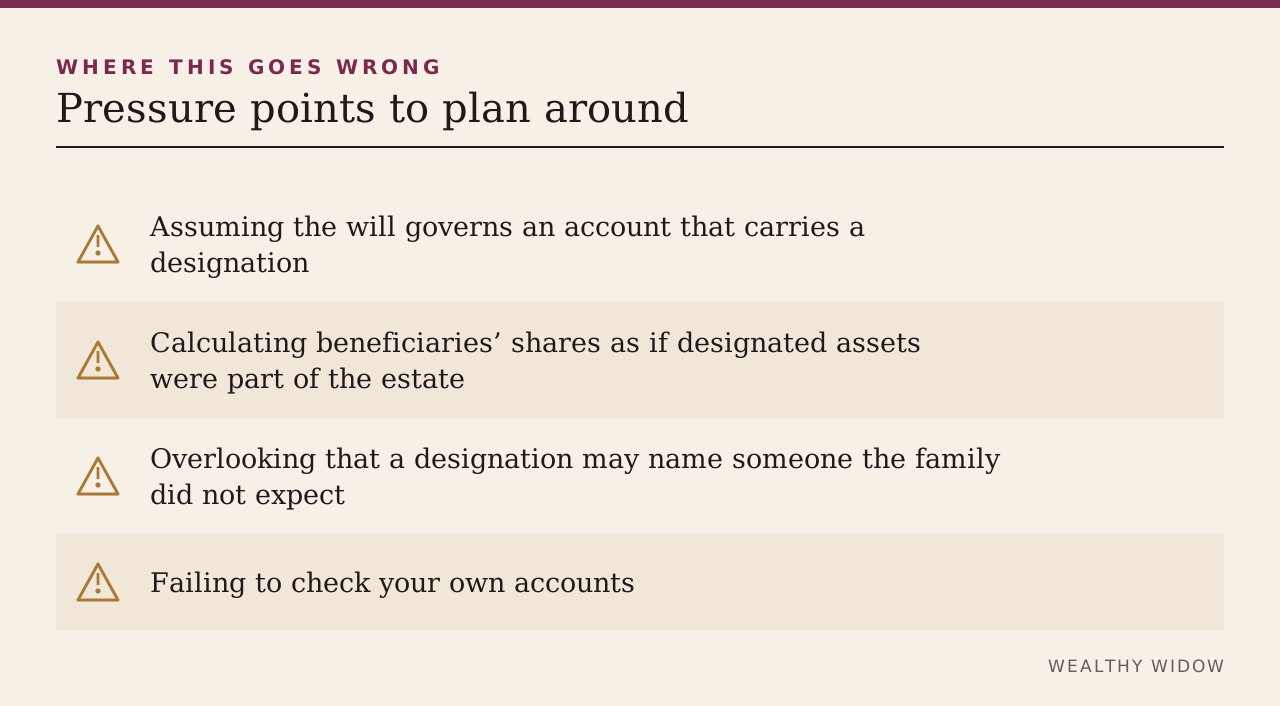
The failure modes below are predictable rather than unlucky, which is precisely what makes them avoidable. Assuming the will governs an account that carries a designation.
Calculating beneficiaries’ shares as if designated assets were part of the estate. Overlooking that a designation may name someone the family did not expect. Failing to check your own accounts, and leaving the same surprise for the next generation.
Gather these before the first call
Every organisation involved will want some combination of the following, and several will want it more than once.
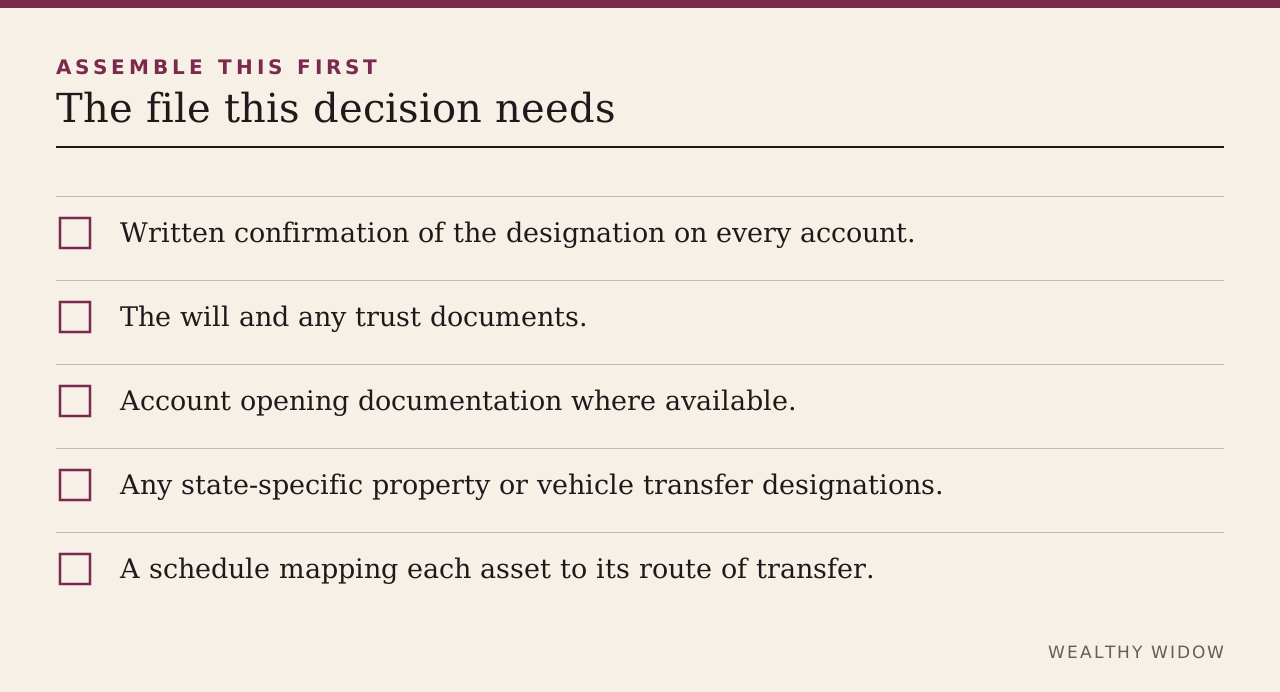
- Written confirmation of the designation on every account.
- The will and any trust documents.
- Account opening documentation where available.
- Any state-specific property or vehicle transfer designations.
- A schedule mapping each asset to its route of transfer.
What to have documented
Put each of these in the file with a date against it.
- The designation held on each account, in writing.
- How each designated asset passes, and to whom.
- What happens where a designated person has died.
- Whether designations conflict with the will.
What to ask before you sign
Ask these before an engagement letter is signed or a product is recommended.
- What designation do you hold on this account?
- What happens if the person designated has also died?
- Does this asset pass outside probate?
- Can a designation be challenged, and on what grounds?
Where to verify this
Every load-bearing point above traces to one of the following. Where a figure or deadline matters to you, read it there.
- Internal Revenue Service — Retirement topics, beneficiary
- U.S. Securities and Exchange Commission — Investor.gov
- Federal Deposit Insurance Corporation — Deposit insurance
- Legal Services Corporation — I need legal help
What a professional still has to decide
The limits of a guide matter as much as its content, because acting past them is where the cost sits. It cannot tell you what designations exist. Only the institutions can, and each must be asked separately and in writing.
What good looks like here
Ask every institution what it holds, in writing, before calculating anything. Designations are effective, invisible, and the single most common reason an estate distributes differently from the will.
For the step that usually comes next, read Signals That a Will May Be Challenged, and What to Do Early.
Primary sources
- Internal Revenue Service — Retirement topics, beneficiary
- U.S. Securities and Exchange Commission — Investor.gov
- Federal Deposit Insurance Corporation — Deposit insurance
- Legal Services Corporation — I need legal help
This article provides general education, not individualized legal, tax, investment, insurance, or benefits advice. Rules and deadlines change; verify the current requirement with the agency and a qualified professional.