Home
Checking That the Record Says What You Think It Says
Property records contain errors, old liens, and defects that surface at the worst moment, which is usually during a sale.

The difficulty here is rarely the paperwork. It is knowing what is actually being asked. Property records contain errors, old liens, and defects that surface at the worst moment, which is usually during a sale.
A change of ownership after a death is a natural point to check the property record. Defects are more common than expected and are far cheaper to resolve outside a transaction.
The time to find a defect in the record is when nobody is waiting on the answer.
Name the decision before you make it
The facts that govern this are narrower than the anxiety around it. Property records can contain old liens, easements, and errors that were never resolved. A satisfied mortgage may not have been formally released on the record. Title insurance covers certain defects, and an existing policy may still be relevant.
Correcting a defect takes weeks or months, which a transaction timetable rarely allows without a price reduction or a collapsed sale. The record does not update on a death; a document must be recorded.
How to work through it
Follow it in order, and leave anything requiring a signature until the end rather than the beginning.
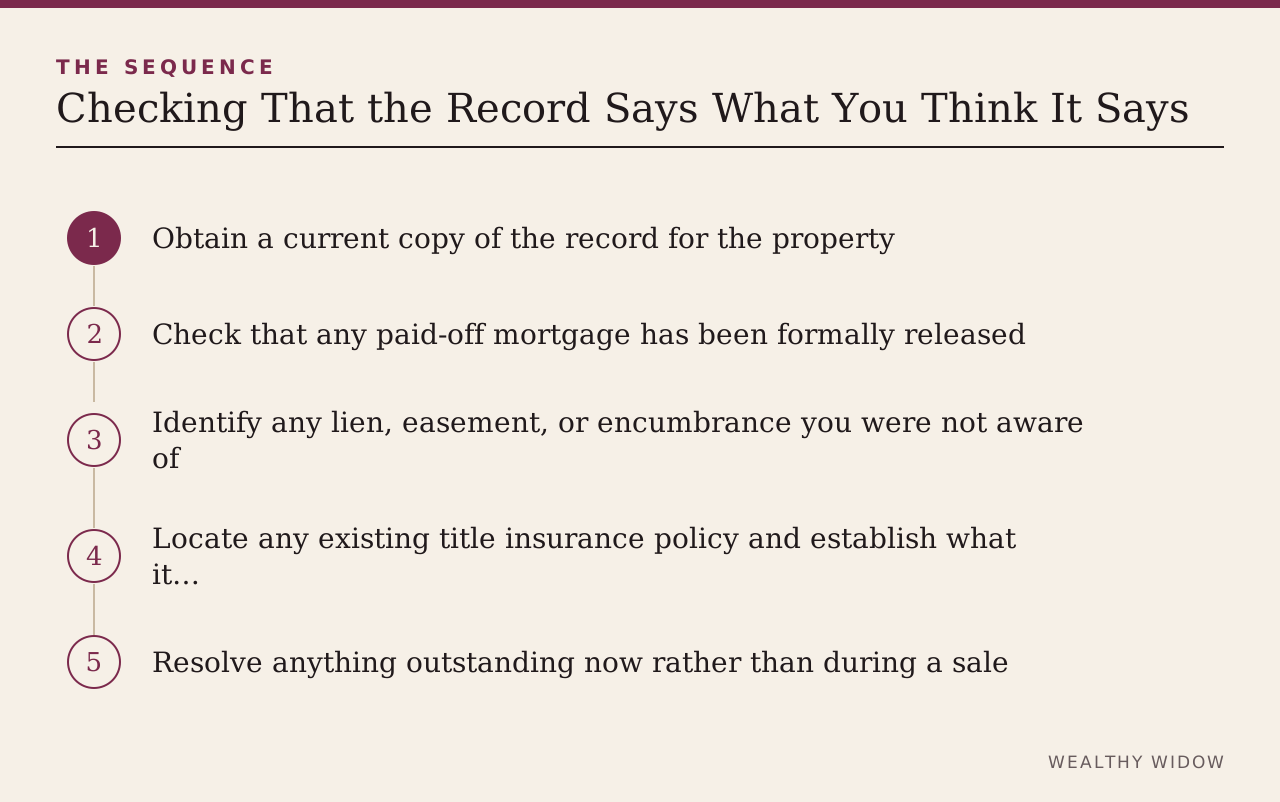
- Obtain a current copy of the record for the property.
- Check that any paid-off mortgage has been formally released.
- Identify any lien, easement, or encumbrance you were not aware of.
- Locate any existing title insurance policy and establish what it covers.
- Resolve anything outstanding now rather than during a sale.
Known hazards
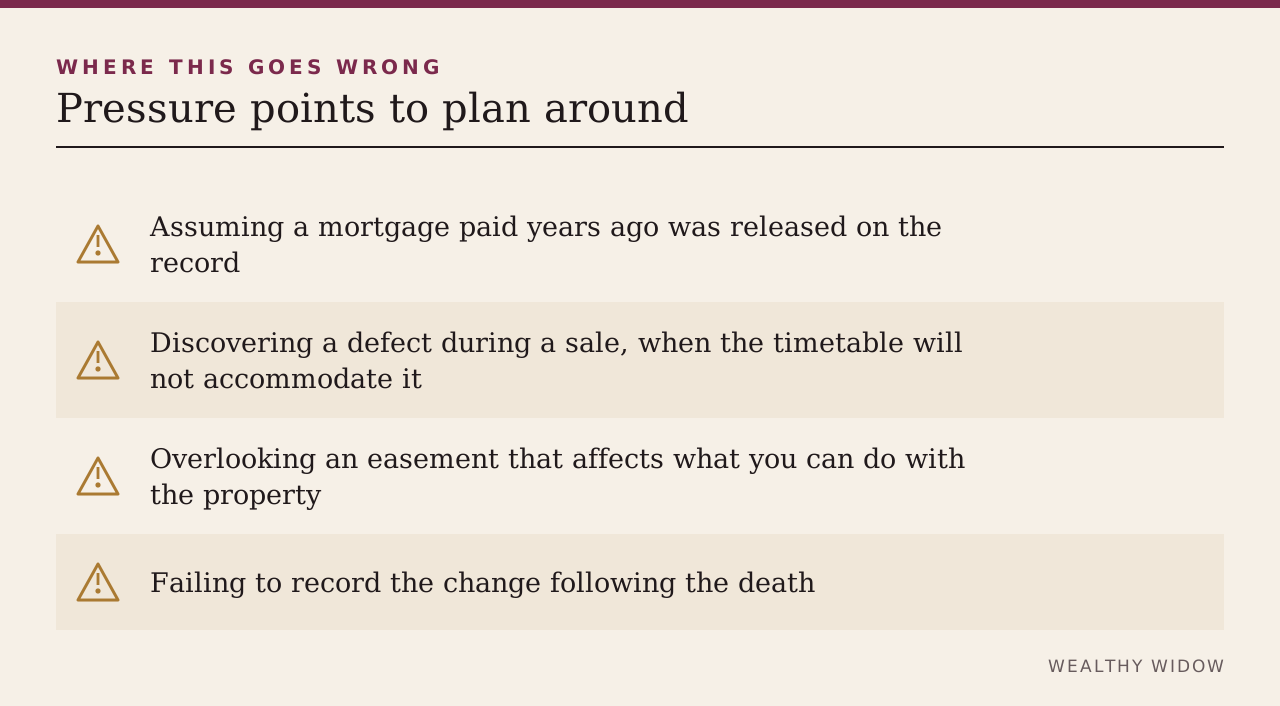
Each of the following is a signal to pause and confirm rather than to proceed on the assumption that it is fine. Assuming a mortgage paid years ago was released on the record.
Discovering a defect during a sale, when the timetable will not accommodate it. Overlooking an easement that affects what you can do with the property. Failing to record the change following the death, which is itself a defect.
The documents to assemble first
The evidence below does most of the work of establishing who you are and what you may do.
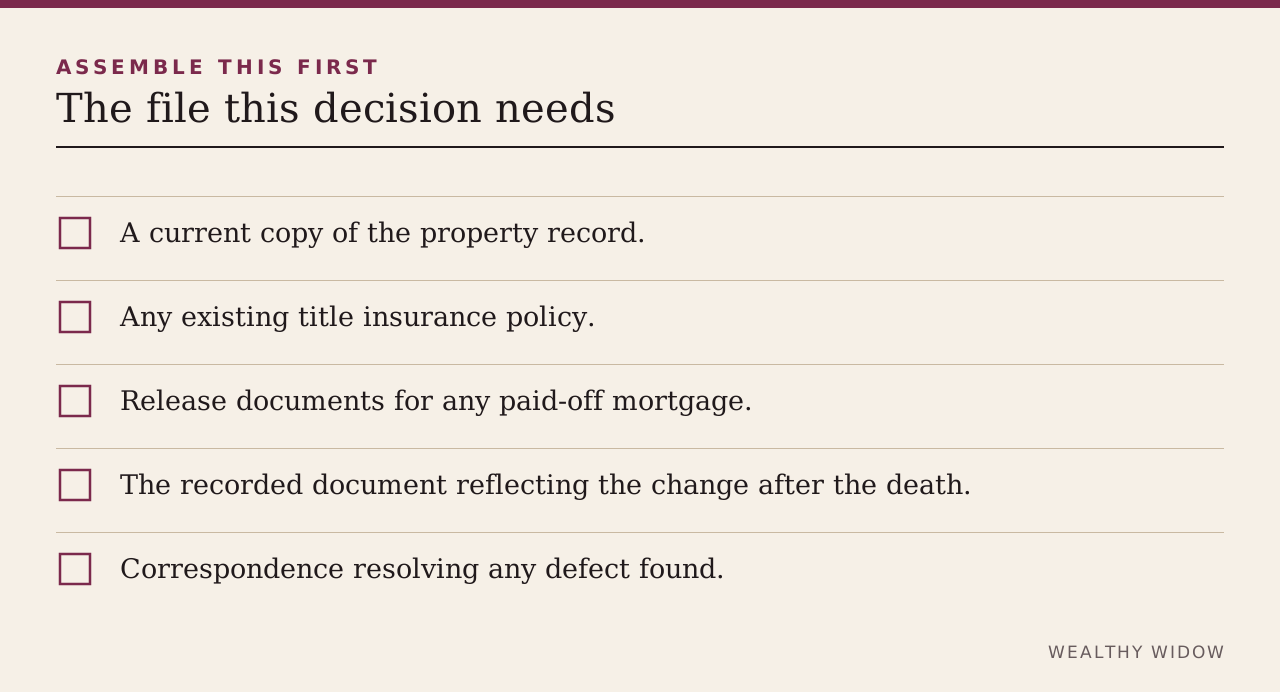
- A current copy of the property record.
- Any existing title insurance policy.
- Release documents for any paid-off mortgage.
- The recorded document reflecting the change after the death.
- Correspondence resolving any defect found.
Get these in writing
Put each item below in your file with a date and a named source.
- That paid-off charges have been released on the record.
- What encumbrances currently affect the property.
- What any existing title policy covers.
- That the change following the death has been recorded.
The questions worth asking
These are the questions whose answers change what you decide, rather than merely confirming what you assumed.
- Does the record show anything I should be concerned about?
- Has the previous mortgage been formally released?
- What does my existing title policy cover?
- What would need correcting before a sale?
Check this against the source
These are the primary sources behind this guide. They are the ones that change, and the ones worth checking before you act.
- National Association of Insurance Commissioners — Consumer resources
- U.S. Department of Housing and Urban Development — Find a housing counselor
- USAGov — Get copies of vital records and ID cards
- Legal Services Corporation — I need legal help
The questions this cannot reach
No account written for a general readership can reach the following, and it should not pretend to. It cannot check your record, and a title company or property lawyer can do so quickly and inexpensively outside a transaction.
Taking it from here
Pull the record now, while nothing depends on it. Defects are common, they are cheap to fix in a quiet month, and they are expensive to discover with a buyer waiting.
Our related guide The House: A Housing Decision Wearing a Financial Costume covers the adjacent problem.
Primary sources
- National Association of Insurance Commissioners — Consumer resources
- U.S. Department of Housing and Urban Development — Find a housing counselor
- USAGov — Get copies of vital records and ID cards
- Legal Services Corporation — I need legal help
This article provides general education, not individualized legal, tax, investment, insurance, or benefits advice. Rules and deadlines change; verify the current requirement with the agency and a qualified professional.