Taxes
Choosing Which Year Income Falls Into
Where you have any control over when income is received, moving it across a year end can change the total tax on the same amount.

This guide covers a decision that is easy to make quickly and expensive to make wrongly. Where you have any control over when income is received, moving it across a year end can change the total tax on the same amount.
The years after a death frequently involve very uneven income: a large distribution one year, a settled position the next. Where timing is discretionary, using it deliberately is straightforward planning.
Tax is calculated annually, which means the year in which income lands is itself a decision worth making.
Start by naming the decision correctly
These are the load-bearing facts. Progressive rates mean the same total income taxed unevenly across years costs more. Filing status may differ between the years in question, which magnifies the effect. Some income is discretionary in timing, including retirement distributions, asset sales, and certain elections, and those are the levers worth using.
Other income is fixed in timing, including benefits and most pension payments, and the plan has to work around those rather than against them. The interaction with benefit taxation and other thresholds can amplify the difference.
The order of operations
Sequence matters, because some steps close options that later steps need.
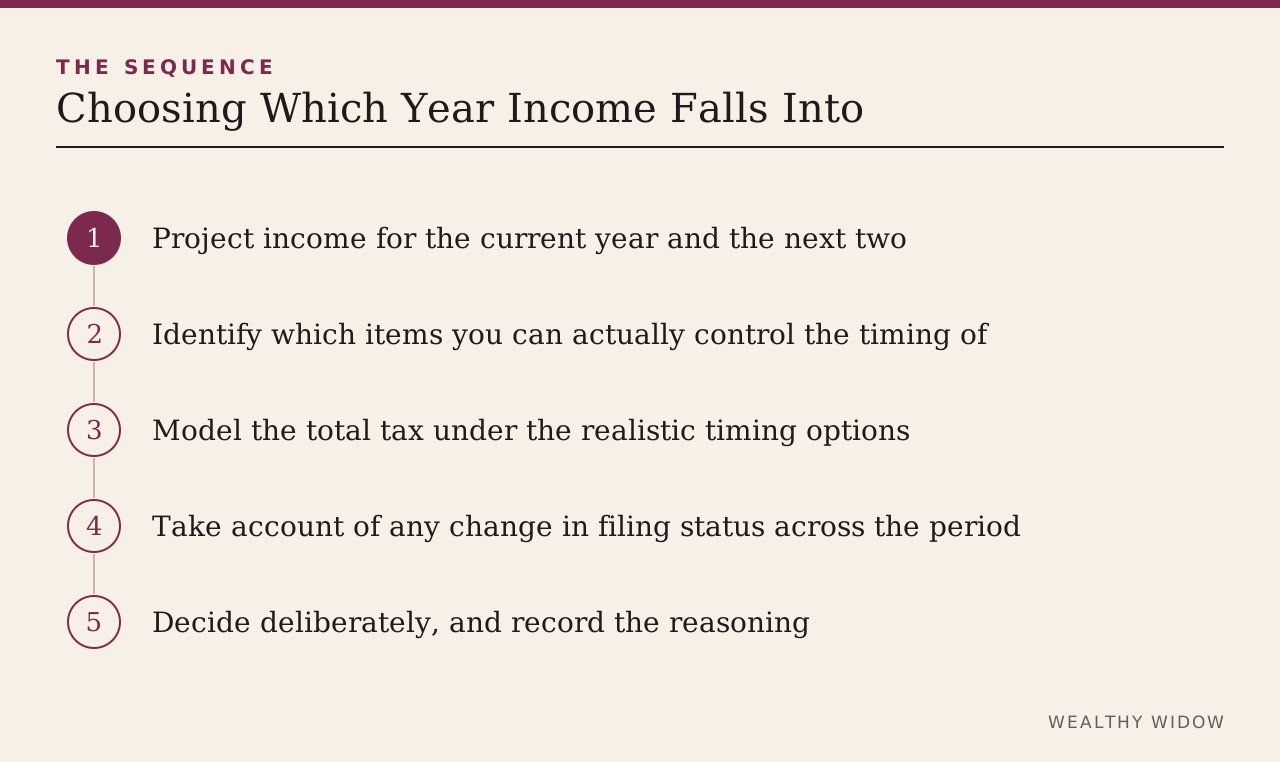
- Project income for the current year and the next two.
- Identify which items you can actually control the timing of.
- Model the total tax under the realistic timing options.
- Take account of any change in filing status across the period.
- Decide deliberately, and record the reasoning.
Where readers most often get hurt
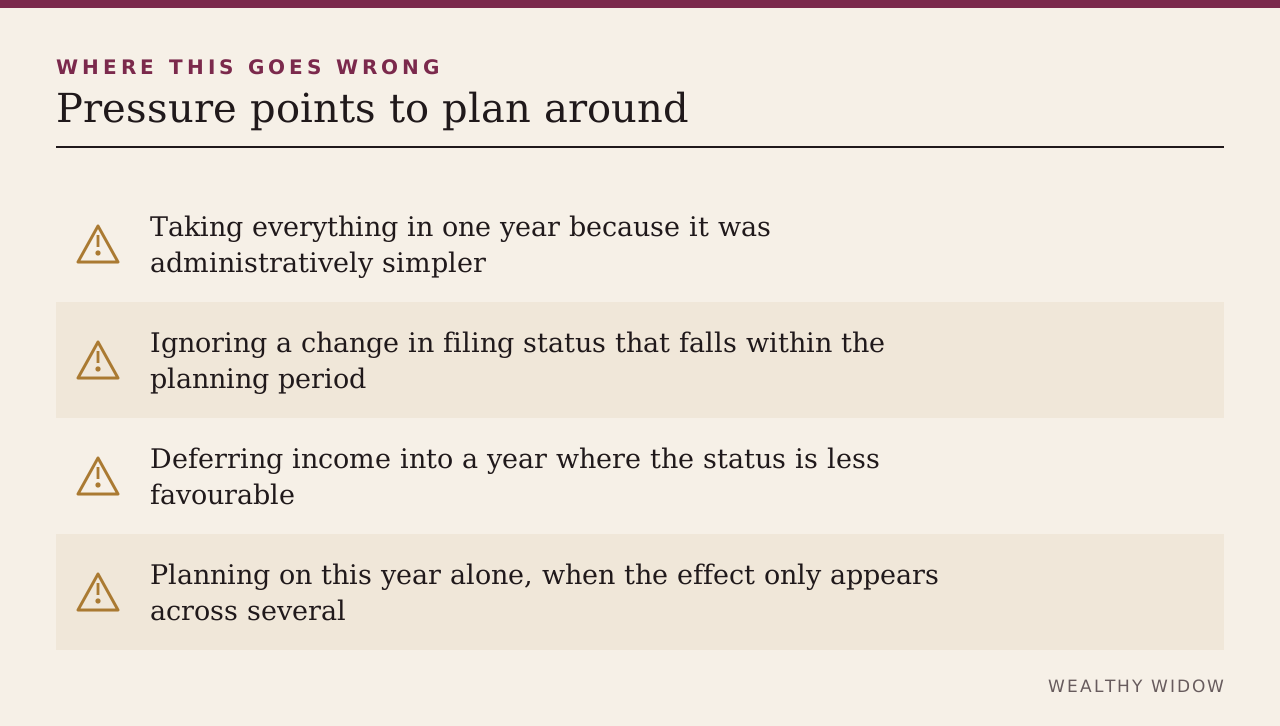
What follows is where readers most reliably lose ground. Taking everything in one year because it was administratively simpler.
Ignoring a change in filing status that falls within the planning period. Deferring income into a year where the status is less favourable. Planning on this year alone, when the effect only appears across several.
The paperwork this actually requires
The file below does most of the work of establishing who you are.
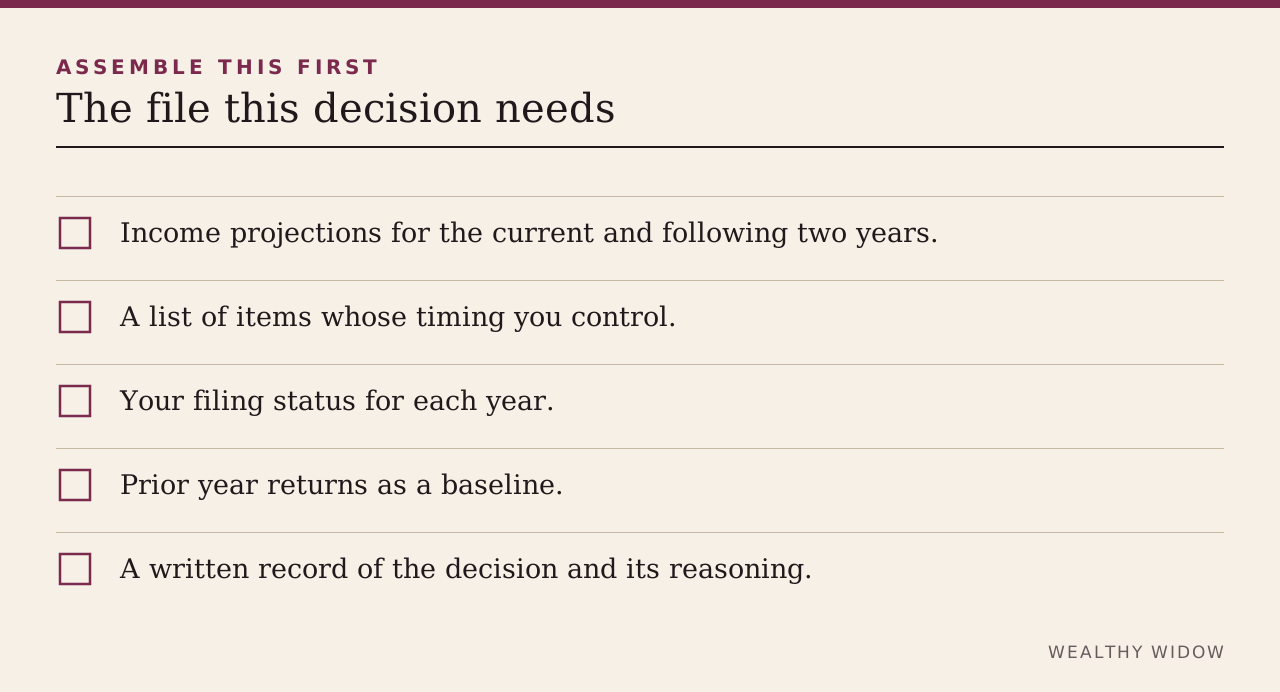
- Income projections for the current and following two years.
- A list of items whose timing you control.
- Your filing status for each year.
- Prior year returns as a baseline.
- A written record of the decision and its reasoning.
The written record you should hold
Hold written confirmation of each of these points before you rely on any of them to make a decision.
- Which income is genuinely discretionary in timing.
- Your filing status in each year concerned.
- The total tax under each realistic option.
- Any threshold effects that amplify the difference.
What a good adviser will answer plainly
Whoever advises you should be able to answer each of these plainly and in writing.
- What is the total tax across these years under each option?
- Which of these items can I actually time?
- Does my filing status change within this period?
- What thresholds am I close to in each year?
Check it at source
These are the pages that change when the rules change, which is why they and not this guide are the authority.
- Internal Revenue Service — Estimated taxes
- Internal Revenue Service — Tax withholding estimator
- Internal Revenue Service — Publication 505, tax withholding and estimated tax
- Internal Revenue Service — About Publication 559, survivors, executors, and administrators
What still needs a professional
Be clear about what remains outside anything written for a general readership. It cannot model your position, which requires the projections and the current year rates.
The working conclusion
Project three years rather than one, identify what you can actually time, and model the total. It is the same money either way, and the year it lands in genuinely changes what is left of it.
If this raised a further question, What to Assemble Before the Return Is Prepared takes it further.
Primary sources
- Internal Revenue Service — Estimated taxes
- Internal Revenue Service — Tax withholding estimator
- Internal Revenue Service — Publication 505, tax withholding and estimated tax
- Internal Revenue Service — About Publication 559, survivors, executors, and administrators
This article provides general education, not individualized legal, tax, investment, insurance, or benefits advice. Rules and deadlines change; verify the current requirement with the agency and a qualified professional.