Taxes
The Year the Favourable Filing Status Runs Out
For many widows the tax bill rises noticeably a year or two after the death, when the joint or surviving spouse status no longer applies.

Widowhood arrives with a queue of decisions that all look equally urgent. For many widows the tax bill rises noticeably a year or two after the death, when the joint or surviving spouse status no longer applies. They are not the same task, and treating them as one is how good decisions get made badly.
This is a predictable cliff and it is regularly a shock, because it lands well after the death when the household believes the financial disruption is behind it.
The same income taxed as a single filer rather than jointly can produce a materially larger bill, and the change arrives on a known date.
What you are really being asked
Start from the reliable ground, before anyone asks you to act on anything less certain than it. Rate thresholds and the standard deduction differ between joint and single filers. The same income can therefore attract a higher effective rate once the status changes. The change can also affect the proportion of Social Security benefits that is taxable.
Where a favourable status applies for a limited period, the end date is knowable in advance. Some planning, such as the timing of distributions, can be done in the years before the change.
The sequence that keeps options open
Work through it deliberately rather than all at once, and stop at any point where an answer is missing.
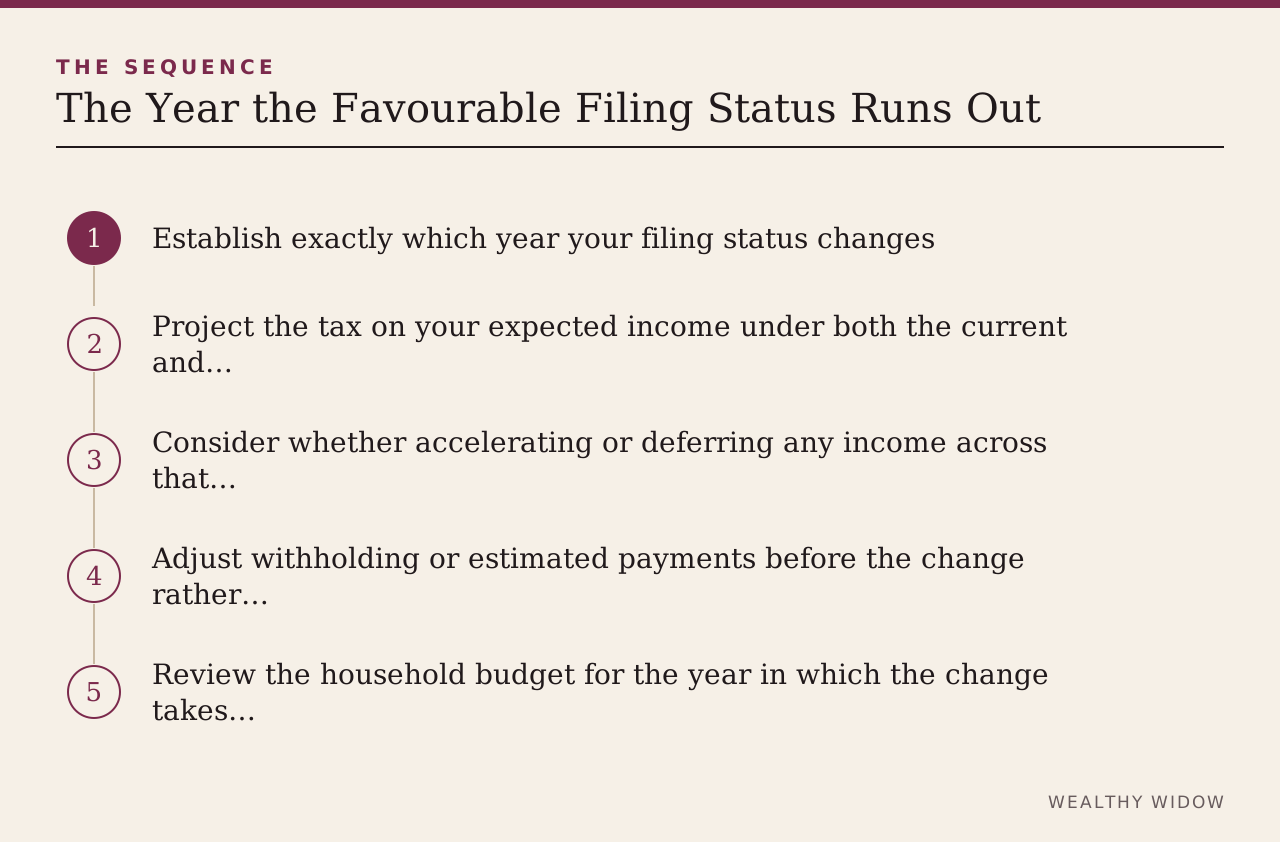
- Establish exactly which year your filing status changes.
- Project the tax on your expected income under both the current and the future status.
- Consider whether accelerating or deferring any income across that boundary helps.
- Adjust withholding or estimated payments before the change rather than after.
- Review the household budget for the year in which the change takes effect.
The failure modes to plan around
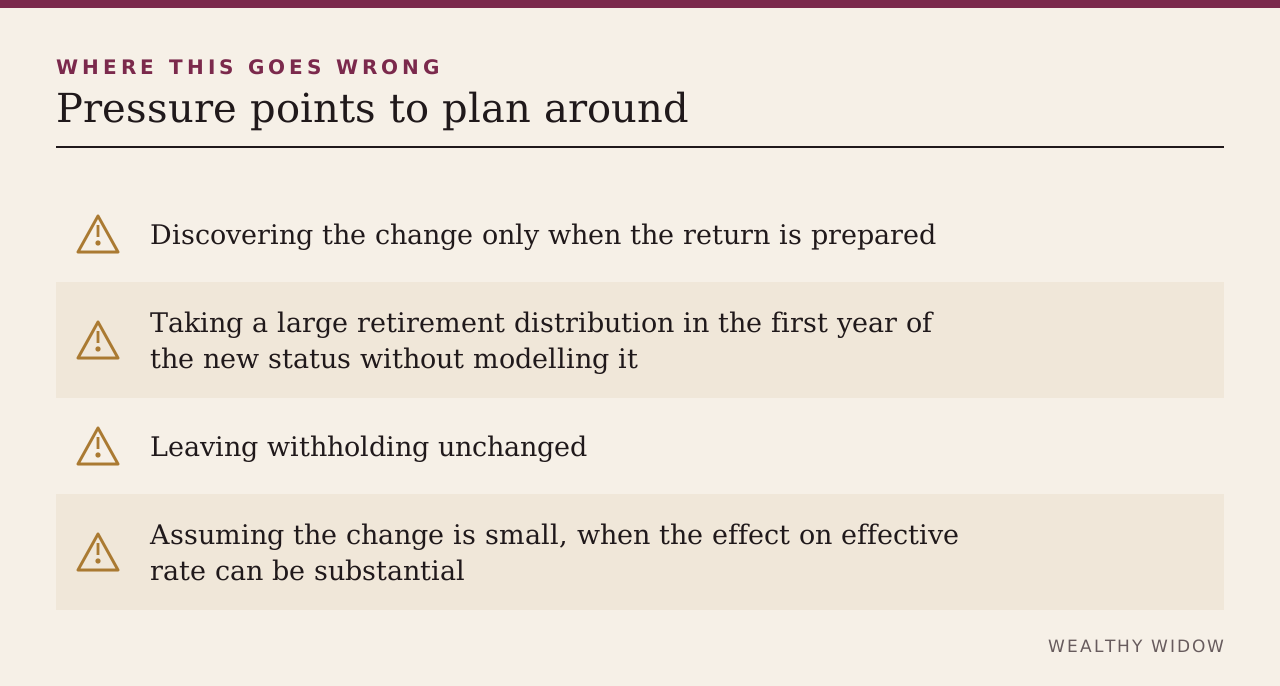
Each of these is a signal to stop and confirm rather than proceed. Discovering the change only when the return is prepared, after the year has ended.
Taking a large retirement distribution in the first year of the new status without modelling it. Leaving withholding unchanged, and facing both a larger bill and a penalty. Assuming the change is small, when the effect on effective rate can be substantial.
The evidence to gather
You will be asked for these in some combination by almost everyone involved.
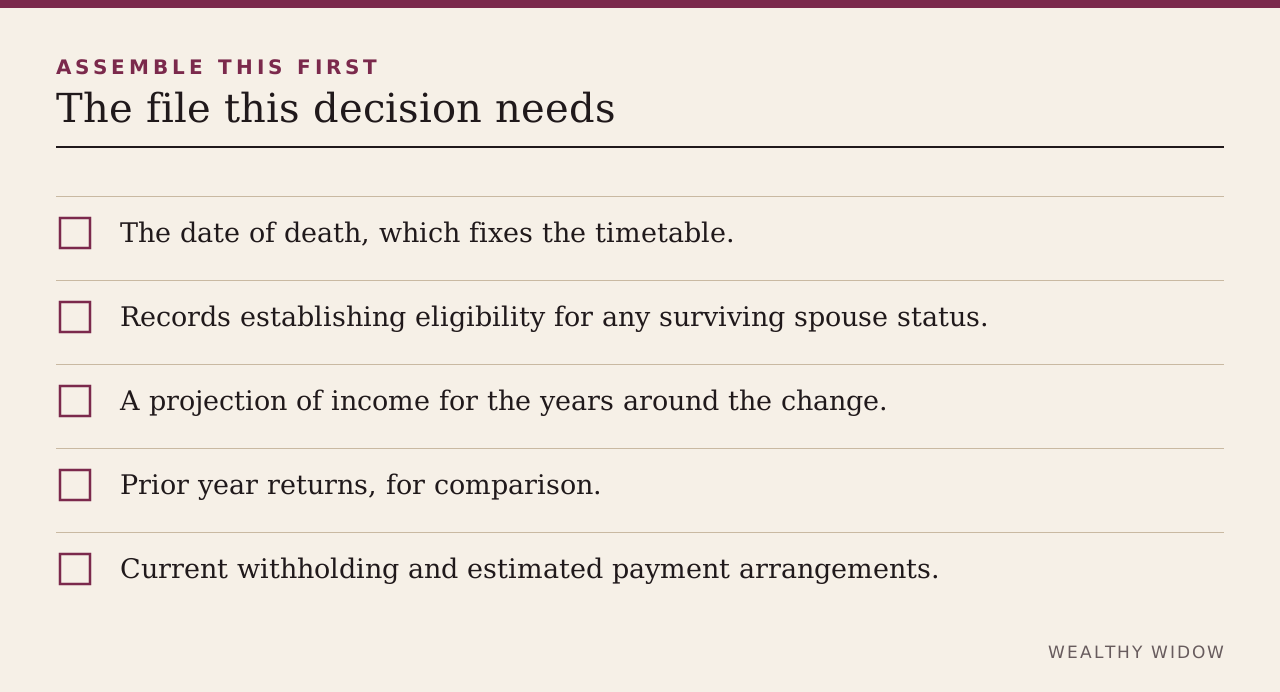
- The date of death, which fixes the timetable.
- Records establishing eligibility for any surviving spouse status.
- A projection of income for the years around the change.
- Prior year returns, for comparison.
- Current withholding and estimated payment arrangements.
Ask for this in writing
Each item below should exist somewhere other than your memory, because memory is not evidence in a dispute.
- The exact year in which your status changes.
- The projected tax under each status on your expected income.
- Whether head of household is available to you afterwards.
- The withholding or estimated payment change needed.
The questions to bring to the meeting
Take these to the attorney, tax professional, or planner handling this work.
- In which year does my filing status change, and to what?
- What is the projected difference in tax on my expected income?
- Should any income be accelerated or deferred across that boundary?
- What withholding change should I make, and when?
Confirm this against the rule
Do not take this guide as the authority. Each source below states the current rule for the part of this decision it covers.
- Internal Revenue Service — File the final income tax returns of a deceased person
- Internal Revenue Service — About Publication 559, survivors, executors, and administrators
- Internal Revenue Service — Tax withholding estimator
- Internal Revenue Service — Estimated taxes
What is outside this
What follows is outside anything written for a general readership. It cannot project your tax, which needs current year rates and your own income figures.
The short version
Find the year, run the projection, and adjust withholding before it arrives. This is one of the few tax surprises that is entirely predictable, which makes being surprised by it unnecessary.
Read Medical Expenses in the Last Year of Life next; the two decisions interact.
Primary sources
- Internal Revenue Service — File the final income tax returns of a deceased person
- Internal Revenue Service — About Publication 559, survivors, executors, and administrators
- Internal Revenue Service — Tax withholding estimator
- Internal Revenue Service — Estimated taxes
This article provides general education, not individualized legal, tax, investment, insurance, or benefits advice. Rules and deadlines change; verify the current requirement with the agency and a qualified professional.