Home
Treating the House as an Asset Without Treating It Only as an Asset
A home is usually the largest asset and the least liquid one, and planning that ignores either of those facts goes wrong.

The pressure to resolve this quickly usually comes from outside you. A home is usually the largest asset and the least liquid one, and planning that ignores either of those facts goes wrong.
Housing decisions and financial planning are usually conducted separately, which is how households end up asset rich and cash poor without ever deciding to be.
Equity in a home is real wealth that you cannot spend without changing where you live.
The question underneath the paperwork
Take the ground facts first, because most of the difficulty here dissolves once they are stated plainly. Home equity is generally the largest single asset in a household and the hardest to access. Accessing it requires either selling, borrowing against it, or a specialist product. A plan that assumes the home will be sold at a particular point should say when and why.
Care costs later in life are frequently met from housing equity, deliberately or otherwise. The home may also be the asset most likely to be left to children, which competes with using it.
Sequence the work deliberately
Take these in order. Reversing them tends to create work rather than save it.
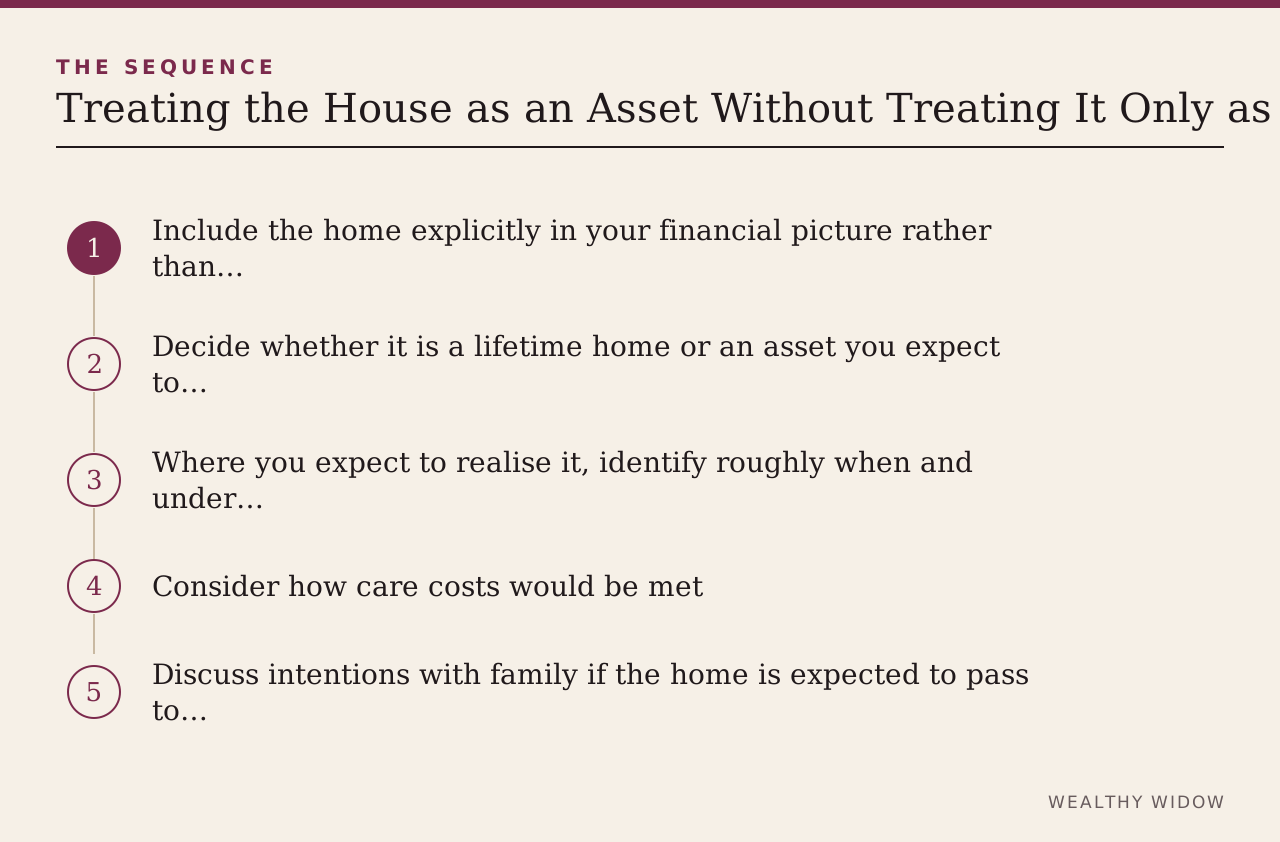
- Include the home explicitly in your financial picture rather than treating it separately.
- Decide whether it is a lifetime home or an asset you expect to realise, and write that down.
- Where you expect to realise it, identify roughly when and under what circumstances.
- Consider how care costs would be met, and whether the home is part of that answer.
- Discuss intentions with family if the home is expected to pass to them.
What to refuse, and why
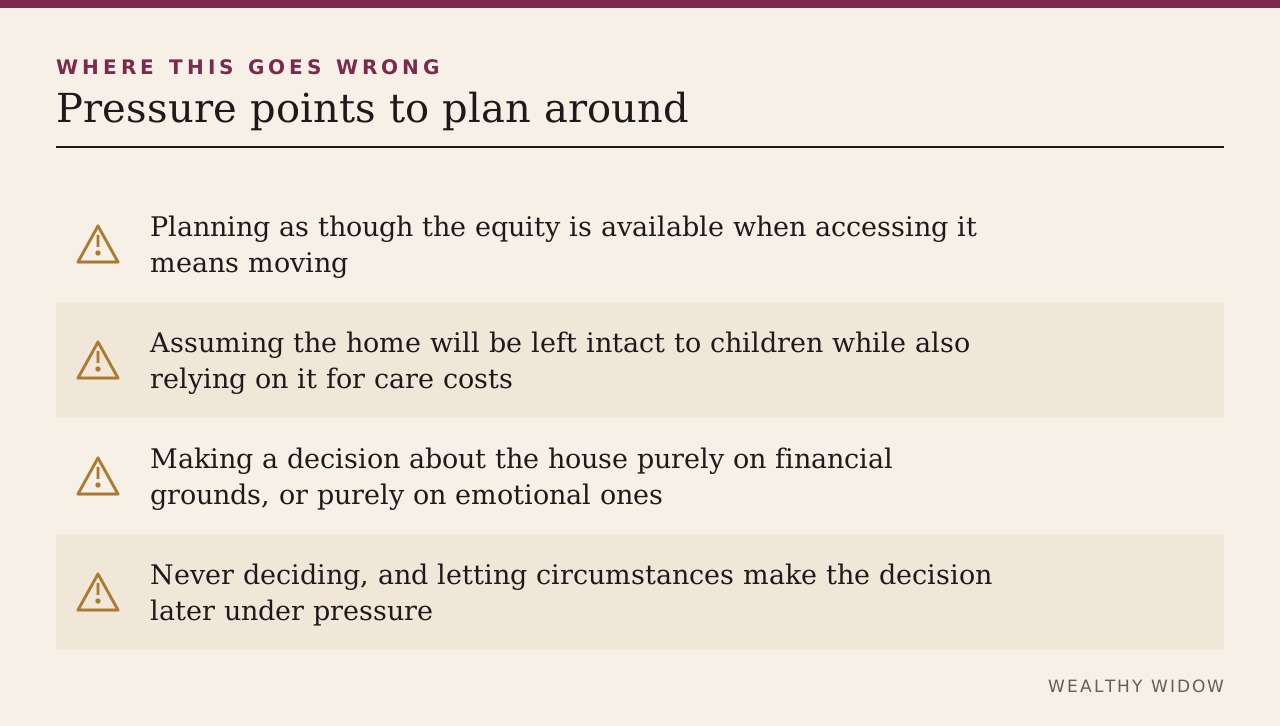
The failure modes below are predictable rather than unlucky, which is precisely what makes them avoidable. Planning as though the equity is available when accessing it means moving.
Assuming the home will be left intact to children while also relying on it for care costs. Making a decision about the house purely on financial grounds, or purely on emotional ones. Never deciding, and letting circumstances make the decision later under pressure.
Gather these before the first call
Every organisation involved will want some combination of the following, and several will want it more than once.
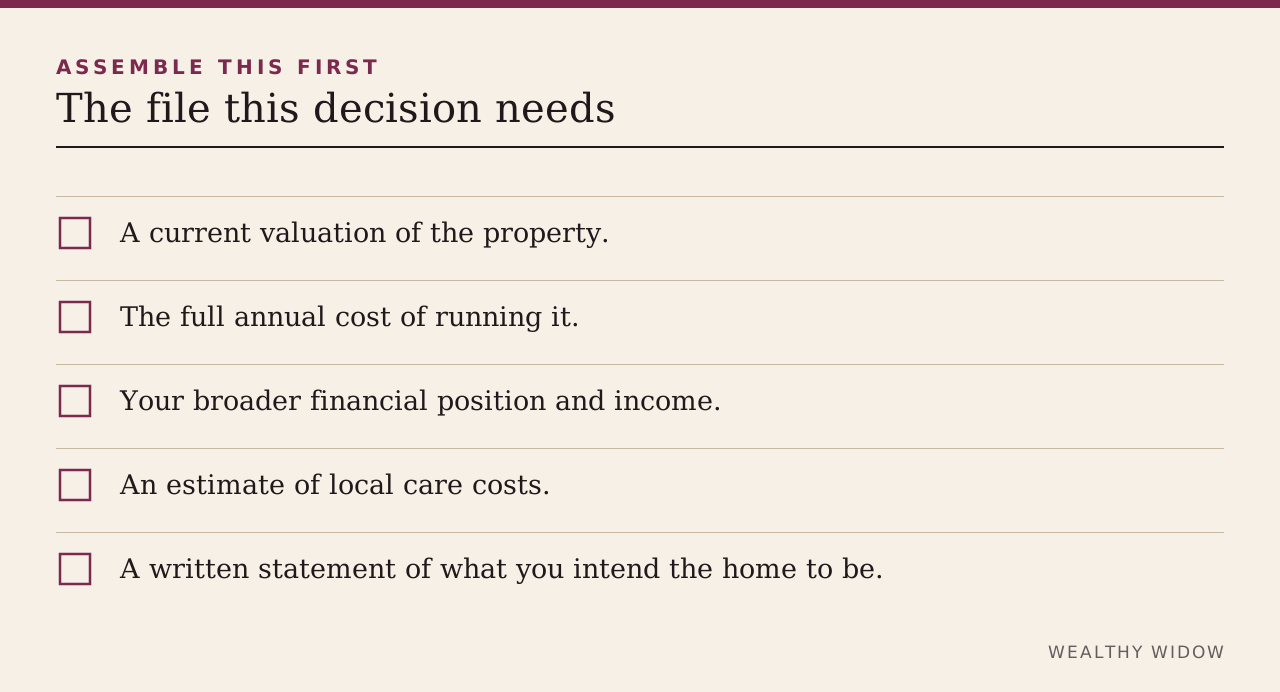
- A current valuation of the property.
- The full annual cost of running it.
- Your broader financial position and income.
- An estimate of local care costs.
- A written statement of what you intend the home to be.
Written confirmation to insist on
Before you act on what you have been told, hold written confirmation of each point.
- Whether the home is a lifetime home or an asset to be realised.
- How care costs would be met if needed.
- What your family currently assumes about the property.
- The realistic cost of accessing equity without moving.
Take these questions to your adviser
Ask these before an engagement letter is signed, while you still have every option open to you.
- How does the house fit into my overall financial position?
- If care were needed, where would the money come from?
- What is the realistic cost of accessing equity without moving?
- What should I tell my family about my intentions here?
Sources worth reading yourself
Where this guide and a source disagree, the source is right.
- U.S. Securities and Exchange Commission — Investor.gov
- U.S. Department of Housing and Urban Development — Find a housing counselor
- Internal Revenue Service — Publication 523, selling your home
- Administration for Community Living — Long-term care planning
The boundary of this guide
Be clear about the boundary; the wrong assumption here is expensive. It cannot make the decision, which is properly a housing decision informed by financial facts rather than the other way round.
Where this leaves you
Decide explicitly what the house is for, and write it down. Households that never make that decision usually have it made for them, later, under conditions they would not have chosen.
Read When the House Is Owned by a Trust next; the two decisions interact.
Primary sources
- U.S. Securities and Exchange Commission — Investor.gov
- U.S. Department of Housing and Urban Development — Find a housing counselor
- Internal Revenue Service — Publication 523, selling your home
- Administration for Community Living — Long-term care planning
This article provides general education, not individualized legal, tax, investment, insurance, or benefits advice. Rules and deadlines change; verify the current requirement with the agency and a qualified professional.