Taxes
The First Return You Prepare Without Them
Where one spouse always handled the return, the first solo filing combines unfamiliar mechanics with an unfamiliar tax position.

Some decisions after a death are reversible. This one deserves more care than most. Where one spouse always handled the return, the first solo filing combines unfamiliar mechanics with an unfamiliar tax position.
Two separate difficulties arrive together: not knowing how the process works, and facing a genuinely different tax position. Separating them makes both manageable.
The mechanics are learnable and the position has changed, and confusing the two makes the whole thing feel harder than it is.
The substance beneath the process
Hold on to a small number of accurate points. Prior year returns are the best available checklist of income sources and deductions. The tax position after a death differs from the household’s previous one, sometimes substantially. Free preparation assistance exists for those who qualify.
Withholding set for a two-income household is frequently wrong for a one-income one. A preparer who has handled decedent returns before is worth seeking out for the first year, because the split around the date of death is where errors concentrate.
The order that protects you
This is the order that avoids closing doors you may still need.
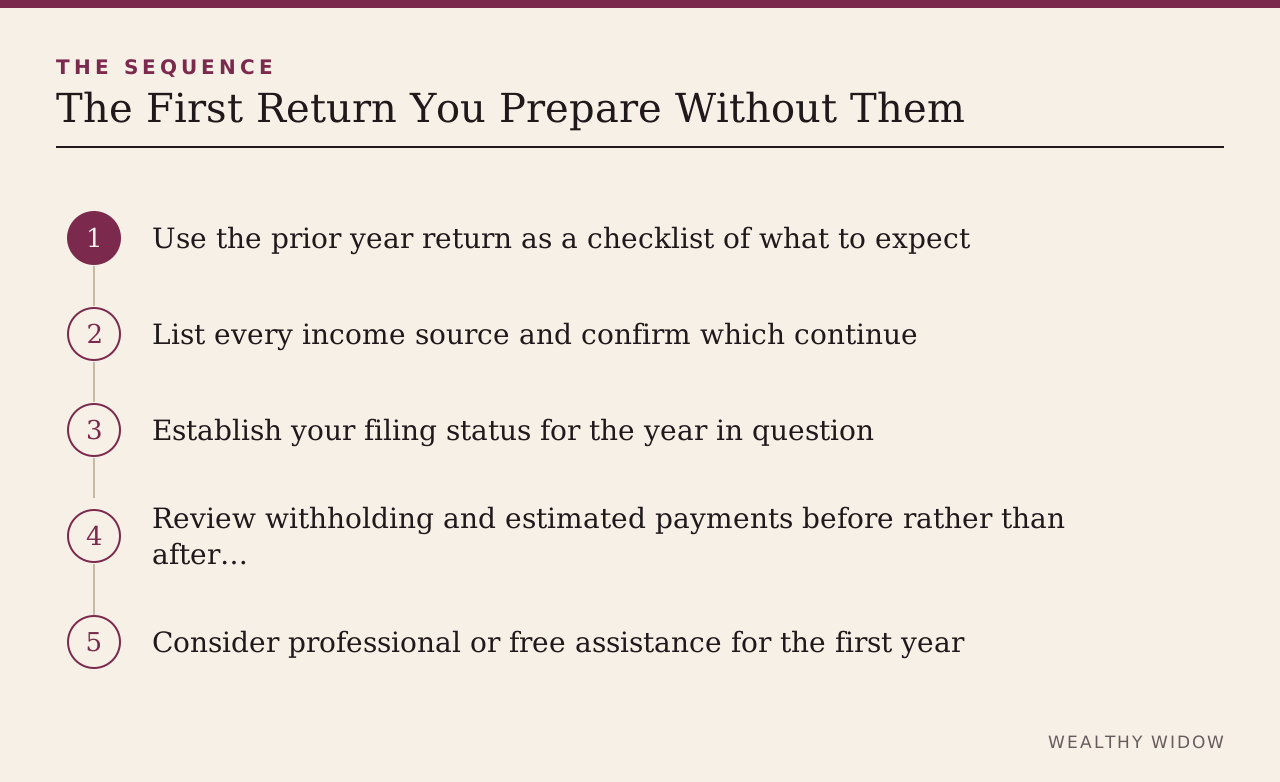
- Use the prior year return as a checklist of what to expect.
- List every income source and confirm which continue.
- Establish your filing status for the year in question.
- Review withholding and estimated payments before rather than after filing.
- Consider professional or free assistance for the first year, then reassess.
What tends to go wrong here
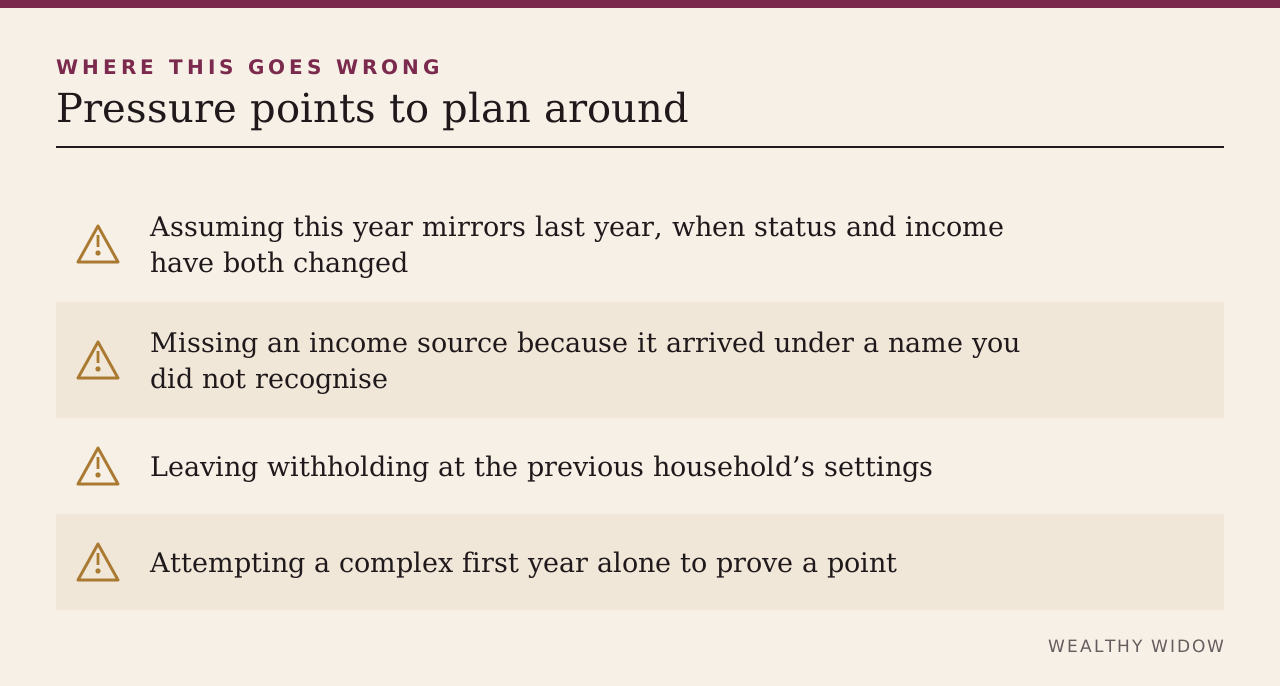
The errors here are well worn, which makes them avoidable. Assuming this year mirrors last year, when status and income have both changed.
Missing an income source because it arrived under a name you did not recognise. Leaving withholding at the previous household’s settings. Attempting a complex first year alone to prove a point.
What to have in front of you
Collect these once and keep them together, because you will be asked for them repeatedly over the coming months.
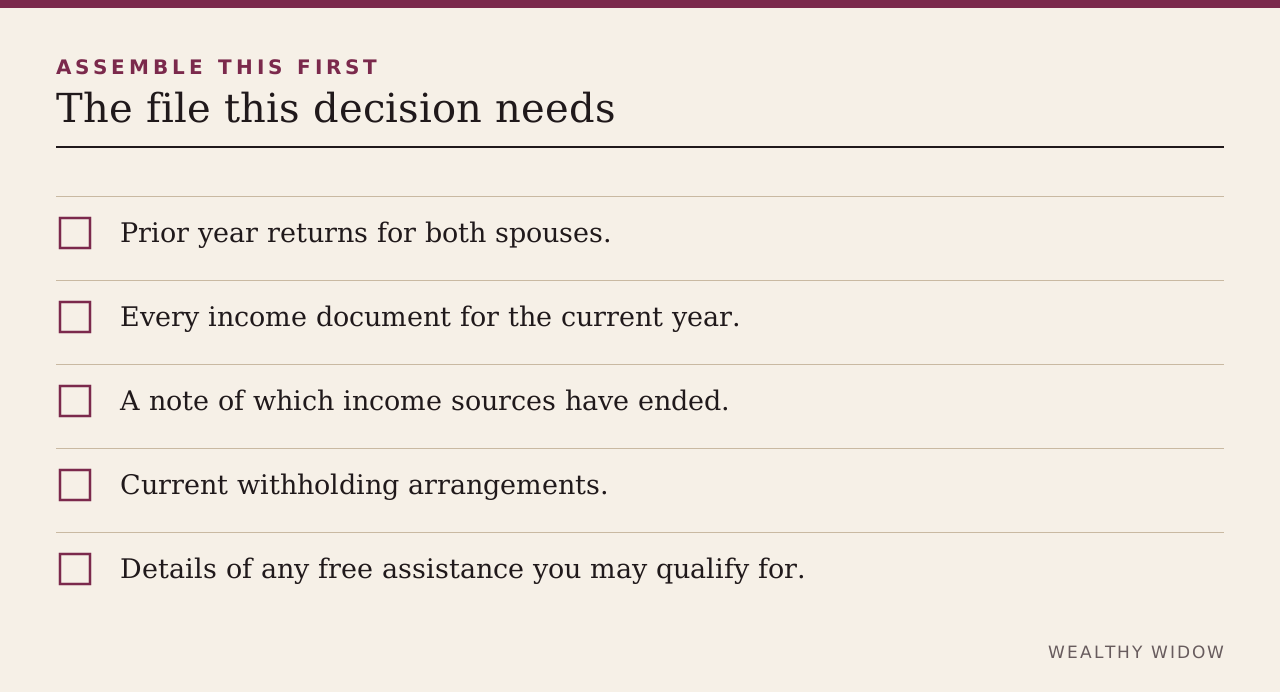
- Prior year returns for both spouses.
- Every income document for the current year.
- A note of which income sources have ended.
- Current withholding arrangements.
- Details of any free assistance you may qualify for.
The written record you should hold
Hold written confirmation of each of these points before you rely on any of them to make a decision.
- Your filing status for the year.
- That every income source has been identified.
- That withholding reflects your current position.
- Whether you qualify for assistance.
What a good adviser will answer plainly
Whoever advises you should be able to answer each of these plainly and in writing.
- What is different about my position this year compared with last?
- What income sources should I expect that I might not recognise?
- Should I be adjusting withholding for next year?
- Do I qualify for free preparation assistance?
Where to verify this
Every load-bearing point above traces to one of the following. Where a figure or deadline matters to you, read it there.
- Internal Revenue Service — Topic no. 101, volunteer tax assistance and outreach
- Internal Revenue Service — Tax withholding estimator
- Taxpayer Advocate Service — An independent organization within the IRS
- Internal Revenue Service — About Publication 559, survivors, executors, and administrators
What a professional still has to decide
The limits of a guide matter as much as its content, because acting past them is where the cost sits. It cannot prepare a return, and for a first year that includes a change of status professional help is usually worth its cost.
What good looks like here
Use last year’s return as the checklist, establish this year’s status separately, and get help for the first one. The mechanics become routine quickly; the changed position is the part worth advice.
Our related guide When the Number Does Not Look Right covers the adjacent problem.
Primary sources
- Internal Revenue Service — Topic no. 101, volunteer tax assistance and outreach
- Internal Revenue Service — Tax withholding estimator
- Taxpayer Advocate Service — An independent organization within the IRS
- Internal Revenue Service — About Publication 559, survivors, executors, and administrators
This article provides general education, not individualized legal, tax, investment, insurance, or benefits advice. Rules and deadlines change; verify the current requirement with the agency and a qualified professional.