Taxes
The Estate Needs Its Own Number Before It Can Do Anything
An estate is a separate entity and needs its own tax identification number to open an account or file a return.

The pressure to resolve this quickly usually comes from outside you. An estate is a separate entity and needs its own tax identification number to open an account or file a return.
This is an early administrative step that blocks several later ones. It is quick to do and frequently delayed because nobody identifies it as the prerequisite it is.
Almost nothing in estate administration can proceed properly until the estate has a number of its own.
The shape of this decision
These are the load-bearing facts. An estate is a separate taxpayer and generally requires its own identification number. Banks require it before opening an estate account. It is needed to file the estate’s own income tax return.
It is distinct from the Social Security number of the person who died, which should not be used for income arising after the date of death. It is obtained by application, typically by the personal representative.
Order of play
Sequence matters, because some steps close options that later steps need.
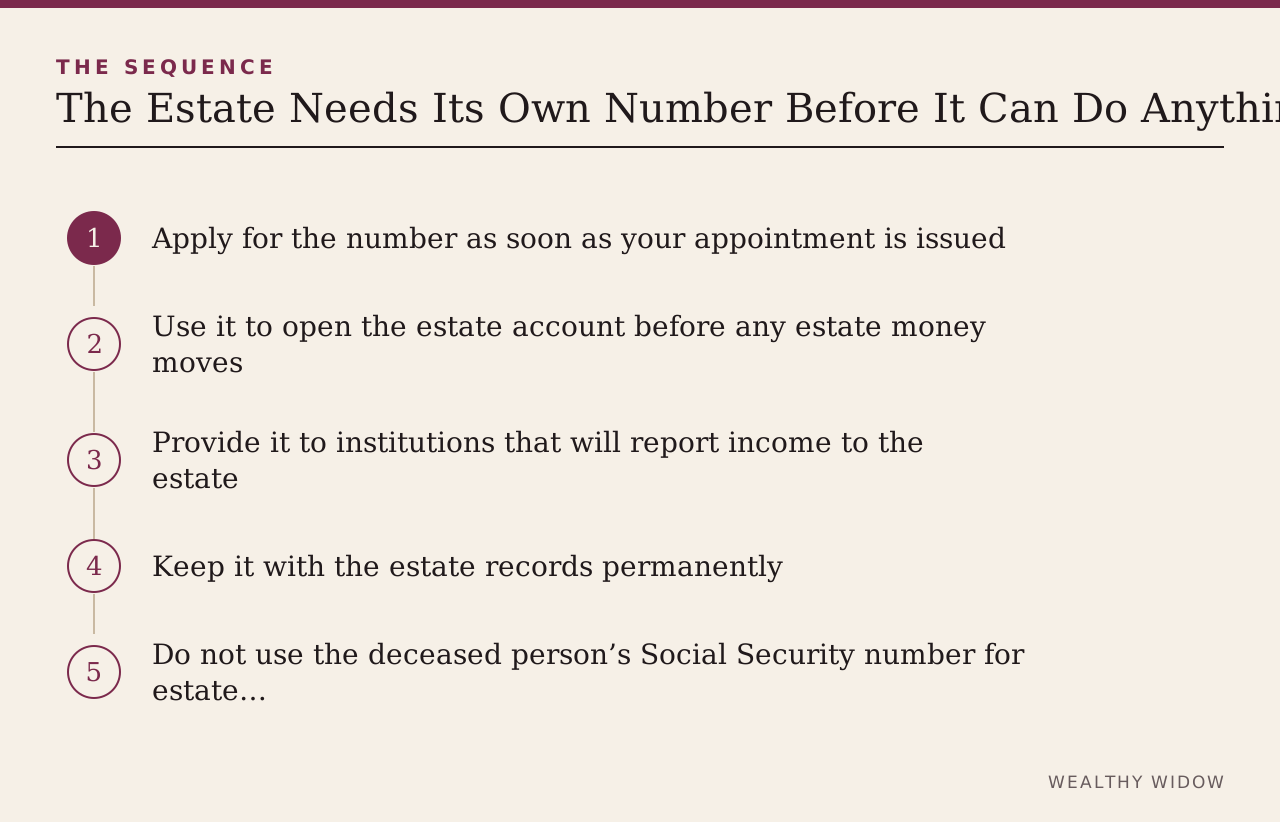
- Apply for the number as soon as your appointment is issued.
- Use it to open the estate account before any estate money moves.
- Provide it to institutions that will report income to the estate.
- Keep it with the estate records permanently.
- Do not use the deceased person’s Social Security number for estate income.
The errors worth naming in advance
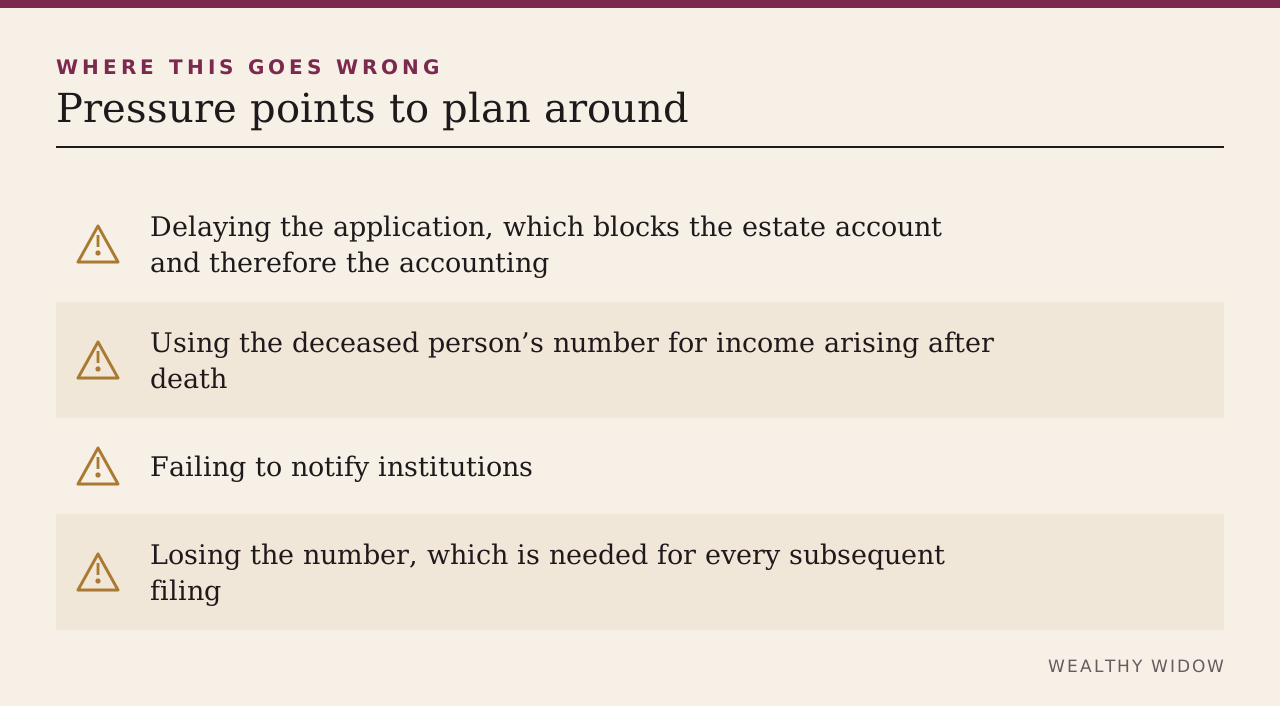
What follows is where readers most reliably lose ground. Delaying the application, which blocks the estate account and therefore the accounting.
Using the deceased person’s number for income arising after death. Failing to notify institutions, so income is reported under the wrong number. Losing the number, which is needed for every subsequent filing.
The paperwork this actually requires
The file below does most of the work of establishing who you are.
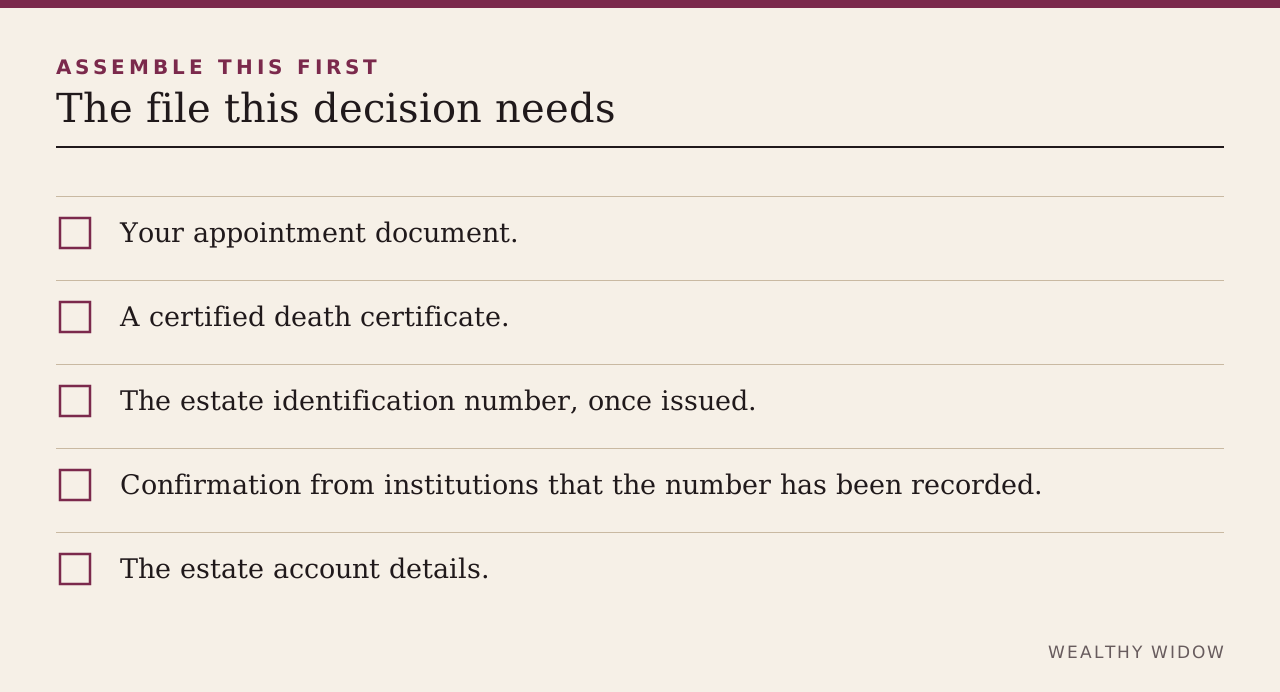
- Your appointment document.
- A certified death certificate.
- The estate identification number, once issued.
- Confirmation from institutions that the number has been recorded.
- The estate account details.
The record to build as you go
A verbal answer is a starting point, not a record. Get each of these documented.
- That the number has been issued and recorded.
- That the estate account is open in the estate’s name.
- That institutions are reporting income under the correct number.
- That the number is stored with the permanent records.
Ask these before anyone is paid
Vagueness on any of these is itself an answer, and it is worth treating as one.
- What do you require to open an estate account?
- Under which number should income after the date of death be reported?
- How long does the number take to obtain?
- What filings will require this number?
Check it at source
These are the pages that change when the rules change, which is why they and not this guide are the authority.
- Internal Revenue Service — File an estate tax income tax return
- Internal Revenue Service — Information for executors
- Internal Revenue Service — About Publication 559, survivors, executors, and administrators
- Internal Revenue Service — File the final income tax returns of a deceased person
What still needs a professional
Be clear about what remains outside anything written for a general readership. It cannot make the application, and the process differs slightly depending on the capacity in which you are applying.
The working conclusion
Apply as soon as you are appointed. It is a short task that unblocks the estate account, the accounting, and every subsequent filing, and delaying it delays all three.
A companion guide, The First Return You Prepare Without Them, covers the decision that sits alongside this one.
Primary sources
- Internal Revenue Service — File an estate tax income tax return
- Internal Revenue Service — Information for executors
- Internal Revenue Service — About Publication 559, survivors, executors, and administrators
- Internal Revenue Service — File the final income tax returns of a deceased person
This article provides general education, not individualized legal, tax, investment, insurance, or benefits advice. Rules and deadlines change; verify the current requirement with the agency and a qualified professional.