Taxes
The Estate’s Own Return: A Second, Separate Filing
Income earned after the date of death belongs to the estate, which may have to file its own return, entirely separate from the final individual one.

The pressure to resolve this quickly usually comes from outside you. Income earned after the date of death belongs to the estate, which may have to file its own return, entirely separate from the final individual one.
An estate is a separate taxable entity for income it earns during administration. Where administration runs for months, that income can be significant and the filing obligation genuine.
Two filings, two taxpayers, two periods. Treating them as one return is the most common error in estate tax administration.
The shape of this decision
A short set of facts governs this, and they are worth holding on to when the surrounding pressure is not. An estate is a separate taxpayer for income arising after the date of death. A filing obligation generally arises where the estate’s gross income exceeds a stated threshold, or where a beneficiary is a non-resident alien. The estate needs its own tax identification number to file.
The estate may choose its own tax year, which is a decision rather than a default. Income distributed to beneficiaries may be taxed to them rather than to the estate, and is reported to them.
Order of play
This order is designed to keep your choices open for as long as possible.
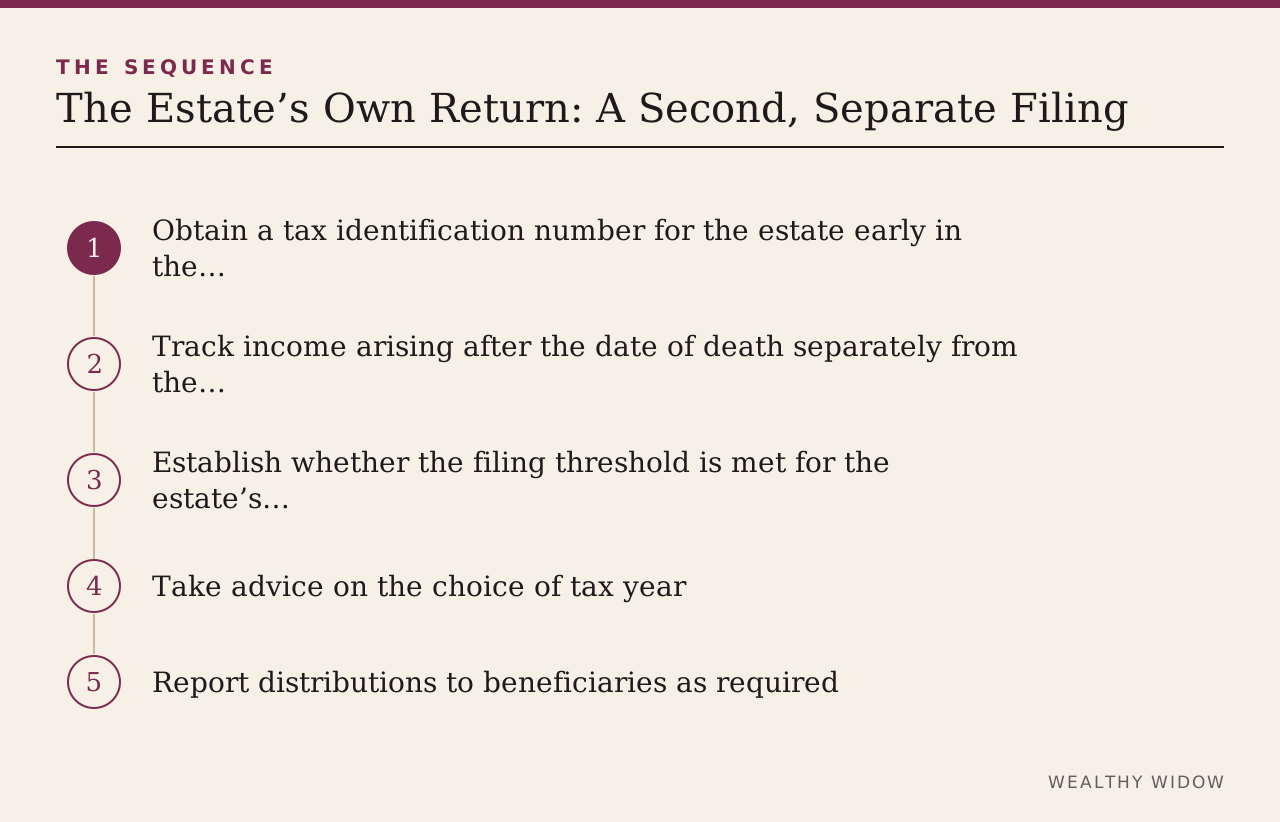
- Obtain a tax identification number for the estate early in the administration.
- Track income arising after the date of death separately from the individual’s income.
- Establish whether the filing threshold is met for the estate’s chosen year.
- Take advice on the choice of tax year, which can affect the timing of tax for beneficiaries.
- Report distributions to beneficiaries as required, so they can file correctly.
The errors worth naming in advance
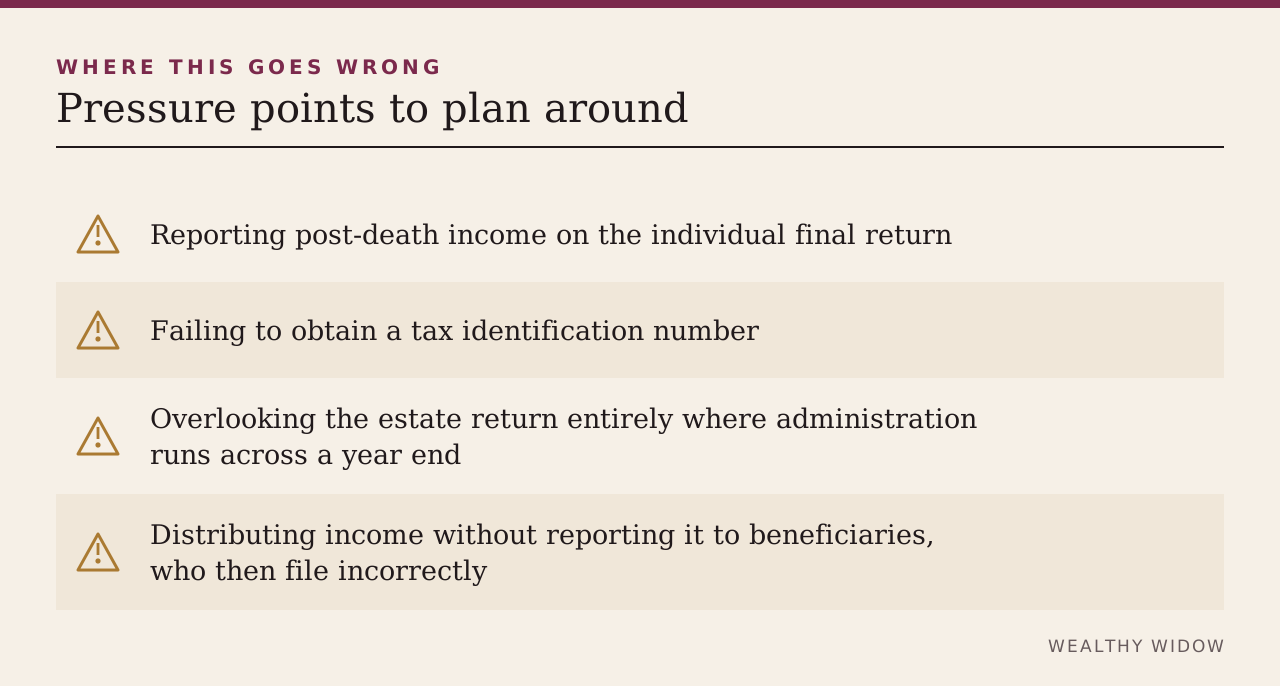
The problems below recur often enough to be planned for. Reporting post-death income on the individual final return.
Failing to obtain a tax identification number, which prevents both the account and the filing. Overlooking the estate return entirely where administration runs across a year end. Distributing income without reporting it to beneficiaries, who then file incorrectly.
What every organisation will ask for
Each item below will be requested more than once. Collect them in one place and log where each copy goes.
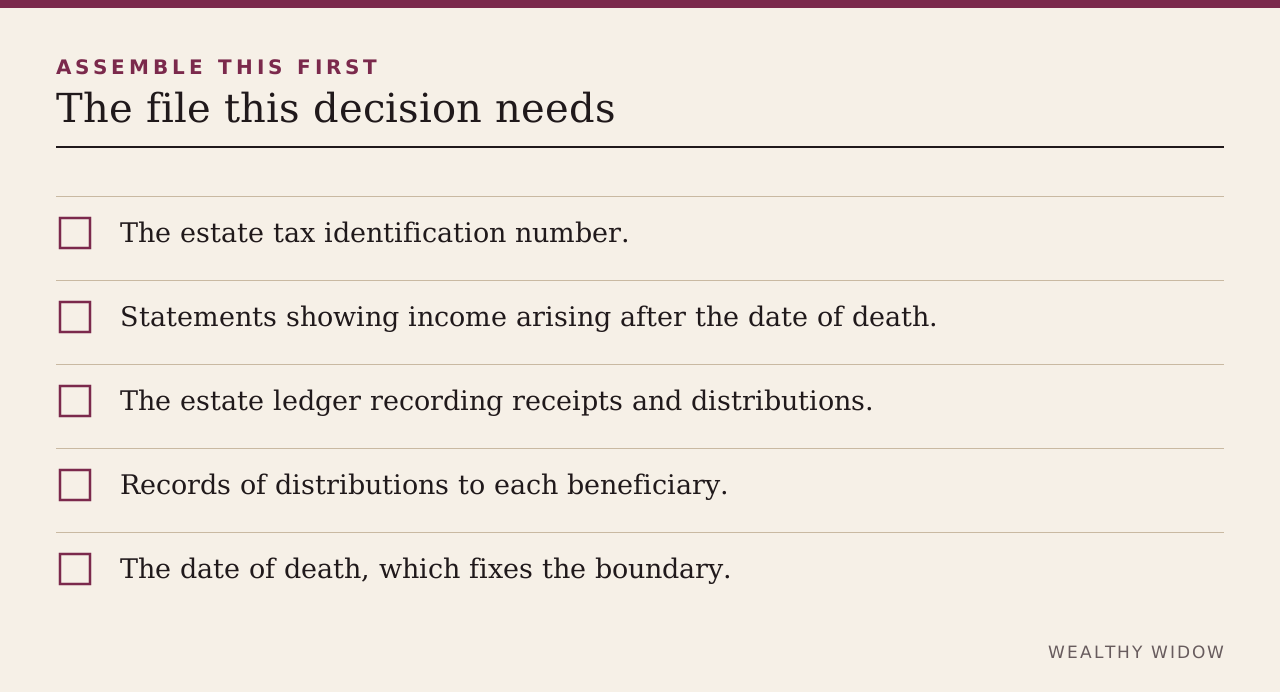
- The estate tax identification number.
- Statements showing income arising after the date of death.
- The estate ledger recording receipts and distributions.
- Records of distributions to each beneficiary.
- The date of death, which fixes the boundary.
Written confirmation to insist on
Before you act on what you have been told, hold written confirmation of each point.
- Whether the estate must file, and for which period.
- The estate’s chosen tax year.
- What must be reported to beneficiaries, and by when.
- Whether the state requires a separate estate filing.
Take these questions to your adviser
Ask these before an engagement letter is signed, while you still have every option open to you.
- Does this estate need to file, and for what period?
- What tax year should the estate adopt, and why?
- What must I report to beneficiaries, and when?
- How is income taxed if it is distributed rather than retained?
Check it at source
These are the pages that change when the rules change, which is why they and not this guide are the authority.
- Internal Revenue Service — File an estate tax income tax return
- Internal Revenue Service — About Publication 559, survivors, executors, and administrators
- Internal Revenue Service — Information for executors
- Internal Revenue Service — Deceased person
What still needs a professional
Be clear about what remains outside anything written for a general readership. It cannot state thresholds or advise on the choice of tax year, both of which need current professional guidance on the estate’s figures.
The working conclusion
Get the identification number early, track post-death income separately from day one, and take advice on the tax year. Reconstructing the split a year later is far harder than maintaining it.
A companion guide, Basis: The Number That Decides the Tax on a Later Sale, covers the decision that sits alongside this one.
Primary sources
- Internal Revenue Service — File an estate tax income tax return
- Internal Revenue Service — About Publication 559, survivors, executors, and administrators
- Internal Revenue Service — Information for executors
- Internal Revenue Service — Deceased person
This article provides general education, not individualized legal, tax, investment, insurance, or benefits advice. Rules and deadlines change; verify the current requirement with the agency and a qualified professional.