Money
The Strongest Financial Move in Year One Is Usually Restraint
Widowhood attracts financial urgency from every direction. In most cases the best first decision is a deliberate, documented decision to wait.

Institutions will describe this as routine. For you it is not routine, and the stakes are not symmetrical. Widowhood attracts financial urgency from every direction. In most cases the best first decision is a deliberate, documented decision to wait.
The financial services industry recognises a newly widowed client as a moment of unusual opportunity, and behaves accordingly. Understanding that dynamic is not cynicism; it is the context in which every pitch you receive should be read.
Almost nothing in a portfolio needs deciding this quarter, and almost everyone who tells you otherwise is paid when you decide.
The shape of this decision
Begin with what can be said with confidence, and treat everything beyond it as still to be established. Grief measurably affects decision making, and the effect is strongest in exactly the period when most pitches arrive. Very few investment decisions genuinely improve by being made in the first year rather than the second. Products sold under urgency, particularly those with surrender charges, are frequently difficult and expensive to unwind.
A decision to wait is itself a decision, and it is stronger when it is written down with a review date attached. Doing nothing does not mean ignoring deadlines; benefit elections and tax filings have real dates that restraint does not suspend.
Order of play
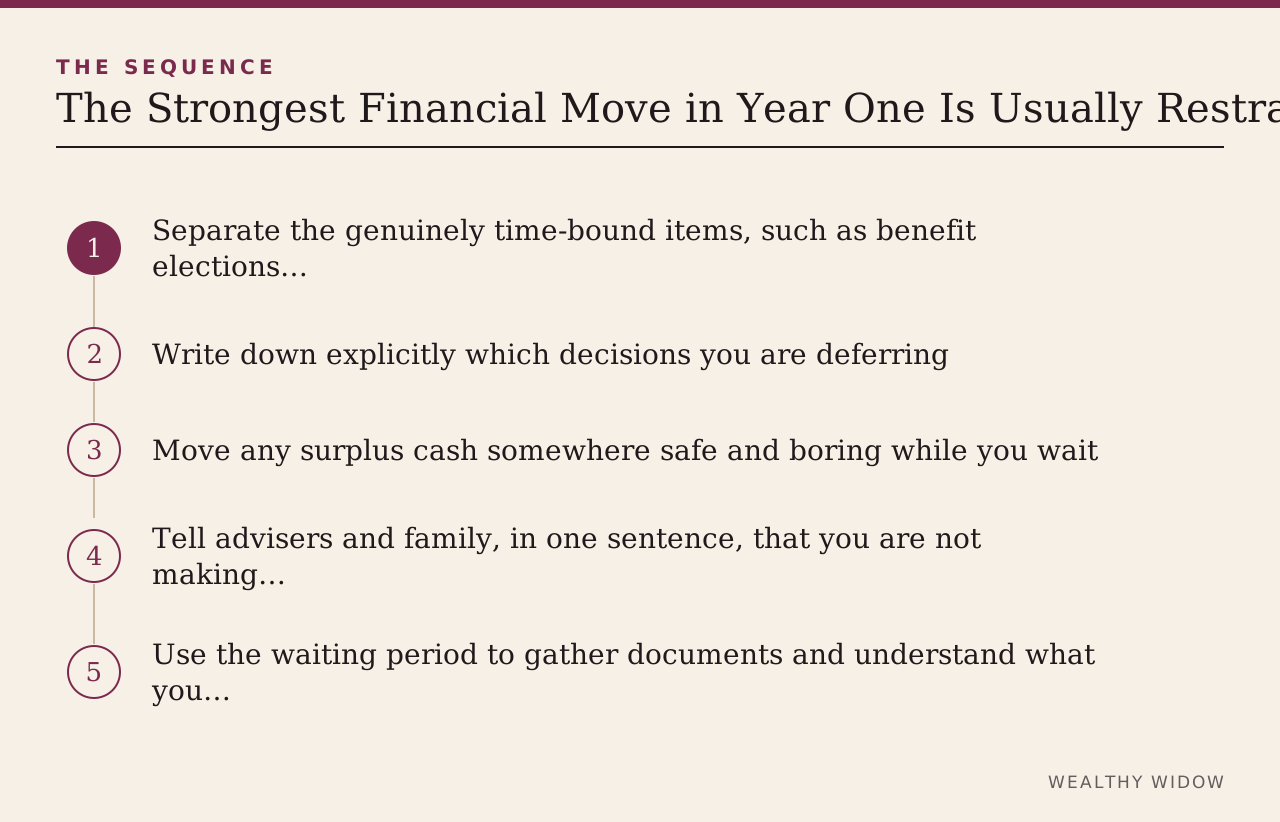
A workable order follows. Each step assumes the last one is done.
- Separate the genuinely time-bound items, such as benefit elections and tax filings, from everything else.
- Write down explicitly which decisions you are deferring, and set a date to revisit each one.
- Move any surplus cash somewhere safe and boring while you wait, rather than leaving the decision to urgency.
- Tell advisers and family, in one sentence, that you are not making structural changes before your review date.
- Use the waiting period to gather documents and understand what you actually hold.
The errors worth naming in advance
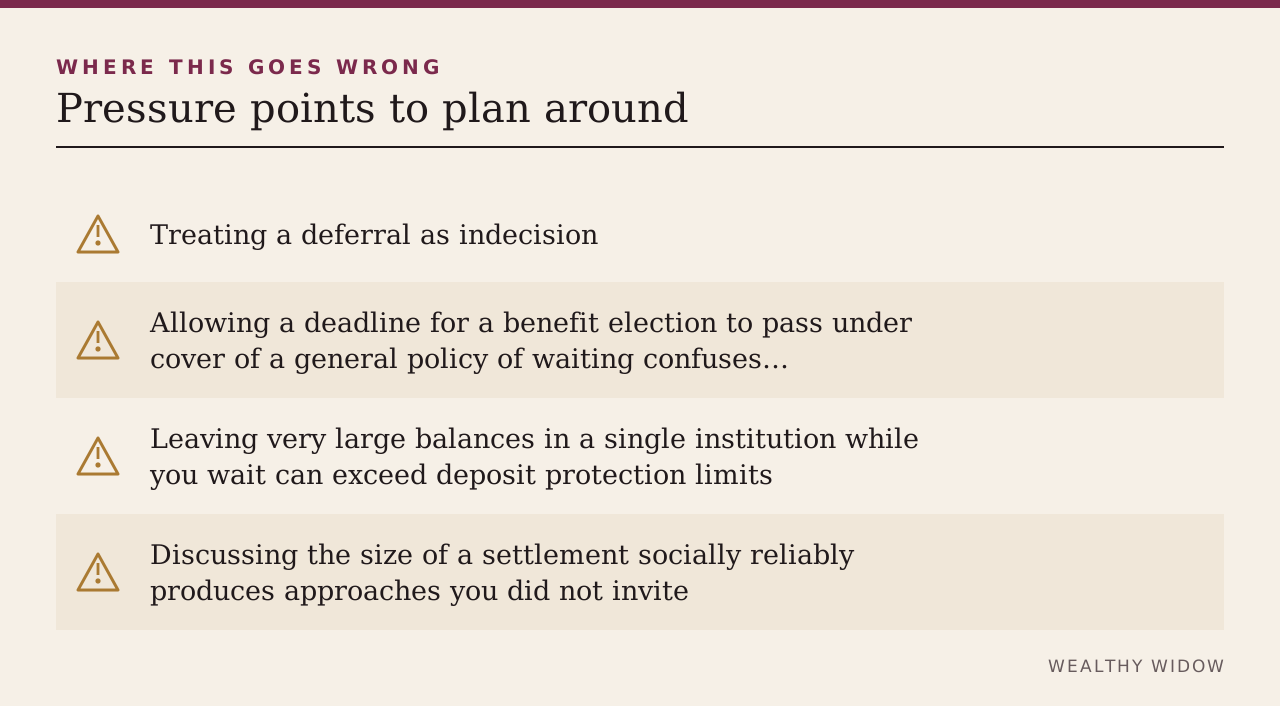
These are the places where readers most often lose ground. Treating a deferral as indecision, and then agreeing to something simply to feel resolved, undoes the entire benefit.
Allowing a deadline for a benefit election to pass under cover of a general policy of waiting confuses restraint with neglect. Leaving very large balances in a single institution while you wait can exceed deposit protection limits. Discussing the size of a settlement socially reliably produces approaches you did not invite.
Documents this decision needs
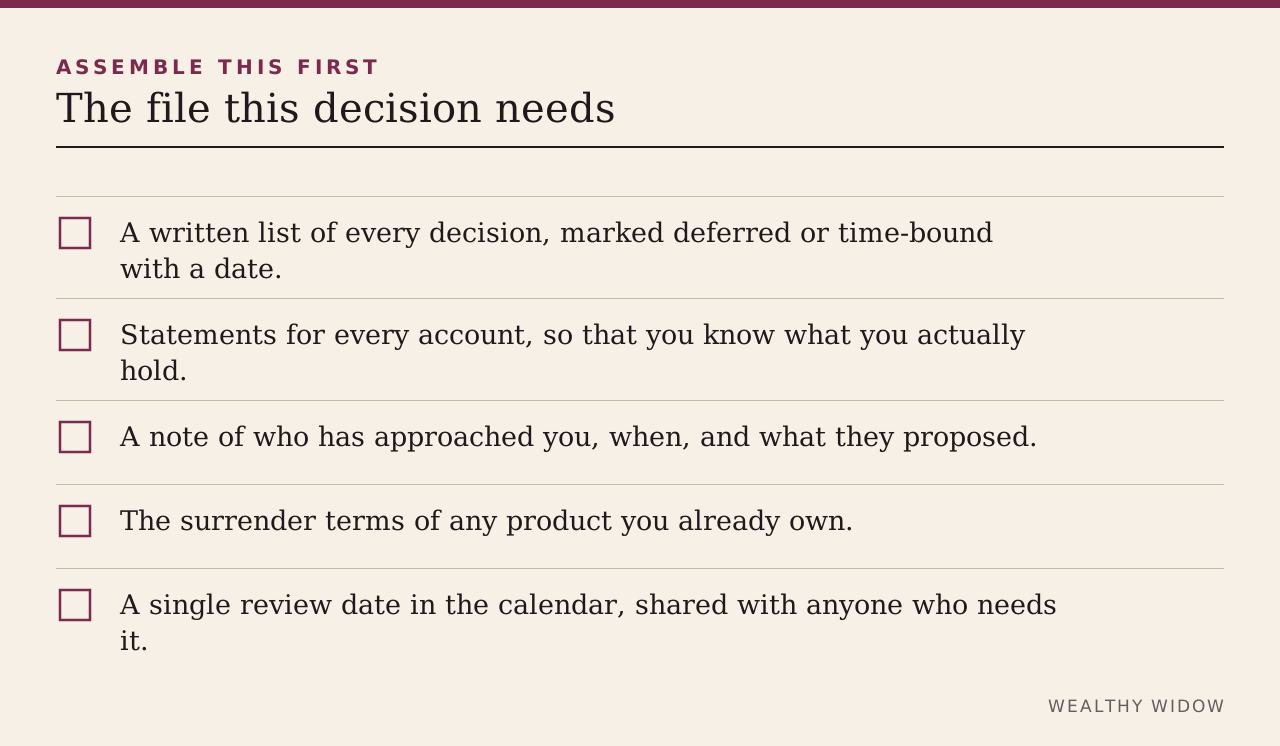
Organisations will ask for these repeatedly, so assemble them once and keep them together.
- A written list of every decision, marked deferred or time-bound with a date.
- Statements for every account, so that you know what you actually hold.
- A note of who has approached you, when, and what they proposed.
- The surrender terms of any product you already own.
- A single review date in the calendar, shared with anyone who needs it.
Get it on paper
Ask for each of the following in writing, by letter, secure message, or email you can save.
- Which decisions carry real deadlines, and what those dates are.
- Where cash is currently held, and whether it is within protection limits.
- The exit terms of anything you already own.
- Your stated review date, recorded in writing.
Questions for the person advising you
Put these directly, note the answers, and record who gave them and when.
- What is the cost of deciding this in twelve months rather than this month?
- What are the exit terms if I later change my mind about this product?
- Are you paid differently depending on which option I choose?
- What would you advise if I told you I intend to make no changes this year?
Where to verify this
Every load-bearing point above traces to one of the following. Where a figure or deadline matters to you, read it there.
- U.S. Securities and Exchange Commission — Investor.gov
- U.S. Securities and Exchange Commission — Ask and check
- Consumer Financial Protection Bureau — Help for surviving spouses
- U.S. Securities and Exchange Commission — Understanding fees
What a professional still has to decide
The limits of a guide matter as much as its content, because acting past them is where the cost sits. It cannot tell you which specific investments to hold. It can tell you that the question is rarely urgent, and that urgency is usually manufactured elsewhere.
What good looks like here
Restraint is an active strategy, not an absence of one. Written down, with deadlines separated out and a review date fixed, it protects you from precisely the decisions that are hardest to reverse.
A companion guide, How Your Adviser Is Paid Determines What You Will Be Advised, covers the decision that sits alongside this one.
Primary sources
- U.S. Securities and Exchange Commission — Investor.gov
- U.S. Securities and Exchange Commission — Ask and check
- Consumer Financial Protection Bureau — Help for surviving spouses
- U.S. Securities and Exchange Commission — Understanding fees
This article provides general education, not individualized legal, tax, investment, insurance, or benefits advice. Rules and deadlines change; verify the current requirement with the agency and a qualified professional.