Money
The Annual Review That Replaces Constant Worry
A fixed yearly review of everything is less work than continuous low-level anxiety and produces better decisions.

The difficulty here is rarely the paperwork. It is knowing what is actually being asked. A fixed yearly review of everything is less work than continuous low-level anxiety and produces better decisions.
In the absence of a routine, financial matters are either ignored or worried about continuously. A fixed annual review, with a checklist, replaces both.
A scheduled review turns finance from something you worry about into something you do on a particular afternoon.
What you are really being asked
The facts that govern this are narrower than the anxiety around it. Beneficiary designations drift out of date and are the most commonly missed item. Investment costs change, and so does what you receive for them. Deposit protection limits can be breached by ordinary balance growth.
Insurance sums insured become inadequate as rebuilding costs rise. Estate documents go stale after moves, deaths, marriages, and changes in law, and nothing prompts you when they do.
The sequence that keeps options open
Follow it in order, and leave anything requiring a signature until the end rather than the beginning.
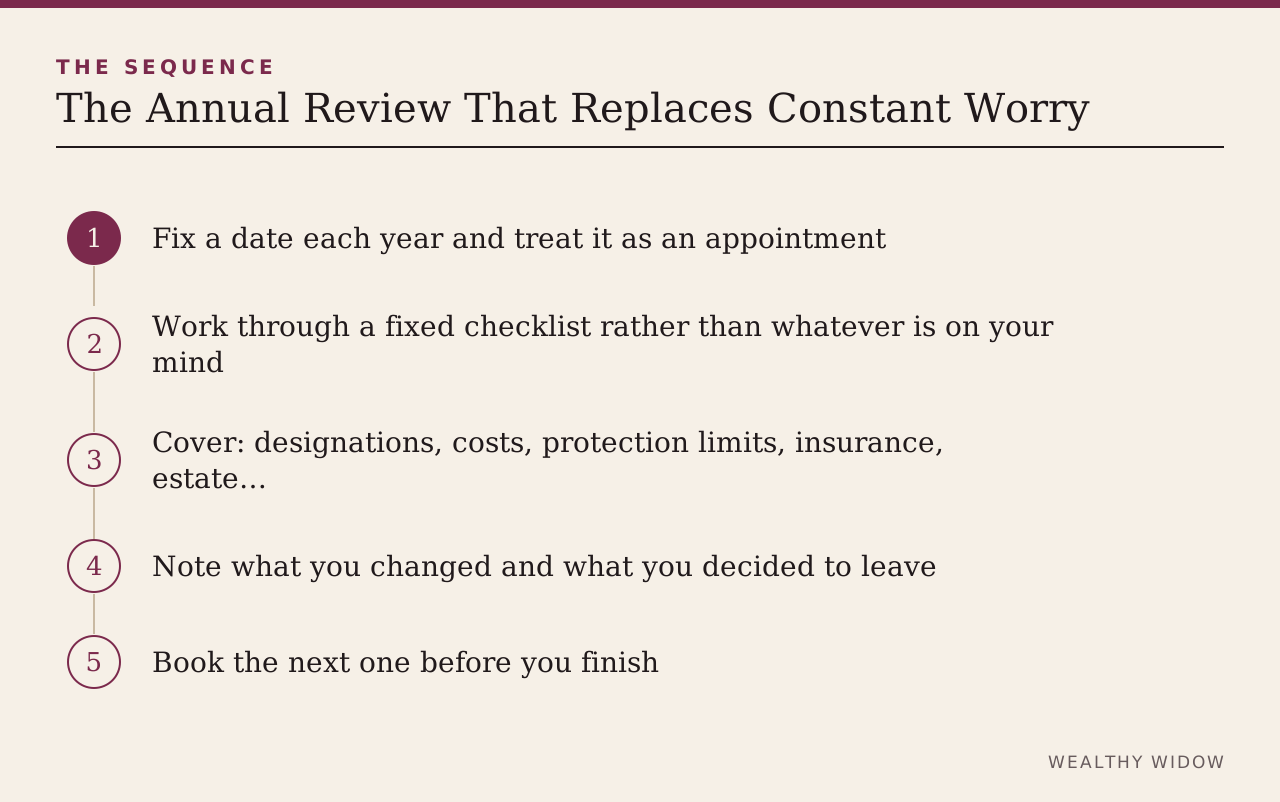
- Fix a date each year and treat it as an appointment.
- Work through a fixed checklist rather than whatever is on your mind.
- Cover: designations, costs, protection limits, insurance, estate documents, and income projection.
- Note what you changed and what you decided to leave.
- Book the next one before you finish.
The failure modes to plan around
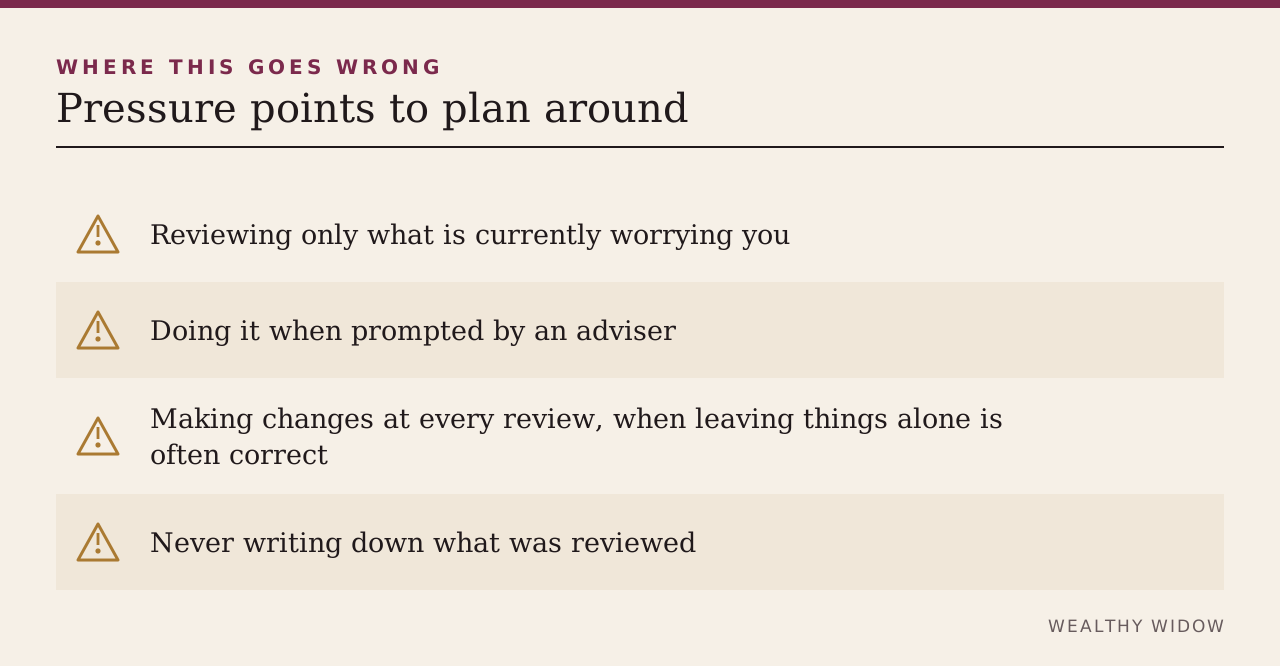
Each of the following is a signal to pause and confirm rather than to proceed on the assumption that it is fine. Reviewing only what is currently worrying you, and missing the rest.
Doing it when prompted by an adviser, which sets the agenda to theirs. Making changes at every review, when leaving things alone is often correct. Never writing down what was reviewed, so nothing is comparable year to year.
The documents to assemble first
The evidence below does most of the work of establishing who you are and what you may do.
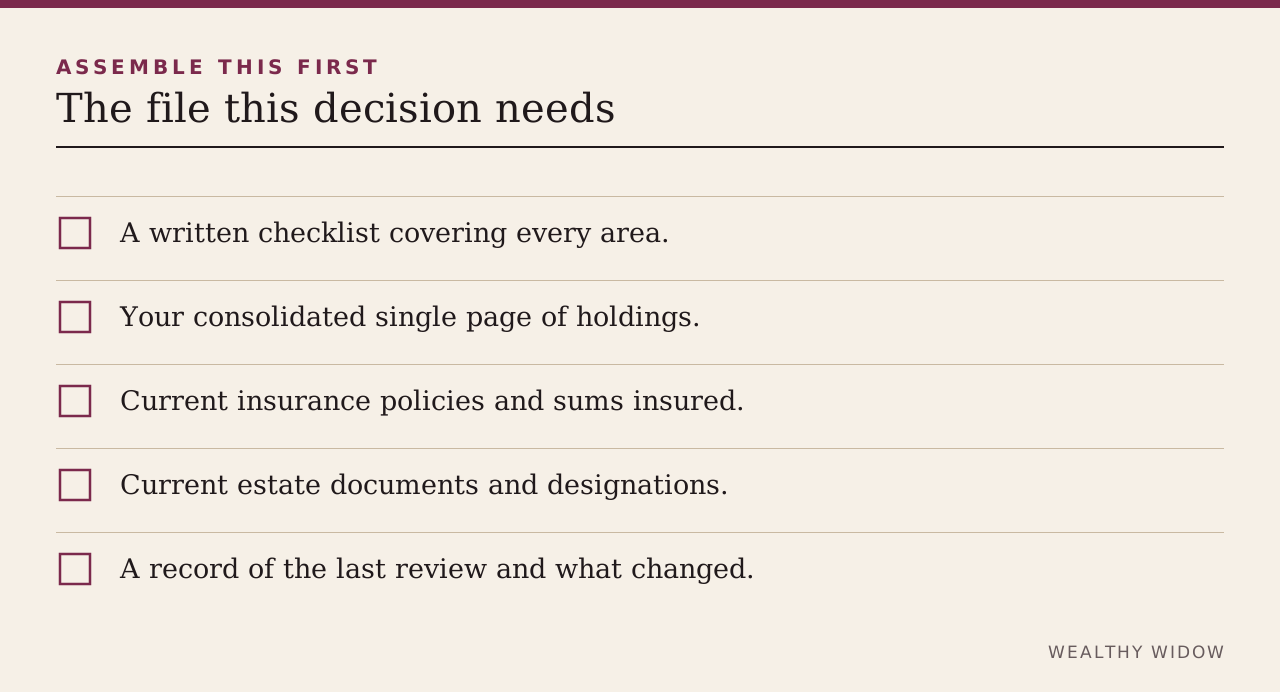
- A written checklist covering every area.
- Your consolidated single page of holdings.
- Current insurance policies and sums insured.
- Current estate documents and designations.
- A record of the last review and what changed.
What to have documented
Put each of these in the file with a date against it.
- That every designation is current.
- That costs are known in dollars.
- That protection limits are not breached.
- That estate documents remain effective.
What to ask before you sign
Ask these before an engagement letter is signed or a product is recommended.
- What has changed in my circumstances since last year?
- What should I be reviewing that is not on my list?
- What would you leave alone this year?
- What is the one thing most likely to be out of date?
The sources behind this
Anything that will drive a decision should be checked here rather than here-abouts.
- U.S. Securities and Exchange Commission — Investor.gov
- U.S. Securities and Exchange Commission — Understanding fees
- Internal Revenue Service — Retirement topics, beneficiary
- Federal Deposit Insurance Corporation — Deposit insurance
Where this guide stops
The boundary matters, because the wrong assumption here is expensive. It cannot conduct the review, and one with a professional is worth having periodically even where you do most of it yourself.
In practice
Fix the date, use the same checklist every year, and write down what you deliberately left alone as well as what you changed. It converts an open-ended anxiety that runs all year into a closed task that occupies a single afternoon, and the year-on-year record is what makes each review faster than the last.
Read Cover That Was Bought for a Household of Two next; the two decisions interact.
Primary sources
- U.S. Securities and Exchange Commission — Investor.gov
- U.S. Securities and Exchange Commission — Understanding fees
- Internal Revenue Service — Retirement topics, beneficiary
- Federal Deposit Insurance Corporation — Deposit insurance
This article provides general education, not individualized legal, tax, investment, insurance, or benefits advice. Rules and deadlines change; verify the current requirement with the agency and a qualified professional.