Taxes
Retirement Withdrawals: The Bracket Effect of a Single Decision
A distribution taken to solve a cash need can push income into a higher band and raise the tax on other income at the same time.

Widowhood arrives with a queue of decisions that all look equally urgent. A distribution taken to solve a cash need can push income into a higher band and raise the tax on other income at the same time. They are not the same task, and treating them as one is how good decisions get made badly.
Retirement accounts are frequently the most accessible source of cash after a death, and taking from them is often right. Taking a large amount in a single year rarely is.
The cost of a withdrawal is not only the tax on the withdrawal; it is the effect on everything else taxed alongside it.
Start by naming the decision correctly
The facts that govern this are narrower than the anxiety around it. Distributions from most tax-deferred retirement accounts are generally taxable as income when received. A large distribution can move income into a higher band and increase the tax on other income. It can also increase the proportion of Social Security benefits that is taxable.
Withholding on a distribution is frequently insufficient to cover the eventual liability. Spreading a withdrawal across tax years can reduce the total tax on the same amount.
The order of operations
Follow it in order, and leave anything requiring a signature until the end rather than the beginning.
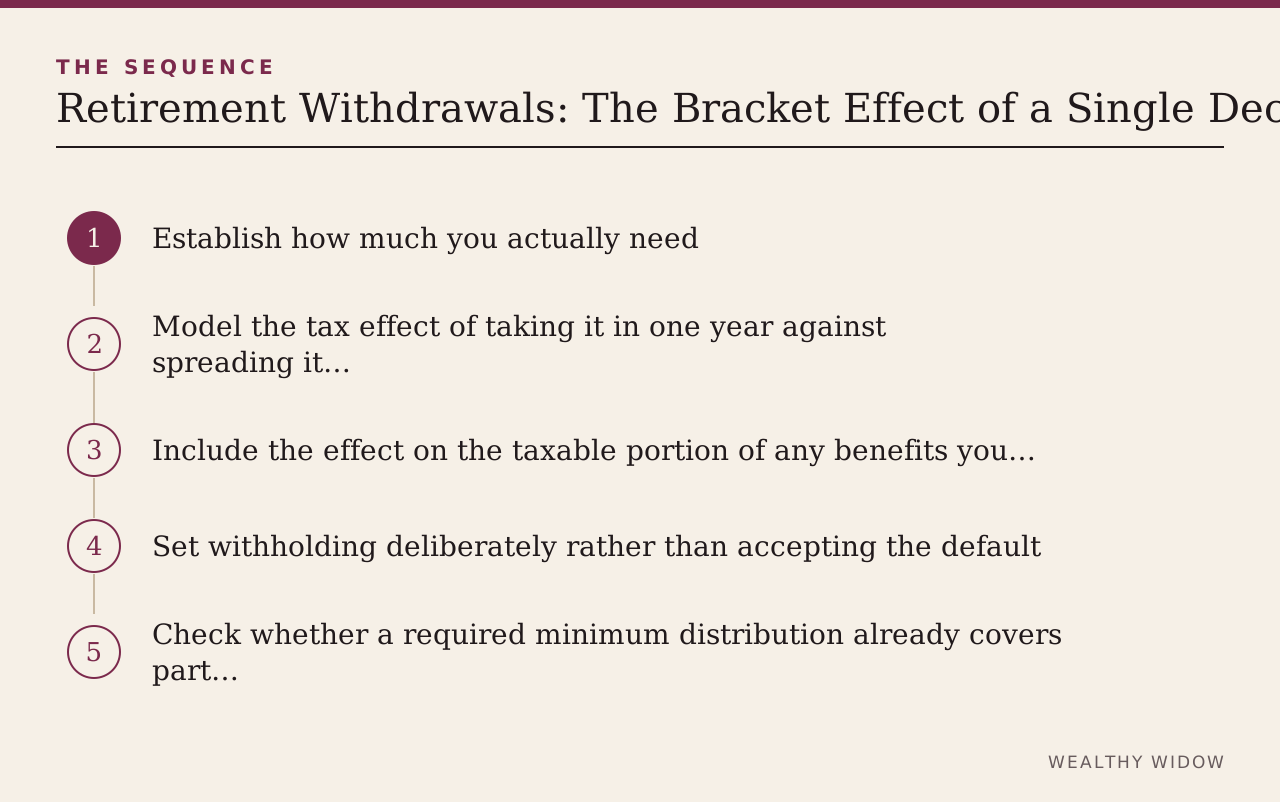
- Establish how much you actually need, and over what period.
- Model the tax effect of taking it in one year against spreading it across two or more.
- Include the effect on the taxable portion of any benefits you receive.
- Set withholding deliberately rather than accepting the default.
- Check whether a required minimum distribution already covers part of the need.
Where readers most often get hurt
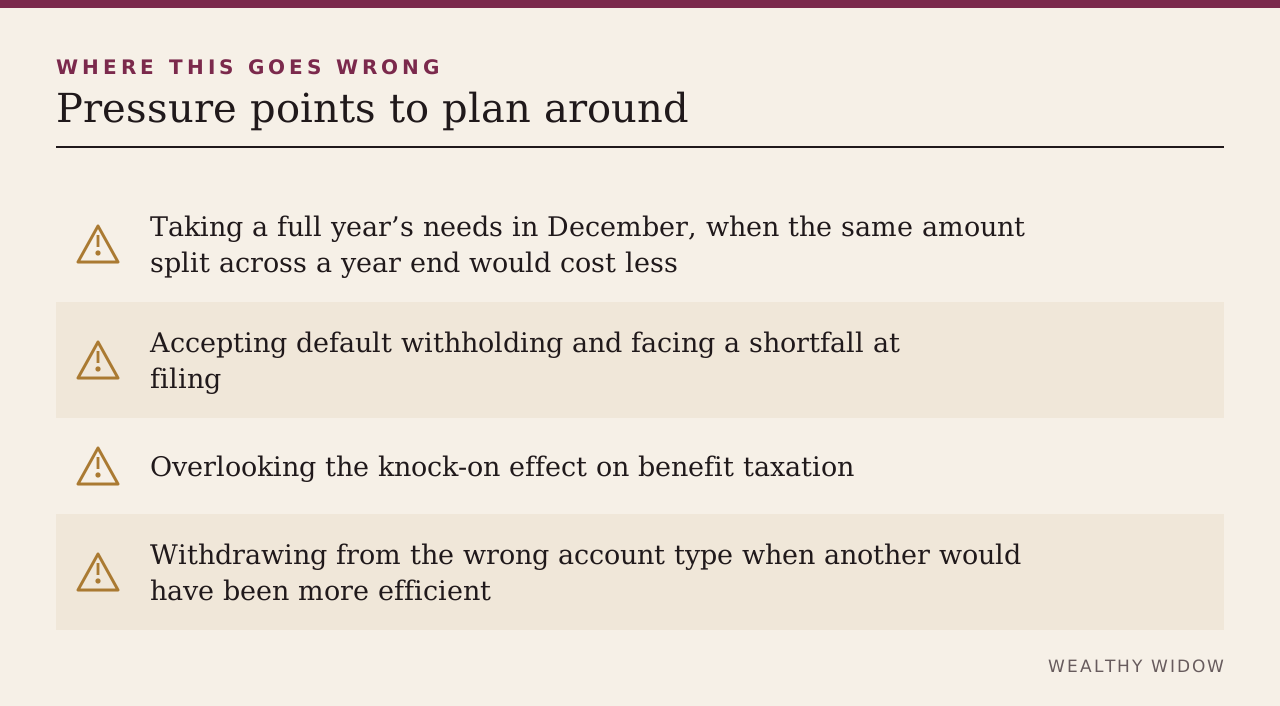
Each of the following is a signal to pause and confirm rather than to proceed on the assumption that it is fine. Taking a full year’s needs in December, when the same amount split across a year end would cost less.
Accepting default withholding and facing a shortfall at filing. Overlooking the knock-on effect on benefit taxation. Withdrawing from the wrong account type when another would have been more efficient.
The documents to assemble first
The evidence below does most of the work of establishing who you are and what you may do.
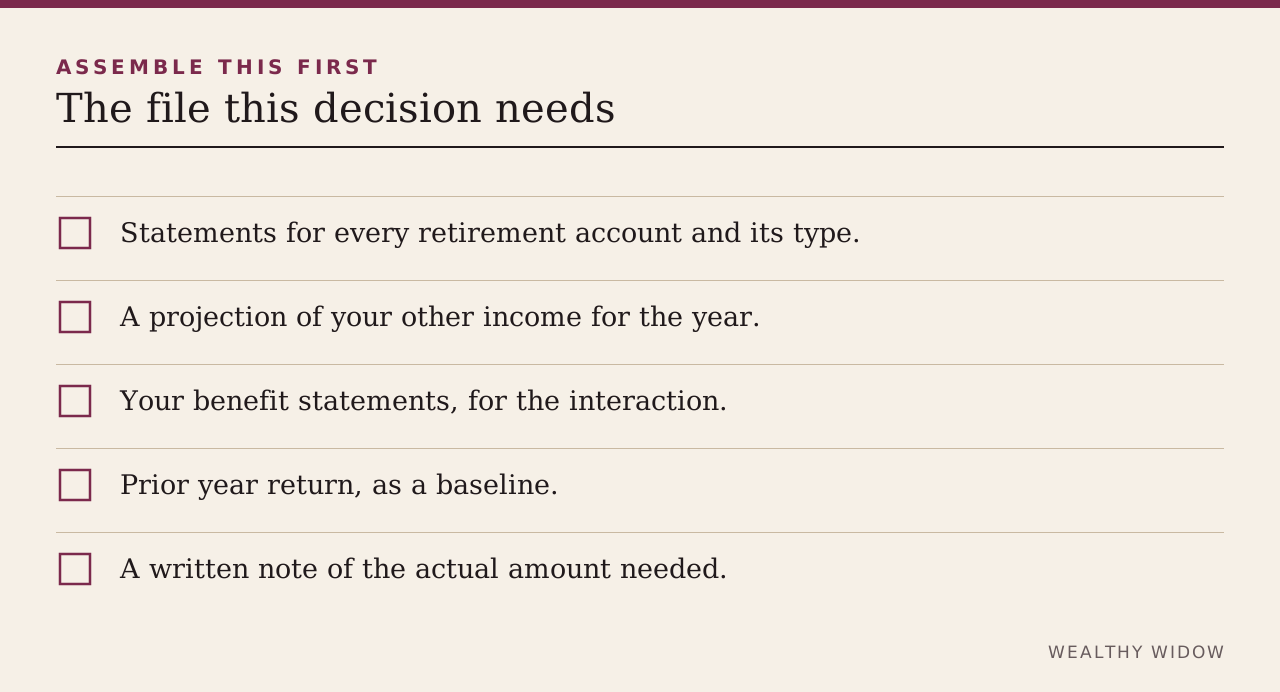
- Statements for every retirement account and its type.
- A projection of your other income for the year.
- Your benefit statements, for the interaction.
- Prior year return, as a baseline.
- A written note of the actual amount needed.
The record to build as you go
A verbal answer is a starting point, not a record. Get each of these documented.
- The marginal tax cost of the amount you intend to withdraw.
- The effect on the taxable portion of your benefits.
- The withholding that will be applied.
- Whether a required distribution already covers part of the need.
Ask these before anyone is paid
Vagueness on any of these is itself an answer, and it is worth treating as one.
- What is the total tax cost of taking this in one year rather than two?
- Which account should this come from, and why?
- What withholding should I request?
- Does this affect the tax on my benefits, and by how much?
Verify each point at source
Check anything that will drive a decision against the source itself, not against this summary of it.
- Internal Revenue Service — Publication 590-B, distributions from IRAs
- Internal Revenue Service — Retirement plan and IRA required minimum distributions FAQs
- Internal Revenue Service — Tax withholding estimator
- Internal Revenue Service — Estimated taxes
What this guide does not settle
What follows is the shape of the problem, not an answer to your version of it. It cannot model your position, which needs your full income picture and the current year’s rates.
Closing the loop
Establish the need, model the split across years, and set withholding deliberately. The same amount of money can cost noticeably different tax depending only on when it is taken.
If this raised a further question, Required Distributions in the Year of a Death takes it further.
Primary sources
- Internal Revenue Service — Publication 590-B, distributions from IRAs
- Internal Revenue Service — Retirement plan and IRA required minimum distributions FAQs
- Internal Revenue Service — Tax withholding estimator
- Internal Revenue Service — Estimated taxes
This article provides general education, not individualized legal, tax, investment, insurance, or benefits advice. Rules and deadlines change; verify the current requirement with the agency and a qualified professional.