Taxes
Fraudulent Returns Filed in the Name of Someone Who Has Died
Filing a fraudulent return using the details of a person who has died is an established pattern, and it is usually discovered when a real return is rejected.

The difficulty here is rarely the paperwork. It is knowing what is actually being asked. Filing a fraudulent return using the details of a person who has died is an established pattern, and it is usually discovered when a real return is rejected.
Tax-related identity theft after a death is common enough to have its own guidance. Recognising the signs and knowing the reporting route shortens what is otherwise a lengthy process.
The first sign is usually a rejected filing, at which point the fraud has already happened and the process becomes recovery.
Separate the label from the decision
A handful of accurate points does most of the work here, and the rest is noise generated by other people’s urgency. A return filed fraudulently in the name of a person who has died may block a genuine filing. Rejection of an electronically filed return is a common first indication. There is a defined reporting and recovery process for tax-related identity theft.
The federal identity theft reporting site provides a recovery plan across agencies. Resolution can take a considerable period, which is a reason to report early rather than wait.
A working sequence for this decision
The order below keeps your options open for as long as possible.
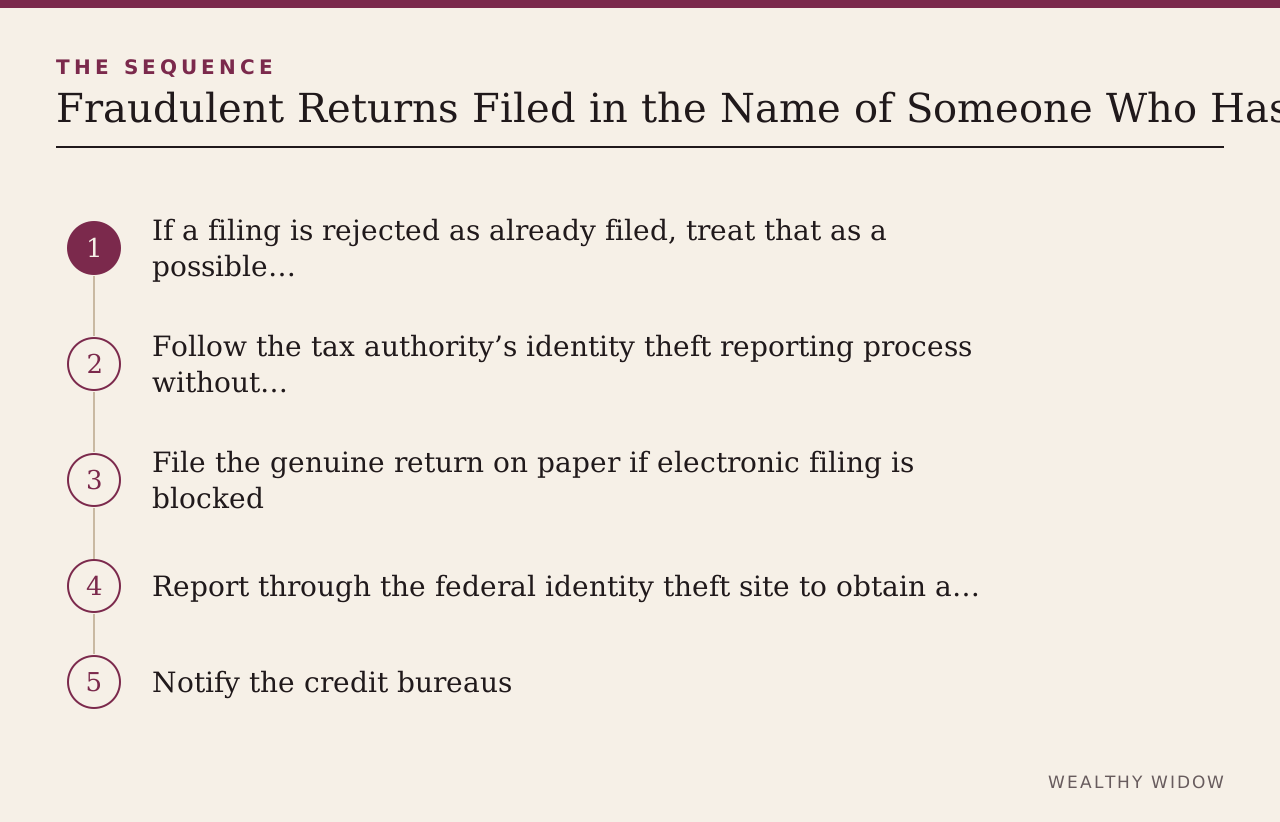
- If a filing is rejected as already filed, treat that as a possible fraud indicator immediately.
- Follow the tax authority’s identity theft reporting process without delay.
- File the genuine return on paper if electronic filing is blocked.
- Report through the federal identity theft site to obtain a cross-agency recovery plan.
- Notify the credit bureaus, since tax fraud rarely occurs in isolation.
The predictable errors
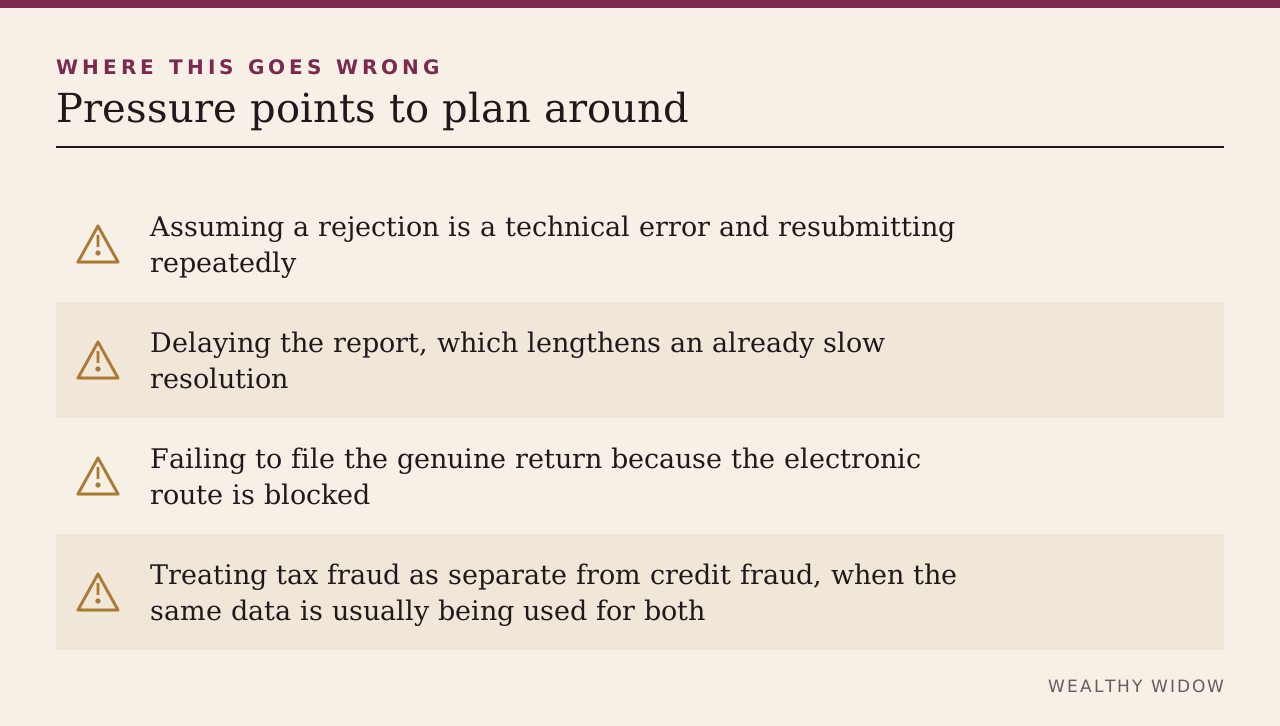
Treat each of the following as a reason to slow down. Assuming a rejection is a technical error and resubmitting repeatedly.
Delaying the report, which lengthens an already slow resolution. Failing to file the genuine return because the electronic route is blocked. Treating tax fraud as separate from credit fraud, when the same data is usually being used for both.
The file this decision needs
Keep these together in one place, and note where every copy goes and on what date it was sent.
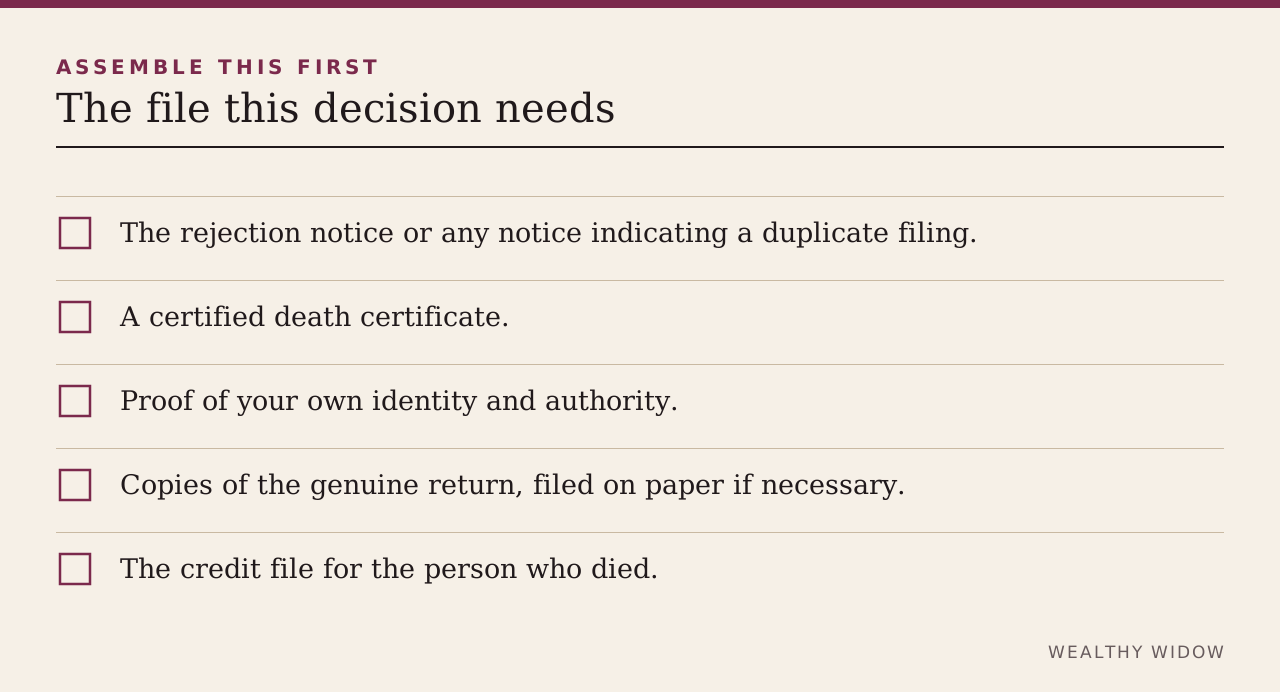
- The rejection notice or any notice indicating a duplicate filing.
- A certified death certificate.
- Proof of your own identity and authority.
- Copies of the genuine return, filed on paper if necessary.
- The credit file for the person who died.
What belongs in your decision log
Get each of the following documented rather than described.
- That a fraudulent filing has in fact occurred.
- The reporting reference for your identity theft report.
- That the genuine return has been received.
- That the credit bureaus have been notified.
Questions that reveal the answer
Each of the following is both a fair question and a revealing one, and no competent adviser will resent it.
- What is the reporting process, and what is my reference?
- How should I file the genuine return while this is unresolved?
- How long does resolution usually take?
- What else should I be protecting while this is outstanding?
Read the agency, not this summary
Treat these as the authority and this guide as an index to them.
- Internal Revenue Service — Identity theft central
- Taxpayer Advocate Service — Identity theft
- Federal Trade Commission — Identity theft
- Taxpayer Advocate Service — An independent organization within the IRS
What only your documents can answer
This is where a guide stops being useful and your own paperwork takes over. It cannot resolve a case for you, and where the process stalls the advocate service is the appropriate escalation.
The last word on this
Treat a rejected filing as a warning rather than a glitch. Reporting on the first day rather than the first month is the single biggest influence on how long resolution takes.
For the step that usually comes next, read Choosing Someone to Prepare a Return That Is Not Straightforward.
Primary sources
- Internal Revenue Service — Identity theft central
- Taxpayer Advocate Service — Identity theft
- Federal Trade Commission — Identity theft
- Taxpayer Advocate Service — An independent organization within the IRS
This article provides general education, not individualized legal, tax, investment, insurance, or benefits advice. Rules and deadlines change; verify the current requirement with the agency and a qualified professional.