Money
Telling Your Children What You Intend, and What You Will Not Discuss
Adult children frequently want to help and sometimes want to decide. Setting the terms of that conversation early prevents years of friction.

The difficulty here is rarely the paperwork. It is knowing what is actually being asked. Adult children frequently want to help and sometimes want to decide. Setting the terms of that conversation early prevents years of friction.
Family involvement in a widow’s finances ranges from genuinely protective to quietly controlling, and the same behaviour can look like either from different angles. Stating the terms yourself is what keeps it in the first category.
Clarity about what you will share, and what remains yours alone, is kinder than an ambiguity that everyone interprets differently.
What this decision actually is
Before any advice, the ground facts. Involving family in some decisions does not require sharing every figure. A nominated trusted contact can be told about unusual activity without having authority over accounts. Financial abuse of older people is most often committed by family rather than strangers.
Ambiguity about intentions is a reliable source of dispute after a second death. Decisions about your own money remain yours regardless of who is offering to help.
Work it in this order
Work through this deliberately. Each step assumes the one before it is done.
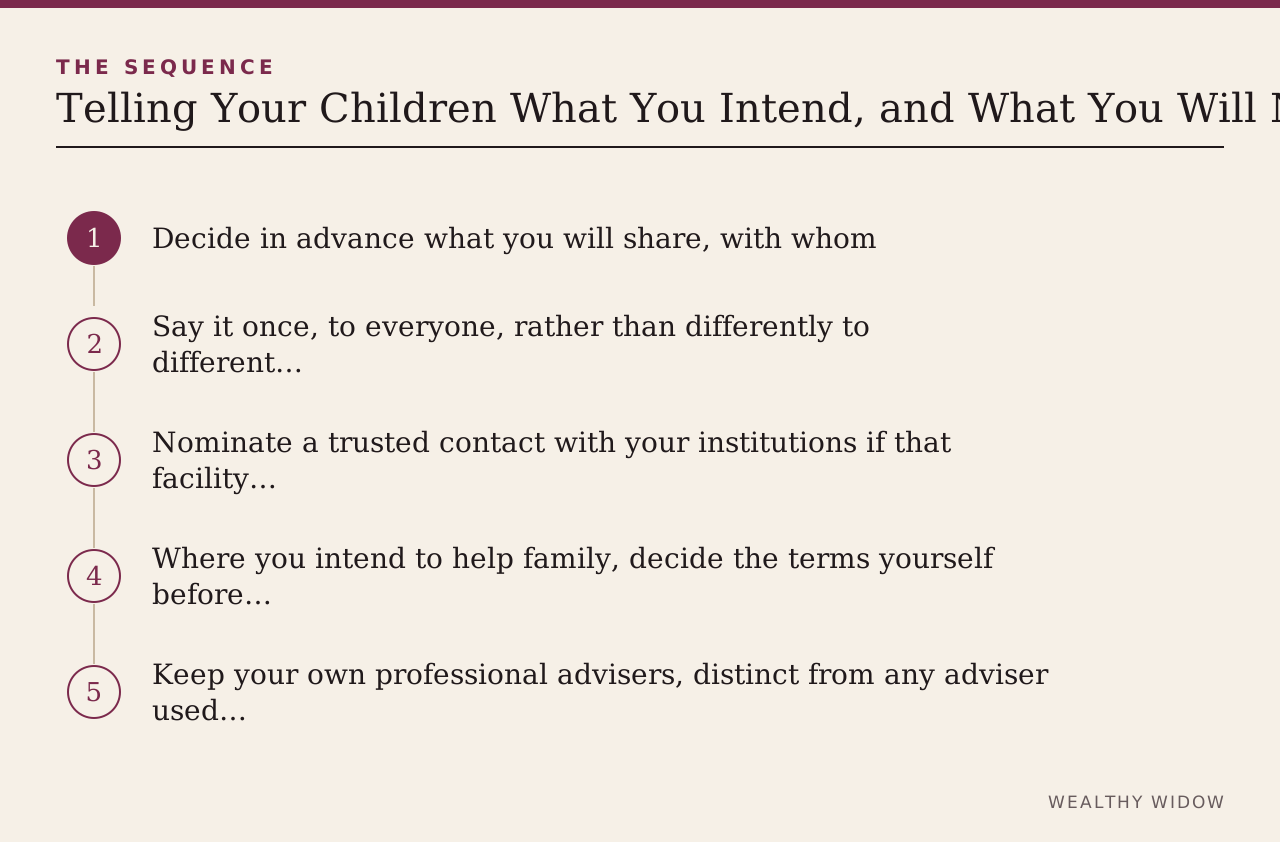
- Decide in advance what you will share, with whom, and what remains private.
- Say it once, to everyone, rather than differently to different children.
- Nominate a trusted contact with your institutions if that facility is offered.
- Where you intend to help family, decide the terms yourself before the conversation.
- Keep your own professional advisers, distinct from any adviser used by your children.
The pressure points to watch
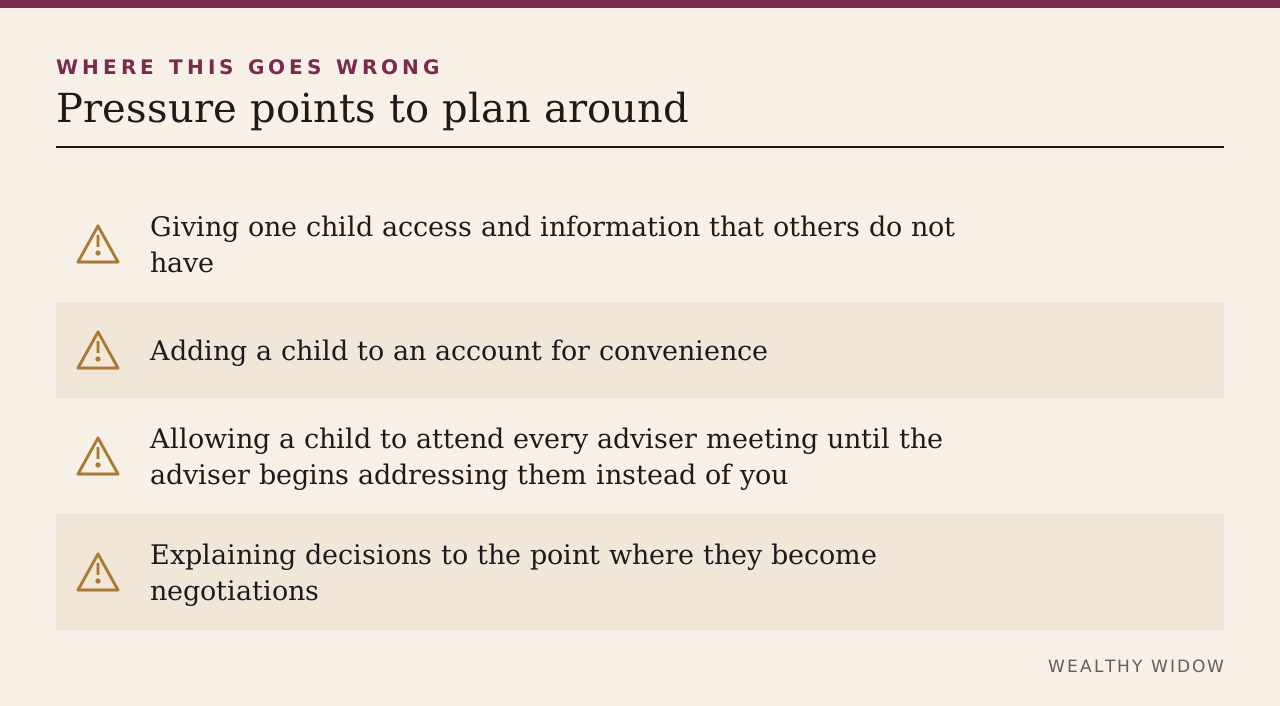
Anticipating these is most of the protection available to you, and it costs nothing but attention. Giving one child access and information that others do not have, which reliably creates suspicion.
Adding a child to an account for convenience, which can have ownership and tax consequences. Allowing a child to attend every adviser meeting until the adviser begins addressing them instead of you. Explaining decisions to the point where they become negotiations.
What you will be asked to produce
Assemble this before the first conversation rather than during it.
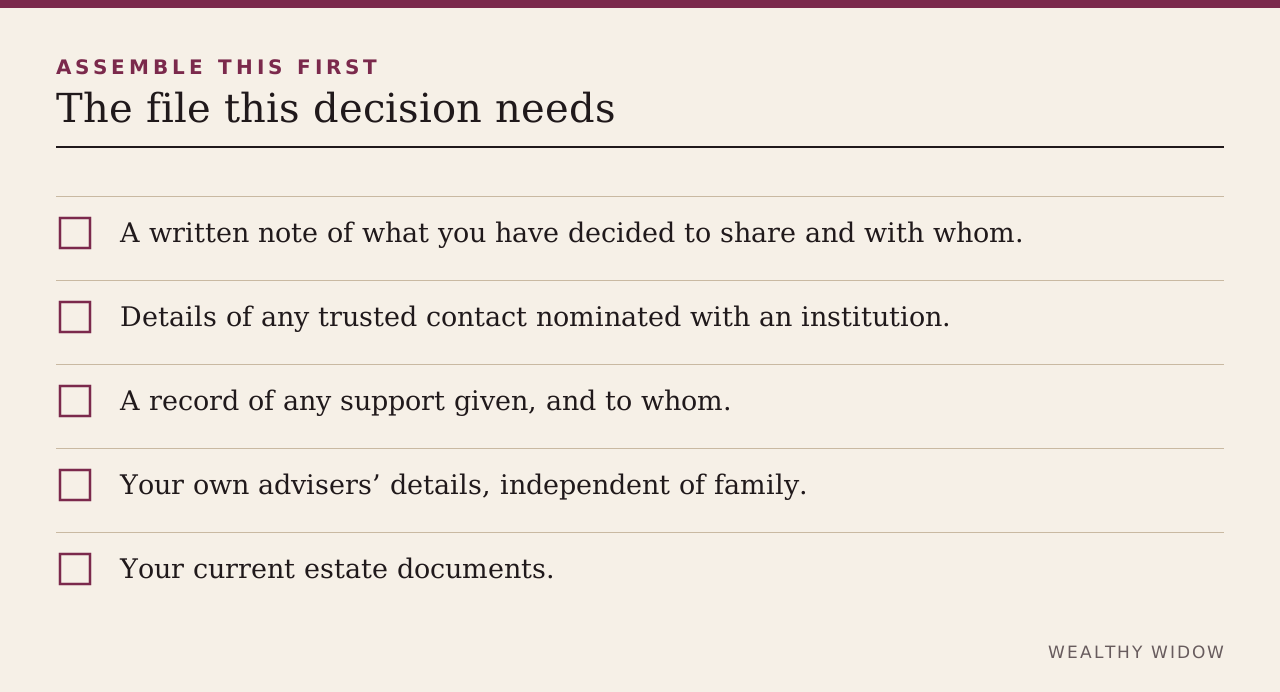
- A written note of what you have decided to share and with whom.
- Details of any trusted contact nominated with an institution.
- A record of any support given, and to whom.
- Your own advisers’ details, independent of family.
- Your current estate documents.
What to have documented
Put each of these in the file with a date against it.
- What each institution’s trusted contact facility actually permits.
- The consequence of adding anyone to an account.
- That your professional advisers act for you alone.
- That your intentions are recorded in your estate documents rather than only spoken.
What to ask before you sign
Ask these before an engagement letter is signed or a product is recommended.
- What does a trusted contact designation allow, and what does it not?
- What happens to ownership if I add a child to this account?
- Whose interests do you act for in this meeting?
- How should I record support given to one child so it is treated fairly later?
The sources behind this
Anything that will drive a decision should be checked here rather than here-abouts.
- Consumer Financial Protection Bureau — Taking control of your finances, help for surviving spouses
- Consumer Financial Protection Bureau — Help for surviving spouses
- National Institute on Aging — What to do after someone dies
- Legal Services Corporation — I need legal help
Where this guide stops
The boundary matters, because the wrong assumption here is expensive. It cannot manage your family. It can help you decide the terms before the conversations happen rather than during them.
In practice
Decide the terms yourself, say them once and consistently, and keep advisers who act for you alone. Most family friction about money is caused by ambiguity rather than by the money.
A companion guide, Reading a Financial Recommendation Properly, covers the decision that sits alongside this one.
Primary sources
- Consumer Financial Protection Bureau — Taking control of your finances, help for surviving spouses
- Consumer Financial Protection Bureau — Help for surviving spouses
- National Institute on Aging — What to do after someone dies
- Legal Services Corporation — I need legal help
This article provides general education, not individualized legal, tax, investment, insurance, or benefits advice. Rules and deadlines change; verify the current requirement with the agency and a qualified professional.