Life After Loss
How to Support Children After a Parent Dies
Use clear language, stable care, school coordination, and qualified child-bereavement support while protecting children’s privacy and assets.
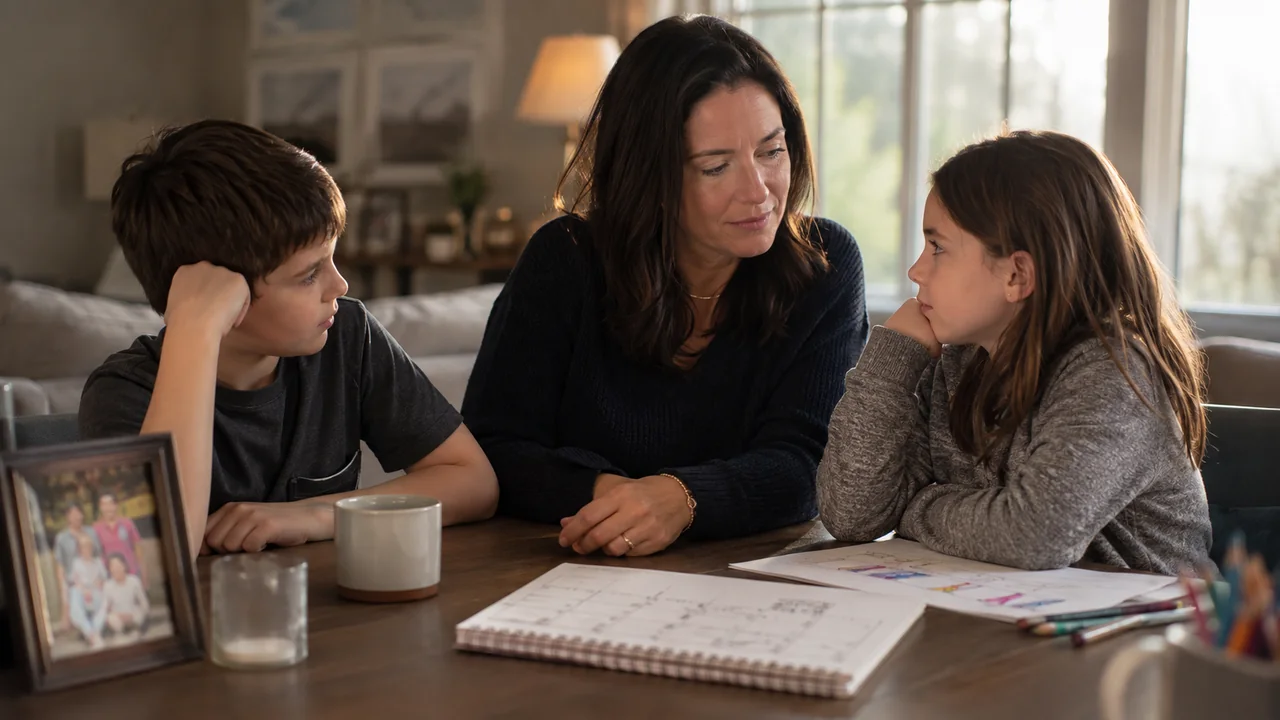
Children’s reactions after a parent dies vary by age, development, relationship, circumstances of the death, culture, and support. A child may ask repeated questions, play normally, become quieter, regress, struggle at school, or show feelings through behavior. No single reaction proves that the child is or is not grieving.
Give truthful, age-appropriate information and stable care. Ask a pediatrician or qualified child mental-health professional for individualized assessment when symptoms concern you.
Tell the truth in manageable pieces, then keep the door open for the next question.
Use direct, concrete language
Young children may interpret euphemisms literally. Say that the parent “died” and explain simply that the body stopped working and the person cannot return. Avoid “went to sleep,” “went away,” or religious language as the only physical explanation. You can add the family’s spiritual beliefs separately.
Answer the question asked rather than delivering every detail. It is acceptable to say, “I do not know,” “I will find out,” or “That part is private.” Correct misinformation gently and repeat explanations as understanding develops.
If the death involved violence, suicide, overdose, or disturbing medical circumstances, seek guidance from a clinician experienced in child trauma before sharing graphic detail. Do not lie, but protect the child from unnecessary imagery and adult speculation.
Make care and safety explicit
Children may worry that the surviving caregiver will also die or that they caused the death. State who will care for them today, who the backups are, where they will sleep, how school and activities will work, and that the death was not their fault.
Maintain routines where practical, but explain unavoidable changes. Post a simple weekly schedule and identify the adult handling pickup, meals, medication, and nighttime support. Stability does not require pretending nothing happened.
Coordinate with school privately
Tell a designated teacher, counselor, or administrator what the child knows, preferred language, privacy boundaries, schedule changes, and who may pick the child up. Ask what school-based support exists and how concerns will be communicated.
Do not assume the entire class or parent network should be told. Agree on what may be shared and with whom. Review the plan around birthdays, the death anniversary, holidays, performances, and assignments involving parents or family history.
Offer participation without forcing it
Explain funerals, memorials, viewings, religious rites, or cemetery visits in advance: what the child may see, who will stay with them, and how they can leave. Offer a choice where circumstances allow, plus an alternate way to participate such as a drawing, letter, object, story, or private ritual.
Do not make a child comfort adults or perform grief publicly. Let them move between remembrance and ordinary play.
Watch for trauma and functional changes
The National Child Traumatic Stress Network explains that childhood traumatic grief involves trauma reactions that interfere with grieving. Warning signs may include persistent avoidance, intrusive memories, intense fear, sleep problems, major regression, dangerous behavior, or substantial school and relationship impairment. These are reasons for professional assessment, not a diagnosis to make from an article.
Contact the child’s pediatrician or a licensed child clinician for persistent, worsening, or concerning symptoms. Use emergency services for immediate danger. In the United States, 988 provides crisis support by call or text.
Protect privacy, inheritance, and adult roles
Keep children out of disputes about fault, money, wills, and family loyalty. Do not ask them to choose sides or carry messages. Share financial facts only at a level appropriate to their needs.
If the child inherits assets, receives benefits, or is involved in a guardianship or trust, obtain state-specific legal advice. A surviving parent does not necessarily have unrestricted authority over every asset owned for the child. Keep court, trust, tax, and benefit records separate from therapeutic notes and school communication.
Support the surviving caregiver
Your own grief and exhaustion matter. Identify adults who can provide meals, transportation, homework help, and consistent time with each child. Adult support should reduce the child’s caregiving burden, not replace your relationship.
Create a one-page care plan: what each child has been told, daily caregivers, school contact, health professionals, privacy instructions, and warning signs. Review it as the child asks new questions and develops.
For your own support options, read How to Choose a Grief Counselor or Bereavement Group.
Primary sources
- National Child Traumatic Stress Network — Childhood traumatic grief for parents and caregivers
- SAMHSA — Coping with bereavement and grief
- National Institute on Aging — Coping with grief and loss
This article provides general education, not individualized legal, tax, investment, insurance, or benefits advice. Rules and deadlines change; verify the current requirement with the agency and a qualified professional.