Home
The Mortgage: Successor Rights That Servicers Often Overlook
A surviving spouse who inherits a home has defined rights with the mortgage servicer, and servicers do not always volunteer them.

There is a version of this decision that takes ten minutes and a version that takes a season. A surviving spouse who inherits a home has defined rights with the mortgage servicer, and servicers do not always volunteer them. The difference is whether the facts were assembled first.
The regulator has documented widespread problems with servicers handling surviving family members. Knowing the terminology and the rights changes the conversation from a request into a requirement.
You can generally be recognised, receive information, keep paying, and be considered for assistance without assuming the loan or refinancing.
Getting the question right first
These are the points the rest of the decision rests on, so it is worth being sure of them before going further. A successor in interest is a defined category that includes a spouse acquiring an interest on the death of a borrower. A confirmed successor is generally entitled to the same protections as a borrower under the servicing rules. A servicer may not require assumption of the loan before treating you as a borrower for those purposes.
Servicers are required to have procedures to identify and communicate with potential successors. Complaints about servicer handling can be submitted to the regulator.
Where to start, and what follows
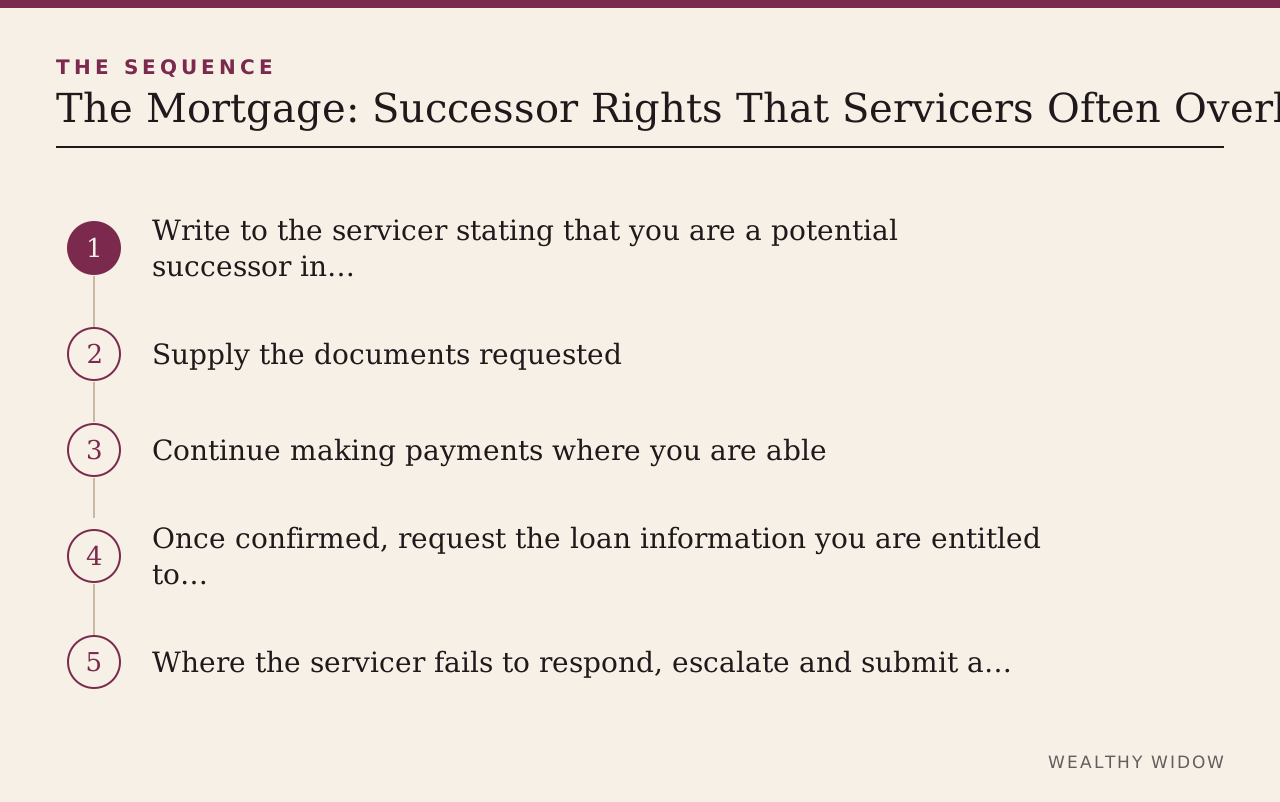
Take it in this sequence. Reversing the order tends to create work rather than save it, and occasionally forecloses a choice.
- Write to the servicer stating that you are a potential successor in interest and asking what it requires to confirm you.
- Supply the documents requested, and keep copies with proof of dispatch.
- Continue making payments where you are able, and record every payment.
- Once confirmed, request the loan information you are entitled to receive.
- Where the servicer fails to respond, escalate and submit a complaint to the regulator.
Where this commonly goes wrong
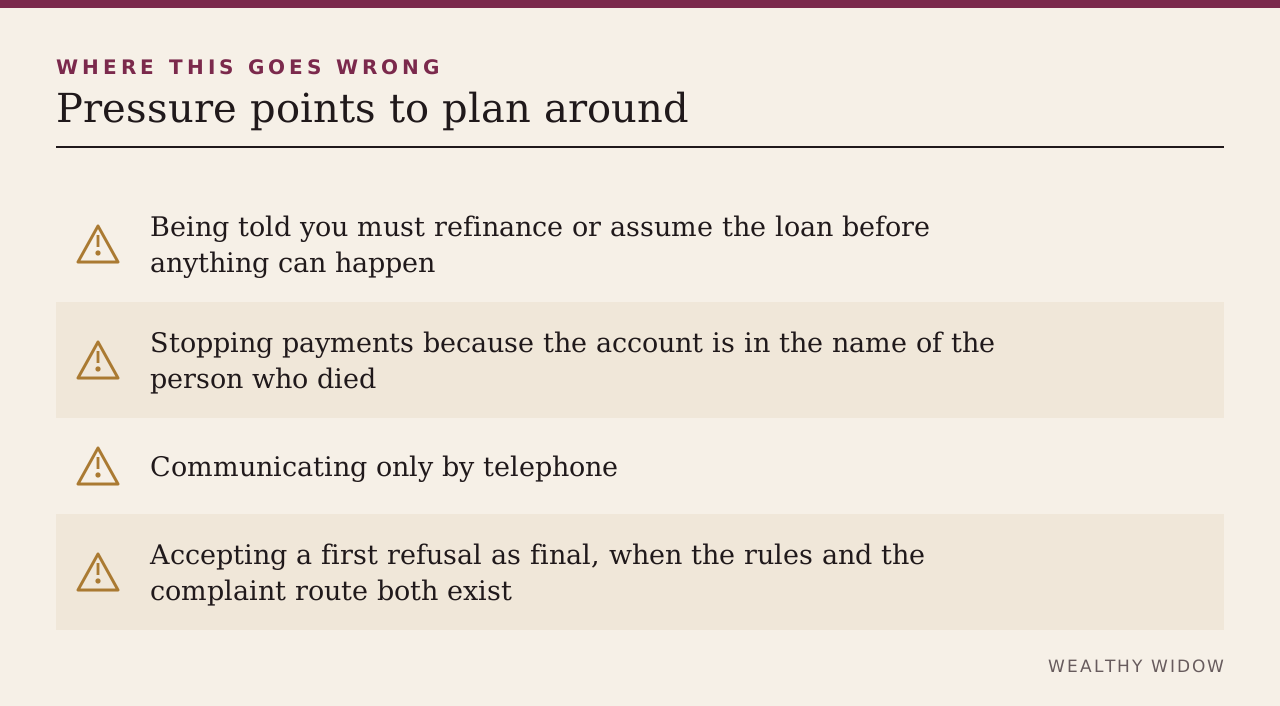
Watch for the following, and treat each as a reason to slow down. Being told you must refinance or assume the loan before anything can happen, which is frequently incorrect.
Stopping payments because the account is in the name of the person who died. Communicating only by telephone, which leaves no record of a request or a refusal. Accepting a first refusal as final, when the rules and the complaint route both exist.
Assemble the file
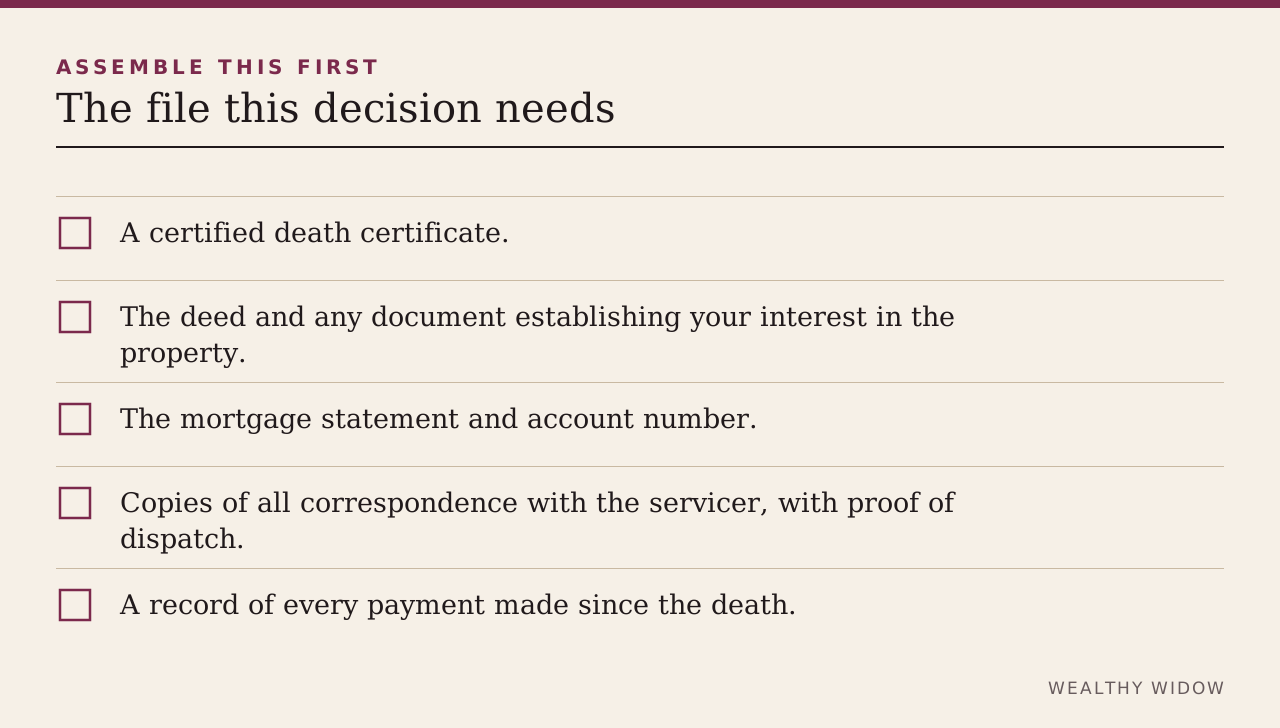
Having the file complete before the first call removes most of the back and forth that follows.
- A certified death certificate.
- The deed and any document establishing your interest in the property.
- The mortgage statement and account number.
- Copies of all correspondence with the servicer, with proof of dispatch.
- A record of every payment made since the death.
What belongs in your decision log
Get each of the following documented rather than described.
- What the servicer requires to confirm you as successor.
- That you have been confirmed, in writing.
- What information and options you are entitled to receive.
- The complaint route if the servicer does not respond.
Questions that reveal the answer
Each of the following is both a fair question and a revealing one, and no competent adviser will resent it.
- What do you require to confirm me as a successor in interest?
- What protections apply to me once confirmed?
- Do I have to assume this loan to be considered for assistance?
- What is your written timescale for responding?
Where the current rule lives
Read the source directly for any figure, date, or threshold that will actually drive a decision you make.
- Consumer Financial Protection Bureau — Regulation X, § 1024.31 definitions
- Consumer Financial Protection Bureau — Mortgage lending rules to assist surviving family members
- Consumer Financial Protection Bureau — Bulletin on mortgage lending rules and successors in interest
- Consumer Financial Protection Bureau — Homeowners face problems with mortgage companies after death of a loved one
What this cannot decide for you
General guidance sets out the shape of a decision. Your documents settle it. It cannot compel a servicer, and where a servicer will not engage the regulator complaint process is the appropriate next step.
Before you move on
Use the term successor in interest, put every request in writing, and keep paying where you can. The rules are on your side here, and the main obstacle is usually a servicer that has not applied them.
If this raised a further question, A Reverse Mortgage on the Home: What Happens Next takes it further.
Primary sources
- Consumer Financial Protection Bureau — Regulation X, § 1024.31 definitions
- Consumer Financial Protection Bureau — Mortgage lending rules to assist surviving family members
- Consumer Financial Protection Bureau — Bulletin on mortgage lending rules and successors in interest
- Consumer Financial Protection Bureau — Homeowners face problems with mortgage companies after death of a loved one
This article provides general education, not individualized legal, tax, investment, insurance, or benefits advice. Rules and deadlines change; verify the current requirement with the agency and a qualified professional.