Estate
Where the Originals Live, and Who Can Reach Them
A perfectly drafted will helps nobody if it cannot be found, and a document locked where only the deceased could reach it causes real delay.

Institutions will describe this as routine. For you it is not routine, and the stakes are not symmetrical. A perfectly drafted will helps nobody if it cannot be found, and a document locked where only the deceased could reach it causes real delay.
You have just experienced what it costs to look for documents under time pressure. Fixing your own arrangements is quick, and it is the piece of estate planning most often left undone.
A document nobody can reach on the day it is needed is, for practical purposes, a document that does not exist.
What this decision actually is
Hold on to a small number of accurate points. Courts frequently require an original will rather than a copy. A safe deposit box may be difficult to access immediately after a death, depending on how it is rented. Some jurisdictions permit a will to be deposited with the court or held by a lawyer.
Copies are useful for reference but are rarely a substitute for the original. The location matters less than whether the right person knows it and can reach it.
Work it in this order
This is the order that avoids closing doors you may still need.
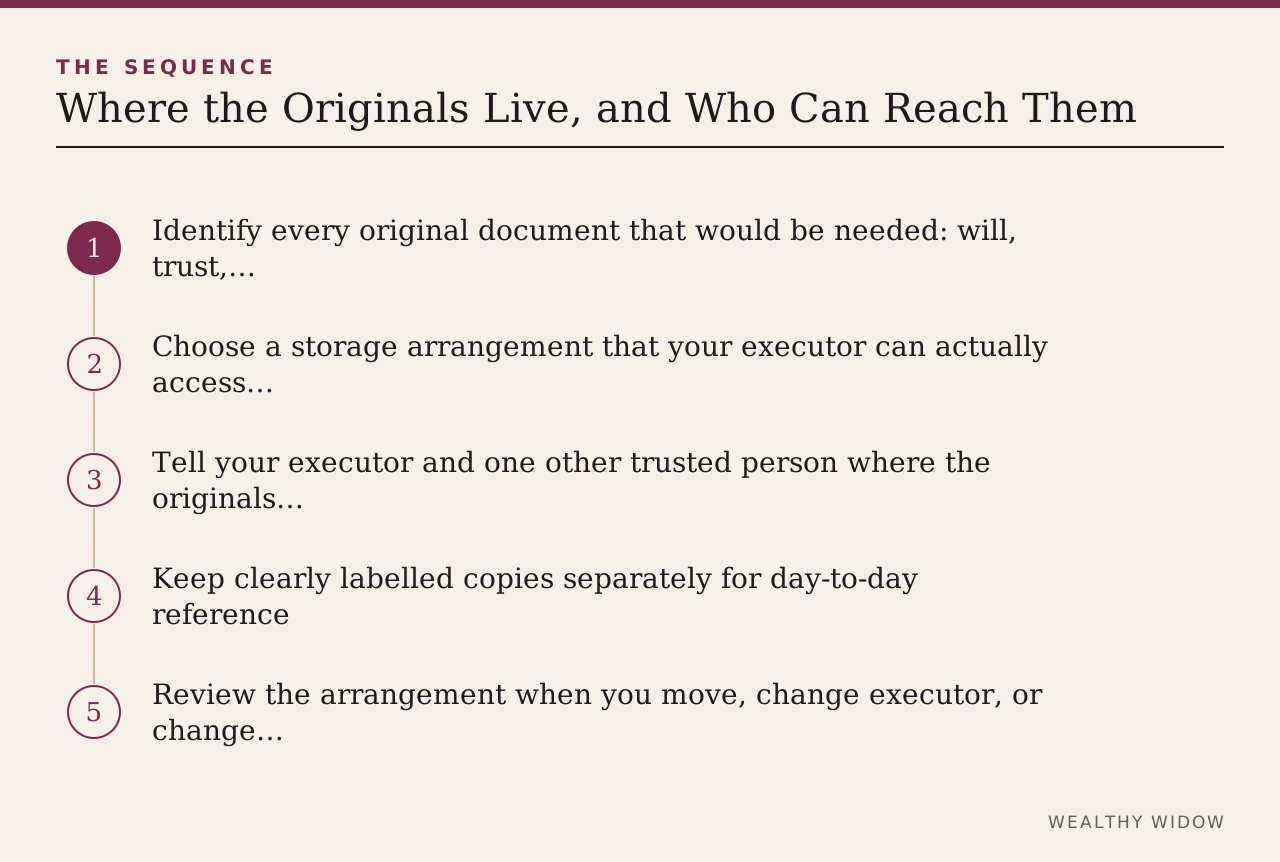
- Identify every original document that would be needed: will, trust, deeds, policies, and powers of attorney.
- Choose a storage arrangement that your executor can actually access without a court order.
- Tell your executor and one other trusted person where the originals are held.
- Keep clearly labelled copies separately for day-to-day reference.
- Review the arrangement when you move, change executor, or change lawyer.
The pressure points to watch
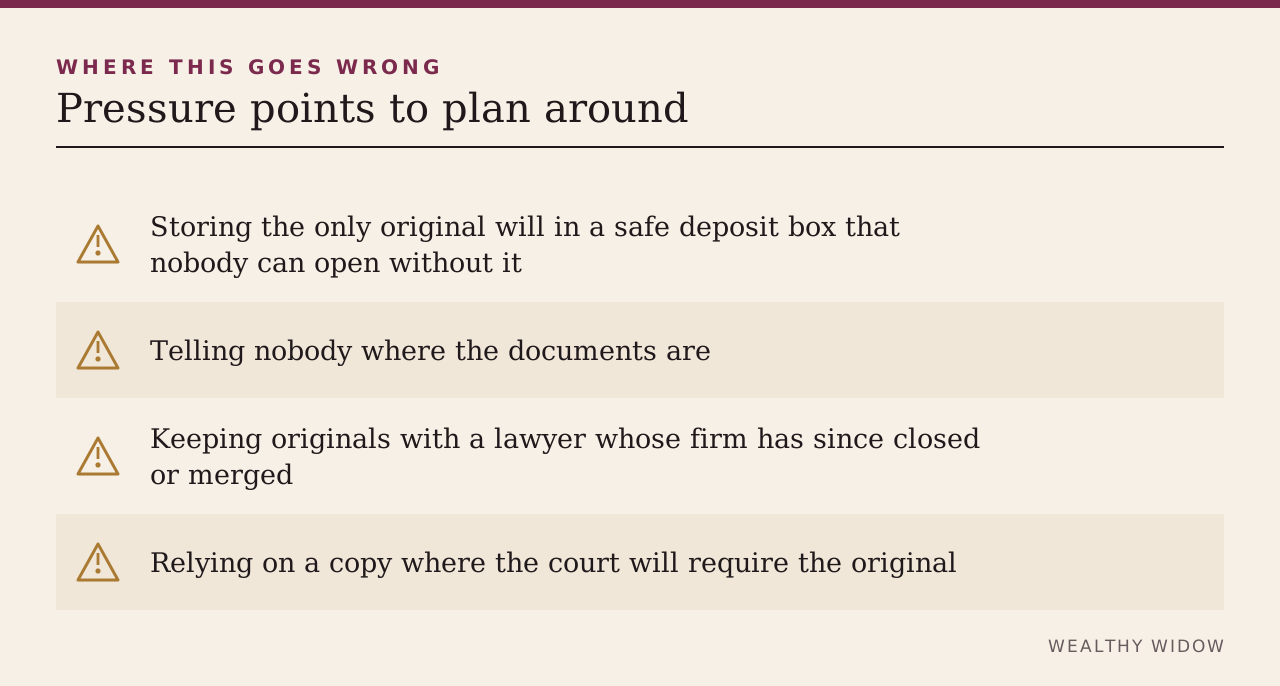
The errors here are well worn, which makes them avoidable. Storing the only original will in a safe deposit box that nobody can open without it.
Telling nobody where the documents are, which is surprisingly common. Keeping originals with a lawyer whose firm has since closed or merged. Relying on a copy where the court will require the original.
What to have in front of you
Collect these once and keep them together, because you will be asked for them repeatedly over the coming months.
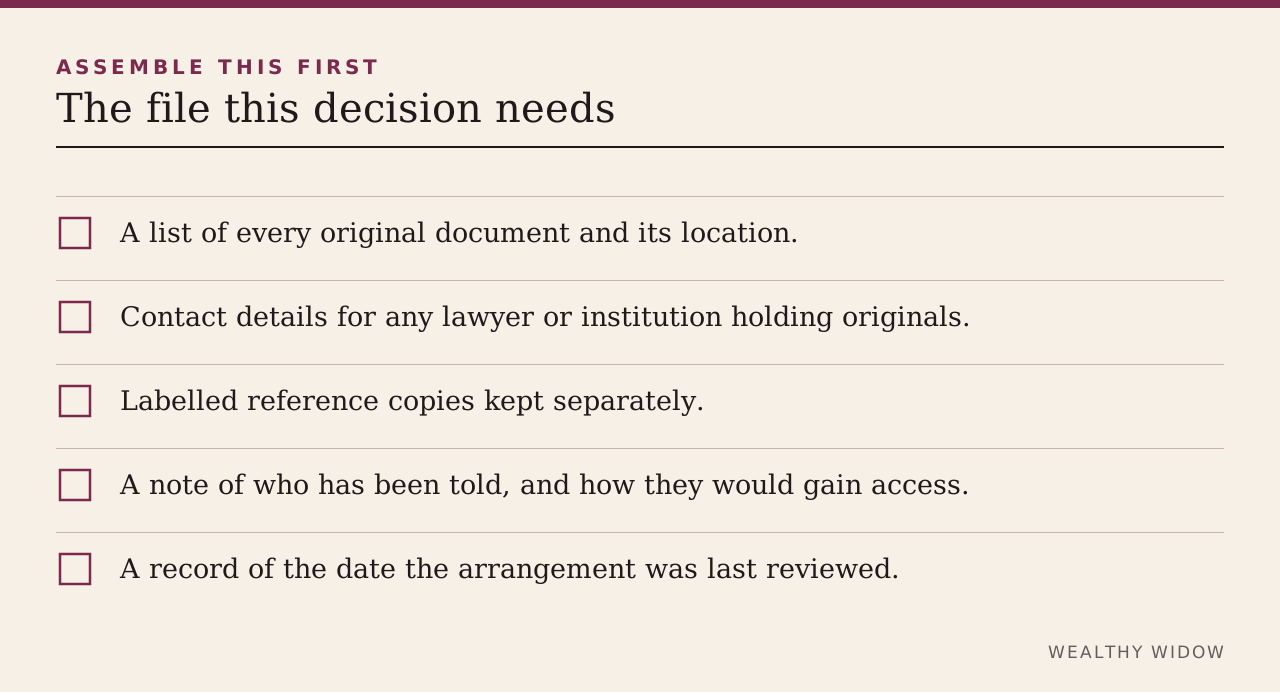
- A list of every original document and its location.
- Contact details for any lawyer or institution holding originals.
- Labelled reference copies kept separately.
- A note of who has been told, and how they would gain access.
- A record of the date the arrangement was last reviewed.
Confirm these in writing before you act
Written confirmation is not distrust. It is ordinary governance. Ask for each of these.
- That your executor knows where the originals are and can reach them.
- Whether your court requires an original will.
- That any professional holding documents still exists and still holds them.
- That the arrangement survives your becoming unwell rather than only your death.
What to put to your adviser
Take these to whoever is advising you, in writing if you can.
- Does this court require an original will, or will a copy suffice?
- Can my executor access this storage without a court order?
- Do you still hold my documents, and under what terms?
- What is the best storage arrangement in this state?
The primary material
Each load-bearing point above traces to one of the following, and they are the versions that stay current.
- Centers for Disease Control and Prevention — Where to write for vital records
- USAGov — Get copies of vital records and ID cards
- Legal Services Corporation — I need legal help
- Consumer Financial Protection Bureau — Taking control of your finances, help for surviving spouses
Where general guidance ends
Here is the line between what can usefully be written for a general readership and what cannot be written at all. It cannot tell you what your court requires or what your storage provider permits, and both should be confirmed directly.
What this comes down to
Choose a location your executor can reach, tell at least two people, and keep labelled copies elsewhere. It takes an afternoon and removes the single most avoidable delay in any estate.
A companion guide, Leaving Money to Someone Who Cannot Manage It, covers the decision that sits alongside this one.
Primary sources
- Centers for Disease Control and Prevention — Where to write for vital records
- USAGov — Get copies of vital records and ID cards
- Legal Services Corporation — I need legal help
- Consumer Financial Protection Bureau — Taking control of your finances, help for surviving spouses
This article provides general education, not individualized legal, tax, investment, insurance, or benefits advice. Rules and deadlines change; verify the current requirement with the agency and a qualified professional.