Taxes
The State Answer Is Not the Federal Answer
State rules on estate tax, inheritance tax, and income differ substantially from federal ones, and from each other.

This guide covers a decision that is easy to make quickly and expensive to make wrongly. State rules on estate tax, inheritance tax, and income differ substantially from federal ones, and from each other.
Federal guidance dominates the available material, which leads families to assume the federal answer is the whole answer. Several states impose estate or inheritance taxes at levels far below the federal threshold.
A federal answer tells you nothing about your state position, and the state position is frequently the one that costs money.
The question underneath the paperwork
Hold on to a small number of accurate points. Some states impose an estate tax, some an inheritance tax, some both, and many neither. State thresholds can be substantially lower than the federal one. An inheritance tax is charged on the recipient, and rates may vary by relationship to the person who died.
The state of residence, and the state where property is located, may both matter. State treatment of retirement income and Social Security also varies considerably.
Sequence the work deliberately
This is the order that avoids closing doors you may still need.
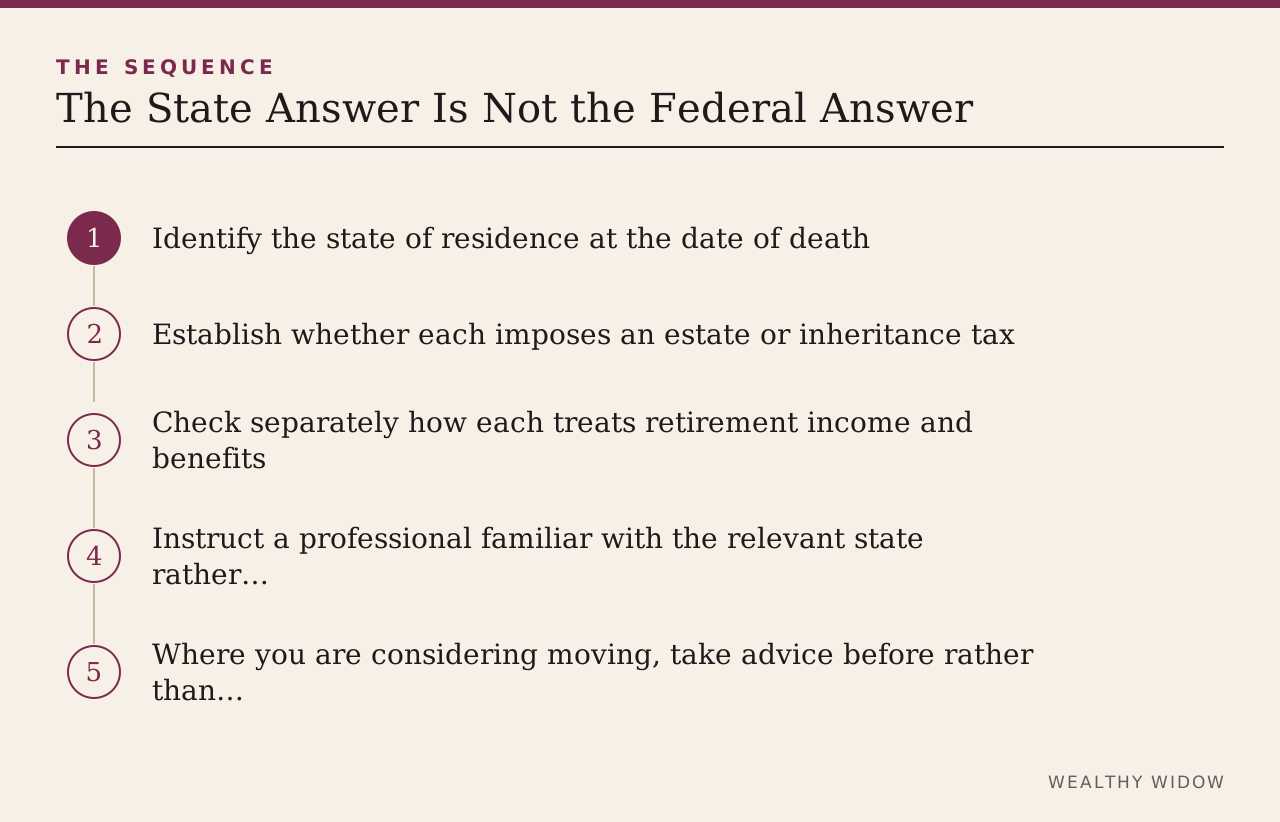
- Identify the state of residence at the date of death, and every state where property is held.
- Establish whether each imposes an estate or inheritance tax, and at what level.
- Check separately how each treats retirement income and benefits.
- Instruct a professional familiar with the relevant state rather than relying on federal guidance.
- Where you are considering moving, take advice before rather than after.
What to refuse, and why
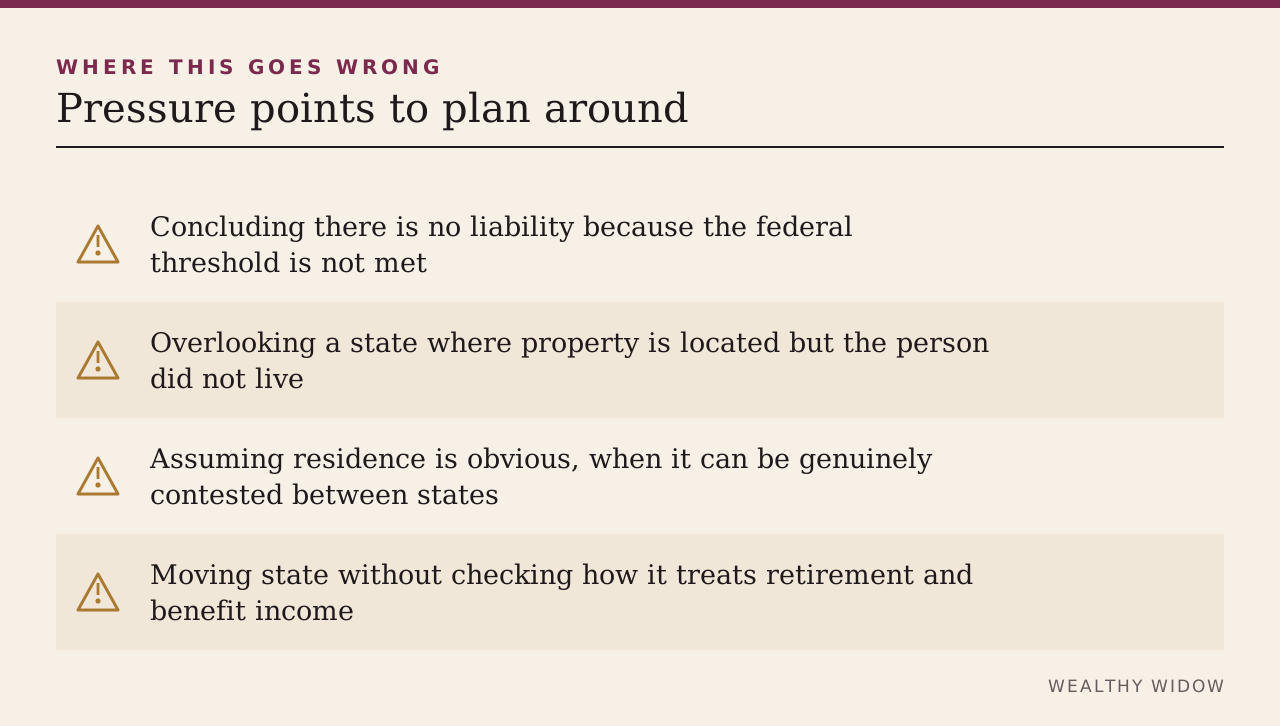
The errors here are well worn, which makes them avoidable. Concluding there is no liability because the federal threshold is not met.
Overlooking a state where property is located but the person did not live. Assuming residence is obvious, when it can be genuinely contested between states. Moving state without checking how it treats retirement and benefit income.
What to have in front of you
Collect these once and keep them together, because you will be asked for them repeatedly over the coming months.
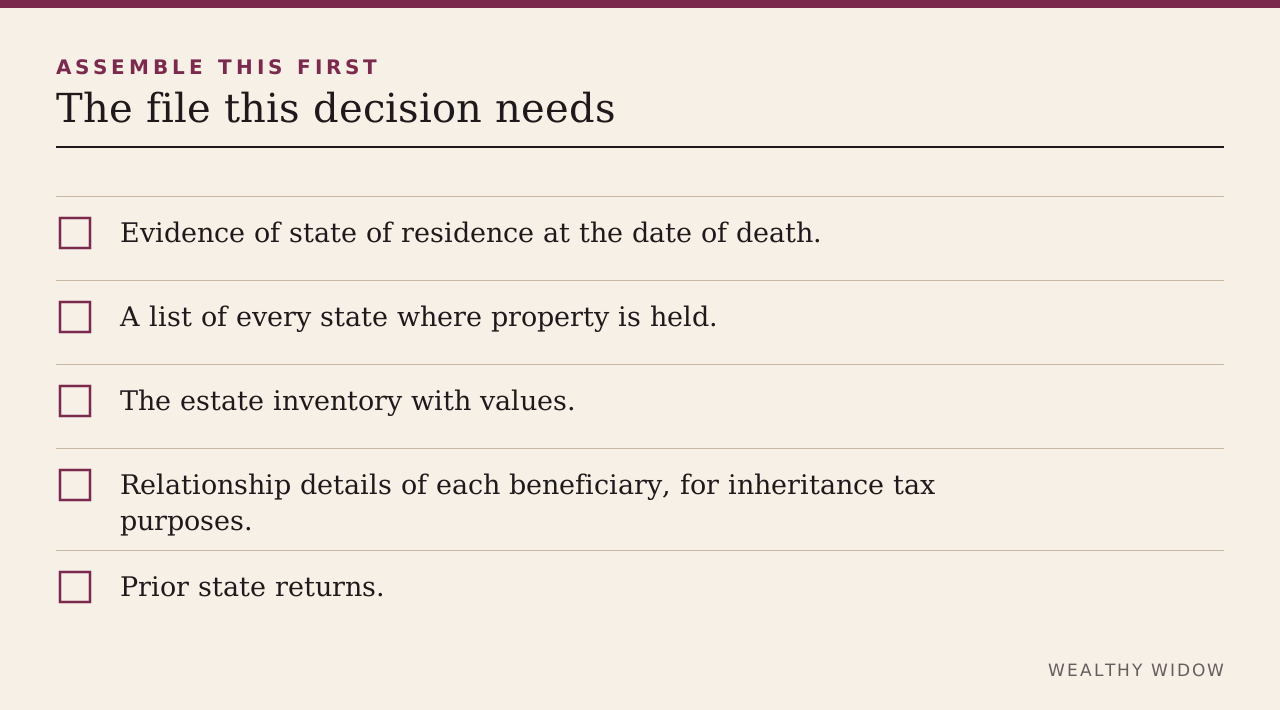
- Evidence of state of residence at the date of death.
- A list of every state where property is held.
- The estate inventory with values.
- Relationship details of each beneficiary, for inheritance tax purposes.
- Prior state returns.
Confirm these in writing before you act
Written confirmation is not distrust. It is ordinary governance. Ask for each of these.
- Which states have a claim, and on what basis.
- Each state’s threshold and rates.
- How each treats your retirement and benefit income.
- The filing deadlines for each state involved.
What to put to your adviser
Take these to whoever is advising you, in writing if you can.
- Which states have a claim on this estate, and why?
- What are the thresholds and deadlines in each?
- Does the relationship of each beneficiary change the rate?
- How would a move change my own position?
Sources worth reading yourself
Where this guide and a source disagree, the source is right.
- Internal Revenue Service — Information for executors
- Internal Revenue Service — About Publication 559, survivors, executors, and administrators
- Internal Revenue Service — Filing estate and gift tax returns
- Legal Services Corporation — I need legal help
The boundary of this guide
Be clear about the boundary; the wrong assumption here is expensive. It cannot describe any state’s rules, which are set individually and change, and which need advice from someone practising in that state.
Where this leaves you
Ask the state question separately and explicitly. It is the one most often skipped, and in several states it is the one that produces an actual bill.
Read Retirement Withdrawals: The Bracket Effect of a Single Decision next; the two decisions interact.
Primary sources
- Internal Revenue Service — Information for executors
- Internal Revenue Service — About Publication 559, survivors, executors, and administrators
- Internal Revenue Service — Filing estate and gift tax returns
- Legal Services Corporation — I need legal help
This article provides general education, not individualized legal, tax, investment, insurance, or benefits advice. Rules and deadlines change; verify the current requirement with the agency and a qualified professional.