Estate
Simplified Procedures for Smaller Estates
Most states offer a simplified route for estates below a threshold, which can avoid full probate entirely.

Institutions will describe this as routine. For you it is not routine, and the stakes are not symmetrical. Most states offer a simplified route for estates below a threshold, which can avoid full probate entirely.
Simplified procedures exist in most states and are substantially faster and cheaper than full administration. Whether one is available depends on the probate estate rather than on total wealth.
Full probate is not the only route, and many families use it because nobody mentioned the alternative.
What you are really being asked
A short set of facts governs this, and they are worth holding on to when the surrounding pressure is not. Most states provide a simplified procedure for estates below a stated value. The threshold applies to the probate estate, not to everything the person owned. Some procedures use a sworn statement or affidavit collected directly by each institution, rather than any court appointment at all.
A waiting period after the death frequently applies before the procedure can be used, which is intended to give creditors and other claimants time to come forward. Real property is frequently excluded from the simplified route entirely, or handled through a separate filing with its own requirements.
The sequence that keeps options open
This order is designed to keep your choices open for as long as possible.
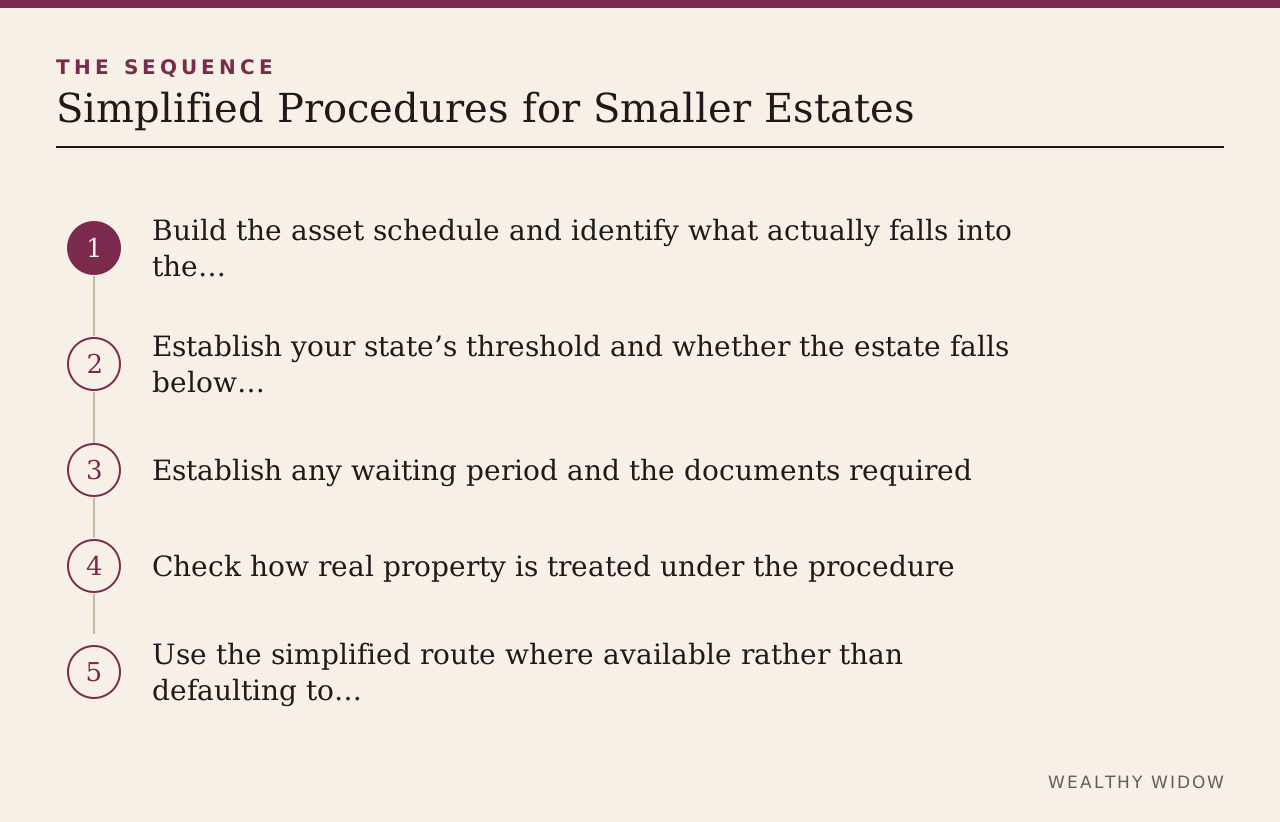
- Build the asset schedule and identify what actually falls into the probate estate.
- Establish your state’s threshold and whether the estate falls below it.
- Establish any waiting period and the documents required.
- Check how real property is treated under the procedure.
- Use the simplified route where available rather than defaulting to full administration.
The failure modes to plan around
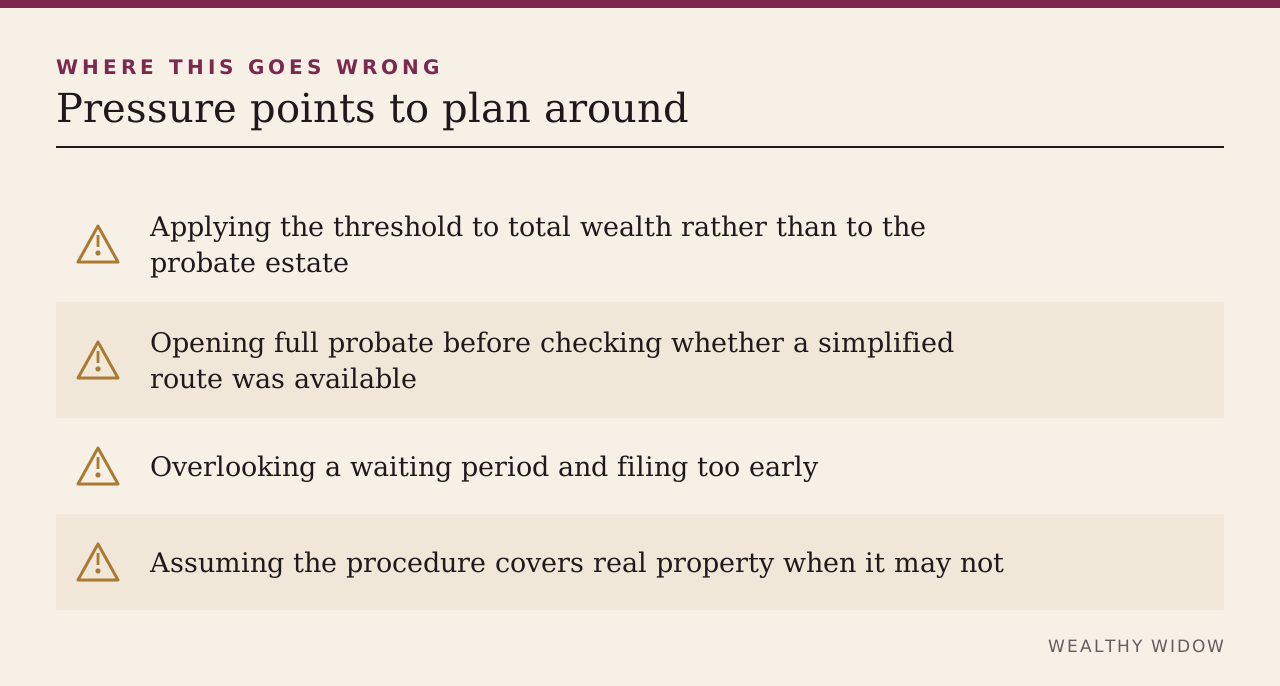
The problems below recur often enough to be planned for. Applying the threshold to total wealth rather than to the probate estate.
Opening full probate before checking whether a simplified route was available. Overlooking a waiting period and filing too early. Assuming the procedure covers real property when it may not.
What every organisation will ask for
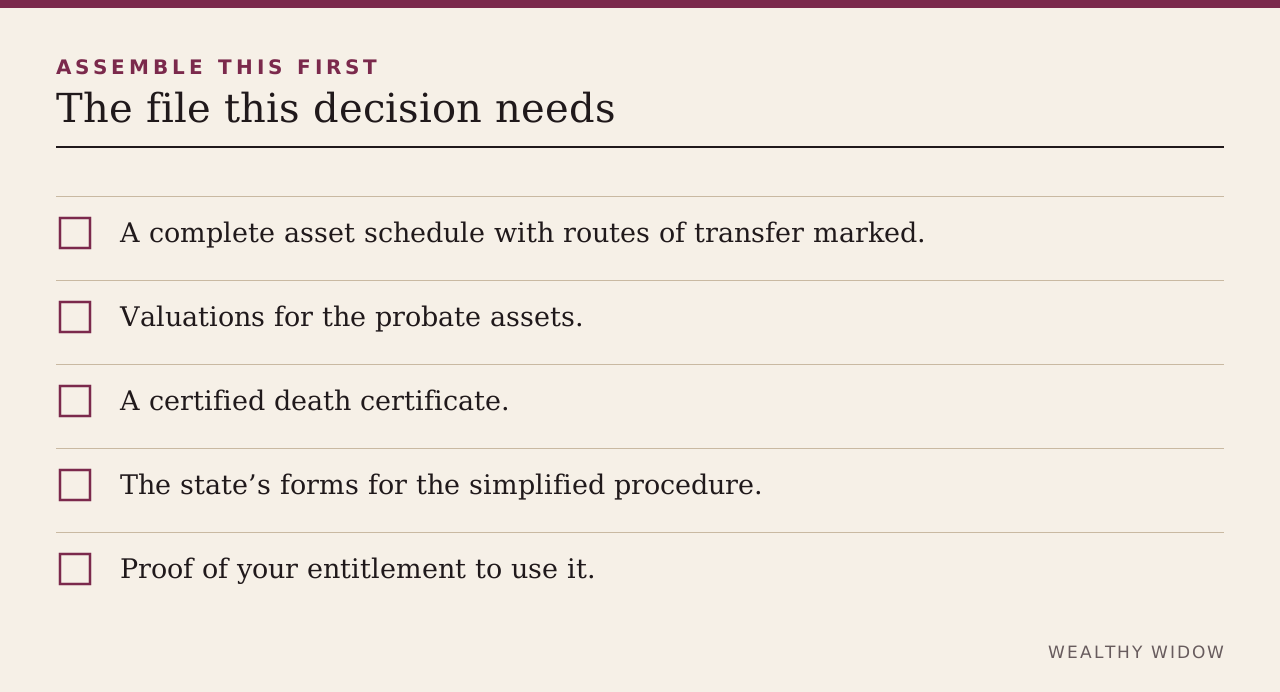
Each item below will be requested more than once. Collect them in one place and log where each copy goes.
- A complete asset schedule with routes of transfer marked.
- Valuations for the probate assets.
- A certified death certificate.
- The state’s forms for the simplified procedure.
- Proof of your entitlement to use it.
Get these in writing
Put each item below in your file with a date and a named source.
- The value of the probate estate.
- Your state’s threshold and waiting period.
- How real property is treated.
- What documents the procedure requires.
The questions worth asking
These are the questions whose answers change what you decide, rather than merely confirming what you assumed.
- Does this estate qualify for a simplified procedure?
- What is the threshold, and what counts toward it?
- Is there a waiting period before I can use it?
- How is the real property handled?
The primary material
Each load-bearing point above traces to one of the following, and they are the versions that stay current.
- Legal Services Corporation — I need legal help
- American Bar Association — Find legal help
- USAGov — Dealing with the death of a loved one
- Internal Revenue Service — Information for executors
Where general guidance ends
Here is the line between what can usefully be written for a general readership and what cannot be written at all. It cannot state your state’s threshold or procedure, which are set locally and differ considerably.
What this comes down to
Build the schedule first, then ask specifically whether a simplified route is available before instructing anyone on a full administration. These procedures are available in most states, they are substantially faster and cheaper, and they are rarely mentioned unless somebody asks about them directly.
Read A Business in the Estate: Valuation, Control, and Time next; the two decisions interact.
Primary sources
- Legal Services Corporation — I need legal help
- American Bar Association — Find legal help
- USAGov — Dealing with the death of a loved one
- Internal Revenue Service — Information for executors
This article provides general education, not individualized legal, tax, investment, insurance, or benefits advice. Rules and deadlines change; verify the current requirement with the agency and a qualified professional.