Money
How Much Cash to Hold When Income Has Become Uncertain
Standard advice about emergency funds assumes a stable salary. After widowhood, income timing is uncertain and the reserve should reflect that.

The pressure to resolve this quickly usually comes from outside you. Standard advice about emergency funds assumes a stable salary. After widowhood, income timing is uncertain and the reserve should reflect that.
Conventional reserve guidance is built around employment income arriving predictably. In the year after a death, benefits are pending, claims are processing, and accounts may be restricted, so the reserve is doing more work than usual.
The purpose of a cash reserve is to stop you making a permanent decision to solve a temporary problem.
Getting the question right first
Begin with what can be said with confidence, and treat everything beyond it as still to be established. Reserves exist to cover timing gaps, not to generate returns, so the priority is access and safety. Benefit and claim payments frequently arrive later than expected, which is a timing risk rather than an income risk. A reserve held in one institution may exceed deposit protection when it is unusually large.
Holding too much in cash indefinitely carries its own cost through inflation. The right figure changes as claims settle and income becomes predictable again.
Where to start, and what follows
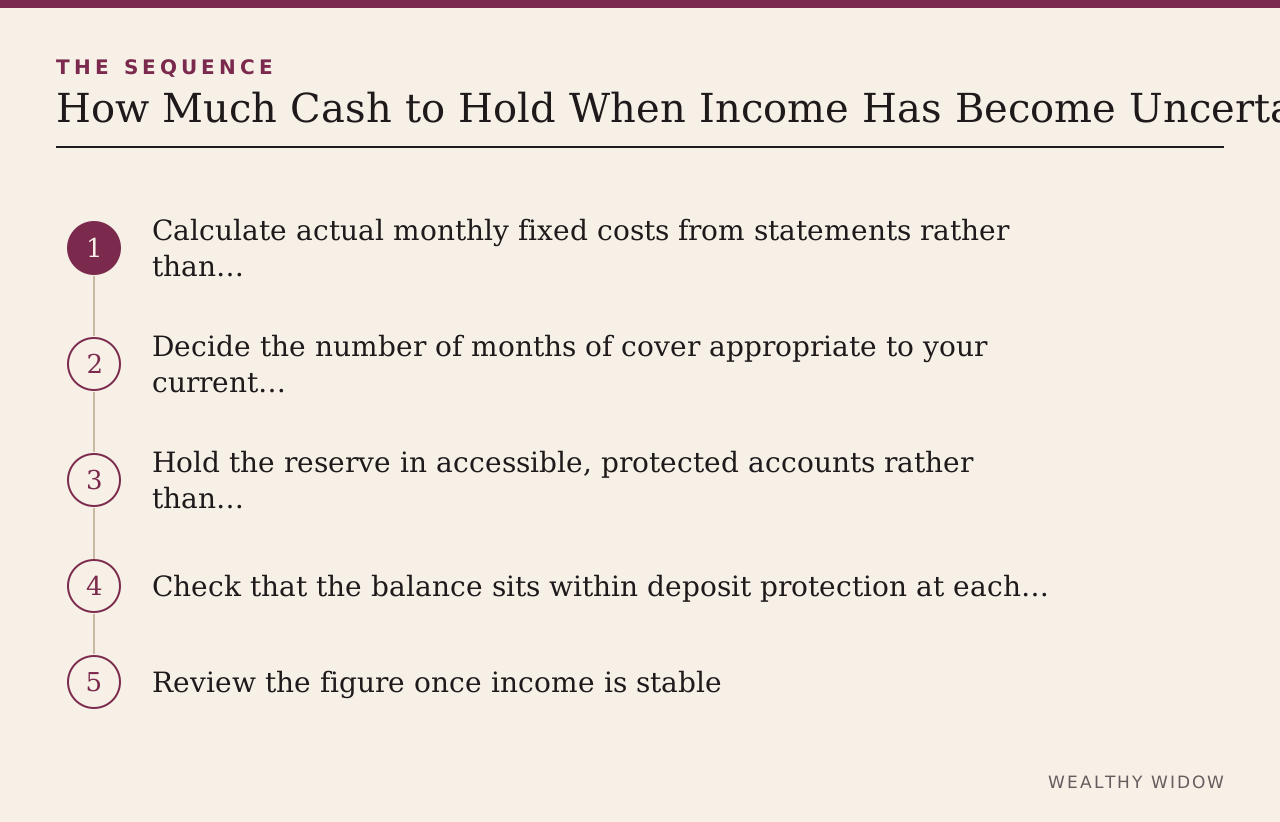
A workable order follows. Each step assumes the last one is done.
- Calculate actual monthly fixed costs from statements rather than estimates.
- Decide the number of months of cover appropriate to your current uncertainty, and write down why.
- Hold the reserve in accessible, protected accounts rather than anything with an exit penalty.
- Check that the balance sits within deposit protection at each institution.
- Review the figure once income is stable, and redeploy the excess deliberately.
Where this commonly goes wrong
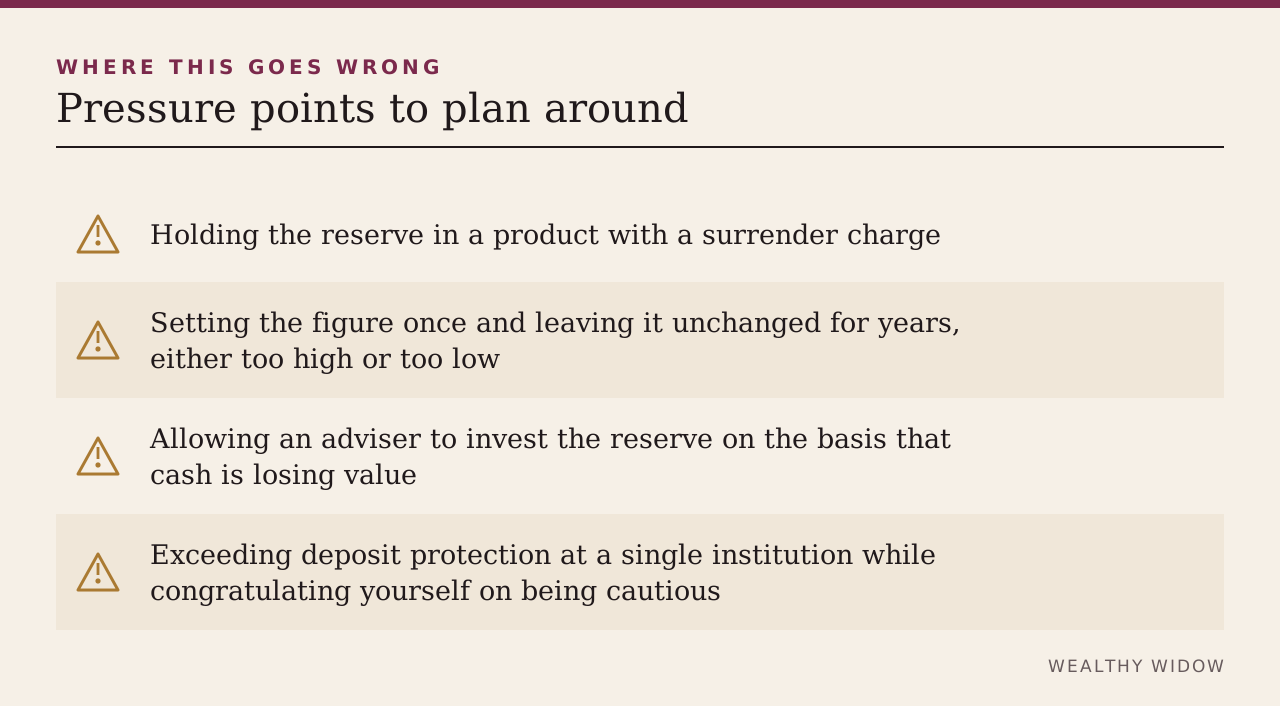
These are the places where readers most often lose ground. Holding the reserve in a product with a surrender charge, which defeats its purpose entirely.
Setting the figure once and leaving it unchanged for years, either too high or too low. Allowing an adviser to invest the reserve on the basis that cash is losing value. Exceeding deposit protection at a single institution while congratulating yourself on being cautious.
Documents this decision needs
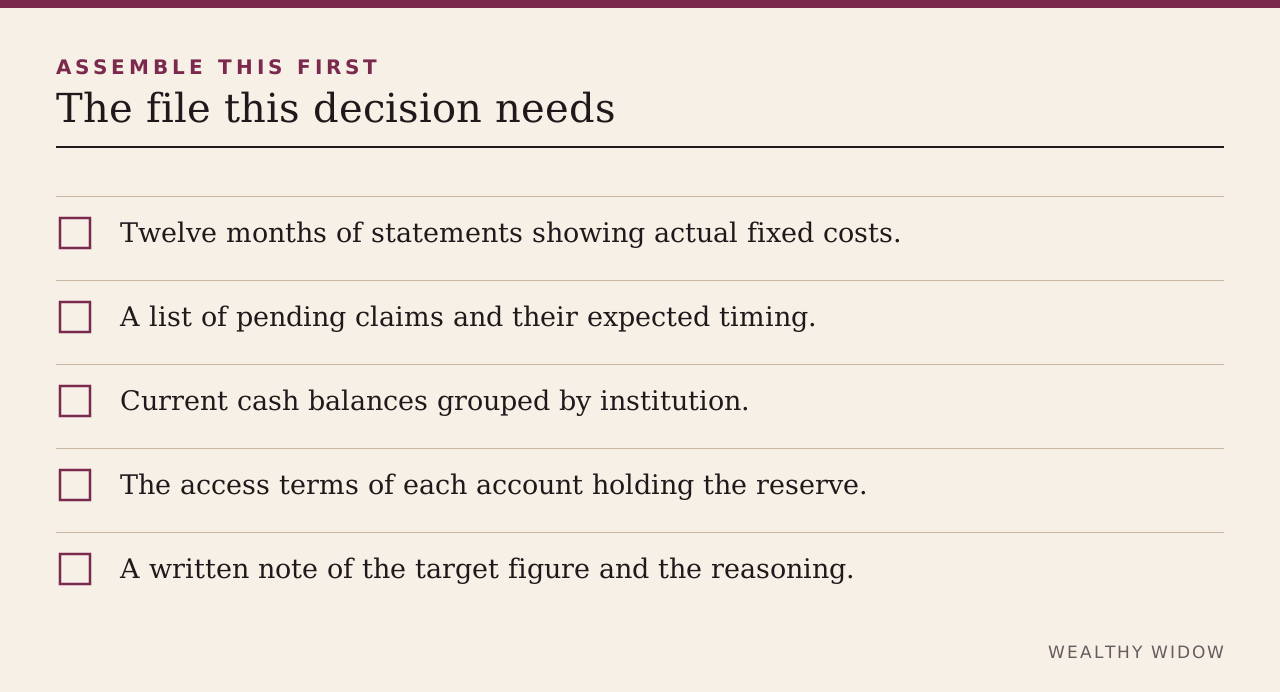
Organisations will ask for these repeatedly, so assemble them once and keep them together.
- Twelve months of statements showing actual fixed costs.
- A list of pending claims and their expected timing.
- Current cash balances grouped by institution.
- The access terms of each account holding the reserve.
- A written note of the target figure and the reasoning.
What belongs in your decision log
Get each of the following documented rather than described.
- Your actual monthly fixed cost, from statements.
- That the reserve is accessible without penalty.
- That balances sit within protection limits.
- The date you will review the figure.
Questions that reveal the answer
Each of the following is both a fair question and a revealing one, and no competent adviser will resent it.
- What reserve is appropriate given my pending claims and their timing?
- Where should this be held so that it is both accessible and protected?
- At what point should I reduce it and redeploy the excess?
- What would you not use this money for?
Sources worth reading yourself
Where this guide and a source disagree, the source is right.
- U.S. Securities and Exchange Commission — Investor.gov
- Federal Deposit Insurance Corporation — Deposit insurance
- Consumer Financial Protection Bureau — Help for surviving spouses
- U.S. Securities and Exchange Commission — Compound interest calculator
The boundary of this guide
Be clear about the boundary; the wrong assumption here is expensive. It cannot set your figure. It depends on your fixed costs, the claims outstanding, and how much uncertainty you are willing to hold.
Where this leaves you
Set the number from your own statements, hold it somewhere boring and accessible, and review it when the income picture settles. Its job is to buy time, and time is what makes every other decision better.
If this raised a further question, Inherited Retirement Accounts: The Options Only a Spouse Has takes it further.
Primary sources
- U.S. Securities and Exchange Commission — Investor.gov
- Federal Deposit Insurance Corporation — Deposit insurance
- Consumer Financial Protection Bureau — Help for surviving spouses
- U.S. Securities and Exchange Commission — Compound interest calculator
This article provides general education, not individualized legal, tax, investment, insurance, or benefits advice. Rules and deadlines change; verify the current requirement with the agency and a qualified professional.