Taxes
Selling the Home: Exclusion, Basis, and Timing
Selling a marital home after a death combines a gain exclusion, a possible basis adjustment, and timing rules that interact in ways worth planning.

Widowhood arrives with a queue of decisions that all look equally urgent. Selling a marital home after a death combines a gain exclusion, a possible basis adjustment, and timing rules that interact in ways worth planning. They are not the same task, and treating them as one is how good decisions get made badly.
The tax treatment of a home sale after a spouse dies involves both an exclusion for gain on a main home and any basis adjustment from the inheritance. The interaction rewards planning and punishes haste.
Timing a home sale after a bereavement is one of the few places where waiting or not waiting has a direct and quantifiable tax consequence.
The shape of this decision
Start from the reliable ground, before anyone asks you to act on anything less certain than it. An exclusion of gain on the sale of a main home is available where ownership and use tests are met. The amount of the exclusion differs between a joint filing and a single filing. A surviving spouse may be able to claim the larger amount for a limited period after the death, subject to conditions.
A basis adjustment on the inherited share can reduce the gain substantially, sometimes to nothing. Improvements made over the years increase basis, and records of them are frequently missing.
Order of play
Work through it deliberately rather than all at once, and stop at any point where an answer is missing.
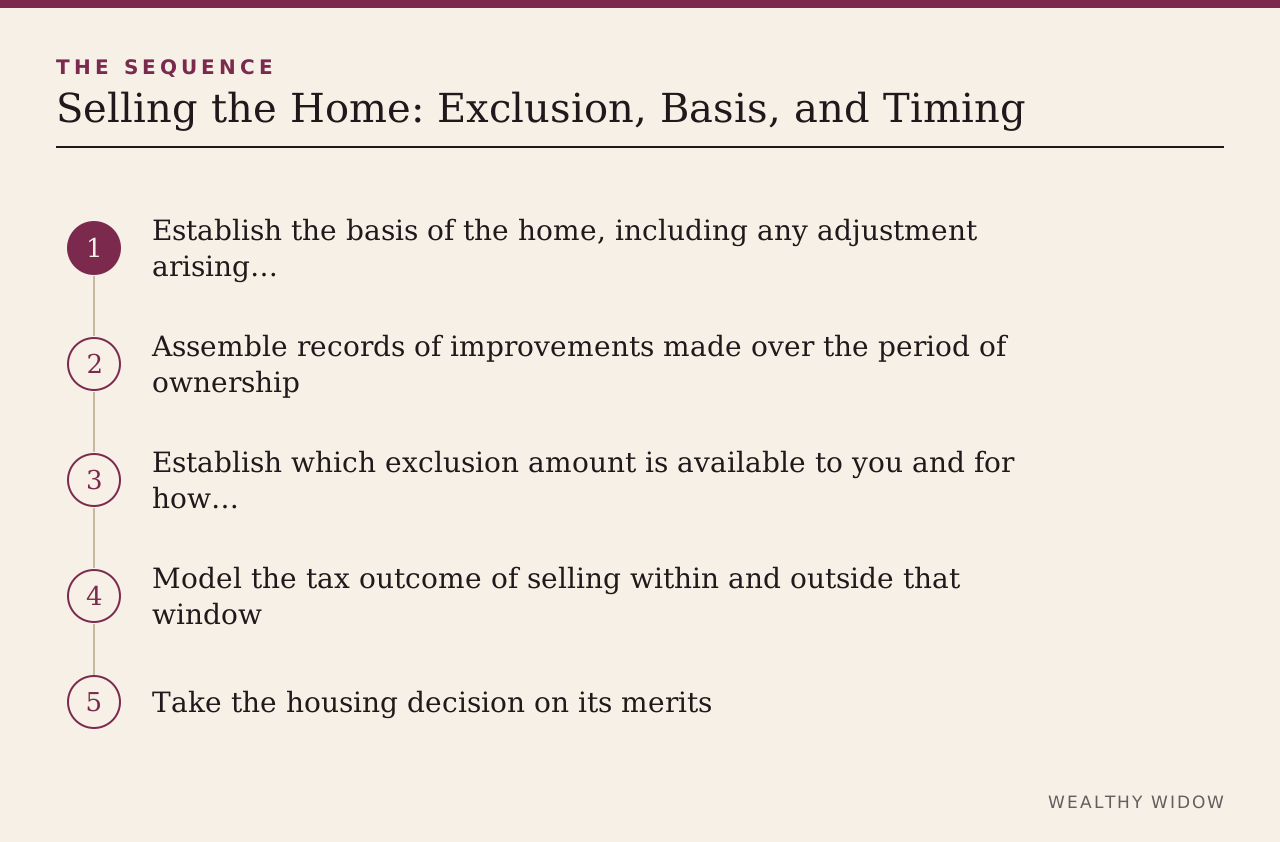
- Establish the basis of the home, including any adjustment arising on the death.
- Assemble records of improvements made over the period of ownership.
- Establish which exclusion amount is available to you and for how long.
- Model the tax outcome of selling within and outside that window.
- Take the housing decision on its merits, then let the tax analysis inform the timing.
The errors worth naming in advance
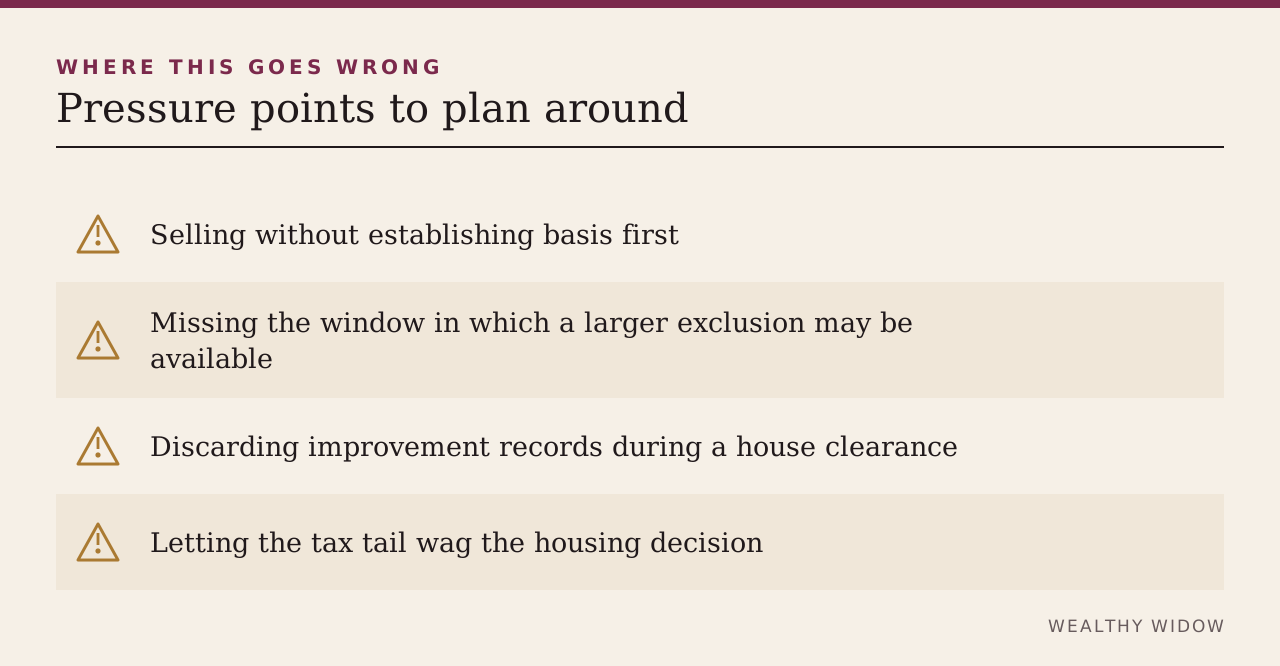
Each of these is a signal to stop and confirm rather than proceed. Selling without establishing basis first, and overstating the gain considerably.
Missing the window in which a larger exclusion may be available. Discarding improvement records during a house clearance, which is extremely common. Letting the tax tail wag the housing decision, and staying somewhere unsuitable for a modest saving.
The evidence to gather
You will be asked for these in some combination by almost everyone involved.
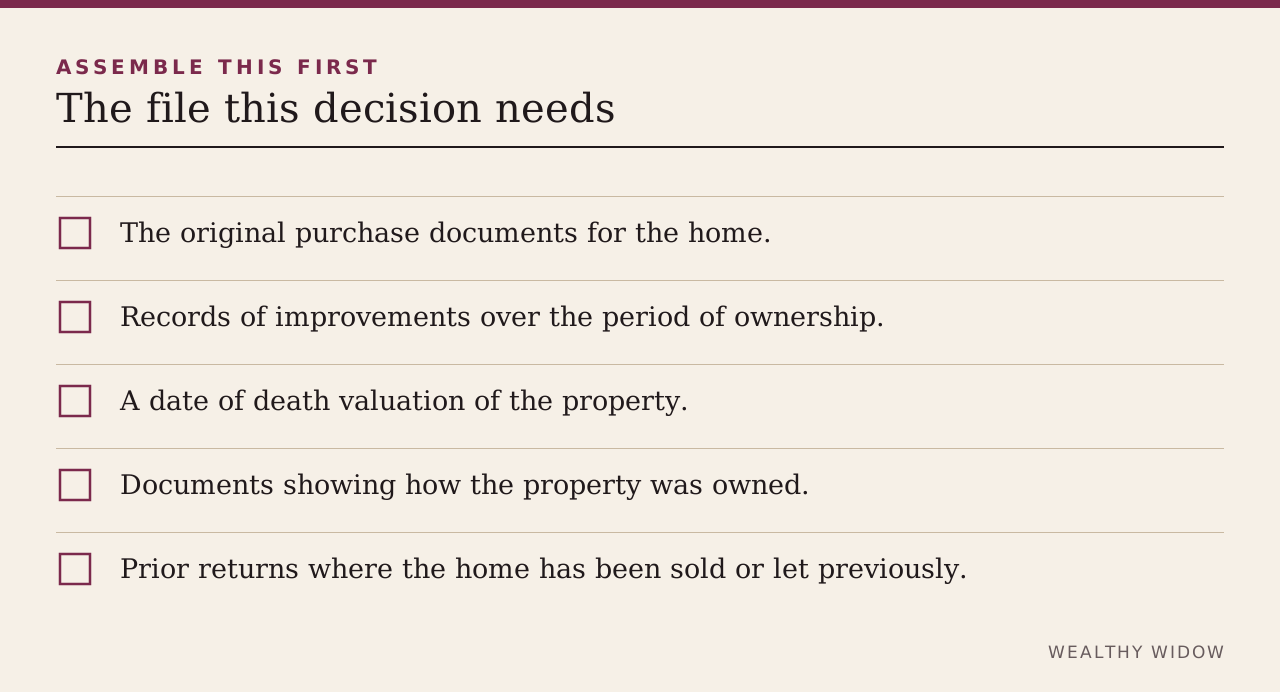
- The original purchase documents for the home.
- Records of improvements over the period of ownership.
- A date of death valuation of the property.
- Documents showing how the property was owned.
- Prior returns where the home has been sold or let previously.
What to have documented
Put each of these in the file with a date against it.
- The basis of the home after any adjustment.
- Which exclusion amount is available, and until when.
- Whether ownership and use tests are satisfied.
- The estimated tax on a sale at the current value.
What to ask before you sign
Ask these before an engagement letter is signed or a product is recommended.
- What basis do I have in this home now?
- Which exclusion amount applies to me, and for how long?
- What is the estimated tax if I sell this year rather than in two years?
- What records do I need to support the improvements I have made?
Verify each point at source
Check anything that will drive a decision against the source itself, not against this summary of it.
- Internal Revenue Service — Publication 523, selling your home
- Internal Revenue Service — About Publication 523, selling your home
- Internal Revenue Service — Topic no. 701, sale of your home
- Internal Revenue Service — Sale of residence, real estate tax tips
What this guide does not settle
What follows is the shape of the problem, not an answer to your version of it. It cannot state exclusion amounts or run your numbers; those depend on the current year rules and on your ownership history.
Closing the loop
Establish basis and the applicable exclusion before deciding when to sell. Then make the housing decision first and let the timing be informed by tax rather than dictated by it.
A companion guide, The Income That Was Earned But Never Received, covers the decision that sits alongside this one.
Primary sources
- Internal Revenue Service — Publication 523, selling your home
- Internal Revenue Service — About Publication 523, selling your home
- Internal Revenue Service — Topic no. 701, sale of your home
- Internal Revenue Service — Sale of residence, real estate tax tips
This article provides general education, not individualized legal, tax, investment, insurance, or benefits advice. Rules and deadlines change; verify the current requirement with the agency and a qualified professional.