Home
Selling Contents: Knowing What Is Valuable Before It Leaves
House clearance companies, estate sale organisers, and dealers all operate differently, and the difference can be substantial.

Widowhood arrives with a queue of decisions that all look equally urgent. House clearance companies, estate sale organisers, and dealers all operate differently, and the difference can be substantial. They are not the same task, and treating them as one is how good decisions get made badly.
Contents disposal sits at the intersection of grief, time pressure, and information asymmetry. The buyer usually knows far more than the seller about what is in the room.
Nobody offering to clear a house for free is doing it for free, and the payment is whatever they find.
Separate the label from the decision
These are the points the rest of the decision rests on, so it is worth being sure of them before going further. Estate sale organisers, auction houses, and clearance companies operate on very different bases. Items with genuine value are frequently unremarkable in appearance, particularly jewellery, art, and collections. A valuation before disposal costs money and regularly returns more than it costs.
Where the contents form part of an estate, a representative has duties in how they are disposed of. Date of death values may be needed for tax purposes regardless of what is later received.
A working sequence for this decision
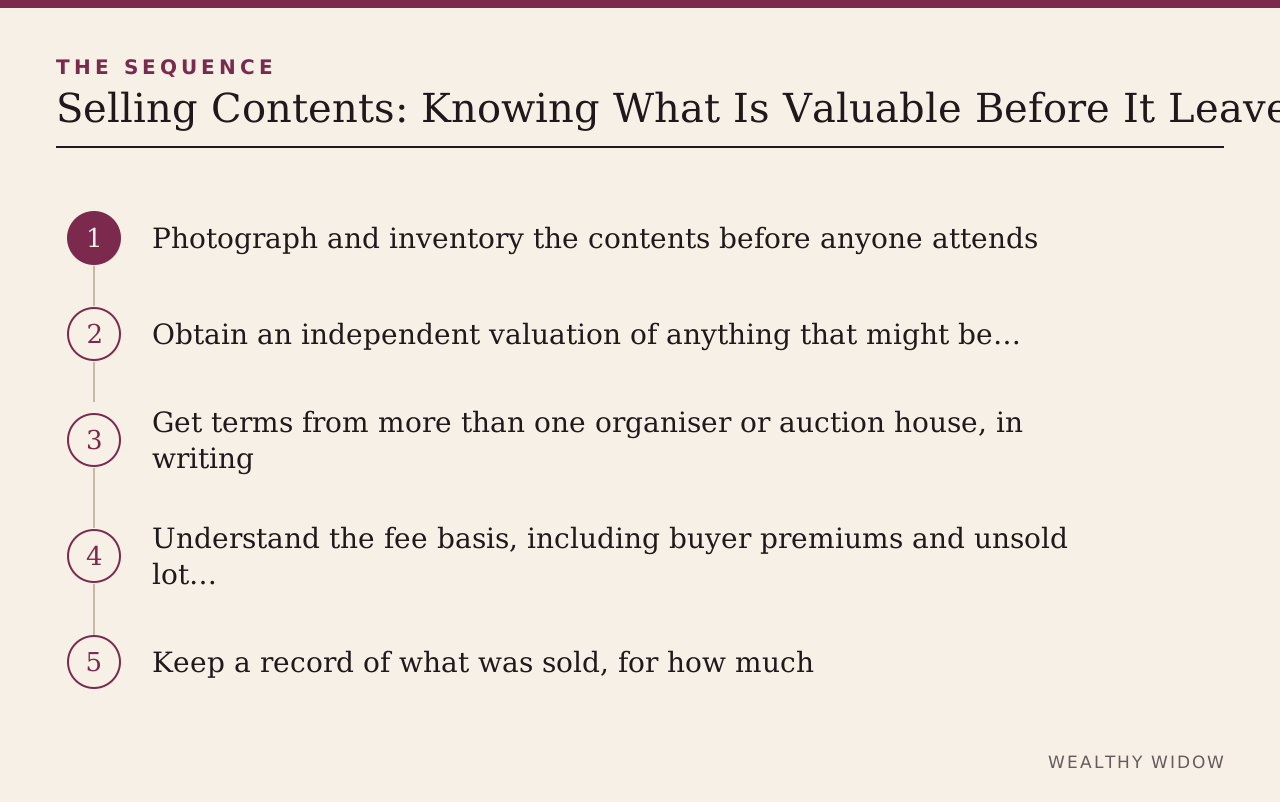
Take it in this sequence. Reversing the order tends to create work rather than save it, and occasionally forecloses a choice.
- Photograph and inventory the contents before anyone attends.
- Obtain an independent valuation of anything that might be significant.
- Get terms from more than one organiser or auction house, in writing.
- Understand the fee basis, including buyer premiums and unsold lot charges.
- Keep a record of what was sold, for how much, and to whom.
The predictable errors
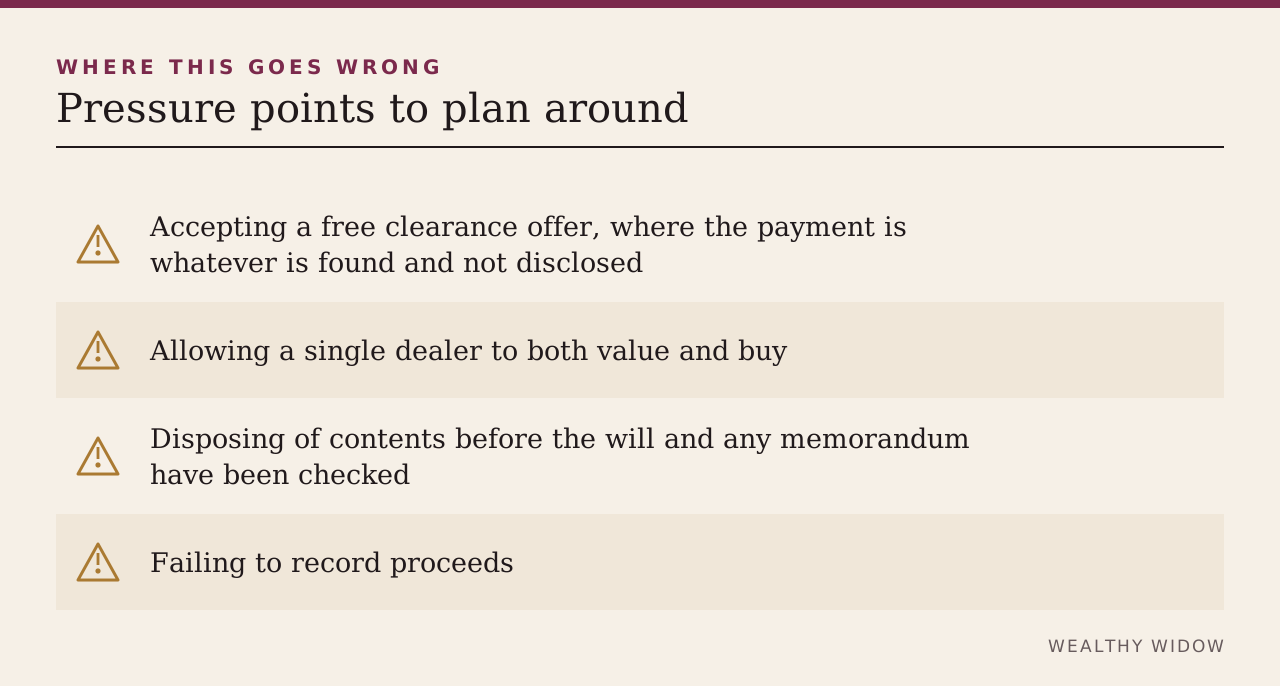
Watch for the following, and treat each as a reason to slow down. Accepting a free clearance offer, where the payment is whatever is found and not disclosed.
Allowing a single dealer to both value and buy, which is a plain conflict. Disposing of contents before the will and any memorandum have been checked. Failing to record proceeds, which a representative may have to account for.
Assemble the file
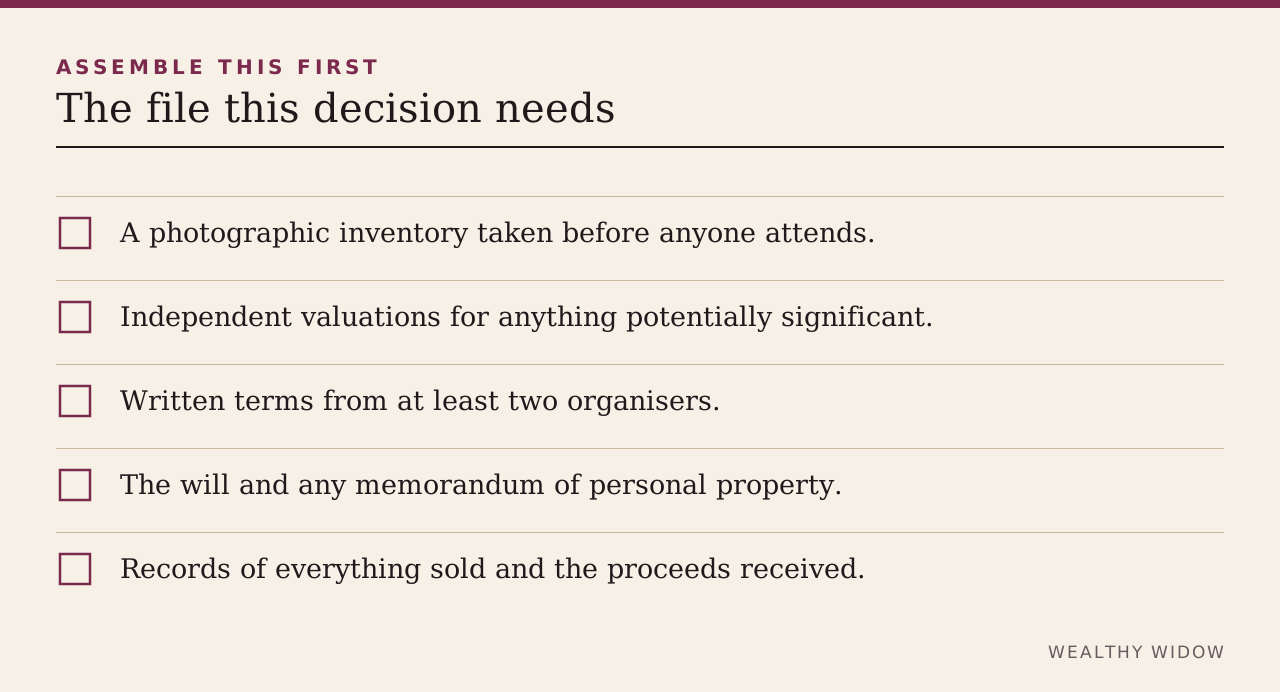
Having the file complete before the first call removes most of the back and forth that follows.
- A photographic inventory taken before anyone attends.
- Independent valuations for anything potentially significant.
- Written terms from at least two organisers.
- The will and any memorandum of personal property.
- Records of everything sold and the proceeds received.
Put these in writing, then proceed
A conversation is a starting point. These belong on paper.
- What the fee basis actually is, including all charges.
- That nothing specifically bequeathed is being sold.
- That anything potentially valuable has been independently valued.
- That proceeds are recorded for the estate accounts.
Before anyone is engaged, ask these
Ask them plainly; the response tells you as much as the answer.
- What is your fee, including any buyer premium and unsold lot charge?
- Who values the items, and are they connected to the buyer?
- What would you expect these items to achieve, and on what basis?
- What happens to items that do not sell?
Verify each point at source
Check anything that will drive a decision against the source itself, not against this summary of it.
- Federal Trade Commission — Scams and identity theft
- Federal Trade Commission — Consumer advice
- Internal Revenue Service — Publication 551, basis of assets
- Internal Revenue Service — Information for executors
What this guide does not settle
What follows is the shape of the problem, not an answer to your version of it. It cannot value contents, and an independent valuer with no interest in buying is the person who can.
Closing the loop
Photograph everything, value independently, and get terms from more than one party in writing. The information asymmetry in this transaction is enormous, and a valuation is the only thing that closes it.
For the step that usually comes next, read Treating the House as an Asset Without Treating It Only as an Asset.
Primary sources
- Federal Trade Commission — Scams and identity theft
- Federal Trade Commission — Consumer advice
- Internal Revenue Service — Publication 551, basis of assets
- Internal Revenue Service — Information for executors
This article provides general education, not individualized legal, tax, investment, insurance, or benefits advice. Rules and deadlines change; verify the current requirement with the agency and a qualified professional.