Home
Household Security After a Change in Occupancy
A change in who lives at an address is worth reviewing deliberately, both for physical security and for the information others now hold.

Institutions will describe this as routine. For you it is not routine, and the stakes are not symmetrical. A change in who lives at an address is worth reviewing deliberately, both for physical security and for the information others now hold.
Security after a death has two parts: the physical arrangements at the property, and the fact that a number of people now know the household composition has changed.
Arrangements set up for a two-person household frequently assume a second person is there, and that assumption has changed.
First, get the category right
Begin with what can be said with confidence, and treat everything beyond it as still to be established. An obituary or funeral notice may reveal that a household has changed or when a property may be empty. Contractors, carers, and others may still hold keys or codes granted under different circumstances. Alarm systems, key-holder lists, and emergency contacts may also still name the person who died.
Funeral timings are sometimes used to identify when a property will be empty. Local services can advise on both security and personal safety arrangements.
Take the steps in this order
A workable order follows. Each step assumes the last one is done.
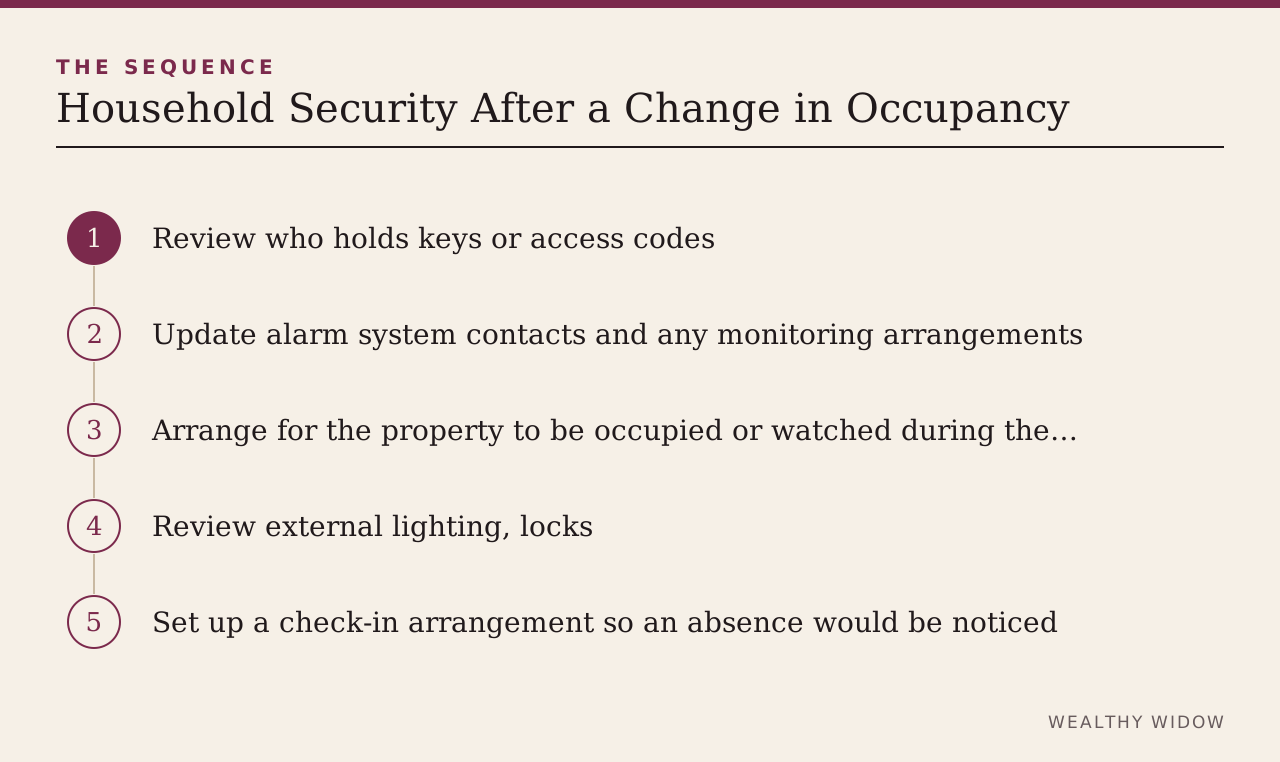
- Review who holds keys or access codes, and change what should be changed.
- Update alarm system contacts and any monitoring arrangements.
- Arrange for the property to be occupied or watched during the funeral.
- Review external lighting, locks, and visibility from the street.
- Set up a check-in arrangement so an absence would be noticed.
What to watch for
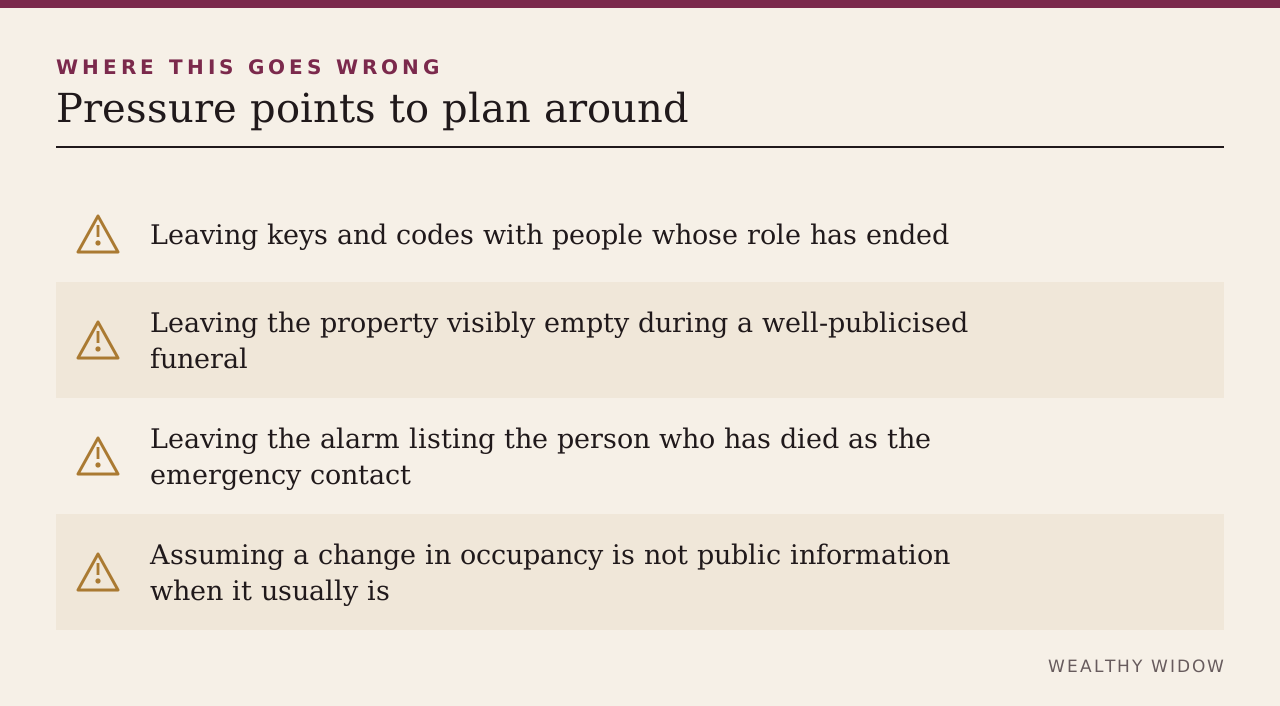
These are the places where readers most often lose ground. Leaving keys and codes with people whose role has ended.
Leaving the property visibly empty during a well-publicised funeral. Leaving the alarm listing the person who has died as the emergency contact. Assuming a change in occupancy is not public information when it usually is.
Documents this decision needs
Organisations will ask for these repeatedly, so assemble them once and keep them together.
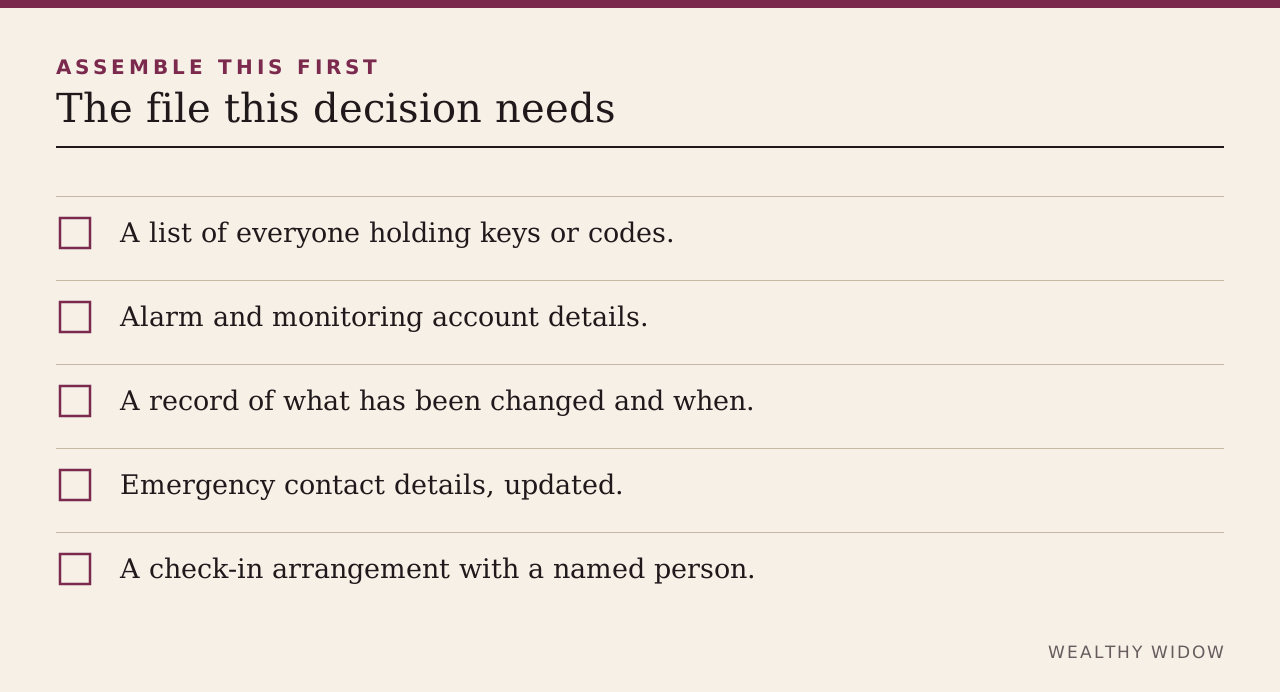
- A list of everyone holding keys or codes.
- Alarm and monitoring account details.
- A record of what has been changed and when.
- Emergency contact details, updated.
- A check-in arrangement with a named person.
Do not proceed on a verbal answer
Ask for each of these in a form you can save, date, and produce again months later if it is questioned.
- Who currently holds access to the property.
- That alarm and monitoring contacts are current.
- That the property will not stand visibly empty at a known time.
- That a check-in arrangement is in place.
Put these questions directly
A competent professional will welcome these questions. Hesitation is itself information.
- Who currently has keys or codes to this property?
- Can you update the emergency contacts on this account?
- What security improvements would you recommend here?
- What local support exists for personal safety?
Read the rule yourself
The sources below govern. This guide only summarises them.
- CISA — Personal Security Considerations Action Guide
- Federal Trade Commission — Identity theft
- Administration for Community Living — Eldercare Locator
The limits of this guide
This is where general guidance ends and your own paperwork takes over. It cannot assess your property, and local services or a security assessment will identify things a general list will not.
What to hold on to
Review the access list, update the contacts, and arrange cover for the funeral. It is an hour of administration at a point when the household composition has become public information.
A companion guide, Comparing Housing Options Without Being Sold One, covers the decision that sits alongside this one.
Primary sources
- CISA — Personal Security Considerations Action Guide
- Federal Trade Commission — Identity theft
- Administration for Community Living — Eldercare Locator
This article provides general education, not individualized legal, tax, investment, insurance, or benefits advice. Rules and deadlines change; verify the current requirement with the agency and a qualified professional.