Money
Why the Approaches Increase, and How to Recognise Them
Recently widowed women are targeted deliberately by fraud, and by high-pressure sales that is legal but not much better.

Institutions will describe this as routine. For you it is not routine, and the stakes are not symmetrical. Recently widowed women are targeted deliberately by fraud, and by high-pressure sales that is legal but not much better.
The increase in approaches is not imagined. Public records make the circumstances knowable, and the combination of liquidity, grief, and unfamiliarity with the household finances is precisely what both fraudsters and aggressive salespeople look for.
Fraud and hard selling share a structure: urgency, authority, isolation, and a request to act before you consult anyone.
What is really being decided here
Start with what is actually true of this decision. Public records and obituaries make a recent death, and often an address, easy to identify. Government agencies do not call demanding immediate payment, threaten arrest, or request gift cards or transfers. Isolation is a common tactic: being told not to discuss the matter with family or advisers is a reliable warning sign.
Legal but aggressive sales uses the same pressure techniques as fraud, and the financial damage can be comparable. Registration and disciplinary records for investment professionals are publicly searchable in minutes.
What to do, and in what order
The sequence below is the one that keeps you in control of the pace.
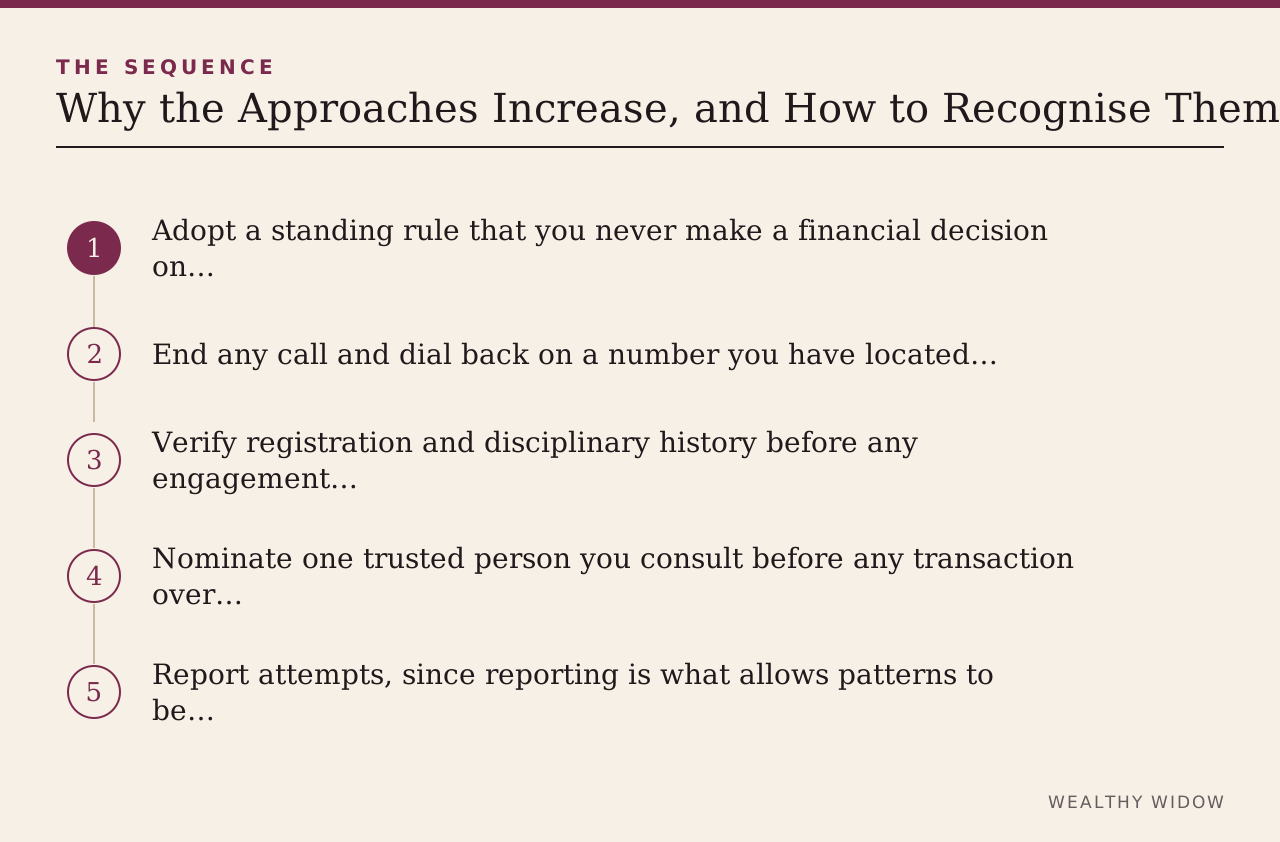
- Adopt a standing rule that you never make a financial decision on an inbound call, without exception.
- End any call and dial back on a number you have located independently.
- Verify registration and disciplinary history before any engagement with an investment professional.
- Nominate one trusted person you consult before any transaction over an amount you set in advance.
- Report attempts, since reporting is what allows patterns to be identified.
The mistakes that are hard to reverse
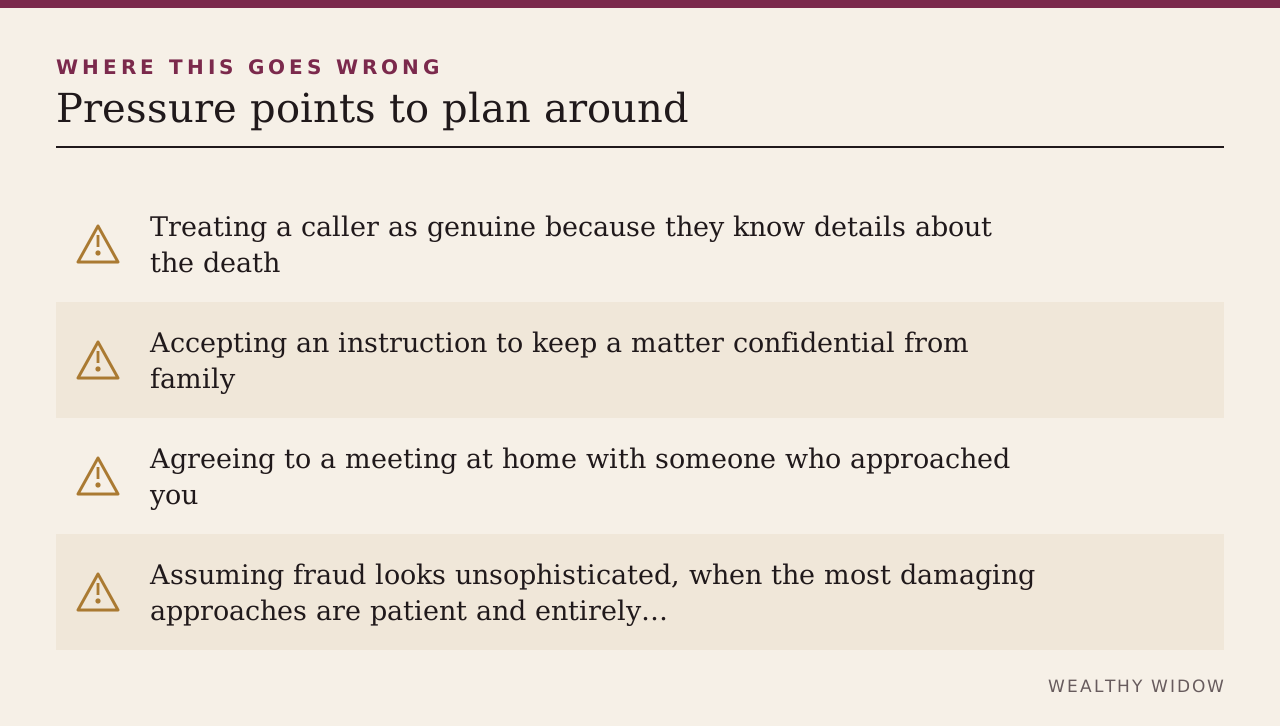
These recur often enough across households to be planned around rather than discovered one at a time. Treating a caller as genuine because they know details about the death, which are public.
Accepting an instruction to keep a matter confidential from family, which is the isolation tactic working. Agreeing to a meeting at home with someone who approached you, rather than at their regulated office. Assuming fraud looks unsophisticated, when the most damaging approaches are patient and entirely plausible.
Before the first call, collect these
Gather these first. A call made without them usually has to be made again.
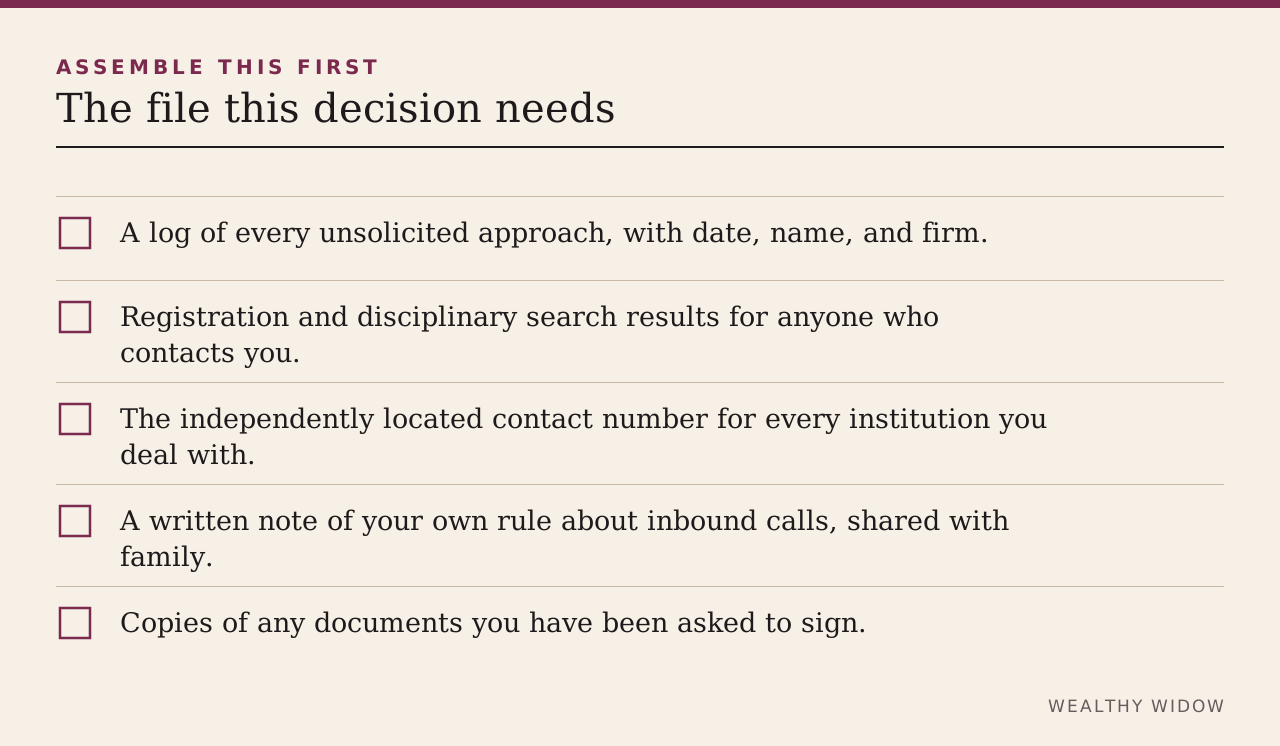
- A log of every unsolicited approach, with date, name, and firm.
- Registration and disciplinary search results for anyone who contacts you.
- The independently located contact number for every institution you deal with.
- A written note of your own rule about inbound calls, shared with family.
- Copies of any documents you have been asked to sign.
The written record you should hold
Hold written confirmation of each of these points before you rely on any of them to make a decision.
- The identity and registration of anyone proposing a transaction.
- That any request for payment is genuine, verified through an independent channel.
- What you have been asked to sign, read by someone else before you sign it.
- That your nominated trusted contact knows the arrangement.
What a good adviser will answer plainly
Whoever advises you should be able to answer each of these plainly and in writing.
- What is your registration number, and which regulator holds it?
- Why does this need to be decided today rather than next month?
- Why would I not discuss this with my family or another adviser?
- Will you put this recommendation, and your compensation, in writing?
The primary material
Each load-bearing point above traces to one of the following, and they are the versions that stay current.
- Federal Trade Commission — Scams and identity theft
- Social Security Administration — Protect yourself from Social Security scams
- Social Security Administration Office of the Inspector General — Report fraud
- U.S. Securities and Exchange Commission — Ask and check
Where general guidance ends
Here is the line between what can usefully be written for a general readership and what cannot be written at all. It cannot vet a specific approach for you. It can give you a rule that works regardless of how plausible any individual approach appears.
What this comes down to
One rule covers almost all of it: no financial decision on an inbound contact, ever. It costs nothing, offends nobody who is legitimate, and removes the mechanism on which nearly every approach depends.
Our related guide Your Own Beneficiary Forms Are Now Out of Date covers the adjacent problem.
Primary sources
- Federal Trade Commission — Scams and identity theft
- Social Security Administration — Protect yourself from Social Security scams
- Social Security Administration Office of the Inspector General — Report fraud
- U.S. Securities and Exchange Commission — Ask and check
This article provides general education, not individualized legal, tax, investment, insurance, or benefits advice. Rules and deadlines change; verify the current requirement with the agency and a qualified professional.