Life After Loss
Declining Things Without Providing a Justification
Widowhood generates invitations, requests, and expectations, and the energy spent explaining each refusal is energy you do not have.

Grief can affect energy, sleep, appetite, concentration, and social preference differently from one person to another. A short refusal is a practical communication tool for periods when you want fewer commitments; it is not a clinical prescription to withdraw from people.
Invitations and requests from family, organizations, and people who mean well can still require energy to evaluate. A reusable response removes the need to invent a new explanation each time.
A complete answer can be courteous without turning your capacity into a subject for negotiation.
What is really being decided here
Most of the confusion here clears once the choice is separated from the explanation. Giving a reason may invite a follow-up solution, while “I can’t take that on” communicates the decision itself. NIA also cautions that the right level of social activity differs by person, so use boundaries to choose sustainable contact rather than to turn temporary low capacity into automatic isolation.
A short standard phrase can be used consistently without appearing personal. Declining now does not preclude accepting later, and saying so keeps the relationship intact.
What to do, and in what order
Work deliberately, one step at a time, and treat each as complete before the next one starts.
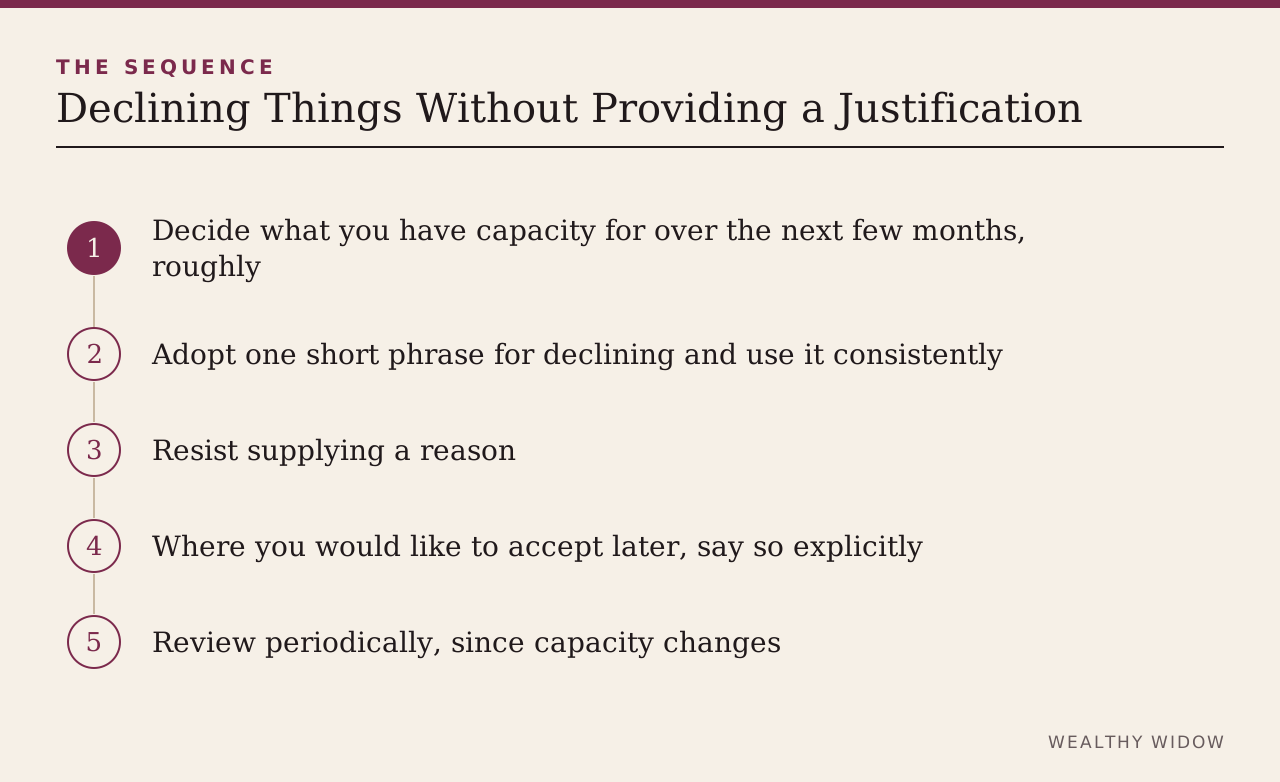
- Decide what you have capacity for over the next few months, roughly.
- Adopt one short phrase for declining and use it consistently.
- Resist supplying a reason, since the reason becomes the subject of discussion.
- Where you would like to accept later, say so explicitly.
- Review periodically, since capacity changes.
The mistakes that are hard to reverse
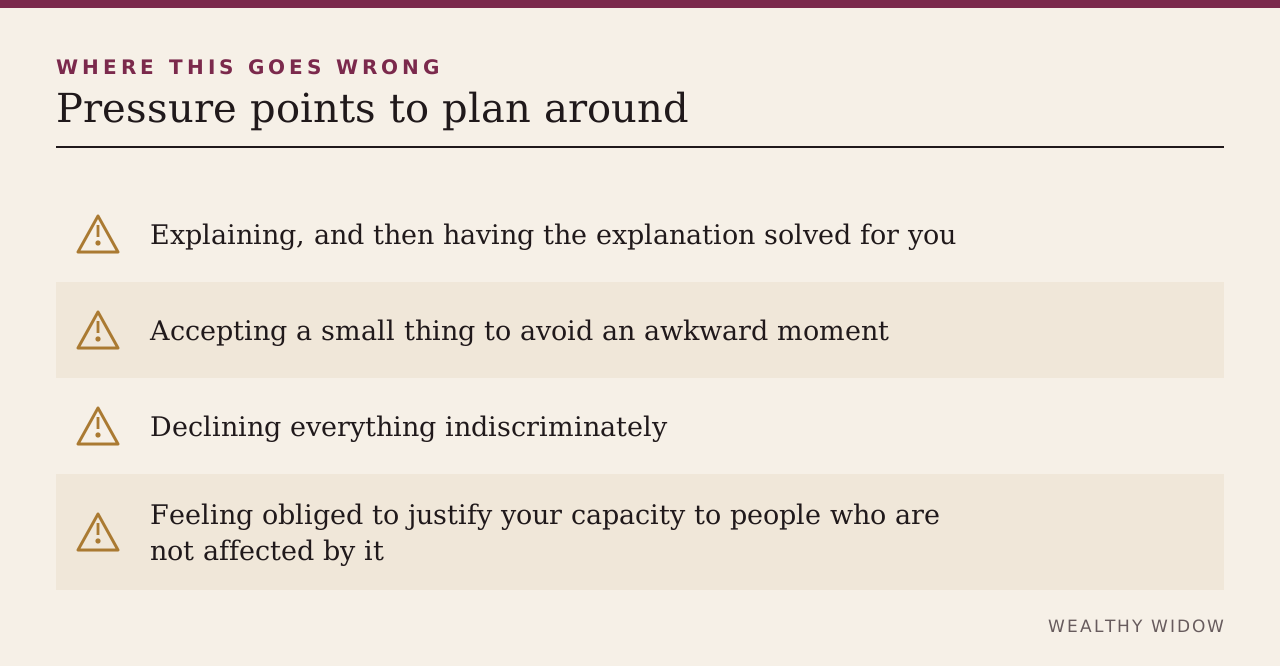
Knowing the failure modes is half of it; the following are the usual ways this goes wrong. Explaining, and then having the explanation solved for you.
Accepting a small thing to avoid an awkward moment, and creating a precedent. Declining everything indiscriminately, which reduces future invitations. Feeling obliged to justify your capacity to people who are not affected by it.
Assemble this evidence before you start
Note these before responding so the choice reflects your actual capacity rather than the pressure of the moment.
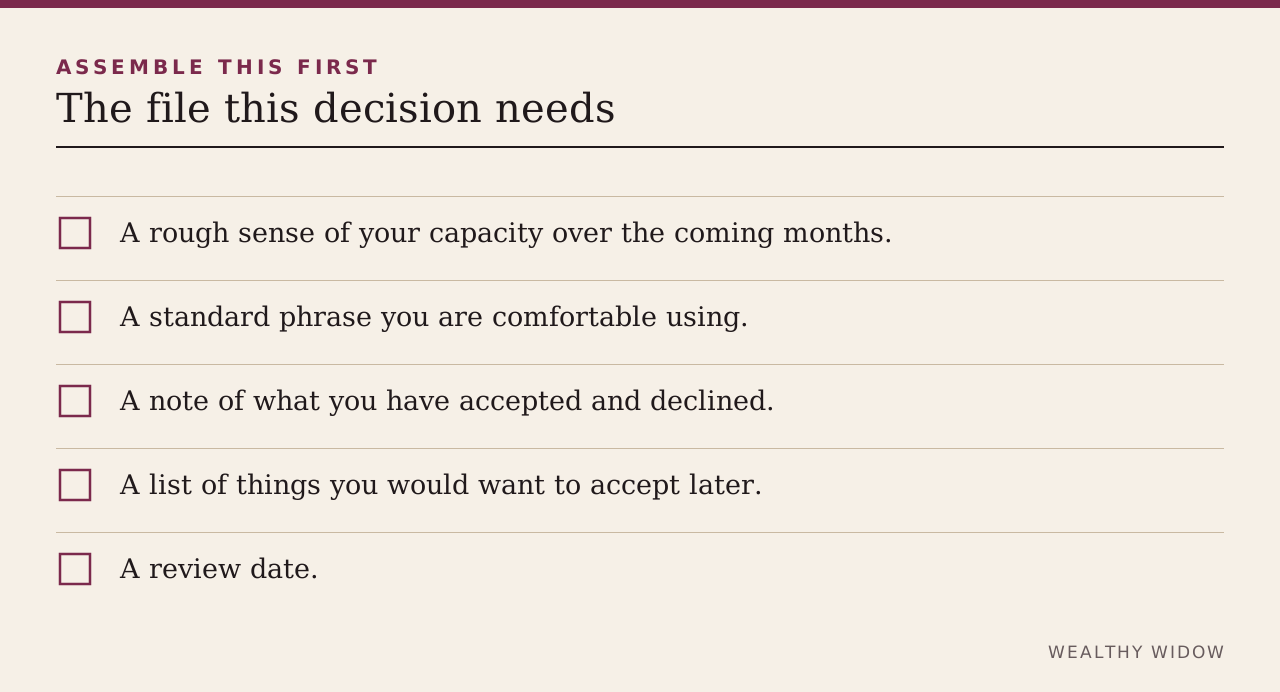
- A rough sense of your capacity over the coming months.
- A standard phrase you are comfortable using.
- A note of what you have accepted and declined.
- A list of things you would want to accept later.
- A review date.
Make the boundary reusable
The point is to reduce repeated decision-making, not to create evidence for a dispute.
- That you have a phrase you can use without preparation.
- That you are not supplying reasons that invite negotiation.
- That people you want to hear from again know that.
- That your capacity is reviewed rather than fixed.
The questions that change the answer
A competent professional answers each of these without hesitation.
- Would you ask me again in a few months?
- Is there a smaller version of this I could do instead?
- Can I let you know closer to the time?
- Would it help if I did this part rather than all of it?
The sources behind this
Anything that will drive a decision should be checked here rather than here-abouts.
- National Institute on Aging — Coping with grief and loss
- Substance Abuse and Mental Health Services Administration — Coping with bereavement and grief
- National Institute on Aging — Participating in activities you enjoy
Where this guide stops
The boundary matters, because the wrong assumption here is expensive. It cannot decide what to accept, and the point is not to decline more but to decline with less effort.
In practice
Choose one courteous phrase you can use without preparation: “Thank you for asking, but I can’t take that on.” Add “Please ask me again another time” only when you mean it, and revisit your level of contact as capacity changes.
Our related guide The Animal in the House: Comfort and Contingency covers the adjacent problem.
Primary sources
- National Institute on Aging — Coping with grief and loss
- Substance Abuse and Mental Health Services Administration — Coping with bereavement and grief
- National Institute on Aging — Participating in activities you enjoy
This article provides general education, not individualized legal, tax, investment, insurance, or benefits advice. Rules and deadlines change; verify the current requirement with the agency and a qualified professional.