Money
Paper Certificates and Savings Bonds: The Assets Hiding in Drawers
Older households frequently hold paper bonds and certificates that no statement mentions, and that nobody will chase you about.

This guide covers a decision that is easy to make quickly and expensive to make wrongly. Older households frequently hold paper bonds and certificates that no statement mentions, and that nobody will chase you about.
Paper holdings sit outside the digital record entirely. They surface during a house clearance, or they do not surface at all, and both outcomes are common.
An asset that generates no statement is an asset nobody will remind you about, including the institution holding it.
The decision behind the form
These are the load-bearing facts. Paper savings bonds and share certificates represent real holdings and remain valid, even when decades old. Some bonds stop earning interest after a period, so holding them longer produces nothing. Redemption and transfer after a death follow defined procedures that vary by instrument.
Interest on certain holdings has tax consequences on redemption that should be understood first. Unredeemed holdings may eventually be reported to a state unclaimed property office.
Step by step, in this order
Sequence matters, because some steps close options that later steps need.
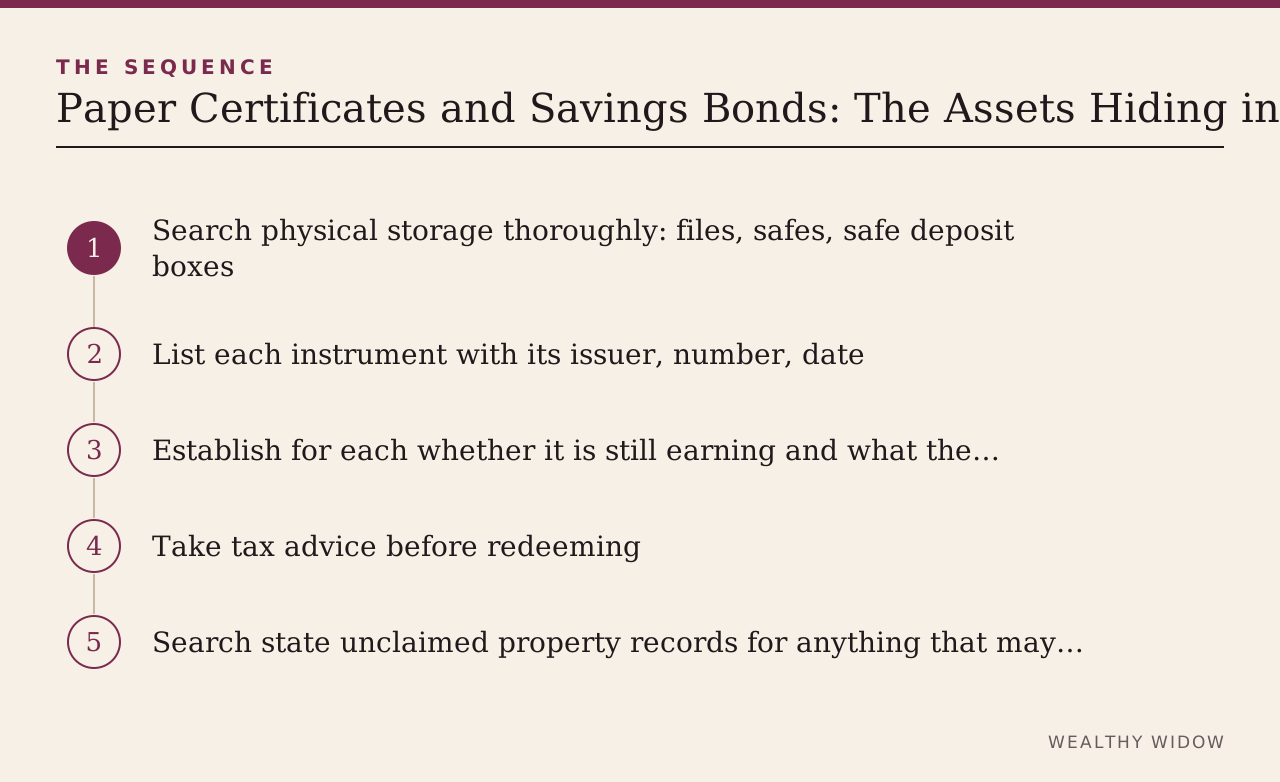
- Search physical storage thoroughly: files, safes, safe deposit boxes, and books.
- List each instrument with its issuer, number, date, and face value.
- Establish for each whether it is still earning and what the redemption procedure is.
- Take tax advice before redeeming, since timing can matter.
- Search state unclaimed property records for anything that may already have been reported.
The costly misreadings
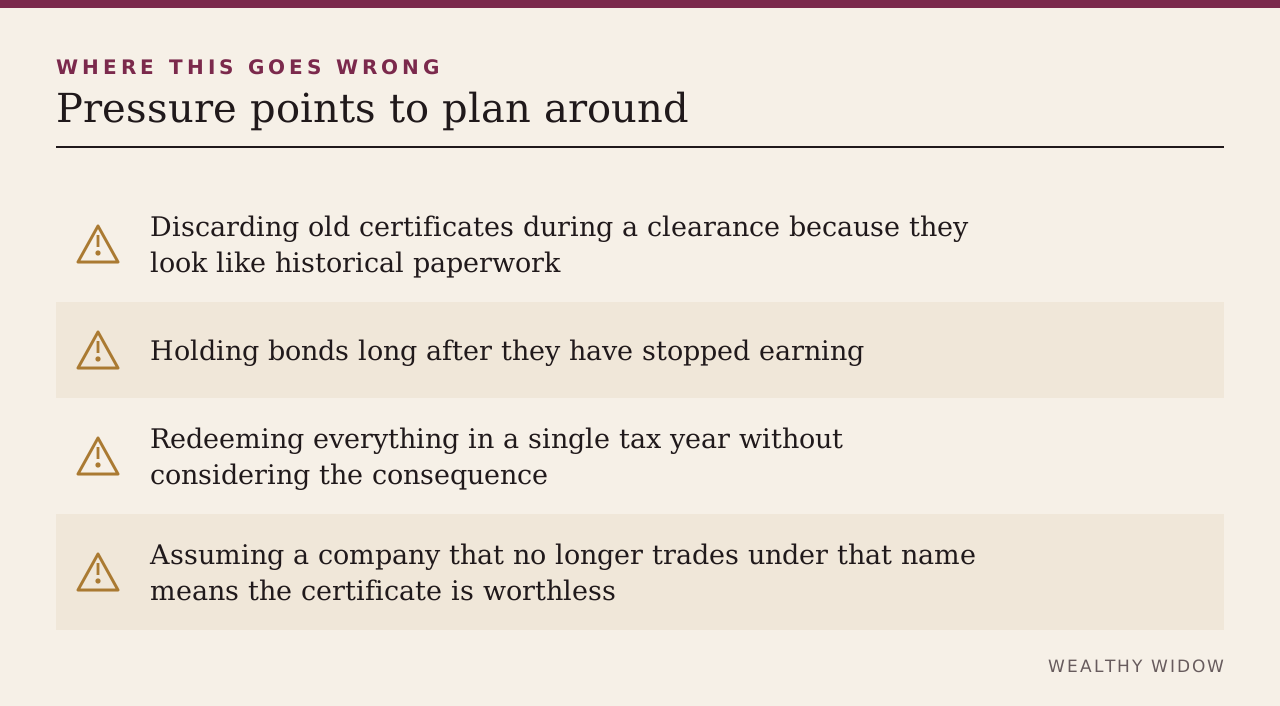
What follows is where readers most reliably lose ground. Discarding old certificates during a clearance because they look like historical paperwork.
Holding bonds long after they have stopped earning, which is a silent cost. Redeeming everything in a single tax year without considering the consequence. Assuming a company that no longer trades under that name means the certificate is worthless.
The paperwork this actually requires
The file below does most of the work of establishing who you are.
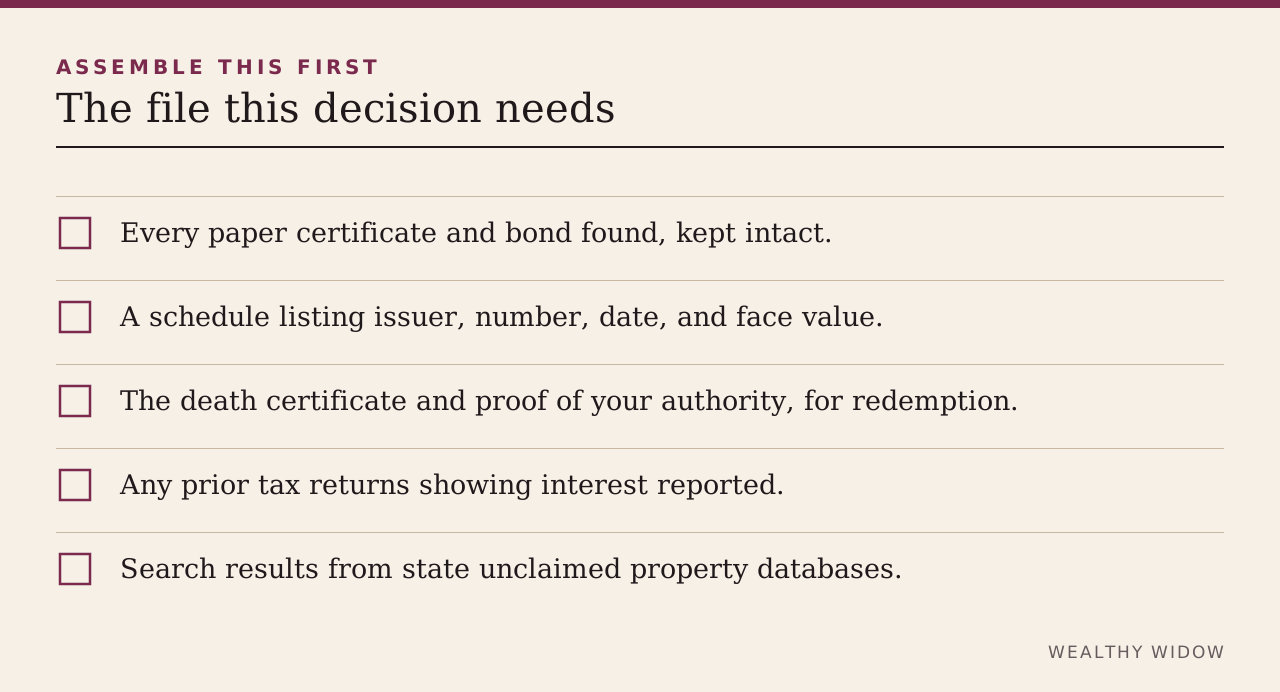
- Every paper certificate and bond found, kept intact.
- A schedule listing issuer, number, date, and face value.
- The death certificate and proof of your authority, for redemption.
- Any prior tax returns showing interest reported.
- Search results from state unclaimed property databases.
What belongs in your decision log
Get each of the following documented rather than described.
- Whether each instrument is still earning.
- The redemption or transfer procedure for each.
- The tax treatment on redemption.
- Whether any holding has already been reported as unclaimed.
Questions that reveal the answer
Each of the following is both a fair question and a revealing one, and no competent adviser will resent it.
- Is this instrument still earning, and if not, since when?
- What is the procedure for redeeming or transferring this after a death?
- What tax arises on redemption, and does the timing matter?
- What happened to the company that issued this certificate?
Check it at source
These are the pages that change when the rules change, which is why they and not this guide are the authority.
- National Association of Unclaimed Property Administrators — Search beyond your state
- Internal Revenue Service — Deceased person
- Federal Deposit Insurance Corporation — Understanding deposit insurance
- USAGov — Dealing with the death of a loved one
What still needs a professional
Be clear about what remains outside anything written for a general readership. It cannot value your holdings or state current rates. Those come from the issuer and from the register, and both should be checked directly.
The working conclusion
Search the drawers before the clearance, list everything intact, and check the tax position before redeeming. Paper assets are easy to lose and entirely straightforward to claim once found.
Read Telling Your Children What You Intend, and What You Will Not Discuss next; the two decisions interact.
Primary sources
- National Association of Unclaimed Property Administrators — Search beyond your state
- Internal Revenue Service — Deceased person
- Federal Deposit Insurance Corporation — Understanding deposit insurance
- USAGov — Dealing with the death of a loved one
This article provides general education, not individualized legal, tax, investment, insurance, or benefits advice. Rules and deadlines change; verify the current requirement with the agency and a qualified professional.