Money
Your Own Beneficiary Forms Are Now Out of Date
Almost every widow has accounts and policies naming a spouse who has died. Updating them is quick, free, and frequently forgotten for years.

There is a version of this decision that takes ten minutes and a version that takes a season. Almost every widow has accounts and policies naming a spouse who has died. Updating them is quick, free, and frequently forgotten for years. The difference is whether the facts were assembled first.
This is among the highest-value hours available to a widow, and among the least glamorous. Forms naming a deceased spouse can send assets somewhere nobody intended, and the failure only becomes visible after your own death.
Beneficiary designations override your will, so an out-of-date form quietly defeats whatever your estate plan says.
Name the decision before you make it
These are the points the rest of the decision rests on, so it is worth being sure of them before going further. Retirement accounts and insurance policies generally pass by designation rather than under a will. Where a named beneficiary has died and no contingent is named, the asset may default to the estate, which is often the worst outcome. Passing through the estate can mean probate, delay, and in some cases less favourable tax treatment for the recipient.
Designations are held by each provider separately, so there is no single place to update them. Naming a minor directly can create the need for a court-supervised arrangement.
How to work through it
Take it in this sequence. Reversing the order tends to create work rather than save it, and occasionally forecloses a choice.
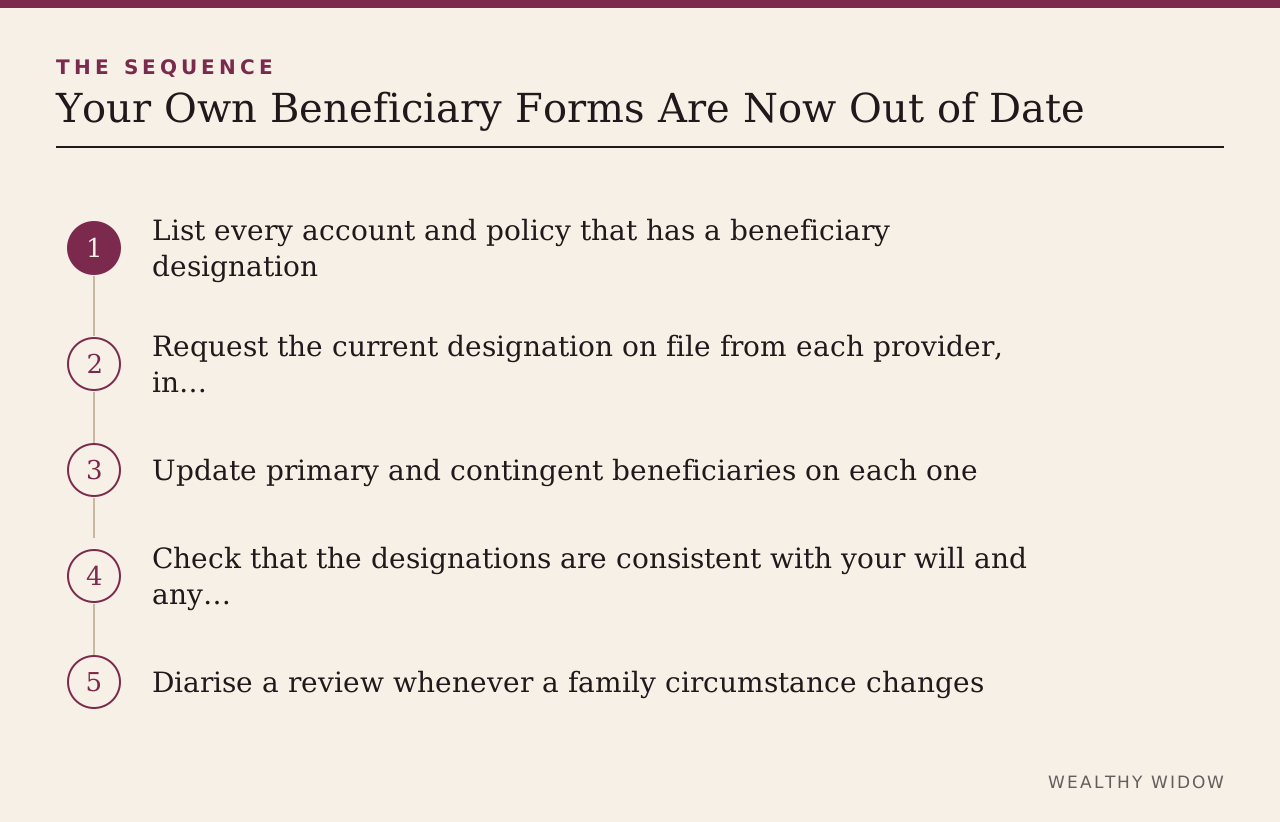
- List every account and policy that has a beneficiary designation.
- Request the current designation on file from each provider, in writing, rather than relying on memory.
- Update primary and contingent beneficiaries on each one, and keep the confirmation.
- Check that the designations are consistent with your will and any trust, and resolve any conflict deliberately.
- Diarise a review whenever a family circumstance changes, and at least every few years.
Known hazards
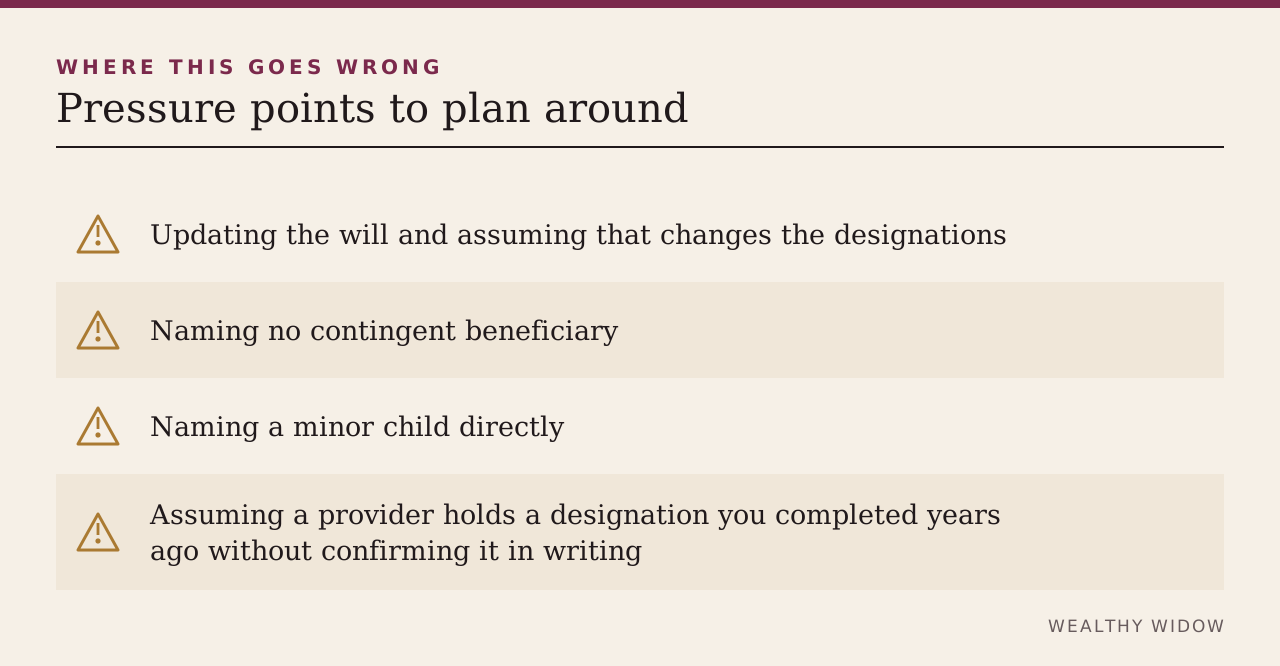
Watch for the following, and treat each as a reason to slow down. Updating the will and assuming that changes the designations, which it does not.
Naming no contingent beneficiary, so the asset defaults to the estate if the primary predeceases you. Naming a minor child directly, which can force a court-supervised arrangement. Assuming a provider holds a designation you completed years ago without confirming it in writing.
Assemble the file
Having the file complete before the first call removes most of the back and forth that follows.
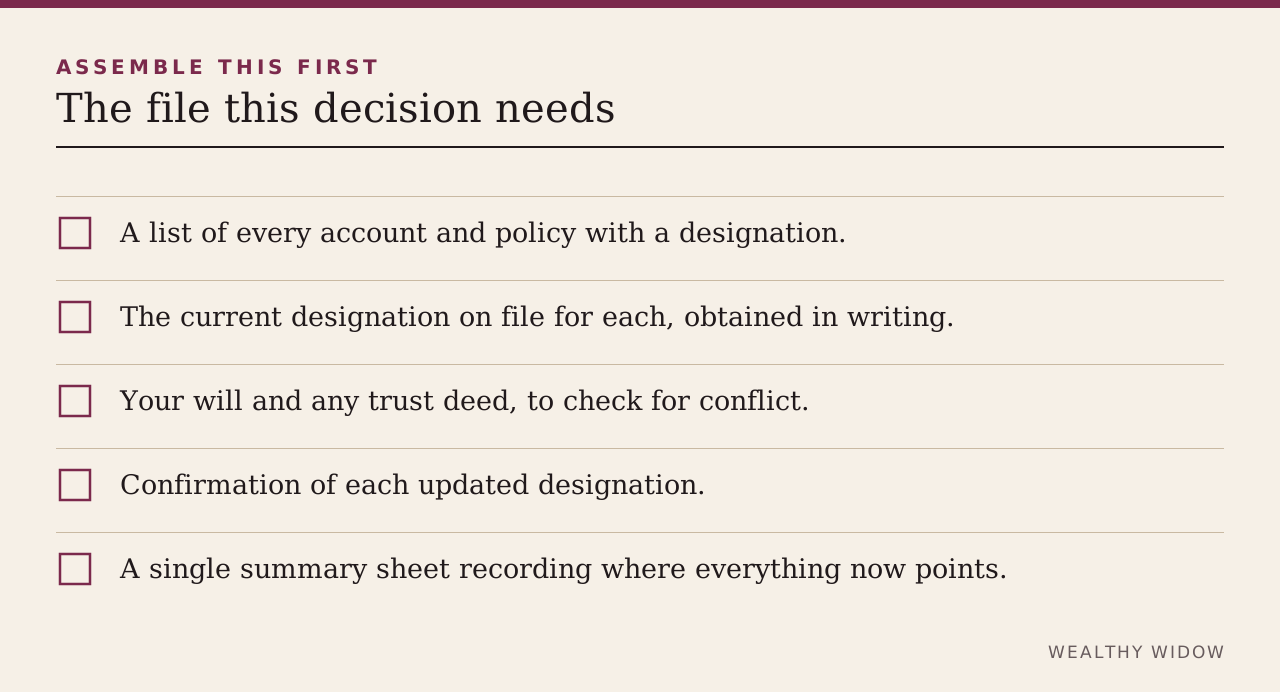
- A list of every account and policy with a designation.
- The current designation on file for each, obtained in writing.
- Your will and any trust deed, to check for conflict.
- Confirmation of each updated designation.
- A single summary sheet recording where everything now points.
Put these in writing, then proceed
A conversation is a starting point. These belong on paper.
- The current designation of record for every account and policy.
- That each update has been processed, confirmed in writing.
- That primary and contingent beneficiaries are both named.
- That designations and your will do not conflict.
Before anyone is engaged, ask these
Ask them plainly; the response tells you as much as the answer.
- What designation do you currently hold on file for this account?
- What happens if my named beneficiary predeceases me and there is no contingent?
- What are the tax consequences for each type of beneficiary I might name?
- How should I name a minor without forcing a court arrangement?
Where the current rule lives
Read the source directly for any figure, date, or threshold that will actually drive a decision you make.
- Internal Revenue Service — Retirement topics, beneficiary
- U.S. Securities and Exchange Commission — Investor.gov
- National Association of Insurance Commissioners — Consumer resources
- U.S. Department of Labor — Reporting and disclosure guide for employee benefit plans
What this cannot decide for you
General guidance sets out the shape of a decision. Your documents settle it. It cannot tell you who to name. It can ensure that whoever you choose is actually recorded, and that the forms and the will point the same way.
Before you move on
This is an afternoon of administration with an outsized effect. Confirm every designation in writing, name a contingent on each, and keep one summary sheet so the next review takes minutes rather than weeks.
Our related guide Care Costs: The Planning a Widow Now Does Alone covers the adjacent problem.
Primary sources
- Internal Revenue Service — Retirement topics, beneficiary
- U.S. Securities and Exchange Commission — Investor.gov
- National Association of Insurance Commissioners — Consumer resources
- U.S. Department of Labor — Reporting and disclosure guide for employee benefit plans
This article provides general education, not individualized legal, tax, investment, insurance, or benefits advice. Rules and deadlines change; verify the current requirement with the agency and a qualified professional.