Money
Reading a Portfolio Somebody Else Built
Inheriting responsibility for investments chosen by a spouse means understanding them before changing them, and the order matters.

There is a version of this decision that takes ten minutes and a version that takes a season. Inheriting responsibility for investments chosen by a spouse means understanding them before changing them, and the order matters. The difference is whether the facts were assembled first.
Many widows inherit not only assets but the responsibility for a strategy they did not design and may not have been consulted on. The instinct to simplify quickly is sound, and acting on it too fast is not.
Understand what you hold before you change what you hold, because selling in ignorance can create tax and cost you did not need to incur.
Name the decision before you make it
Before any advice, the ground facts. A portfolio has a structure, a cost, and a tax position, and each of the three needs understanding separately. Selling inherited investments can have tax consequences that differ from selling assets you always owned. Ongoing fund charges sit beneath any adviser fee and are frequently invisible on a statement summary.
Concentration in a single holding is a risk that may have been deliberate, or may simply never have been reviewed. A portfolio designed for two people with two time horizons may not suit one person with one.
How to work through it
Work through this deliberately. Each step assumes the one before it is done.
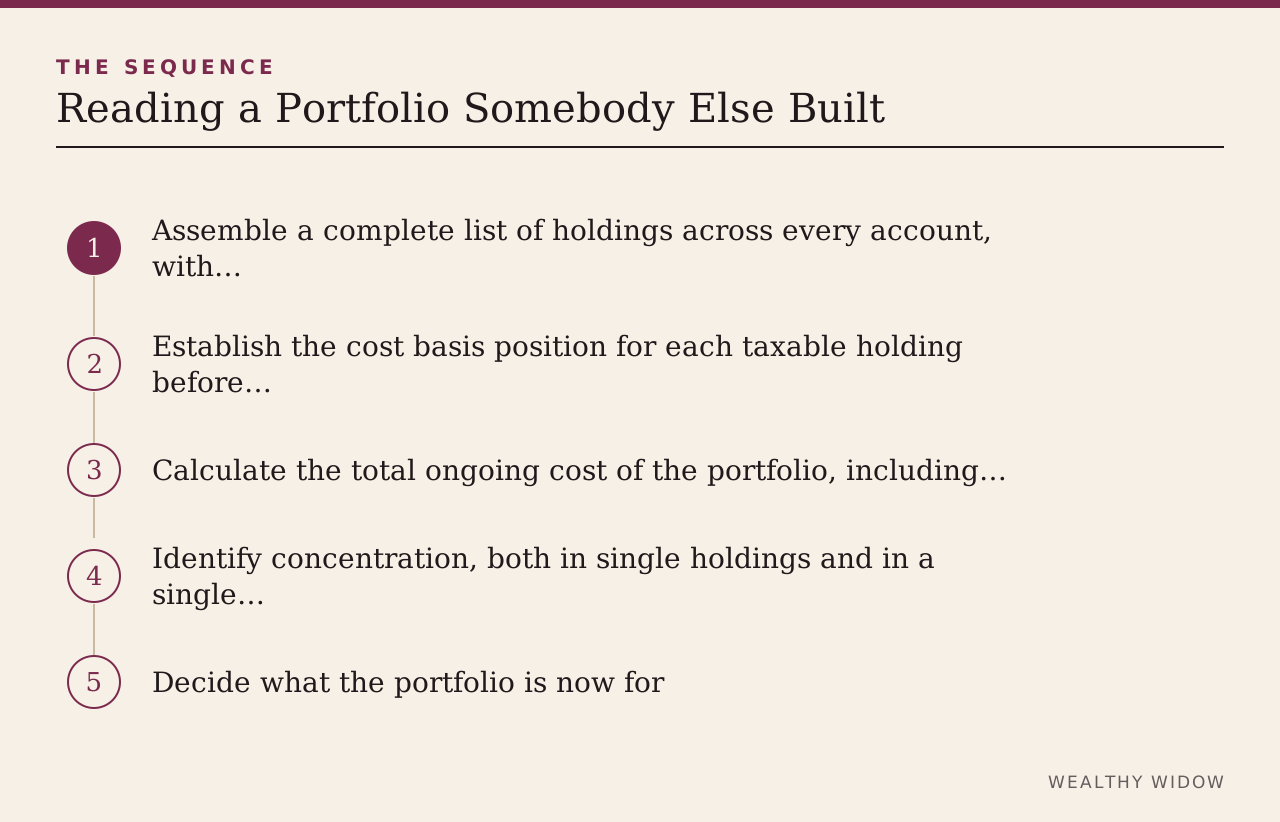
- Assemble a complete list of holdings across every account, with values and account types.
- Establish the cost basis position for each taxable holding before selling anything.
- Calculate the total ongoing cost of the portfolio, including fund-level charges.
- Identify concentration, both in single holdings and in a single sector or employer.
- Decide what the portfolio is now for, and only then consider changes to it.
Known hazards
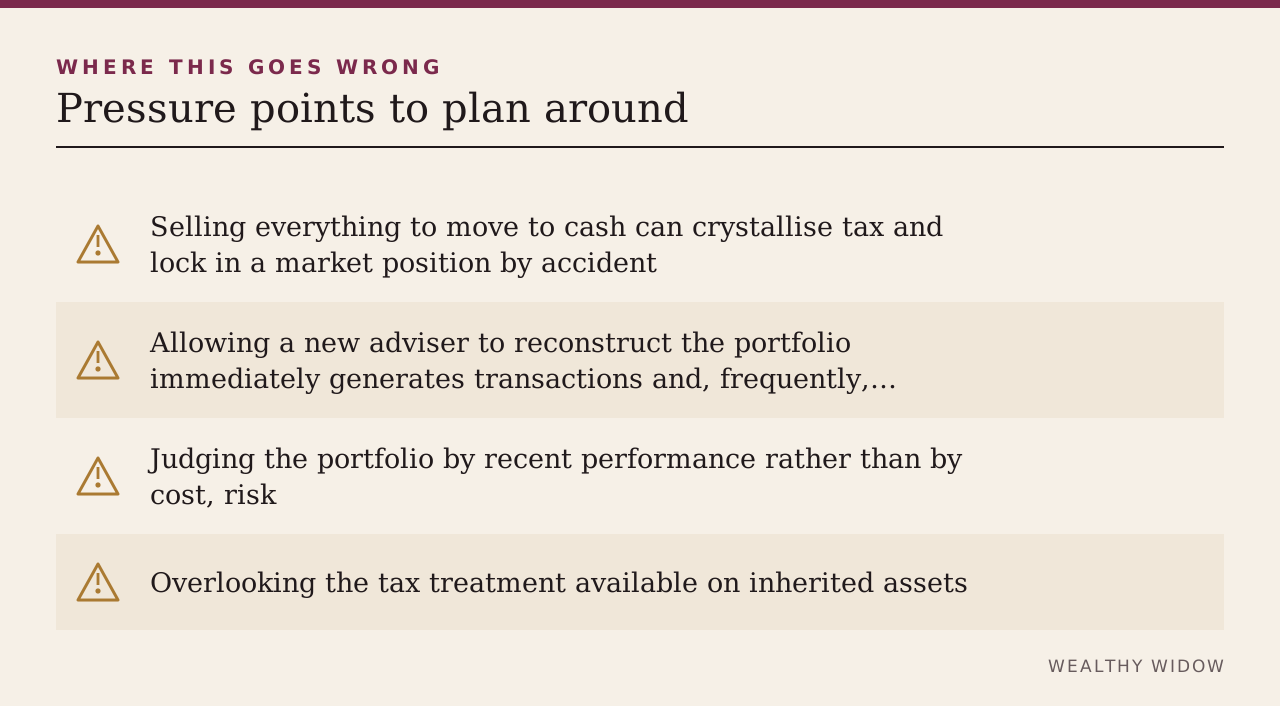
Anticipating these is most of the protection available to you, and it costs nothing but attention. Selling everything to move to cash can crystallise tax and lock in a market position by accident.
Allowing a new adviser to reconstruct the portfolio immediately generates transactions and, frequently, commissions. Judging the portfolio by recent performance rather than by cost, risk, and suitability. Overlooking the tax treatment available on inherited assets, which can be favourable and is easily lost.
What you will be asked to produce
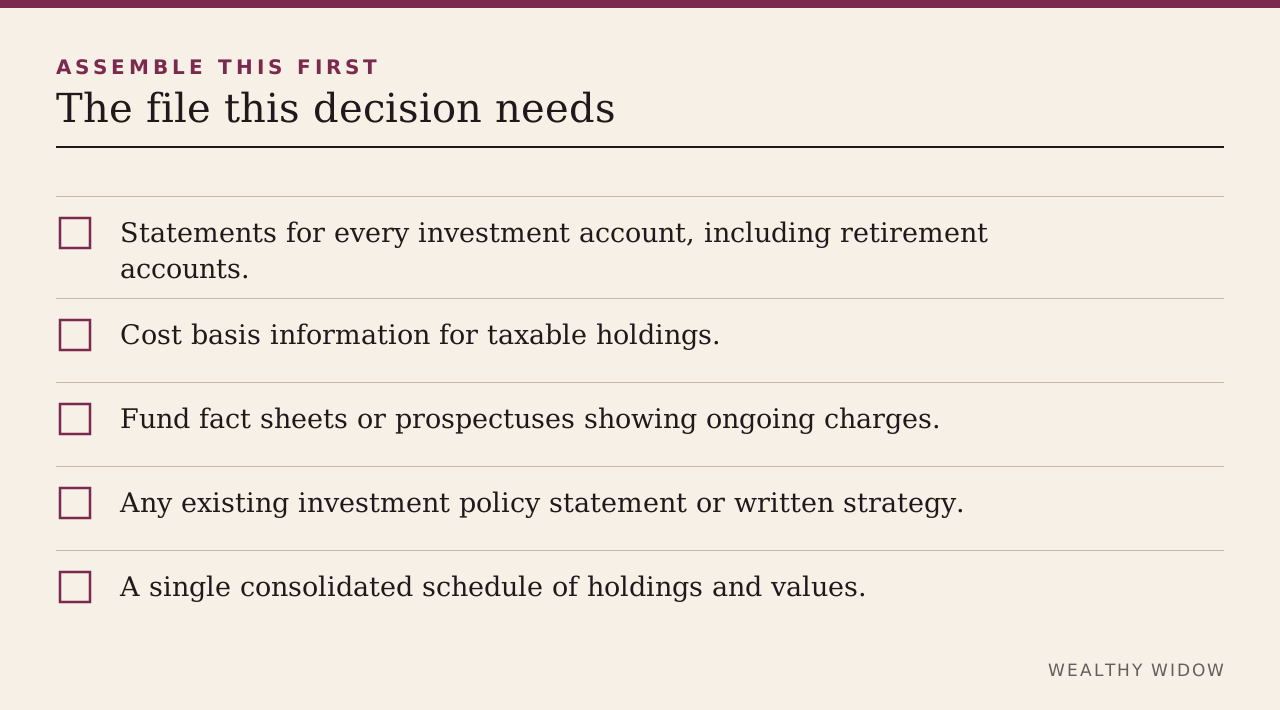
Assemble this before the first conversation rather than during it.
- Statements for every investment account, including retirement accounts.
- Cost basis information for taxable holdings.
- Fund fact sheets or prospectuses showing ongoing charges.
- Any existing investment policy statement or written strategy.
- A single consolidated schedule of holdings and values.
Ask for this in writing
Each item below should exist somewhere other than your memory, because memory is not evidence in a dispute.
- The total ongoing cost of the portfolio, in dollars.
- The cost basis position for each taxable holding.
- The tax treatment applying to inherited assets in your case.
- Any concentration risk, quantified as a percentage.
The questions to bring to the meeting
Take these to the attorney, tax professional, or planner handling this work.
- What is the tax consequence of selling each of these holdings?
- What is my total annual cost across advice and products?
- What is the single largest risk in this portfolio as it stands?
- What would you change, what would you leave, and why?
Where the current rule lives
Read the source directly for any figure, date, or threshold that will actually drive a decision you make.
- U.S. Securities and Exchange Commission — Investor.gov
- U.S. Securities and Exchange Commission — Understanding fees
- U.S. Securities and Exchange Commission — Mutual fund and ETF fees and expenses
- U.S. Securities and Exchange Commission — Mutual fund analyzer
What this cannot decide for you
General guidance sets out the shape of a decision. Your documents settle it. It cannot evaluate your specific holdings. It can ensure that before anything is sold, you know its cost, its tax position, and why it was there.
Before you move on
Understand first, simplify second. A portfolio you can explain is worth more than an optimised one you cannot, and the tax cost of rushing is real and permanent.
Our related guide Lending to Family: The Decision That Is Never Only Financial covers the adjacent problem.
Primary sources
- U.S. Securities and Exchange Commission — Investor.gov
- U.S. Securities and Exchange Commission — Understanding fees
- U.S. Securities and Exchange Commission — Mutual fund and ETF fees and expenses
- U.S. Securities and Exchange Commission — Mutual fund analyzer
This article provides general education, not individualized legal, tax, investment, insurance, or benefits advice. Rules and deadlines change; verify the current requirement with the agency and a qualified professional.