Taxes
Required Distributions in the Year of a Death
A required distribution may still be due for the year in which the account holder died, and missing it carries a penalty.

Some decisions after a death are reversible. This one deserves more care than most. A required distribution may still be due for the year in which the account holder died, and missing it carries a penalty.
This is a technical point with a real penalty attached, and it is frequently missed in the first year because everyone is dealing with more visible matters.
The obligation does not disappear with the account holder; it moves, and the deadline stays where it was.
First, get the category right
A short set of facts governs this, and they are worth holding on to when the surrounding pressure is not. Where a required distribution was due for the year of death and not taken, it generally must still be taken. Responsibility for taking it typically falls to the beneficiary or the estate. A penalty can apply where a required distribution is not taken on time.
Beneficiaries have their own distribution requirements in subsequent years, which differ by beneficiary type. Relief from the penalty may be available where the failure is corrected and reasonable cause shown.
Take the steps in this order
This order is designed to keep your choices open for as long as possible.
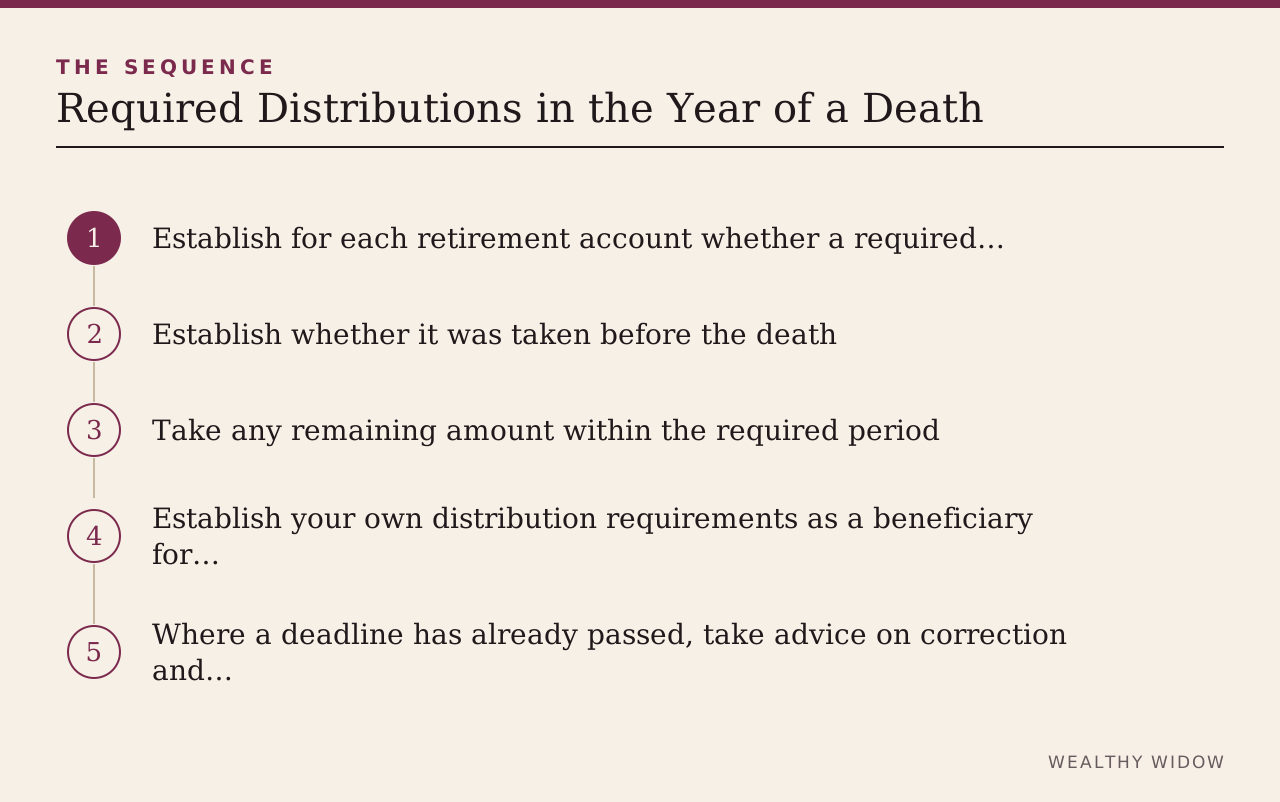
- Establish for each retirement account whether a required distribution was due for the year of death.
- Establish whether it was taken before the death, and how much remains.
- Take any remaining amount within the required period.
- Establish your own distribution requirements as a beneficiary for subsequent years.
- Where a deadline has already passed, take advice on correction and penalty relief promptly.
What to watch for
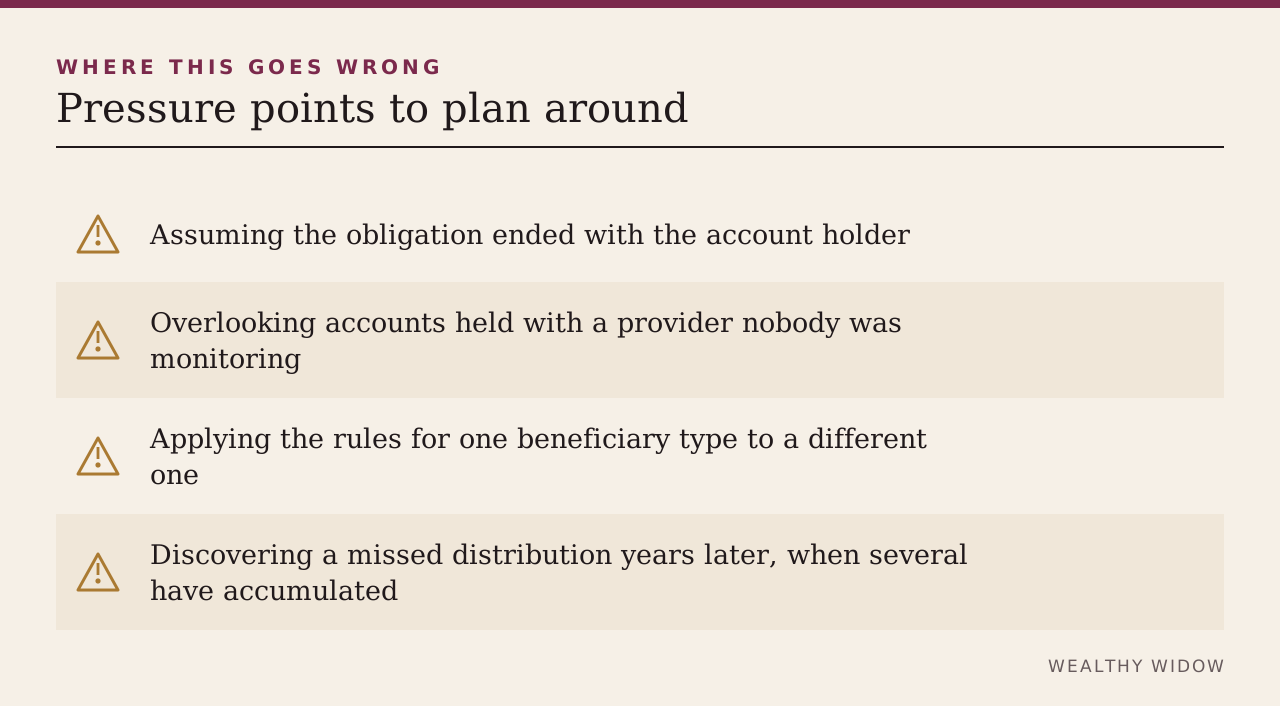
The problems below recur often enough to be planned for. Assuming the obligation ended with the account holder.
Overlooking accounts held with a provider nobody was monitoring. Applying the rules for one beneficiary type to a different one. Discovering a missed distribution years later, when several have accumulated.
What every organisation will ask for
Each item below will be requested more than once. Collect them in one place and log where each copy goes.
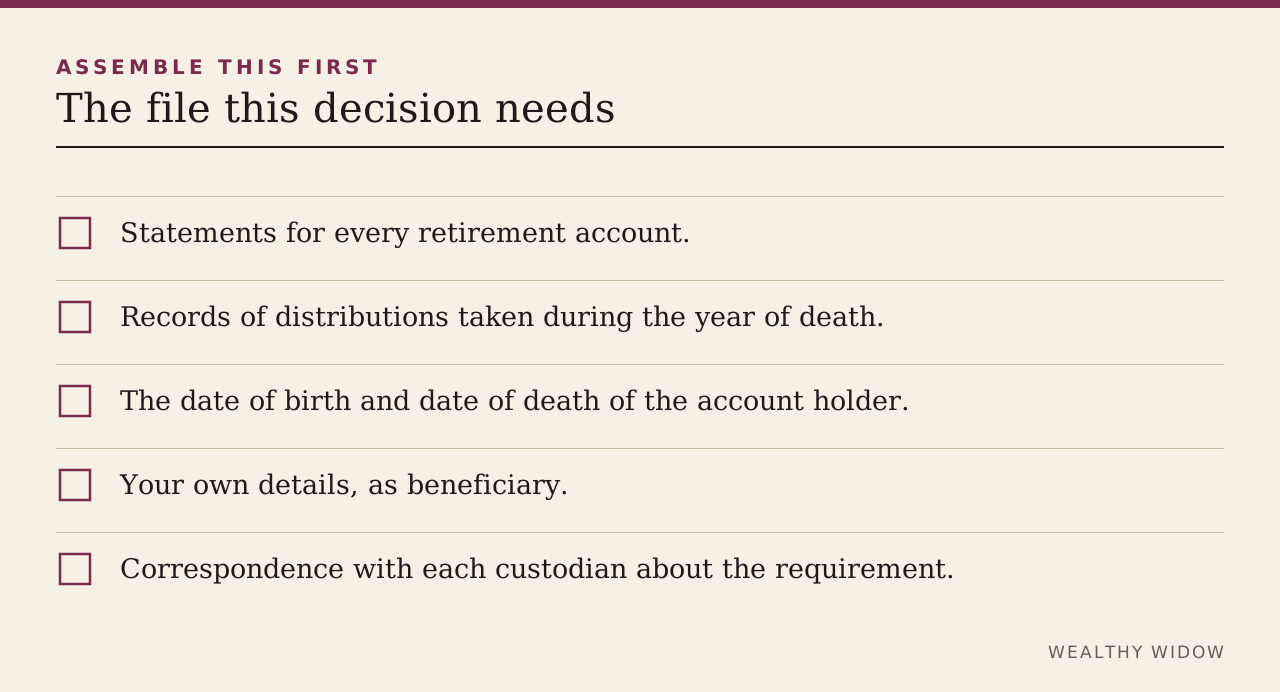
- Statements for every retirement account.
- Records of distributions taken during the year of death.
- The date of birth and date of death of the account holder.
- Your own details, as beneficiary.
- Correspondence with each custodian about the requirement.
What belongs in your decision log
Get each of the following documented rather than described.
- Whether a distribution was due for the year of death.
- How much, if any, remains to be taken.
- Your own requirements in subsequent years.
- Whether any penalty relief is needed and available.
Questions that reveal the answer
Each of the following is both a fair question and a revealing one, and no competent adviser will resent it.
- Was a required distribution due for this year, and was it taken?
- What are my requirements as a beneficiary going forward?
- What happens if a required distribution was missed?
- Which of these accounts have separate requirements?
Read the rule yourself
The sources below govern. This guide only summarises them.
- Internal Revenue Service — Retirement plan and IRA required minimum distributions FAQs
- Internal Revenue Service — Required minimum distributions for IRA beneficiaries
- Internal Revenue Service — Retirement topics, required minimum distributions
- Internal Revenue Service — Publication 590-B, distributions from IRAs
The limits of this guide
This is where general guidance ends and your own paperwork takes over. It cannot calculate a distribution or state penalty rates, both of which need current guidance and the account figures.
What to hold on to
Check every account for the year of death, take anything outstanding, then establish your own timetable. It is a small technical item with a penalty attached, and it is exactly the kind of thing that gets lost in a busy year.
A companion guide, Are Life Insurance Proceeds Taxable?, covers the decision that sits alongside this one.
Primary sources
- Internal Revenue Service — Retirement plan and IRA required minimum distributions FAQs
- Internal Revenue Service — Required minimum distributions for IRA beneficiaries
- Internal Revenue Service — Retirement topics, required minimum distributions
- Internal Revenue Service — Publication 590-B, distributions from IRAs
This article provides general education, not individualized legal, tax, investment, insurance, or benefits advice. Rules and deadlines change; verify the current requirement with the agency and a qualified professional.