Home
Letting Space: Income With Obligations Attached
Renting a room or the whole property can close an income gap, and it converts you into a landlord with the duties that carries.

You may be told this is simply a form to sign. It is a decision with consequences. Renting a room or the whole property can close an income gap, and it converts you into a landlord with the duties that carries.
Letting space is a practical response to a reduced income and an underused property. The obligations that come with it are manageable and are routinely discovered after the fact rather than before.
Rental income is taxable, insurance-relevant, and legally regulated, and none of those three arrive with the first payment.
First, get the category right
Start from the reliable ground, before anyone asks you to act on anything less certain than it. Rental income is generally taxable and must be reported, with related expenses potentially deductible. A standard homeowners policy usually does not cover a letting arrangement, and cover must be adjusted. Landlord obligations are set by state and local law and can include deposits, notice, and habitability requirements.
Letting part of a main home can affect the tax treatment of an eventual sale. Local rules may restrict short-term letting entirely, particularly in community associations.
Take the steps in this order
Work through it deliberately rather than all at once, and stop at any point where an answer is missing.
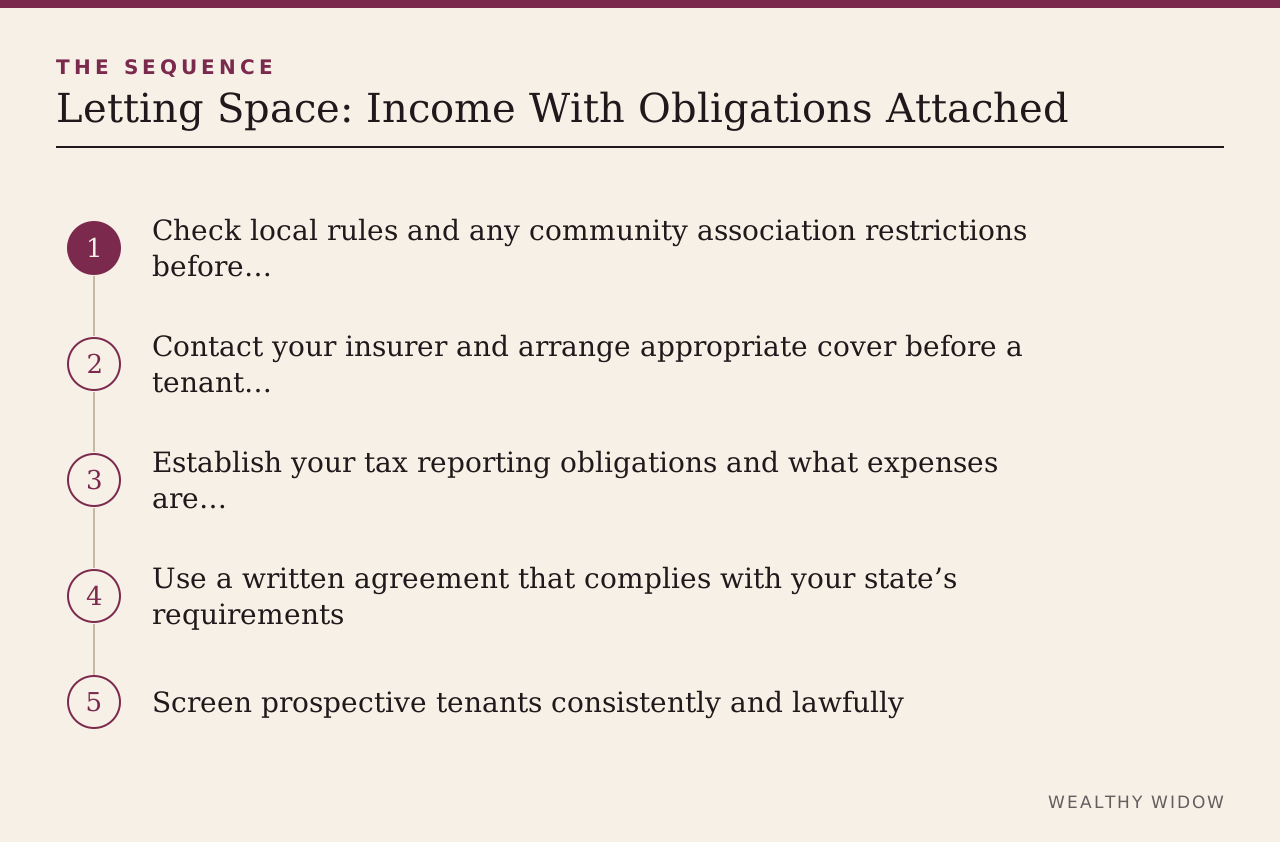
- Check local rules and any community association restrictions before advertising anything.
- Contact your insurer and arrange appropriate cover before a tenant moves in.
- Establish your tax reporting obligations and what expenses are deductible.
- Use a written agreement that complies with your state’s requirements.
- Screen prospective tenants consistently and lawfully.
What to watch for
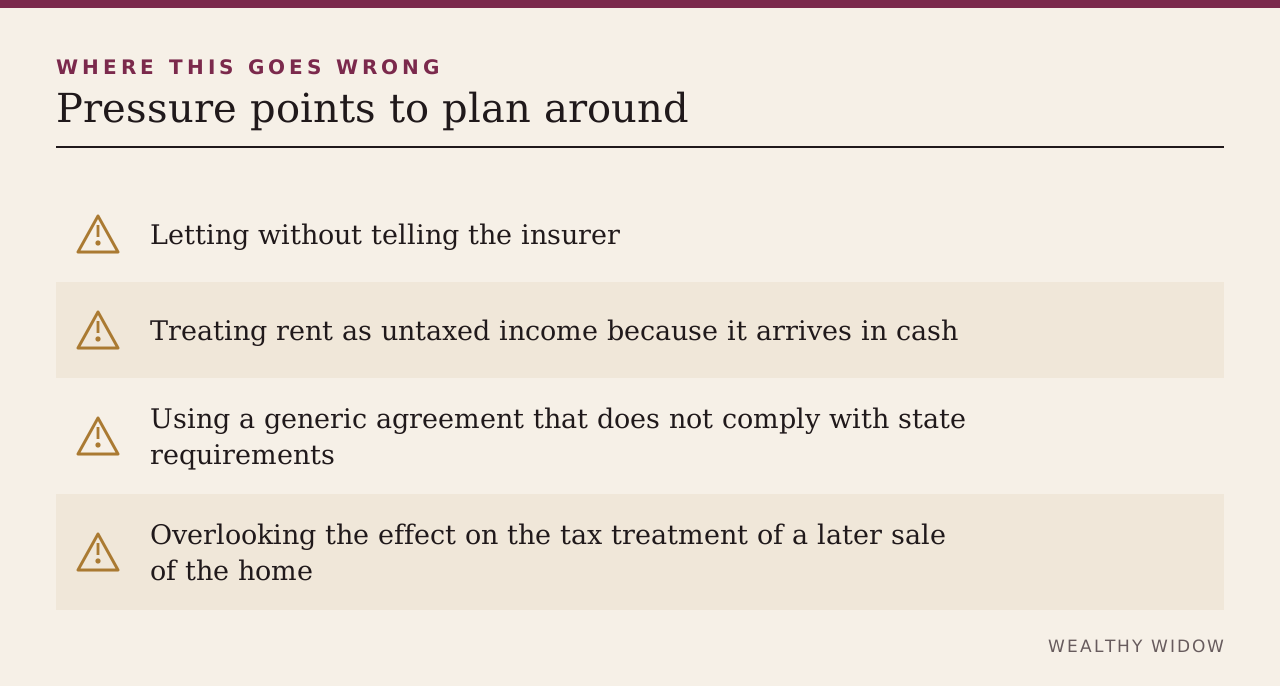
Each of these is a signal to stop and confirm rather than proceed. Letting without telling the insurer, which commonly voids cover entirely.
Treating rent as untaxed income because it arrives in cash. Using a generic agreement that does not comply with state requirements. Overlooking the effect on the tax treatment of a later sale of the home.
The evidence to gather
You will be asked for these in some combination by almost everyone involved.
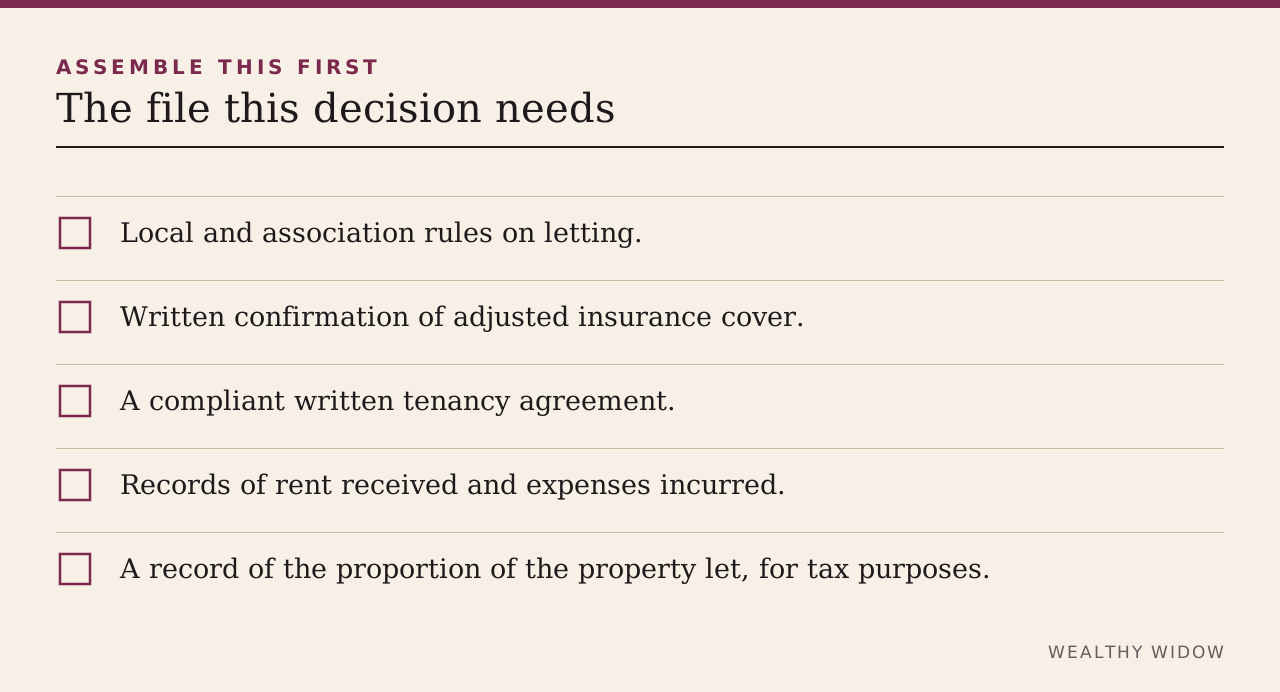
- Local and association rules on letting.
- Written confirmation of adjusted insurance cover.
- A compliant written tenancy agreement.
- Records of rent received and expenses incurred.
- A record of the proportion of the property let, for tax purposes.
Get these in writing
Put each item below in your file with a date and a named source.
- That letting is permitted under local and association rules.
- That insurance covers the arrangement.
- Your tax reporting obligations and deductible expenses.
- The legal requirements for the agreement and the deposit.
The questions worth asking
These are the questions whose answers change what you decide, rather than merely confirming what you assumed.
- Is letting permitted here, and under what conditions?
- What cover do I need, and what is excluded?
- What must I report, and what can I deduct?
- What does my state require in a tenancy agreement?
Check this against the source
These are the primary sources behind this guide. They are the ones that change, and the ones worth checking before you act.
- Internal Revenue Service — Sale of residence, real estate tax tips
- Internal Revenue Service — Estimated taxes
- National Association of Insurance Commissioners — Consumer resources
- U.S. Department of Housing and Urban Development — Find a housing counselor
The questions this cannot reach
No account written for a general readership can reach the following, and it should not pretend to. It cannot state landlord obligations, which are set by state and local law and vary considerably.
Taking it from here
Check the rules, fix the insurance, and use a compliant agreement before anyone moves in. The income is genuine; the obligations are the part that is easier to arrange in advance than to remedy afterwards.
A companion guide, Adapting the House Before You Need It Adapted, covers the decision that sits alongside this one.
Primary sources
- Internal Revenue Service — Sale of residence, real estate tax tips
- Internal Revenue Service — Estimated taxes
- National Association of Insurance Commissioners — Consumer resources
- U.S. Department of Housing and Urban Development — Find a housing counselor
This article provides general education, not individualized legal, tax, investment, insurance, or benefits advice. Rules and deadlines change; verify the current requirement with the agency and a qualified professional.