Taxes
An Inherited Rental Property: Basis, Depreciation, and a Fresh Start
Inheriting a let property resets several tax positions at once, and continuing the previous owner’s treatment is usually wrong.

Widowhood arrives with a queue of decisions that all look equally urgent. Inheriting a let property resets several tax positions at once, and continuing the previous owner’s treatment is usually wrong. They are not the same task, and treating them as one is how good decisions get made badly.
Rental property carries a longer tax history than most assets. Inheriting it generally resets that history, which is favourable and frequently mishandled.
The tax history of a rental property does not transfer with the building, and treating it as though it does causes errors in both directions.
The substance beneath the process
The facts that govern this are narrower than the anxiety around it. Basis in inherited property is generally determined by reference to its value at the date of death. Depreciation generally starts afresh on the new basis rather than continuing the previous schedule. Rental income and expenses must be reported, and the split at the date of death matters.
Estimated tax obligations may arise where rental income is not subject to withholding. Records of the previous owner’s treatment remain relevant to the estate’s own filings.
The order that protects you
Follow it in order, and leave anything requiring a signature until the end rather than the beginning.
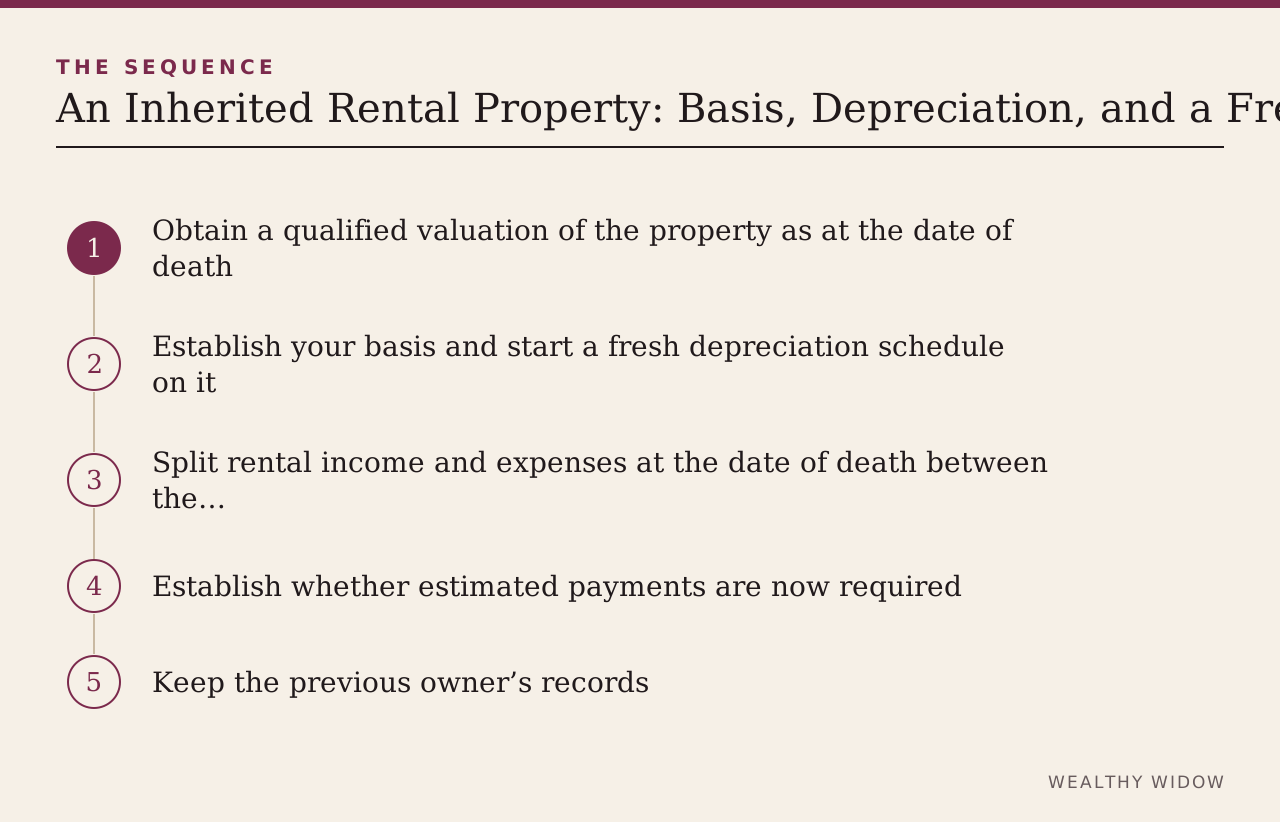
- Obtain a qualified valuation of the property as at the date of death.
- Establish your basis and start a fresh depreciation schedule on it.
- Split rental income and expenses at the date of death between the individual and the estate.
- Establish whether estimated payments are now required.
- Keep the previous owner’s records, which the estate’s filings may still need.
What tends to go wrong here
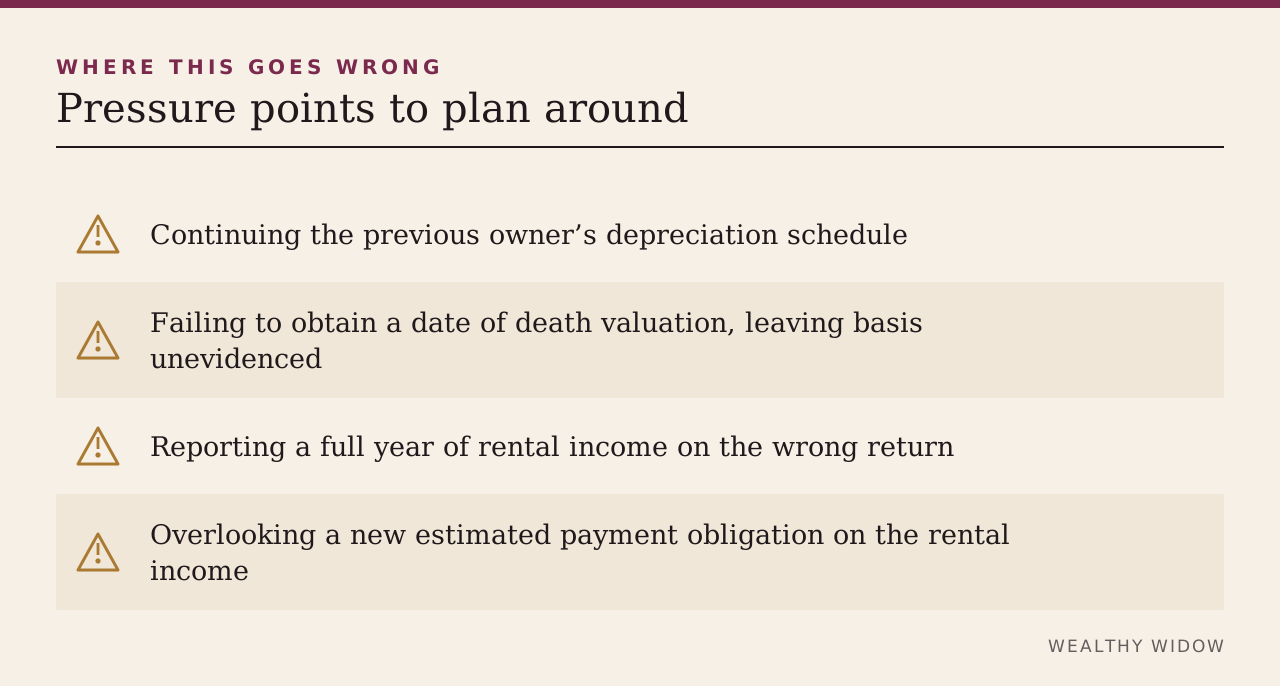
Each of the following is a signal to pause and confirm rather than to proceed on the assumption that it is fine. Continuing the previous owner’s depreciation schedule, which overstates the deduction position.
Failing to obtain a date of death valuation, leaving basis unevidenced. Reporting a full year of rental income on the wrong return. Overlooking a new estimated payment obligation on the rental income.
The documents to assemble first
The evidence below does most of the work of establishing who you are and what you may do.
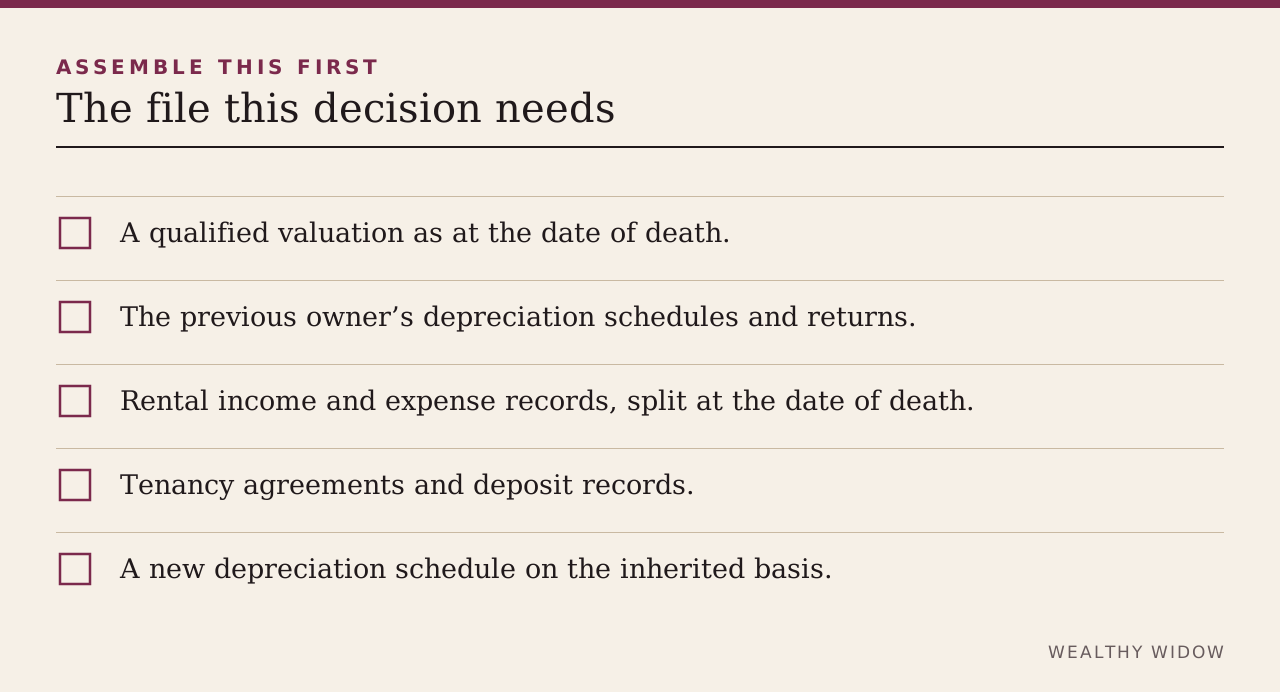
- A qualified valuation as at the date of death.
- The previous owner’s depreciation schedules and returns.
- Rental income and expense records, split at the date of death.
- Tenancy agreements and deposit records.
- A new depreciation schedule on the inherited basis.
Get these in writing
Put each item below in your file with a date and a named source.
- Your basis in the property and how it was established.
- That a fresh depreciation schedule has been started.
- How income is split between the individual and the estate.
- Whether estimated payments are now required.
The questions worth asking
These are the questions whose answers change what you decide, rather than merely confirming what you assumed.
- What basis do I take in this property, and how should it be evidenced?
- Does depreciation restart, and on what figure?
- How is rental income split around the date of death?
- Do I now need to make estimated payments?
Verify each point at source
Check anything that will drive a decision against the source itself, not against this summary of it.
- Internal Revenue Service — Publication 551, basis of assets
- Internal Revenue Service — Sale of residence, real estate tax tips
- Internal Revenue Service — Property, basis, and sale of home FAQs
- Internal Revenue Service — Estimated taxes
What this guide does not settle
What follows is the shape of the problem, not an answer to your version of it. It cannot value the property or prepare the schedules, both of which need professionals working from the actual figures.
Closing the loop
Get the date of death valuation, restart the depreciation on it, and split the income correctly. Inheriting a rental property is generally favourable for tax, and the benefit is lost by carrying forward the previous treatment.
Our related guide Accounts Held Abroad: Reporting Obligations That Continue covers the adjacent problem.
Primary sources
- Internal Revenue Service — Publication 551, basis of assets
- Internal Revenue Service — Sale of residence, real estate tax tips
- Internal Revenue Service — Property, basis, and sale of home FAQs
- Internal Revenue Service — Estimated taxes
This article provides general education, not individualized legal, tax, investment, insurance, or benefits advice. Rules and deadlines change; verify the current requirement with the agency and a qualified professional.