Estate
Getting a Deceased Spouse Off the Title
Property held jointly usually passes to the survivor, but the record does not update itself, and that becomes a problem at the point of sale.

Some decisions after a death are reversible. This one deserves more care than most. Property held jointly usually passes to the survivor, but the record does not update itself, and that becomes a problem at the point of sale.
Survivorship transfers ownership by operation of law in many cases, but the public record still shows both names. Correcting it is straightforward and much easier now than under the pressure of a sale.
The right to the property and the record of the property are two different things, and only one of them updates automatically.
Establish what this is
Begin with what can be said with confidence, and treat everything beyond it as still to be established. Property held with rights of survivorship generally passes to the survivor without probate. The public record does not update on death; a document must be recorded. The procedure and the document required vary by state and by county.
An outdated record can delay or complicate a later sale, refinance, or equity release. Property held as tenants in common does not pass by survivorship and follows a different route.
A sequence, not a scramble
A workable order follows. Each step assumes the last one is done.
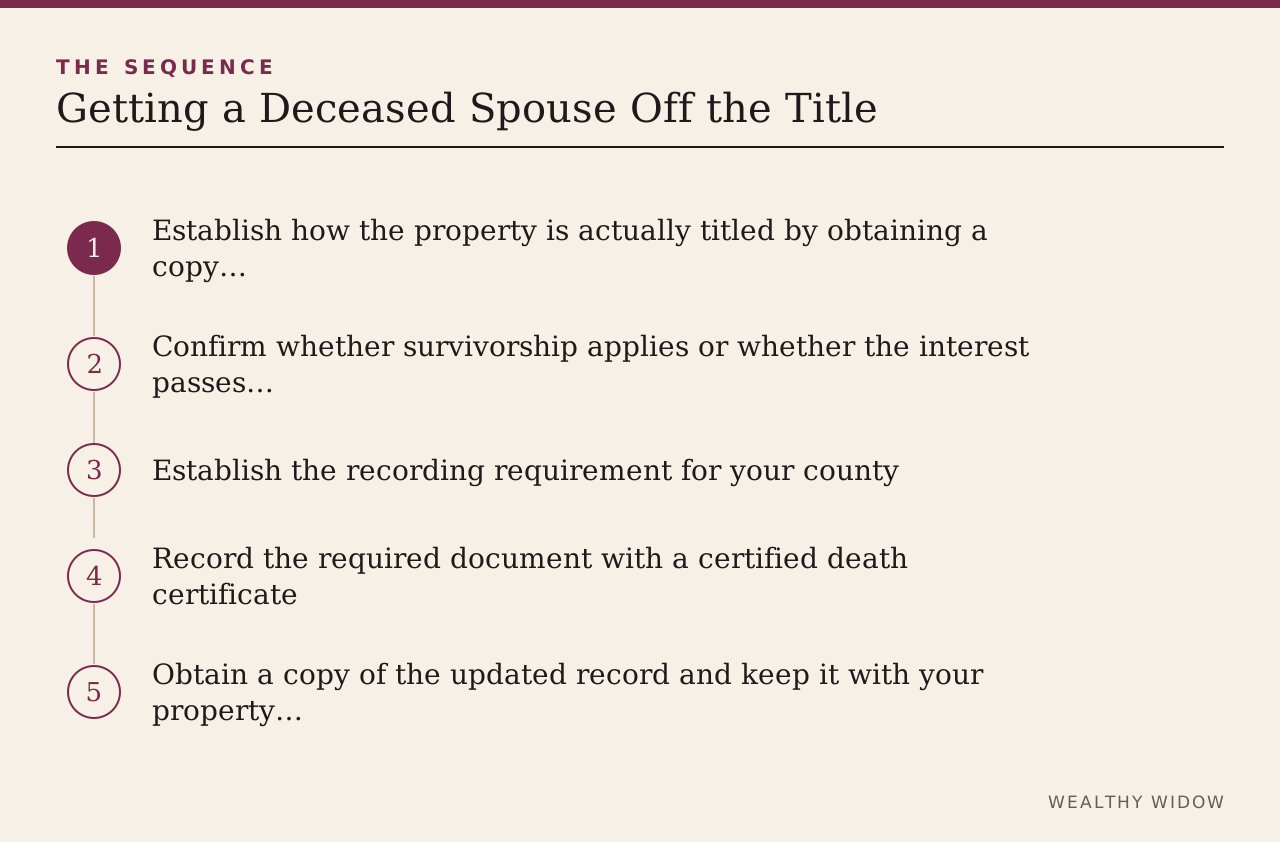
- Establish how the property is actually titled by obtaining a copy of the deed.
- Confirm whether survivorship applies or whether the interest passes under the will.
- Establish the recording requirement for your county.
- Record the required document with a certified death certificate.
- Obtain a copy of the updated record and keep it with your property documents.
Common ways this decision is lost
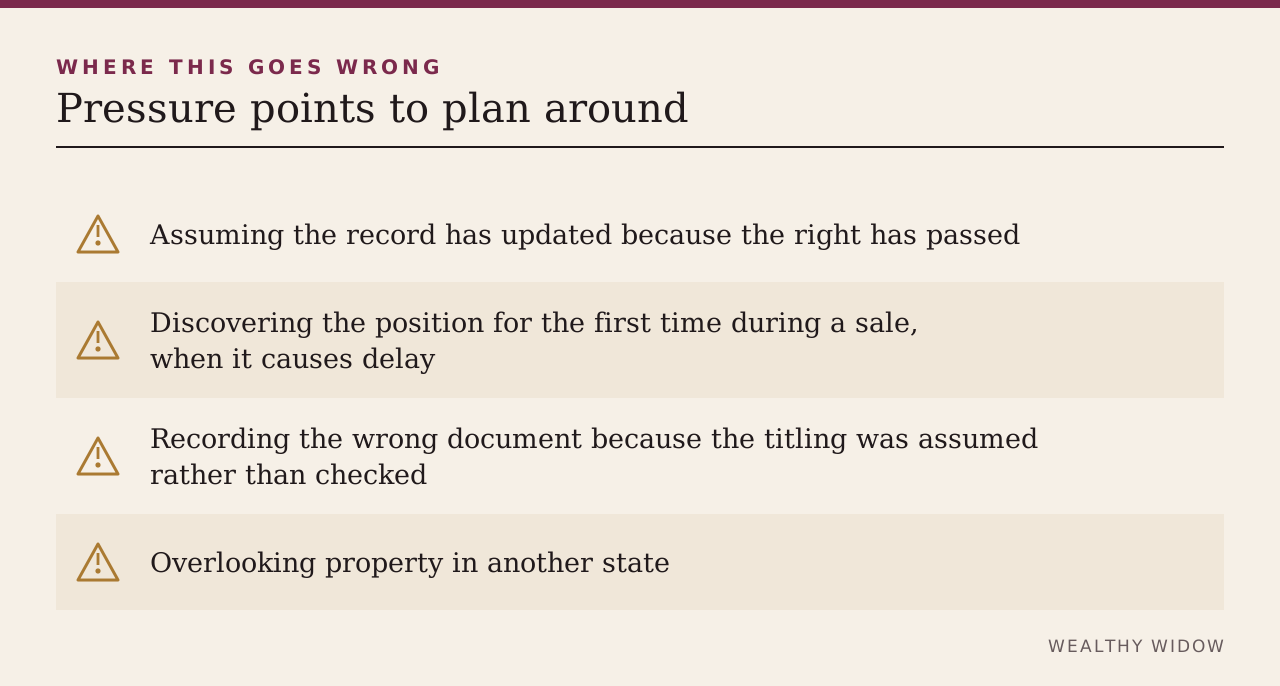
These are the places where readers most often lose ground. Assuming the record has updated because the right has passed.
Discovering the position for the first time during a sale, when it causes delay. Recording the wrong document because the titling was assumed rather than checked. Overlooking property in another state, which has its own recording rules.
Documents this decision needs
Organisations will ask for these repeatedly, so assemble them once and keep them together.
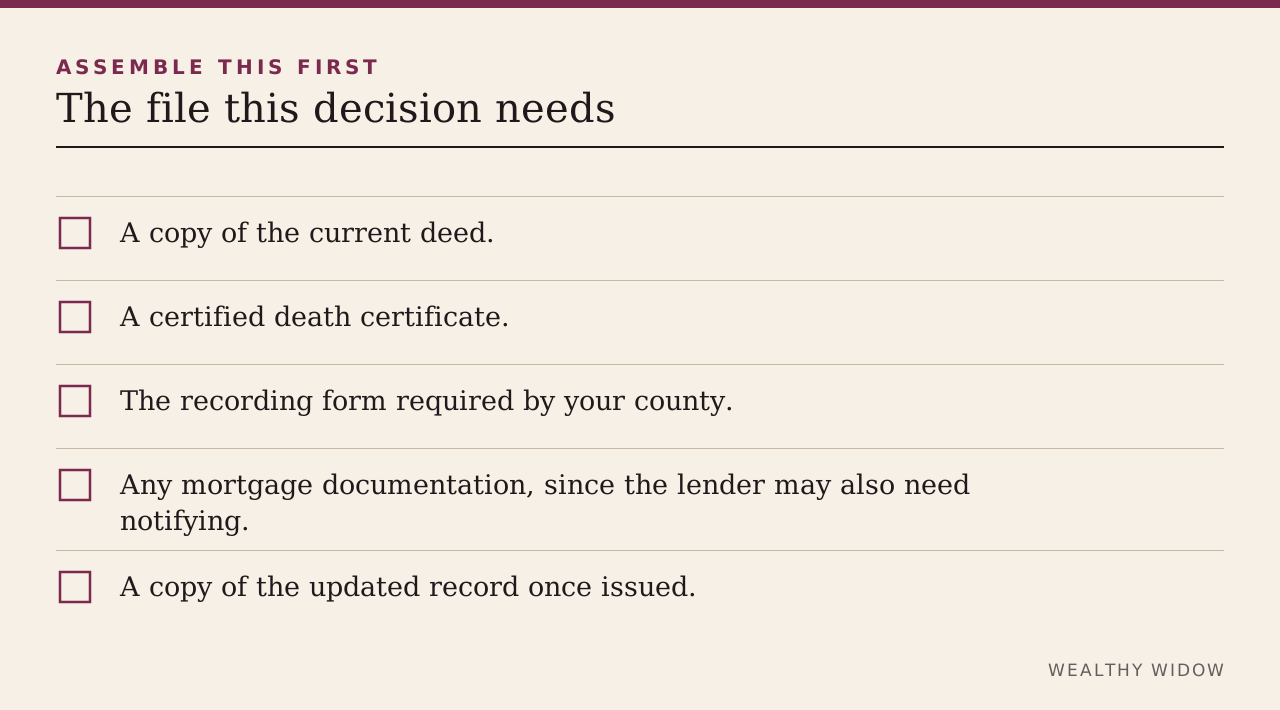
- A copy of the current deed.
- A certified death certificate.
- The recording form required by your county.
- Any mortgage documentation, since the lender may also need notifying.
- A copy of the updated record once issued.
Ask for this in writing
Each item below should exist somewhere other than your memory, because memory is not evidence in a dispute.
- How the property is actually titled.
- Whether survivorship applies.
- The document your county requires, and its fee.
- That the record has been updated, evidenced by a copy.
The questions to bring to the meeting
Take these to the attorney, tax professional, or planner handling this work.
- How is this property titled, and does survivorship apply?
- What document must be recorded, and where?
- Does the mortgage servicer need separate notification?
- What happens to property I own in another state?
Read the rule yourself
The sources below govern. This guide only summarises them.
- Consumer Financial Protection Bureau — Regulation X, § 1024.31 definitions
- Consumer Financial Protection Bureau — Mortgage lending rules to assist surviving family members
- USAGov — Get copies of vital records and ID cards
- Legal Services Corporation — I need legal help
The limits of this guide
This is where general guidance ends and your own paperwork takes over. It cannot tell you your county’s procedure, which is local and specific, or how your particular deed is worded.
What to hold on to
Get a copy of the deed, establish the titling, and record the correction now. It is a small piece of administration that becomes an expensive delay if it is left until someone wants to buy the house.
For the step that usually comes next, read Beneficiaries: What They Are Owed, and What They Are Not.
Primary sources
- Consumer Financial Protection Bureau — Regulation X, § 1024.31 definitions
- Consumer Financial Protection Bureau — Mortgage lending rules to assist surviving family members
- USAGov — Get copies of vital records and ID cards
- Legal Services Corporation — I need legal help
This article provides general education, not individualized legal, tax, investment, insurance, or benefits advice. Rules and deadlines change; verify the current requirement with the agency and a qualified professional.