Home
Getting Money Out of the House Without Leaving It
Several products promise access to home equity, and they differ enormously in cost, risk, and what happens to the property afterwards.

Some decisions after a death are reversible. This one deserves more care than most. Several products promise access to home equity, and they differ enormously in cost, risk, and what happens to the property afterwards.
Where income has fallen but the home has value, releasing equity is an obvious thought. The products differ substantially, and several are heavily marketed to exactly this position.
Every route to home equity has a cost, and the cheapest-looking route is frequently the one whose cost is furthest away.
What is actually on the table
What follows is what is actually true, stripped of the anxiety around it. Options generally include selling, downsizing, a conventional loan secured on the home, or a reverse mortgage. The federally insured reverse mortgage product carries a counselling requirement before it can proceed. Interest that is not paid currently compounds against the property, reducing what remains later.
Any secured borrowing carries a risk to the home if the conditions are not met. Selling and renting is an option that is frequently omitted from comparisons offered by lenders.
The path through this
Do these in sequence, and do not skip ahead to the signature.
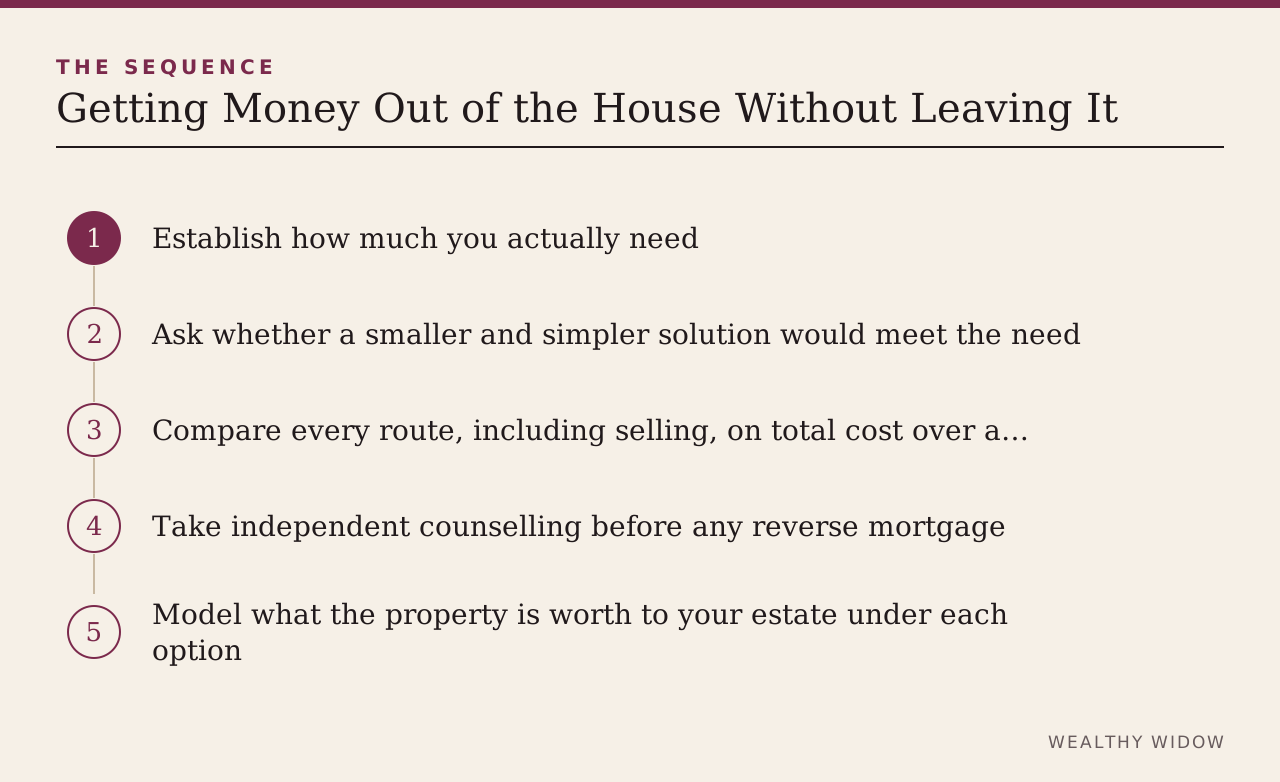
- Establish how much you actually need, and over what period, before considering any product.
- Ask whether a smaller and simpler solution would meet the need.
- Compare every route, including selling, on total cost over a realistic horizon.
- Take independent counselling before any reverse mortgage, which is required for the insured product.
- Model what the property is worth to your estate under each option.
What tends to catch people out
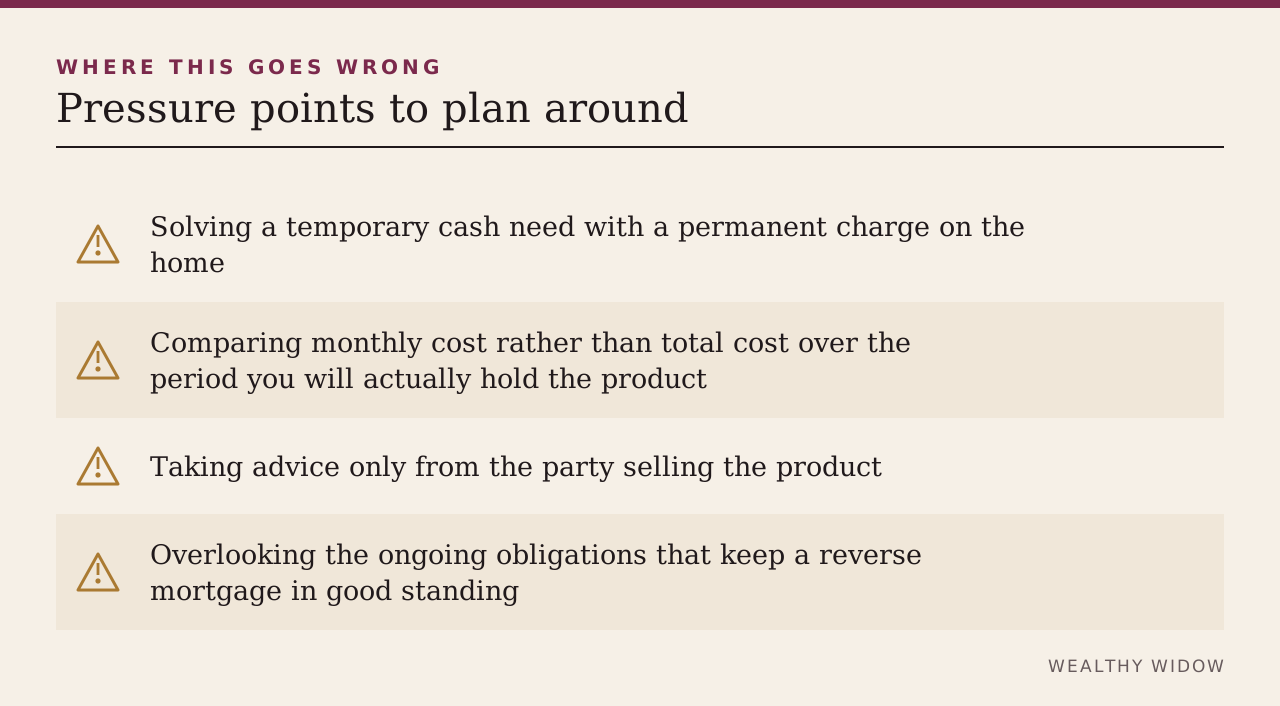
The failures here are predictable, which means they are avoidable. Solving a temporary cash need with a permanent charge on the home.
Comparing monthly cost rather than total cost over the period you will actually hold the product. Taking advice only from the party selling the product. Overlooking the ongoing obligations that keep a reverse mortgage in good standing.
What to have to hand
The paperwork below is what turns a long process into a short one.
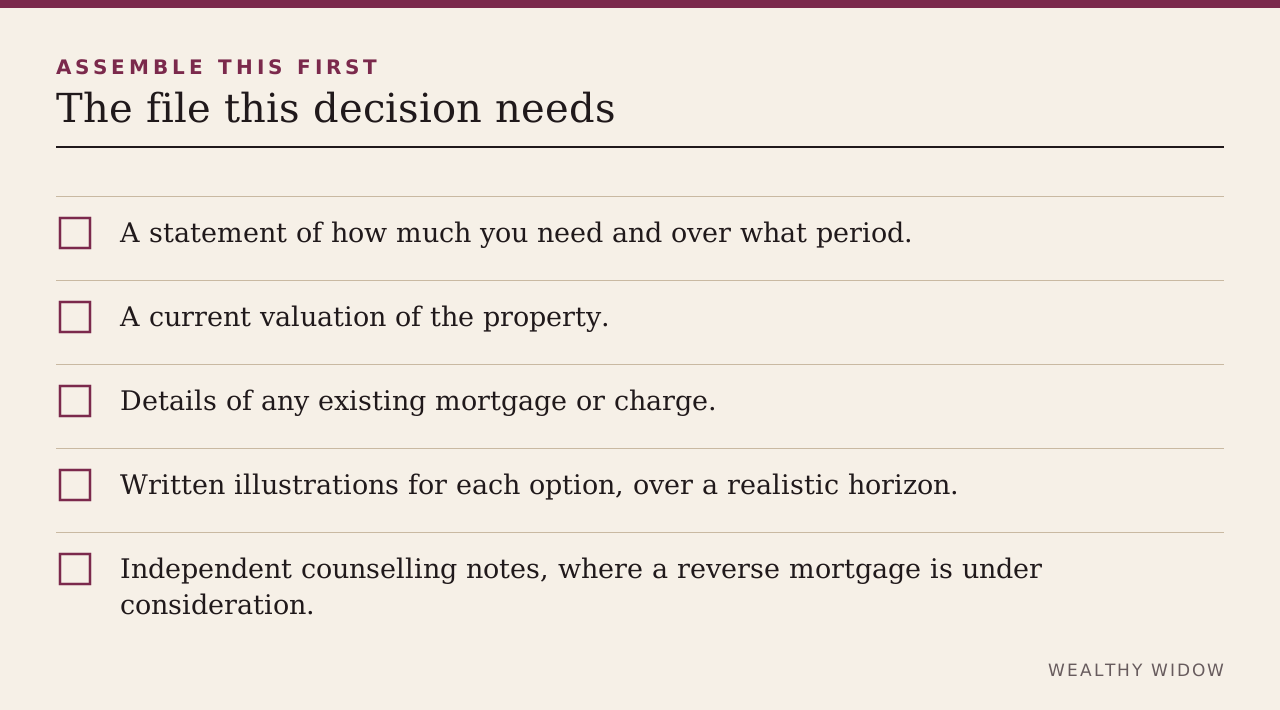
- A statement of how much you need and over what period.
- A current valuation of the property.
- Details of any existing mortgage or charge.
- Written illustrations for each option, over a realistic horizon.
- Independent counselling notes, where a reverse mortgage is under consideration.
Put these in writing, then proceed
A conversation is a starting point. These belong on paper.
- The total cost of each option over your realistic horizon.
- The ongoing obligations attached to each product.
- What remains for your estate under each option.
- Whether a simpler solution would meet the actual need.
Before anyone is engaged, ask these
Ask them plainly; the response tells you as much as the answer.
- What is the total cost of this over ten and twenty years?
- What obligations must I meet to keep this in good standing?
- What would be left in the property for my estate under each option?
- What simpler option have you ruled out, and why?
The primary material
Each load-bearing point above traces to one of the following, and they are the versions that stay current.
- U.S. Department of Housing and Urban Development — FHA reverse mortgage for seniors (HECM)
- U.S. Department of Housing and Urban Development — Find a housing counselor
- Consumer Financial Protection Bureau — Homeowners face problems with mortgage companies after death of a loved one
- U.S. Securities and Exchange Commission — Investor.gov
Where general guidance ends
Here is the line between what can usefully be written for a general readership and what cannot be written at all. It cannot recommend a product, and independent counselling is required for the insured reverse mortgage precisely because the comparison is difficult.
What this comes down to
Establish the actual need first and the smallest solution that meets it. Home equity products are not inherently wrong, but they are usually the largest available answer to a question that may have a smaller one.
For the step that usually comes next, read Moving State: The Consequences That Follow You.
Primary sources
- U.S. Department of Housing and Urban Development — FHA reverse mortgage for seniors (HECM)
- U.S. Department of Housing and Urban Development — Find a housing counselor
- Consumer Financial Protection Bureau — Homeowners face problems with mortgage companies after death of a loved one
- U.S. Securities and Exchange Commission — Investor.gov
This article provides general education, not individualized legal, tax, investment, insurance, or benefits advice. Rules and deadlines change; verify the current requirement with the agency and a qualified professional.