Money
Rebuilding the Budget When Both Income and Costs Have Changed
A widow’s budget is not the old household budget with one income removed. Costs change unevenly, and some rise.

Some decisions after a death are reversible. This one deserves more care than most. A widow’s budget is not the old household budget with one income removed. Costs change unevenly, and some rise.
Rebuilding a budget after a death is genuinely different from adjusting one, because the fixed costs of a household do not halve and some categories, particularly care and services previously done by a spouse, increase.
A one-person household is not half a two-person household, and budgeting as though it were produces a plan that fails in month four.
What is actually on the table
Hold on to a small number of accurate points. Housing, utilities, insurance, and property maintenance are largely fixed regardless of how many people live in the home. Services a spouse previously provided may now have to be bought, which is a new cost rather than a saved one. Tax treatment of a surviving spouse can change in the years after a death, affecting take-home income.
Some income ends abruptly at the date of death, while some benefits begin later, creating a timing gap. A budget built on estimates rather than statements will be wrong in ways that only appear months later.
The path through this
This is the order that avoids closing doors you may still need.
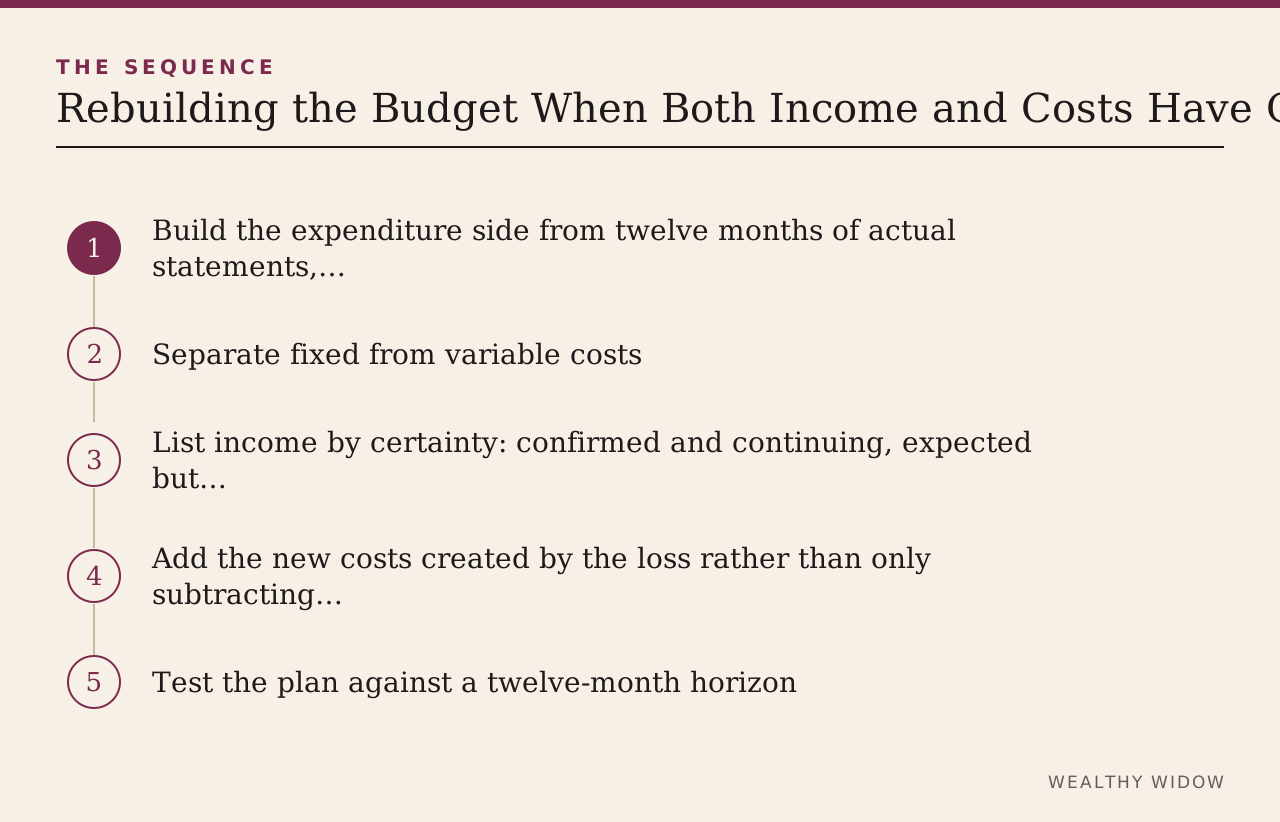
- Build the expenditure side from twelve months of actual statements, not from memory or estimates.
- Separate fixed from variable costs, and mark which fixed costs are genuinely unavoidable.
- List income by certainty: confirmed and continuing, expected but unconfirmed, and possible.
- Add the new costs created by the loss rather than only subtracting the ones removed.
- Test the plan against a twelve-month horizon, then review it quarterly for the first year.
What tends to catch people out
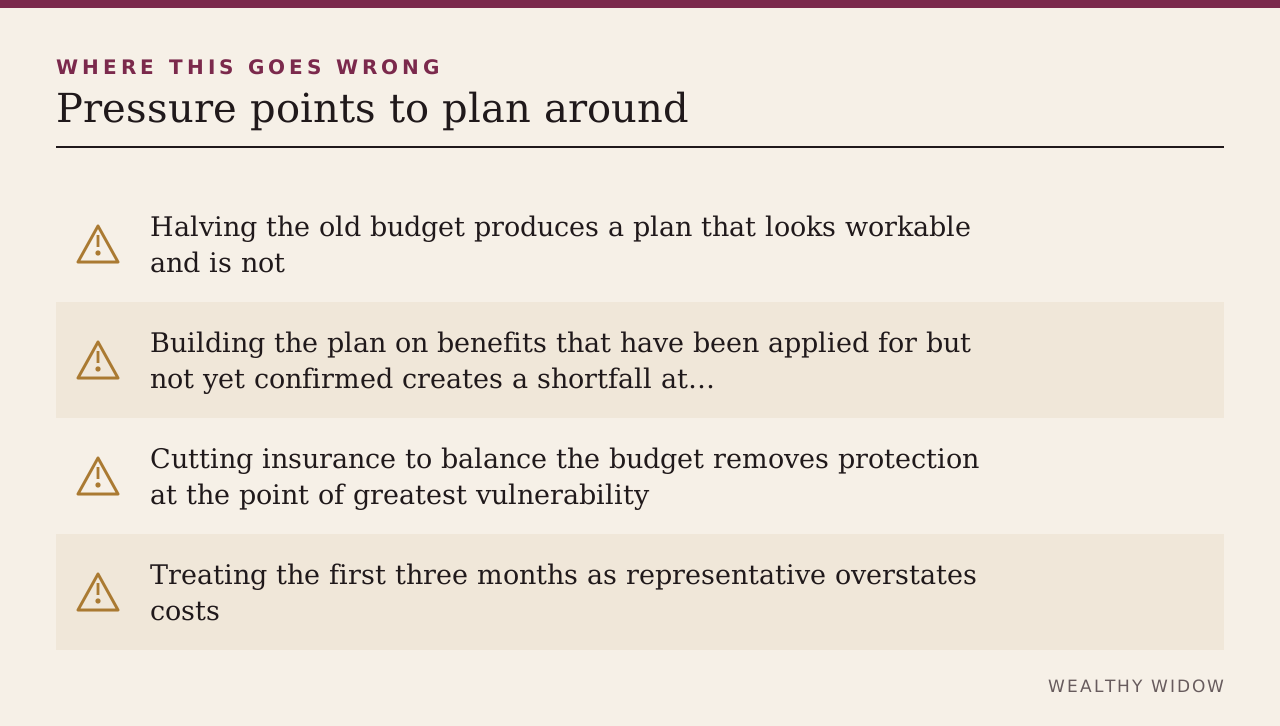
The errors here are well worn, which makes them avoidable. Halving the old budget produces a plan that looks workable and is not.
Building the plan on benefits that have been applied for but not yet confirmed creates a shortfall at the worst time. Cutting insurance to balance the budget removes protection at the point of greatest vulnerability. Treating the first three months as representative overstates costs, because that period is unusual.
What to have in front of you
Collect these once and keep them together, because you will be asked for them repeatedly over the coming months.
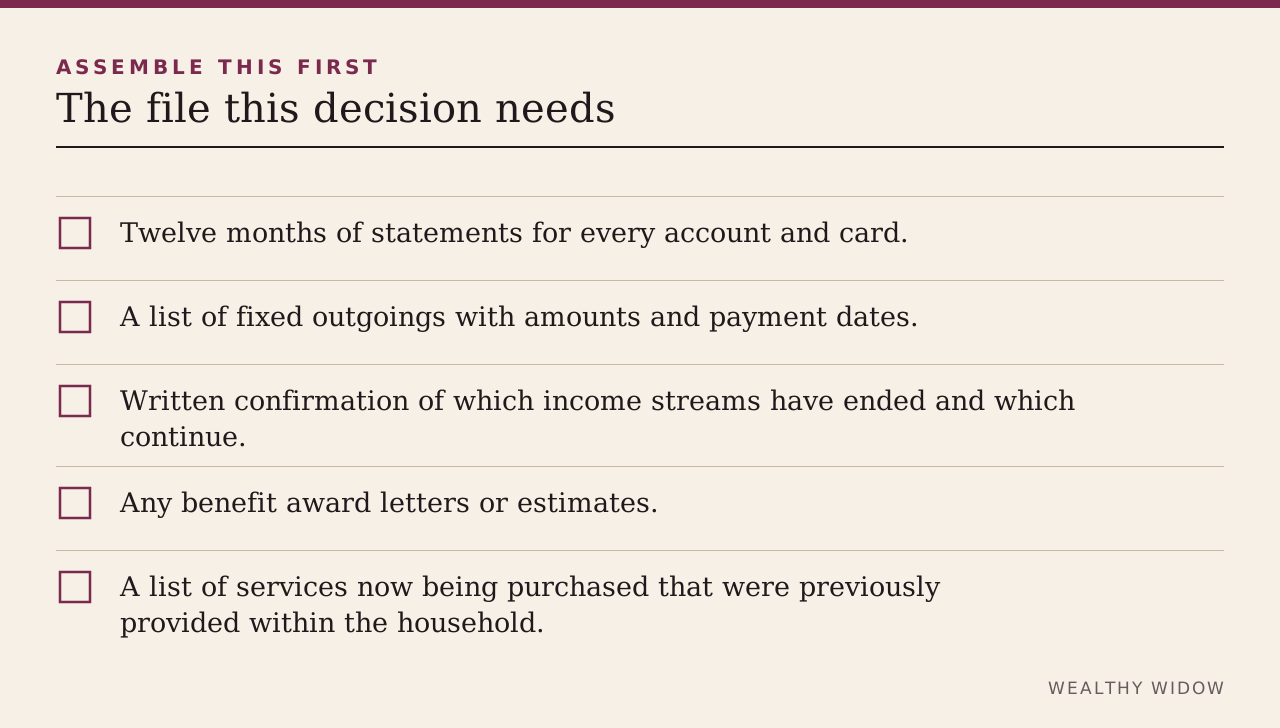
- Twelve months of statements for every account and card.
- A list of fixed outgoings with amounts and payment dates.
- Written confirmation of which income streams have ended and which continue.
- Any benefit award letters or estimates.
- A list of services now being purchased that were previously provided within the household.
Written confirmation to insist on
Before you act on what you have been told, hold written confirmation of each point.
- Which income is confirmed and continuing, in writing.
- The actual, rather than estimated, monthly cost of running the household.
- Any change to your tax position that affects net income.
- The date any expected benefit will start.
Take these questions to your adviser
Ask these before an engagement letter is signed, while you still have every option open to you.
- How will my tax position change over the next few years, and what does that do to net income?
- Which of these costs would you expect to rise, and over what period?
- What level of cash reserve is appropriate for my circumstances?
- Which insurance should I keep even if the budget is tight?
The primary material
Each load-bearing point above traces to one of the following, and they are the versions that stay current.
- Consumer Financial Protection Bureau — Help for surviving spouses
- Consumer Financial Protection Bureau — Taking control of your finances, help for surviving spouses
- U.S. Securities and Exchange Commission — Investor.gov
Where general guidance ends
Here is the line between what can usefully be written for a general readership and what cannot be written at all. It cannot produce your numbers. Only your own statements can, and a budget built on anything else will be a description of a household you no longer have.
What this comes down to
Build the budget from statements and give it a full twelve-month horizon. The plan that survives is the one built on what the household actually spends rather than what it used to.
For the step that usually comes next, read Credit in Your Own Name: A Problem That Surfaces Late.
Primary sources
- Consumer Financial Protection Bureau — Help for surviving spouses
- Consumer Financial Protection Bureau — Taking control of your finances, help for surviving spouses
- U.S. Securities and Exchange Commission — Investor.gov
This article provides general education, not individualized legal, tax, investment, insurance, or benefits advice. Rules and deadlines change; verify the current requirement with the agency and a qualified professional.