Money
Reading a Financial Recommendation Properly
Recommendations arrive as documents designed to be signed rather than read, and the useful information is rarely on the first page.

Widowhood arrives with a queue of decisions that all look equally urgent. Recommendations arrive as documents designed to be signed rather than read, and the useful information is rarely on the first page. They are not the same task, and treating them as one is how good decisions get made badly.
Financial documents are long and structured to reassure. A short, consistent reading method extracts what matters without requiring you to become an expert.
Read what it costs, what it does if you change your mind, and who else is paid, before reading what it promises.
What you are really being asked
Start from the reliable ground, before anyone asks you to act on anything less certain than it. Charges are frequently disclosed in a separate document from the recommendation itself. Illustrations of future value are projections rather than commitments, and the assumptions matter. Exit terms, including surrender charges, determine how reversible the decision is.
The adviser’s compensation for this recommendation, compared with alternatives, is a legitimate question. A recommendation should explain why alternatives were rejected, not only why this one was chosen.
The sequence that keeps options open
Work through it deliberately rather than all at once, and stop at any point where an answer is missing.
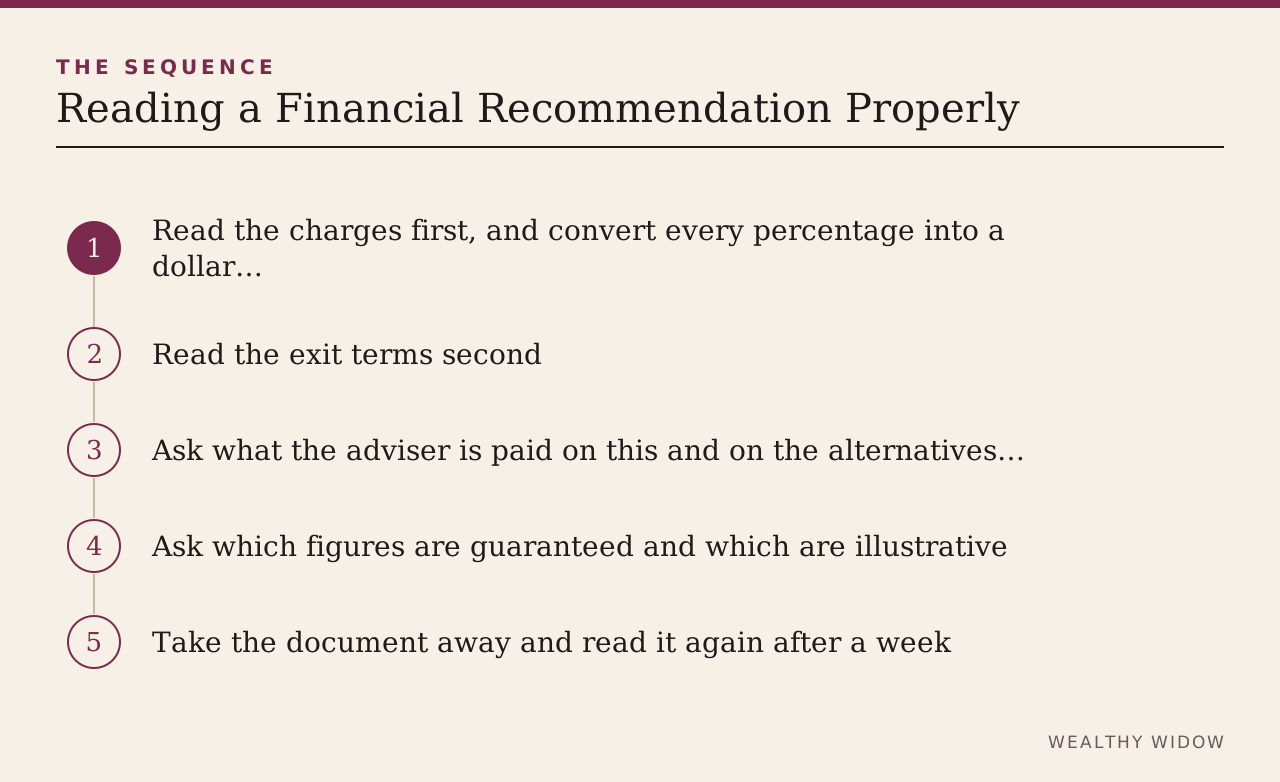
- Read the charges first, and convert every percentage into a dollar figure.
- Read the exit terms second, and note how long they run.
- Ask what the adviser is paid on this and on the alternatives considered.
- Ask which figures are guaranteed and which are illustrative.
- Take the document away and read it again after a week.
The failure modes to plan around
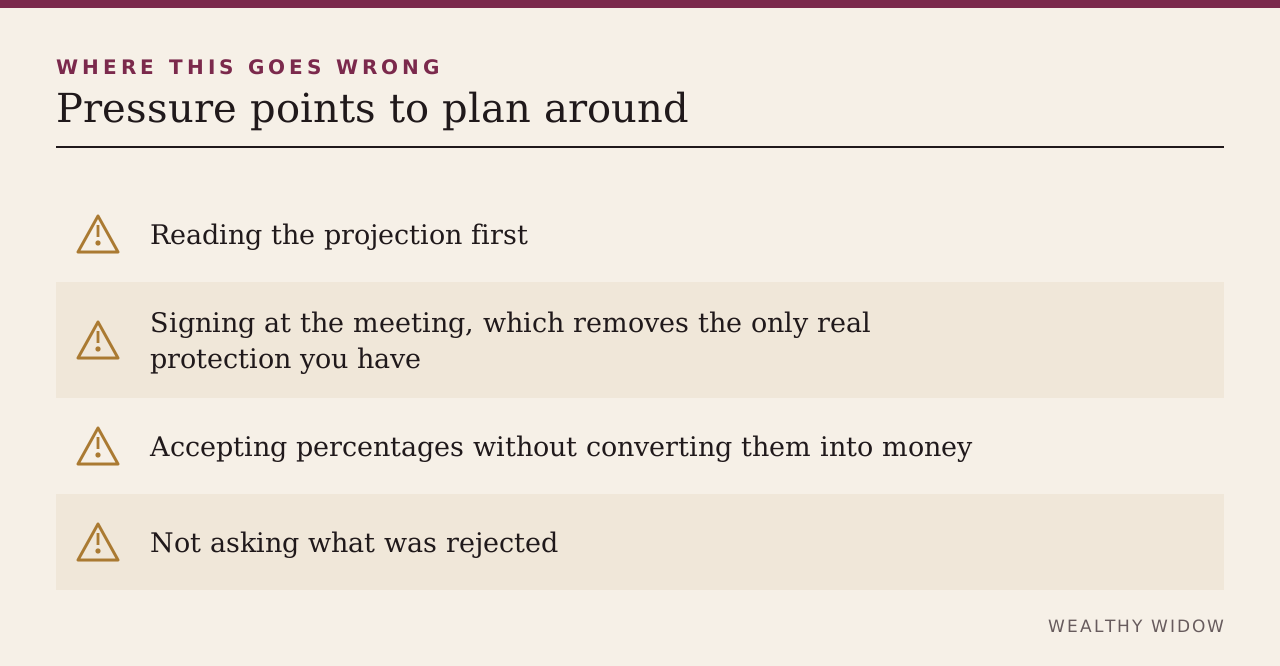
Each of these is a signal to stop and confirm rather than proceed. Reading the projection first, which is the part designed to persuade.
Signing at the meeting, which removes the only real protection you have. Accepting percentages without converting them into money. Not asking what was rejected, which is where the reasoning actually sits.
The evidence to gather
You will be asked for these in some combination by almost everyone involved.
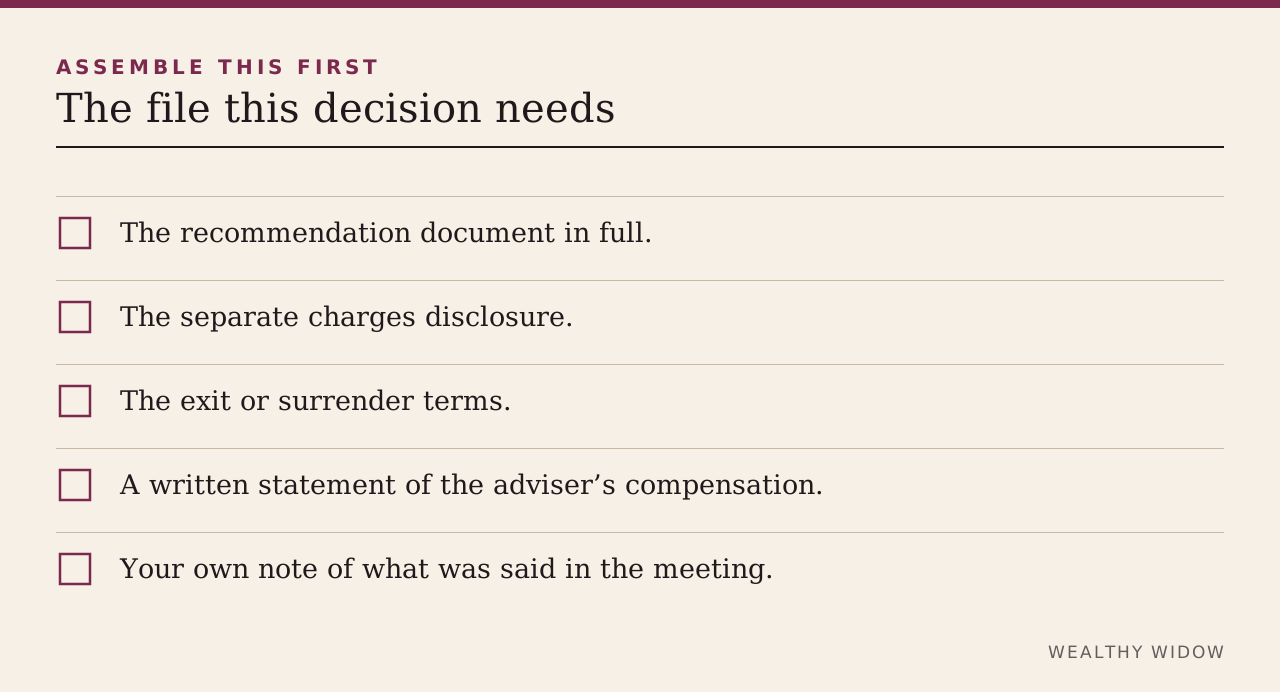
- The recommendation document in full.
- The separate charges disclosure.
- The exit or surrender terms.
- A written statement of the adviser’s compensation.
- Your own note of what was said in the meeting.
Nothing here on a verbal answer
None of the following should rest on a phone call alone, however clear the call felt at the time.
- Total charges, in dollars, per year.
- Exit terms and how long they apply.
- Which figures are guaranteed.
- What alternatives were considered and rejected.
The questions that change the answer
A competent professional answers each of these without hesitation.
- What does this cost me in dollars each year, across every layer?
- What would I pay to exit in year one and year five?
- What are you paid on this compared with the alternatives?
- What did you consider and reject, and why?
Confirm this against the rule
Do not take this guide as the authority. Each source below states the current rule for the part of this decision it covers.
- U.S. Securities and Exchange Commission — Ask and check
- U.S. Securities and Exchange Commission — Understanding fees
- U.S. Securities and Exchange Commission — Check out your investment professional
- U.S. Securities and Exchange Commission — Investor.gov
What is outside this
What follows is outside anything written for a general readership. It cannot evaluate a specific recommendation, and a second opinion from someone not paid on the outcome is what does that.
The short version
Costs first, exit terms second, compensation third, projections last. Reading in that order takes twenty minutes and answers most of what actually matters.
Read A Large Sum Has Arrived: The First Ninety Days next; the two decisions interact.
Primary sources
- U.S. Securities and Exchange Commission — Ask and check
- U.S. Securities and Exchange Commission — Understanding fees
- U.S. Securities and Exchange Commission — Check out your investment professional
- U.S. Securities and Exchange Commission — Investor.gov
This article provides general education, not individualized legal, tax, investment, insurance, or benefits advice. Rules and deadlines change; verify the current requirement with the agency and a qualified professional.