Money
Learning to Read the Statements Somebody Else Used to Open
Where one spouse handled the finances, the survivor inherits documents in an unfamiliar language. The vocabulary is learnable in an afternoon.

Institutions will describe this as routine. For you it is not routine, and the stakes are not symmetrical. Where one spouse handled the finances, the survivor inherits documents in an unfamiliar language. The vocabulary is learnable in an afternoon.
This is extremely common and rarely discussed, because admitting it feels like admitting something else. It is simply a division of labour that has ended, and the remedy is a vocabulary rather than a personality change.
Not knowing what a statement means is a gap in information, not in ability, and it closes faster than most people expect.
The shape of this decision
Hold on to a small number of accurate points. A statement typically shows holdings, values, transactions, income, and sometimes costs, in separate sections. Fund charges deducted within a product usually do not appear as a line item on the statement. Cost basis, where shown, matters for tax when an asset is sold and should be preserved.
Account type, whether taxable or retirement, determines the tax treatment of everything within it. Any provider is obliged to explain its own statement, and asking is unremarkable.
Order of play
This is the order that avoids closing doors you may still need.
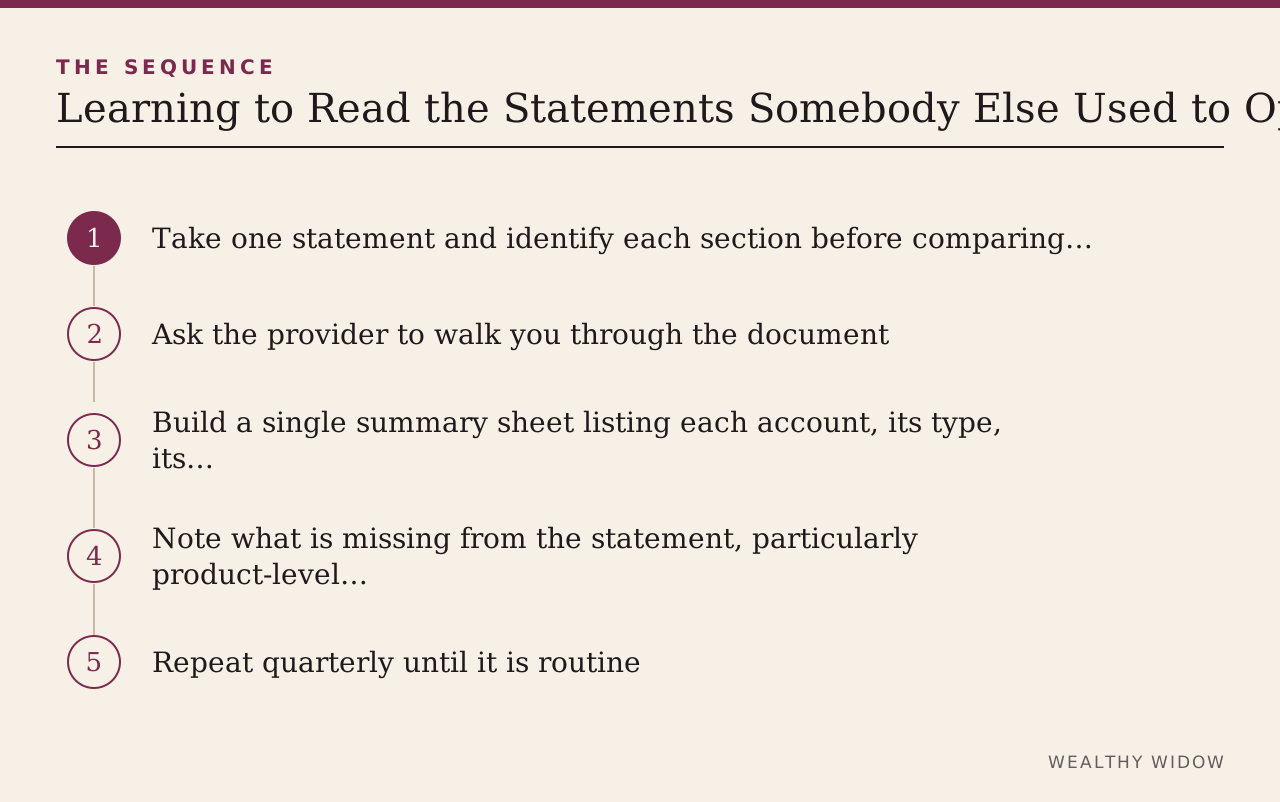
- Take one statement and identify each section before comparing across accounts.
- Ask the provider to walk you through the document; this is a normal request.
- Build a single summary sheet listing each account, its type, its value, and its purpose.
- Note what is missing from the statement, particularly product-level charges.
- Repeat quarterly until it is routine, which takes less time than it sounds.
The errors worth naming in advance
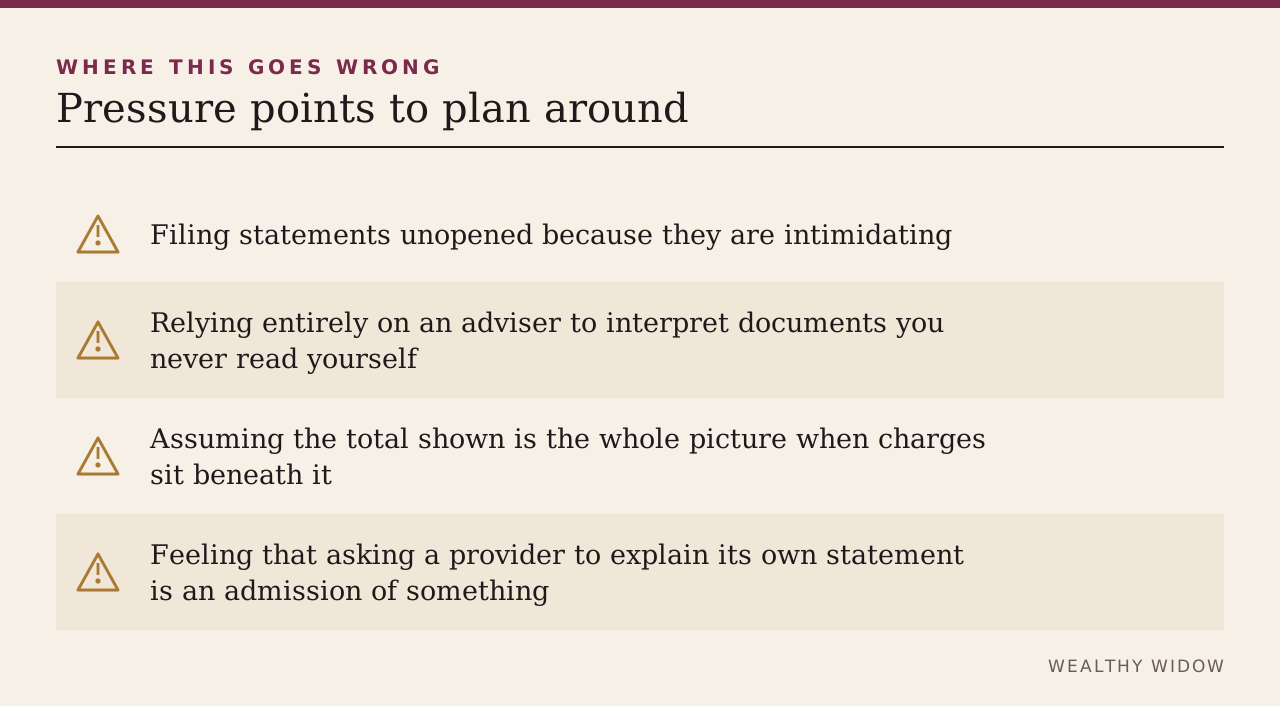
The errors here are well worn, which makes them avoidable. Filing statements unopened because they are intimidating, which is how errors persist for years.
Relying entirely on an adviser to interpret documents you never read yourself. Assuming the total shown is the whole picture when charges sit beneath it. Feeling that asking a provider to explain its own statement is an admission of something.
What to have in front of you
Collect these once and keep them together, because you will be asked for them repeatedly over the coming months.
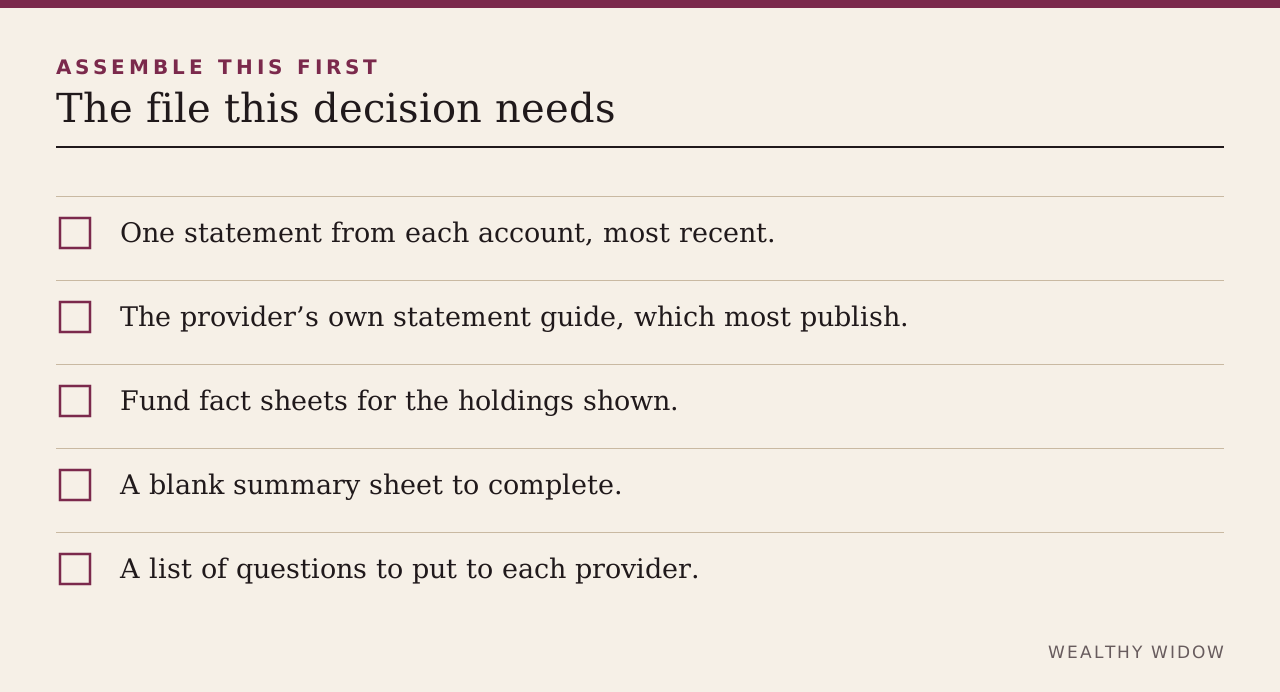
- One statement from each account, most recent.
- The provider’s own statement guide, which most publish.
- Fund fact sheets for the holdings shown.
- A blank summary sheet to complete.
- A list of questions to put to each provider.
Nothing here on a verbal answer
None of the following should rest on a phone call alone, however clear the call felt at the time.
- What each section of the statement represents.
- The account type and its tax treatment.
- What costs are not shown on the statement.
- Whether cost basis information is available and where.
The questions that change the answer
A competent professional answers each of these without hesitation.
- Can you walk me through what each section of this statement means?
- What costs am I paying that do not appear on this document?
- Is cost basis recorded for these holdings, and can I have it?
- What is the tax treatment of this account type?
Where to verify this
Every load-bearing point above traces to one of the following. Where a figure or deadline matters to you, read it there.
- U.S. Securities and Exchange Commission — Investor.gov
- U.S. Securities and Exchange Commission — Understanding fees
- Federal Deposit Insurance Corporation — Understanding deposit insurance
- U.S. Securities and Exchange Commission — Mutual fund analyzer
What a professional still has to decide
The limits of a guide matter as much as its content, because acting past them is where the cost sits. It cannot read your statements. It can tell you that asking a provider to explain its own document is ordinary, expected, and free.
What good looks like here
Start with one statement and one provider call. The vocabulary is smaller than it looks, and the confidence that follows changes every conversation you have about money afterwards.
A companion guide, Fixed Income, Rising Costs: The Slow Risk, covers the decision that sits alongside this one.
Primary sources
- U.S. Securities and Exchange Commission — Investor.gov
- U.S. Securities and Exchange Commission — Understanding fees
- Federal Deposit Insurance Corporation — Understanding deposit insurance
- U.S. Securities and Exchange Commission — Mutual fund analyzer
This article provides general education, not individualized legal, tax, investment, insurance, or benefits advice. Rules and deadlines change; verify the current requirement with the agency and a qualified professional.