Money
Who Would Act If You Could Not: The Question Widows Now Face Alone
The person who would have handled your finances in an emergency has died. Replacing that arrangement is urgent and routinely postponed.

The pressure to resolve this quickly usually comes from outside you. The person who would have handled your finances in an emergency has died. Replacing that arrangement is urgent and routinely postponed.
Most married people rely, often without articulating it, on a spouse to step in. That arrangement has ended, and the replacement requires documents rather than assumptions.
Without a valid power of attorney, an incapacity is resolved by a court rather than by the person you would have chosen.
What you are really being asked
Hold on to a small number of accurate points. A power of attorney made by your spouse ended at their death and gives you nothing going forward. Without a valid financial power of attorney, a court process may be required to appoint someone. Financial and healthcare authority are usually separate documents with separate requirements.
Institutions sometimes resist older powers of attorney, so currency and format matter. Naming a successor matters, because the first person named may be unavailable when needed.
The sequence that keeps options open
This is the order that avoids closing doors you may still need.
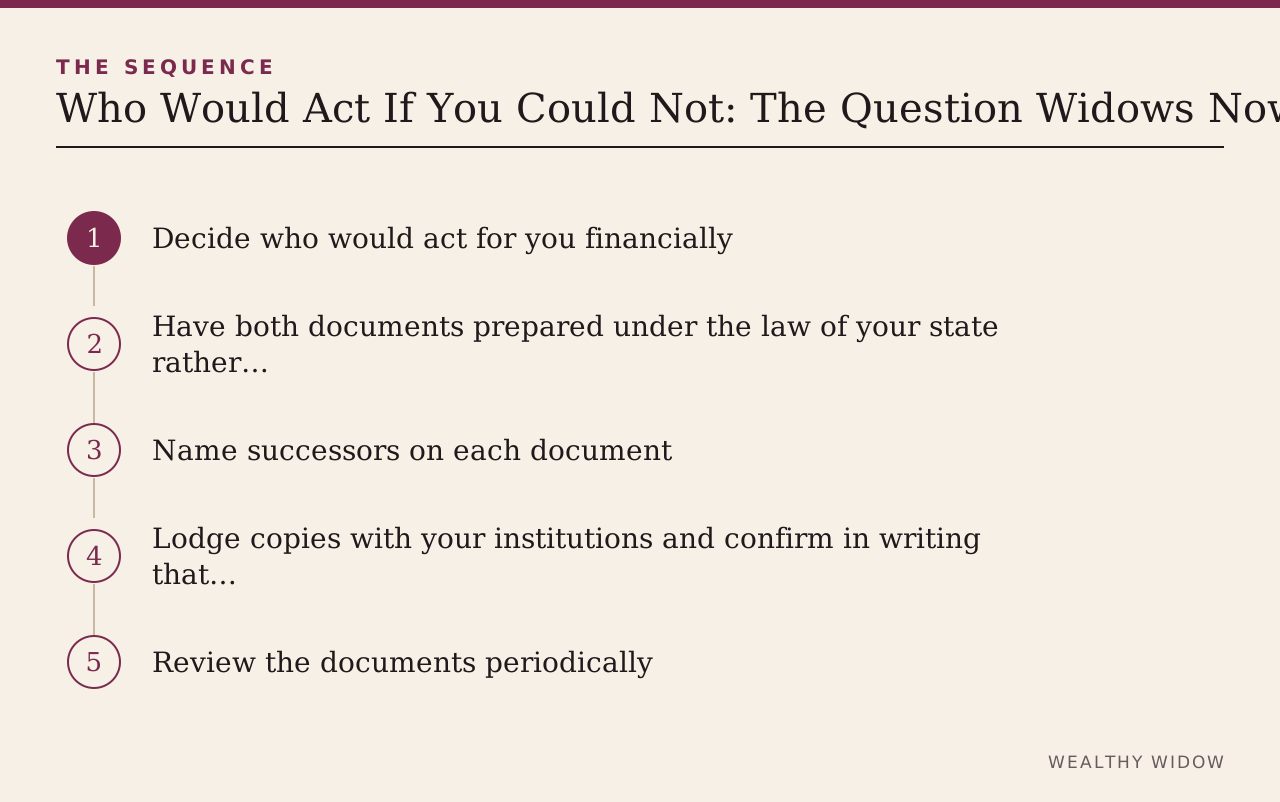
- Decide who would act for you financially, and who would make healthcare decisions, and confirm they agree.
- Have both documents prepared under the law of your state rather than from a generic template.
- Name successors on each document.
- Lodge copies with your institutions and confirm in writing that they will accept them.
- Review the documents periodically, and whenever the named people change circumstances.
The failure modes to plan around
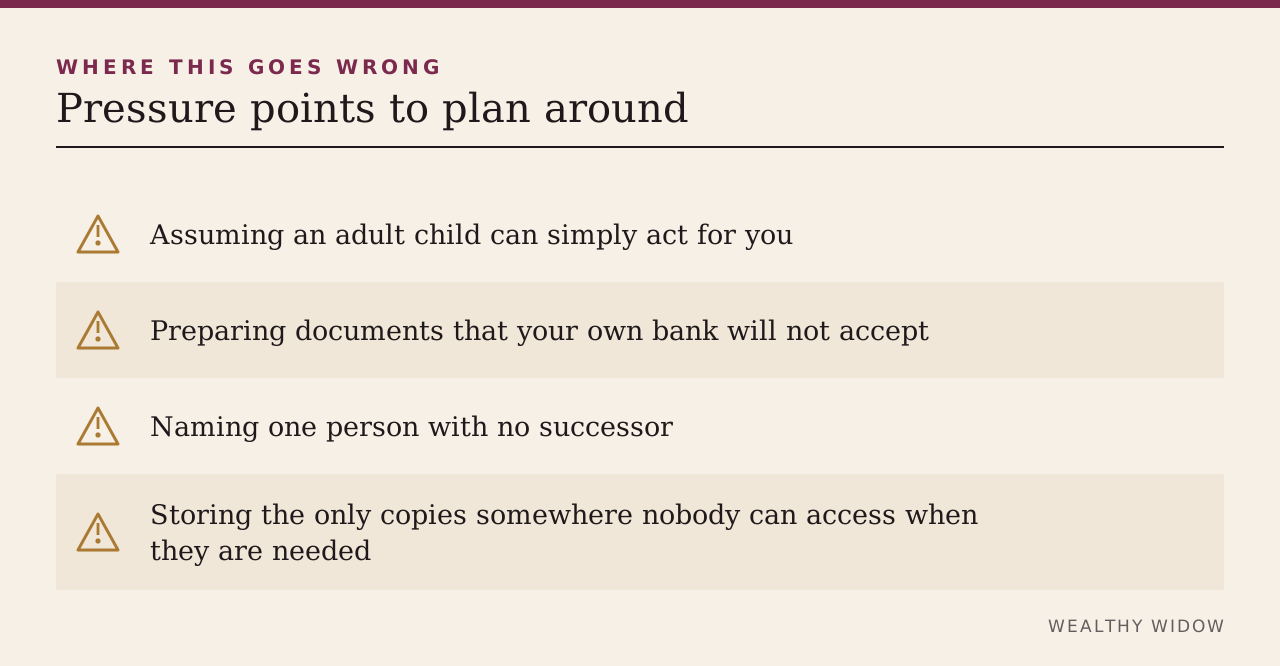
The errors here are well worn, which makes them avoidable. Assuming an adult child can simply act for you, which institutions will not accept without authority.
Preparing documents that your own bank will not accept, which is discovered only in an emergency. Naming one person with no successor, so the arrangement fails if they are unavailable. Storing the only copies somewhere nobody can access when they are needed.
What to have in front of you
Collect these once and keep them together, because you will be asked for them repeatedly over the coming months.
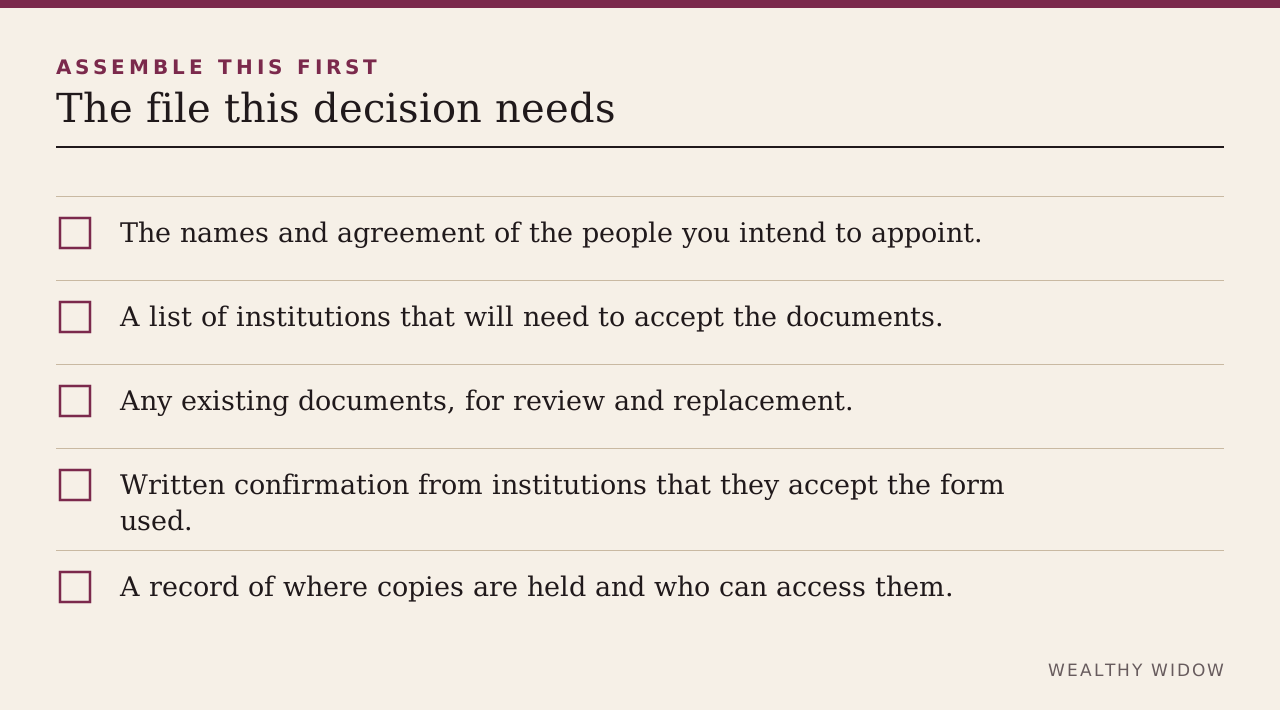
- The names and agreement of the people you intend to appoint.
- A list of institutions that will need to accept the documents.
- Any existing documents, for review and replacement.
- Written confirmation from institutions that they accept the form used.
- A record of where copies are held and who can access them.
Do not proceed on a verbal answer
Ask for each of these in a form you can save, date, and produce again months later if it is questioned.
- That each appointed person has agreed to act.
- That your institutions will accept the documents as drafted.
- That successors are named on each document.
- Where the originals and copies are held.
Put these questions directly
A competent professional will welcome these questions. Hesitation is itself information.
- Will my bank and my investment firm accept this document as drafted?
- What happens if the person I name is unavailable?
- What is the difference in authority between the financial and healthcare documents?
- How often should these be refreshed to avoid being refused as stale?
The primary sources for this guide
This guide summarises. The sources below govern, and they are updated when the rules are.
- National Institute on Aging — Advance care planning and advance directives
- Consumer Financial Protection Bureau — Taking control of your finances, help for surviving spouses
- Legal Services Corporation — I need legal help
- American Bar Association — Find legal help
What this leaves open
A guide can set out the structure of a decision. It cannot read your documents, and your documents govern. It cannot draft your documents, which must comply with the law of your state and be accepted by your own institutions.
The part worth remembering
This is the arrangement that quietly disappeared when your spouse died, and it is the one most often left undone. Two documents, agreed successors, and written acceptance from your institutions closes the gap entirely.
Read Claiming Strategy: Two Benefits, One Decision, Several Timetables next; the two decisions interact.
Primary sources
- National Institute on Aging — Advance care planning and advance directives
- Consumer Financial Protection Bureau — Taking control of your finances, help for surviving spouses
- Legal Services Corporation — I need legal help
- American Bar Association — Find legal help
This article provides general education, not individualized legal, tax, investment, insurance, or benefits advice. Rules and deadlines change; verify the current requirement with the agency and a qualified professional.