Home
Property Tax Relief You May Now Qualify For
Many states and counties offer property tax relief to widows, older owners, or those on reduced incomes, and almost none of it is applied automatically.

Institutions will describe this as routine. For you it is not routine, and the stakes are not symmetrical. Many states and counties offer property tax relief to widows, older owners, or those on reduced incomes, and almost none of it is applied automatically.
Property tax relief is administered locally and advertised poorly. Eligibility frequently changes at exactly the moment a household becomes a single-income one, which is when nobody is looking for it.
Relief programmes are applied for, not awarded. An eligible owner who never applies pays the full amount indefinitely.
First, get the category right
Begin with what can be said with confidence, and treat everything beyond it as still to be established. Property tax is generally assessed and administered locally, so programmes vary by county as well as by state. Exemptions may exist specifically for surviving spouses, older owners, veterans, or those with disabilities. Deferral programmes allow tax to be postponed rather than reduced, which is a different arrangement with different consequences.
Applications usually have annual deadlines, and a missed year is generally not recoverable. A change of ownership after a death can itself trigger a reassessment in some jurisdictions.
Take the steps in this order
A workable order follows. Each step assumes the last one is done.
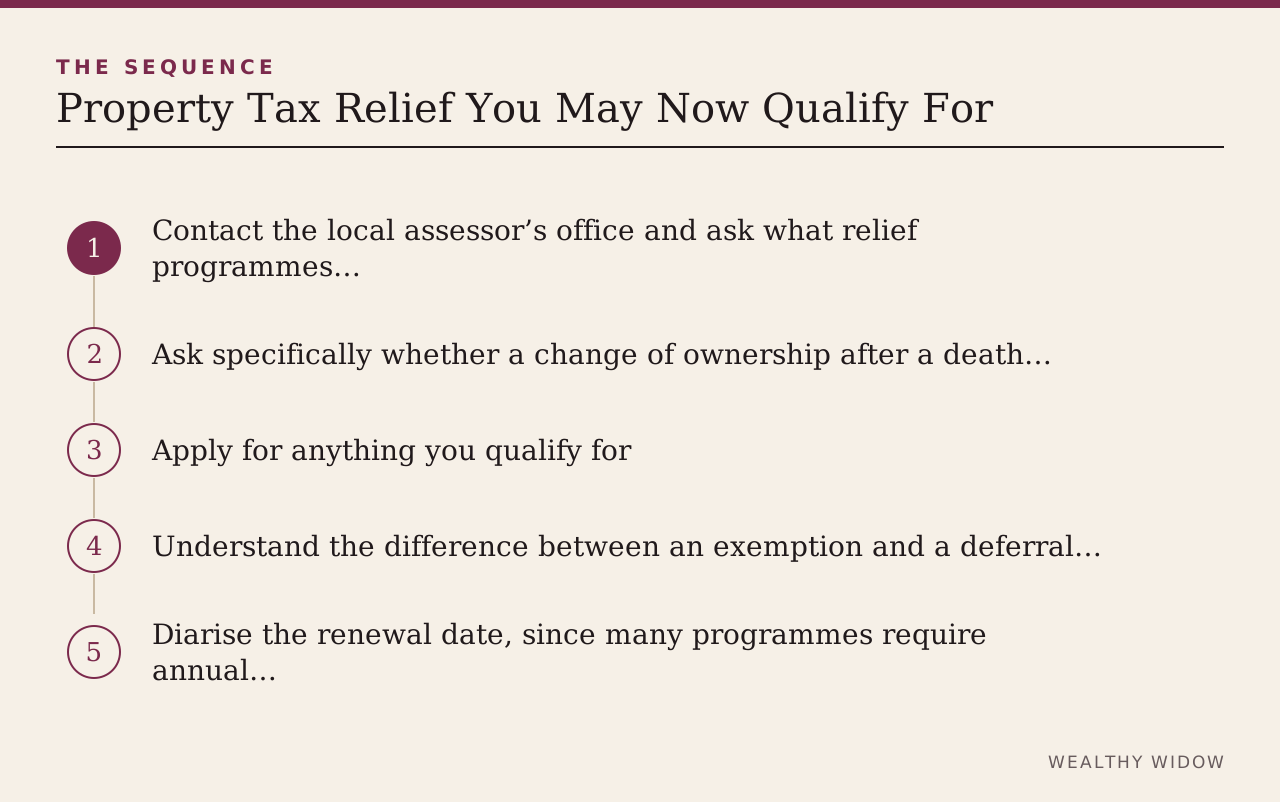
- Contact the local assessor’s office and ask what relief programmes exist and what the eligibility is.
- Ask specifically whether a change of ownership after a death triggers a reassessment.
- Apply for anything you qualify for, before the annual deadline.
- Understand the difference between an exemption and a deferral before choosing either.
- Diarise the renewal date, since many programmes require annual reapplication.
What to watch for
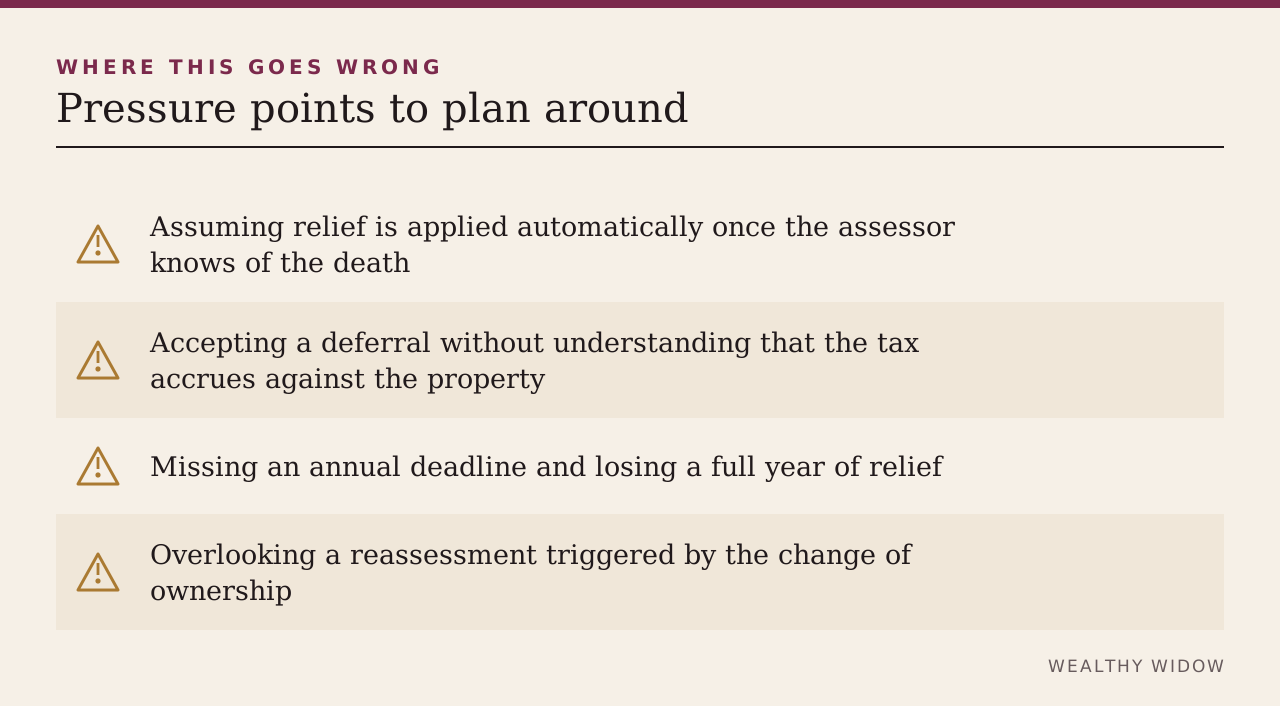
These are the places where readers most often lose ground. Assuming relief is applied automatically once the assessor knows of the death.
Accepting a deferral without understanding that the tax accrues against the property. Missing an annual deadline and losing a full year of relief. Overlooking a reassessment triggered by the change of ownership.
Documents this decision needs
Organisations will ask for these repeatedly, so assemble them once and keep them together.
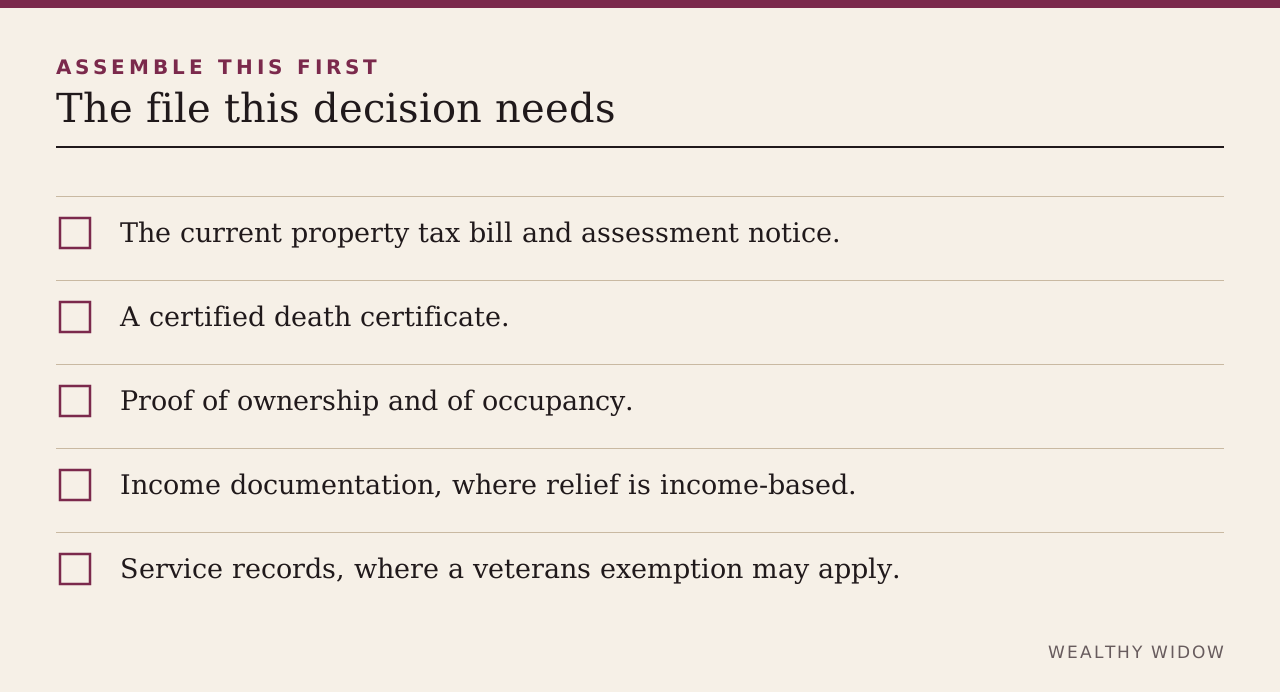
- The current property tax bill and assessment notice.
- A certified death certificate.
- Proof of ownership and of occupancy.
- Income documentation, where relief is income-based.
- Service records, where a veterans exemption may apply.
What belongs in your decision log
Get each of the following documented rather than described.
- What relief programmes exist locally and their eligibility criteria.
- The application deadline for each.
- Whether the change of ownership triggers a reassessment.
- Whether any programme is a deferral rather than an exemption.
Questions that reveal the answer
Each of the following is both a fair question and a revealing one, and no competent adviser will resent it.
- What relief programmes are available to me in this county?
- Does the change of ownership trigger a reassessment?
- Is this a reduction or a deferral, and what accrues if it is a deferral?
- What is the deadline, and does it renew annually?
Read the rule yourself
The sources below govern. This guide only summarises them.
- USAGov — Find government benefits and financial help
- USAGov — Government death benefits
- U.S. Department of Housing and Urban Development — Find a housing counselor
- Administration for Community Living — Finding local services
The limits of this guide
This is where general guidance ends and your own paperwork takes over. It cannot state what your county offers, and property tax relief is one of the most locally variable areas covered by this publication.
What to hold on to
Call the assessor and ask directly. Relief programmes are genuinely available in most places, they are almost never applied automatically, and the deadline is annual.
A companion guide, Getting Money Out of the House Without Leaving It, covers the decision that sits alongside this one.
Primary sources
- USAGov — Find government benefits and financial help
- USAGov — Government death benefits
- U.S. Department of Housing and Urban Development — Find a housing counselor
- Administration for Community Living — Finding local services
This article provides general education, not individualized legal, tax, investment, insurance, or benefits advice. Rules and deadlines change; verify the current requirement with the agency and a qualified professional.