Estate
The Election That Can Only Be Made Now
A surviving spouse may be able to preserve a deceased spouse’s unused estate tax exclusion, but generally only by filing a return in time.

Some decisions after a death are reversible. This one deserves more care than most. A surviving spouse may be able to preserve a deceased spouse’s unused estate tax exclusion, but generally only by filing a return in time.
Many families conclude, reasonably, that an estate below the threshold needs no return. Where portability of the unused exclusion matters, that conclusion can quietly forfeit a significant future benefit.
This is the classic case where filing a return that owes nothing protects something substantial years later.
What you are really being asked
Take the ground facts first, because most of the difficulty here dissolves once they are stated plainly. A deceased spouse’s unused exclusion may be transferable to the survivor, preserving it against the survivor’s own estate. The election is generally made on a timely filed estate tax return, even where no tax is payable. Missing the deadline can forfeit the benefit, though limited relief procedures may exist in some circumstances.
The benefit only matters where the surviving spouse’s own estate might approach the threshold in future. Statutory thresholds have changed materially over time and may change again, which is part of the argument for preserving the election.
The sequence that keeps options open
Take these in order. Reversing them tends to create work rather than save it.
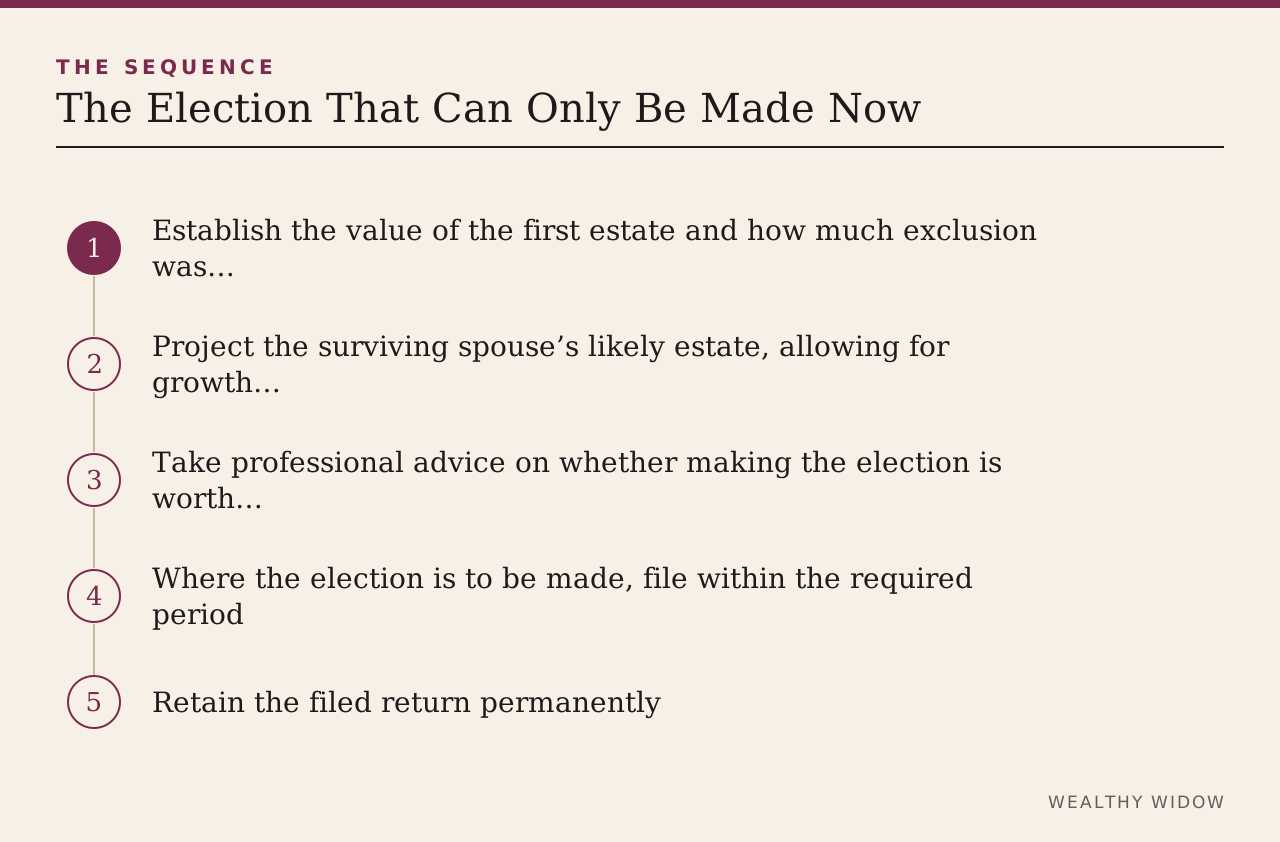
- Establish the value of the first estate and how much exclusion was unused.
- Project the surviving spouse’s likely estate, allowing for growth over a realistic horizon.
- Take professional advice on whether making the election is worth the cost of filing.
- Where the election is to be made, file within the required period.
- Retain the filed return permanently; it will be needed on the second death.
The failure modes to plan around
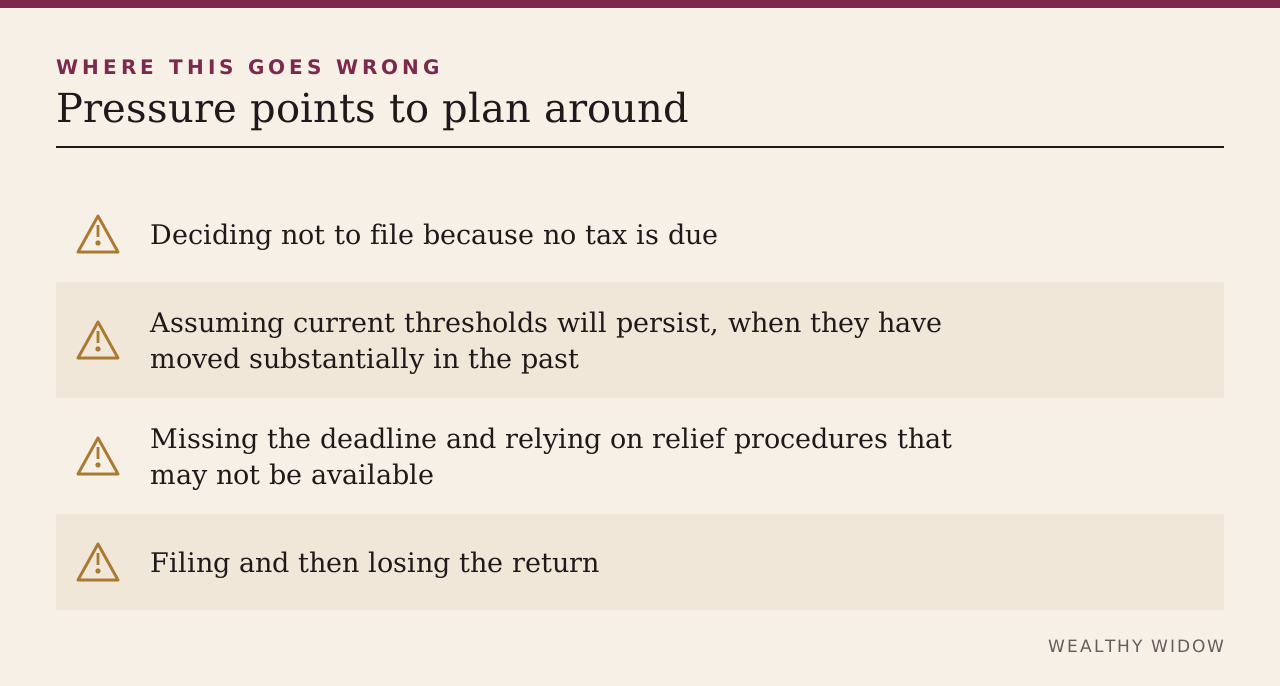
The failure modes below are predictable rather than unlucky, which is precisely what makes them avoidable. Deciding not to file because no tax is due, without considering the election at all.
Assuming current thresholds will persist, when they have moved substantially in the past. Missing the deadline and relying on relief procedures that may not be available. Filing and then losing the return, so the election cannot be evidenced decades later.
Gather these before the first call
Every organisation involved will want some combination of the following, and several will want it more than once.
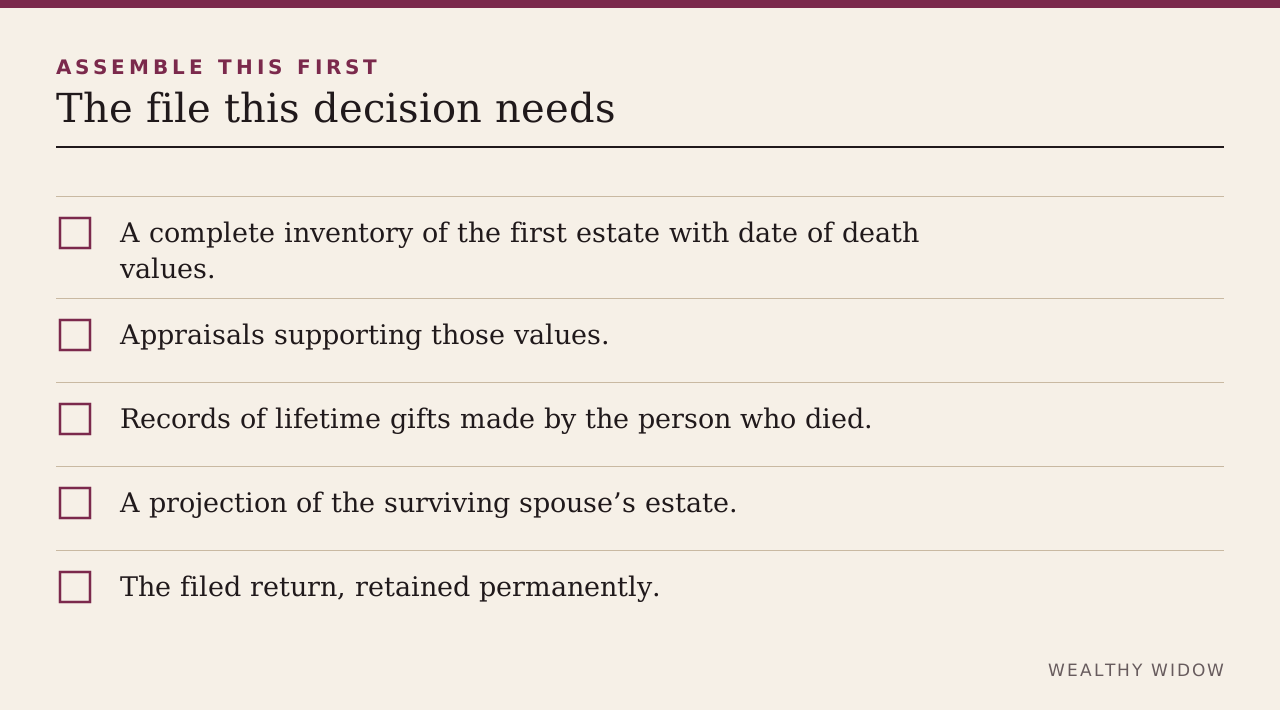
- A complete inventory of the first estate with date of death values.
- Appraisals supporting those values.
- Records of lifetime gifts made by the person who died.
- A projection of the surviving spouse’s estate.
- The filed return, retained permanently.
What to have documented
Put each of these in the file with a date against it.
- The amount of unused exclusion available.
- The deadline for making the election.
- The cost of preparing and filing the return.
- Where the filed return will be stored for the long term.
What to ask before you sign
Ask these before an engagement letter is signed or a product is recommended.
- Is this election worth making in my circumstances?
- What is the deadline, and is any relief available if it is missed?
- What would it cost to prepare and file the return?
- What documentation will be needed on my own death to use this?
The primary material
Each load-bearing point above traces to one of the following, and they are the versions that stay current.
- Internal Revenue Service — About Form 706, United States estate tax return
- Internal Revenue Service — Filing estate and gift tax returns
- Internal Revenue Service — Forms and publications, estate and gift tax
- Internal Revenue Service — Information for executors
Where general guidance ends
Here is the line between what can usefully be written for a general readership and what cannot be written at all. It cannot tell you whether the election is worth making. That needs a projection of your own estate and professional advice on current law.
What this comes down to
Ask the question explicitly rather than letting it be answered by default. This is one of a small number of decisions where filing a return that owes nothing is exactly the right thing to do.
Read Instructing an Estate Lawyer: Scope, Fees, and Who They Act For next; the two decisions interact.
Primary sources
- Internal Revenue Service — About Form 706, United States estate tax return
- Internal Revenue Service — Filing estate and gift tax returns
- Internal Revenue Service — Forms and publications, estate and gift tax
- Internal Revenue Service — Information for executors
This article provides general education, not individualized legal, tax, investment, insurance, or benefits advice. Rules and deadlines change; verify the current requirement with the agency and a qualified professional.