Money
Care Costs: The Planning a Widow Now Does Alone
Care that a spouse might have provided informally now has to be bought or arranged, which changes the arithmetic of every long-term plan.

You may be told this is simply a form to sign. It is a decision with consequences. Care that a spouse might have provided informally now has to be bought or arranged, which changes the arithmetic of every long-term plan.
This is uncomfortable to plan and expensive not to. The point is not to predict what care you will need, but to know how it would be paid for and who would arrange it if you could not.
Most long-term care in a marriage is provided by the other spouse, and that is the resource a widow no longer has.
The decision behind the form
The facts that govern this are narrower than the anxiety around it. Long-term care is largely provided informally by spouses and family, and the absence of a spouse changes the position materially. Costs vary enormously by type of care and by location, and local figures are the only relevant ones. Medicare coverage of long-term custodial care is limited, and the limits surprise most families.
Means-tested programmes have eligibility rules that interact with gifts and transfers made earlier. Deciding in advance who would arrange care, and how, is as important as deciding how it would be paid for.
Step by step, in this order
Follow it in order, and leave anything requiring a signature until the end rather than the beginning.
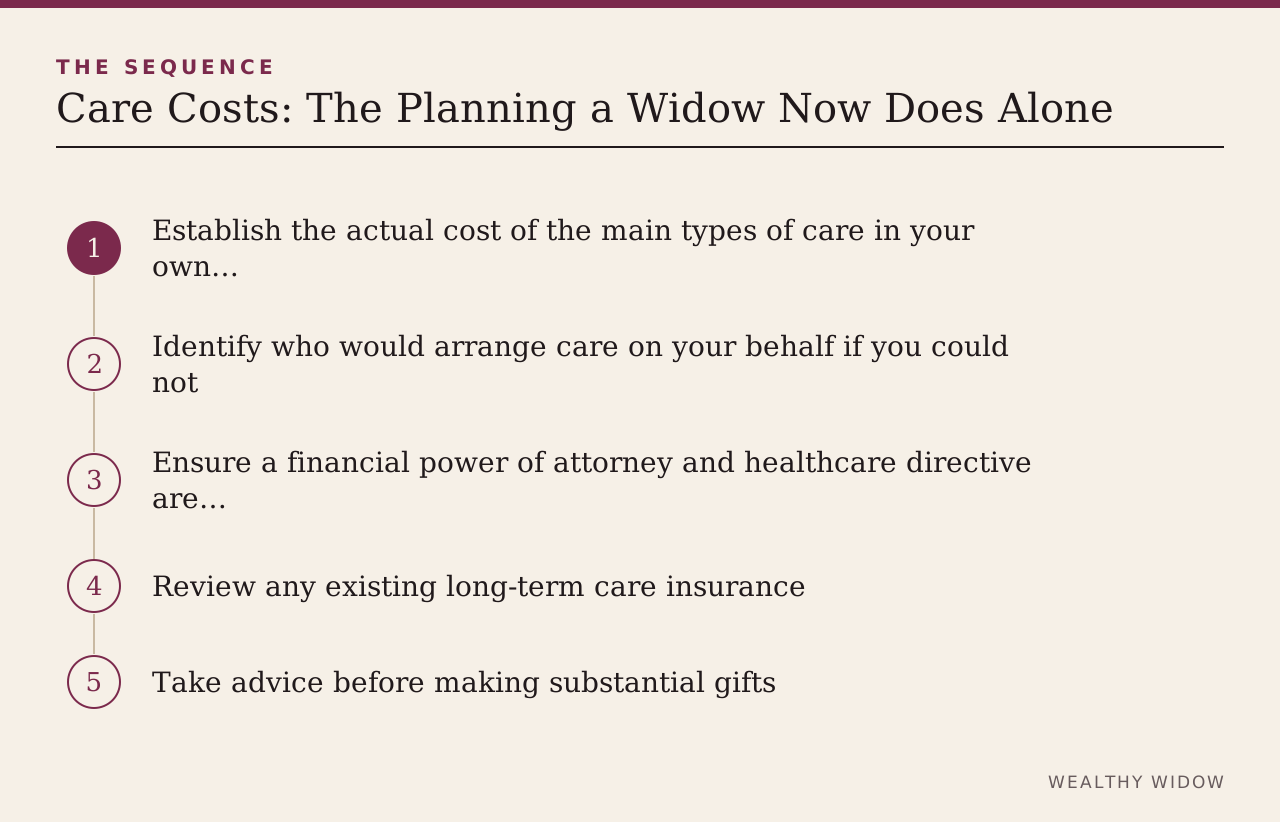
- Establish the actual cost of the main types of care in your own area rather than using national figures.
- Identify who would arrange care on your behalf if you could not, and confirm they are willing.
- Ensure a financial power of attorney and healthcare directive are in place and current.
- Review any existing long-term care insurance, and understand what triggers a claim.
- Take advice before making substantial gifts, since transfers can affect later eligibility for assistance.
The costly misreadings
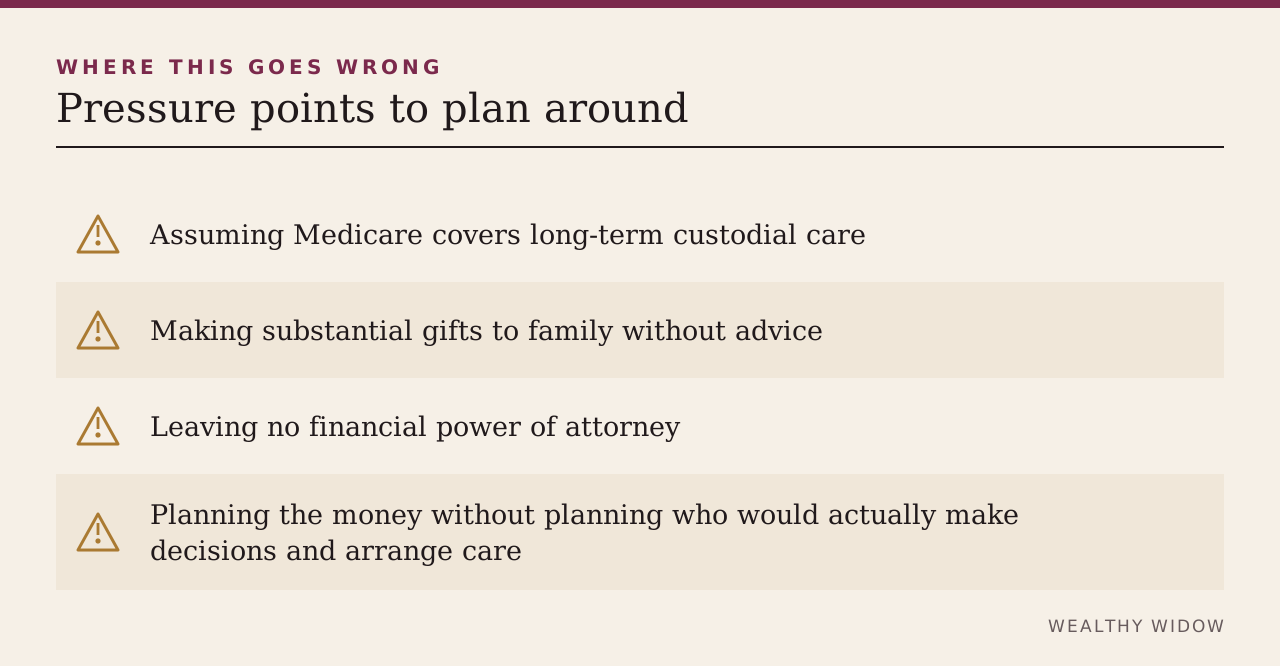
Each of the following is a signal to pause and confirm rather than to proceed on the assumption that it is fine. Assuming Medicare covers long-term custodial care, which is the most common and most costly misunderstanding.
Making substantial gifts to family without advice, then finding they affect eligibility for assistance. Leaving no financial power of attorney, which can force a court process at the worst possible time. Planning the money without planning who would actually make decisions and arrange care.
The documents to assemble first
The evidence below does most of the work of establishing who you are and what you may do.
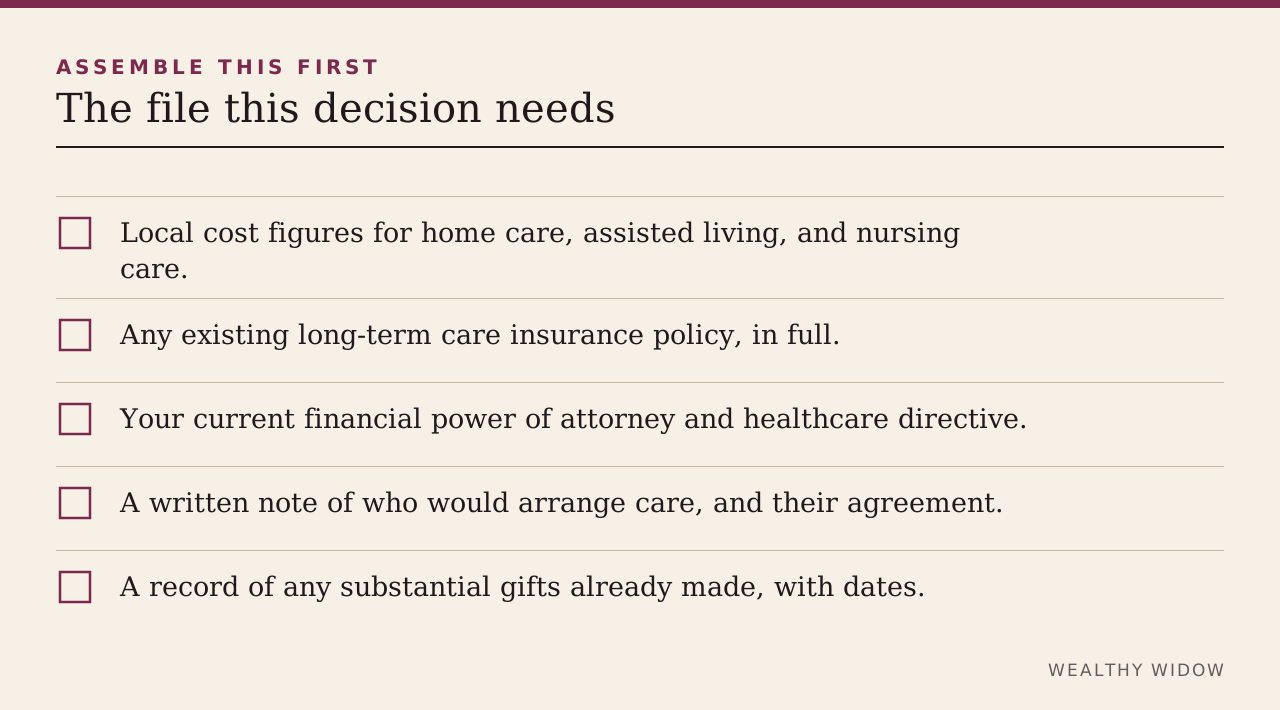
- Local cost figures for home care, assisted living, and nursing care.
- Any existing long-term care insurance policy, in full.
- Your current financial power of attorney and healthcare directive.
- A written note of who would arrange care, and their agreement.
- A record of any substantial gifts already made, with dates.
Written confirmation to insist on
Before you act on what you have been told, hold written confirmation of each point.
- What your existing insurance, if any, actually covers and what triggers it.
- That your power of attorney and healthcare directive are current and accepted by your institutions.
- The realistic local cost of each type of care.
- How gifts already made might affect later eligibility.
Take these questions to your adviser
Ask these before an engagement letter is signed, while you still have every option open to you.
- What does Medicare actually cover in long-term care, and what does it not?
- How would gifts I have already made affect eligibility for assistance?
- What triggers a claim under my existing policy?
- What would happen if I could not make decisions tomorrow?
Read the agency, not this summary
Treat these as the authority and this guide as an index to them.
- Administration for Community Living — Long-term care resources
- Administration for Community Living — Long-term care planning
- Administration for Community Living — Finding local services
- Medicare.gov — Get help with costs
What only your documents can answer
This is where a guide stops being useful and your own paperwork takes over. It cannot price your care or assess your eligibility. Both depend on where you live, what you own, and rules that change, and both need local advice.
The last word on this
Plan the decision-making as carefully as the money. Knowing who would act, under what authority, and how care would be paid for is the part that protects you when you can no longer arrange it yourself.
Read Lump Sum or Lifetime Income: The Irreversible Pension Choice next; the two decisions interact.
Primary sources
- Administration for Community Living — Long-term care resources
- Administration for Community Living — Long-term care planning
- Administration for Community Living — Finding local services
- Medicare.gov — Get help with costs
This article provides general education, not individualized legal, tax, investment, insurance, or benefits advice. Rules and deadlines change; verify the current requirement with the agency and a qualified professional.