Money
Lump Sum or Lifetime Income: The Irreversible Pension Choice
Where a pension offers a lump sum instead of monthly income, the choice is usually permanent and is frequently presented as a simple preference.

The pressure to resolve this quickly usually comes from outside you. Where a pension offers a lump sum instead of monthly income, the choice is usually permanent and is frequently presented as a simple preference.
A lump sum looks larger and feels more controllable, which is exactly why it is chosen more often than the arithmetic supports. The decision deserves modelling rather than instinct.
Guaranteed lifetime income is difficult to buy and easy to give up, and the giving up is usually irreversible.
What is actually on the table
Take the ground facts first, because most of the difficulty here dissolves once they are stated plainly. A lifetime income option transfers longevity risk to the plan; a lump sum transfers it back to you. The election is generally irreversible once made, which is why the comparison must happen beforehand. A lump sum invested must produce both the income and the security that the pension would have guaranteed.
Plan-provided income may be backed by a federal insurance scheme up to limits, which a private investment is not. The tax treatment of a lump sum and of monthly income differs, and the difference affects the real comparison.
The path through this
Take these in order. Reversing them tends to create work rather than save it.
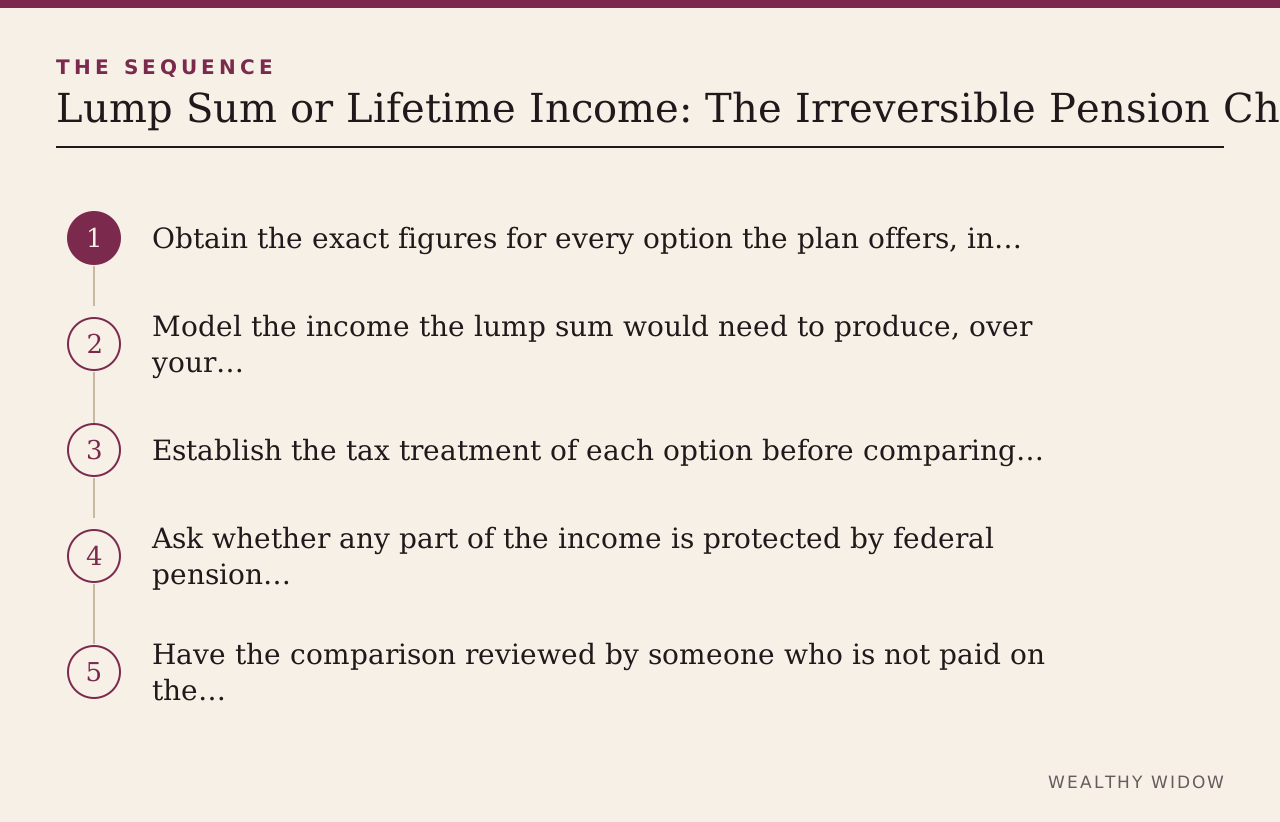
- Obtain the exact figures for every option the plan offers, in writing.
- Model the income the lump sum would need to produce, over your realistic lifespan, to match the pension.
- Establish the tax treatment of each option before comparing headline numbers.
- Ask whether any part of the income is protected by federal pension insurance.
- Have the comparison reviewed by someone who is not paid on the outcome.
What tends to catch people out
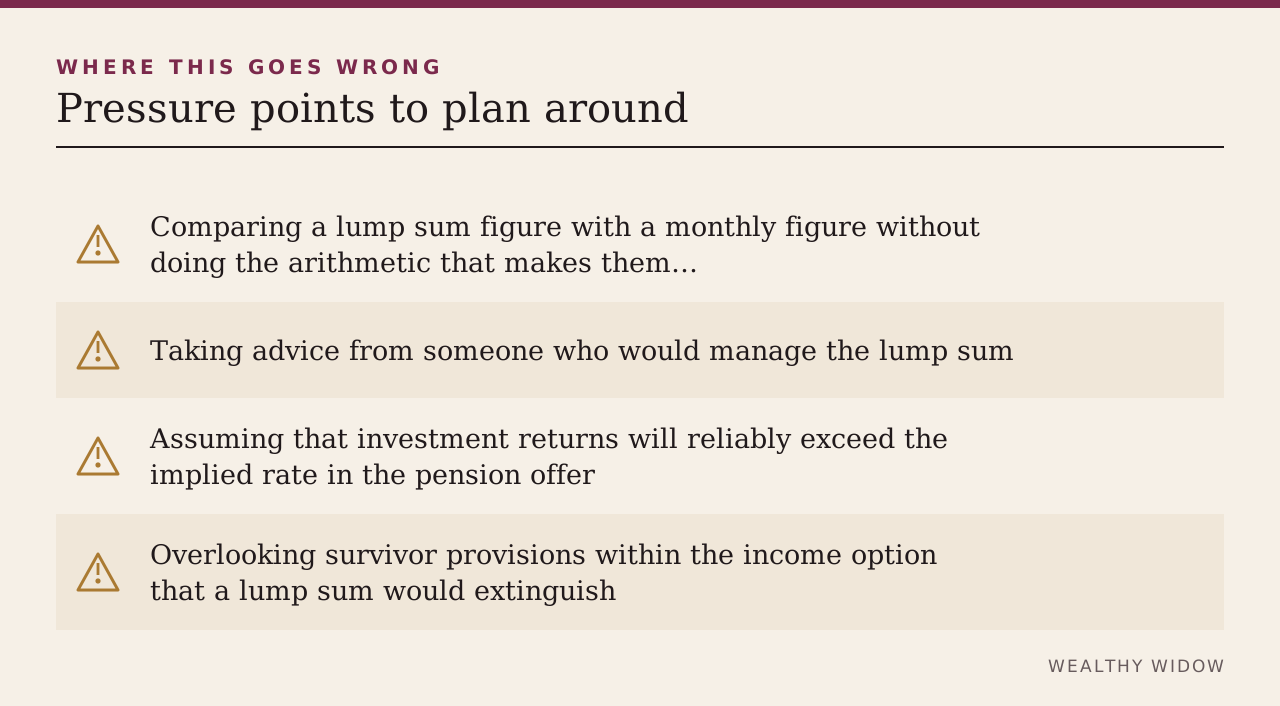
The failure modes below are predictable rather than unlucky, which is precisely what makes them avoidable. Comparing a lump sum figure with a monthly figure without doing the arithmetic that makes them comparable.
Taking advice from someone who would manage the lump sum, and who therefore is not neutral. Assuming that investment returns will reliably exceed the implied rate in the pension offer. Overlooking survivor provisions within the income option that a lump sum would extinguish.
Gather these before the first call
Every organisation involved will want some combination of the following, and several will want it more than once.
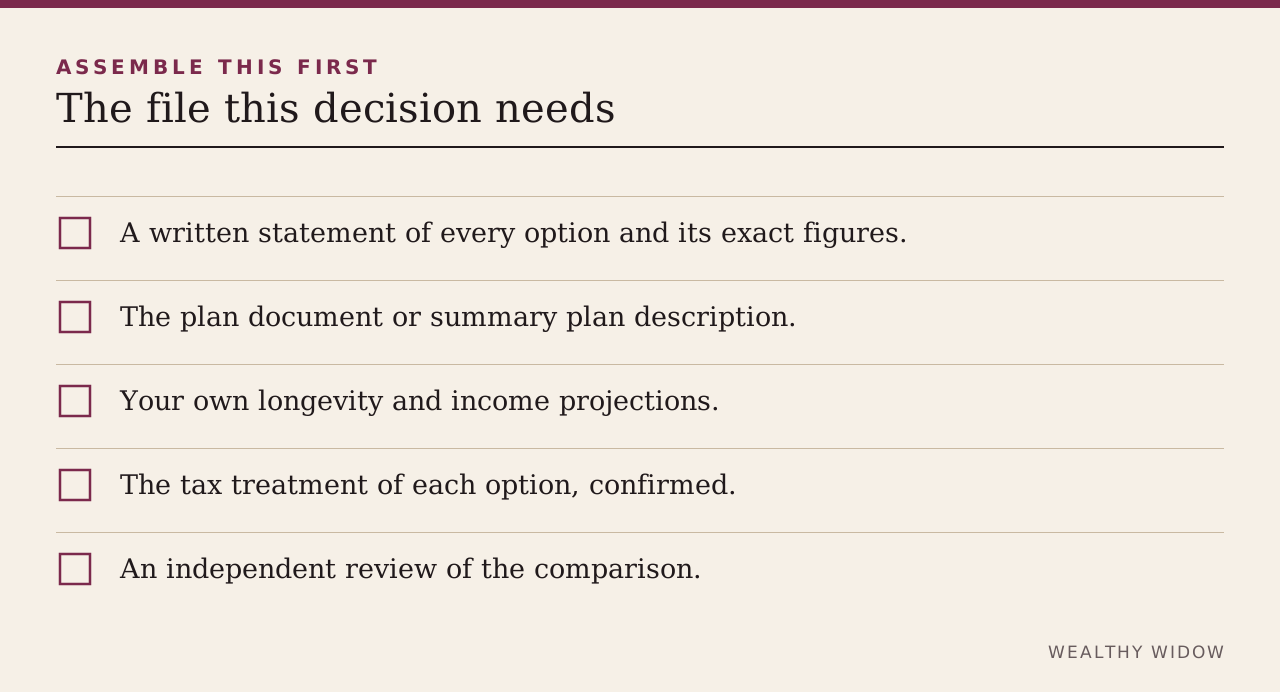
- A written statement of every option and its exact figures.
- The plan document or summary plan description.
- Your own longevity and income projections.
- The tax treatment of each option, confirmed.
- An independent review of the comparison.
Get it on paper
Ask for each of the following in writing, by letter, secure message, or email you can save.
- The precise figures for each option, in writing.
- Whether the election is reversible, and by when.
- The tax treatment applied to each option.
- What protection applies to the income option.
Questions for the person advising you
Put these directly, note the answers, and record who gave them and when.
- What annual return would the lump sum need to match this income for life?
- Are you paid differently depending on which option I choose?
- What survivor or inflation provisions exist within the income option?
- Is this election reversible under any circumstances?
The primary sources for this guide
This guide summarises. The sources below govern, and they are updated when the rules are.
- Pension Benefit Guaranty Corporation — Workers and retirees
- U.S. Department of Labor — Reporting and disclosure guide for employee benefit plans
- U.S. Securities and Exchange Commission — Annuities
- U.S. Office of Personnel Management — Survivor benefits
What this leaves open
A guide can set out the structure of a decision. It cannot read your documents, and your documents govern. It cannot make the calculation for you, because it turns on your age, health, other income, and tax position, all of which are personal.
The part worth remembering
Insist on both sets of figures and an independent view before electing anything. This is one of a small number of financial decisions that genuinely cannot be revisited, and it deserves to be treated that way.
For the step that usually comes next, read The Fee Audit: Finding the Costs That Do Not Appear on a Statement.
Primary sources
- Pension Benefit Guaranty Corporation — Workers and retirees
- U.S. Department of Labor — Reporting and disclosure guide for employee benefit plans
- U.S. Securities and Exchange Commission — Annuities
- U.S. Office of Personnel Management — Survivor benefits
This article provides general education, not individualized legal, tax, investment, insurance, or benefits advice. Rules and deadlines change; verify the current requirement with the agency and a qualified professional.