Taxes
When Something Was Missed: Asking for Relief
Deadlines missed during a bereavement are common, and relief from penalties is sometimes available where reasonable cause is shown.

Institutions will describe this as routine. For you it is not routine, and the stakes are not symmetrical. Deadlines missed during a bereavement are common, and relief from penalties is sometimes available where reasonable cause is shown.
Missing a filing or a distribution deadline during the year after a death is extremely common. There are established routes for seeking relief, and they work considerably better when the failure has already been corrected.
Relief is applied for and evidenced, not assumed, and the application improves the sooner it is made.
What you are really being asked
These are the load-bearing facts. Penalty relief may be available where reasonable cause for a failure can be shown. Correcting the failure before or alongside the request generally strengthens it. Certain first-time relief provisions may be available in some circumstances.
Interest is generally treated separately from penalties and is far less commonly relieved, so it continues to accrue even where a penalty is removed. The taxpayer advocate service may assist where normal channels have not resolved a matter.
The sequence that keeps options open
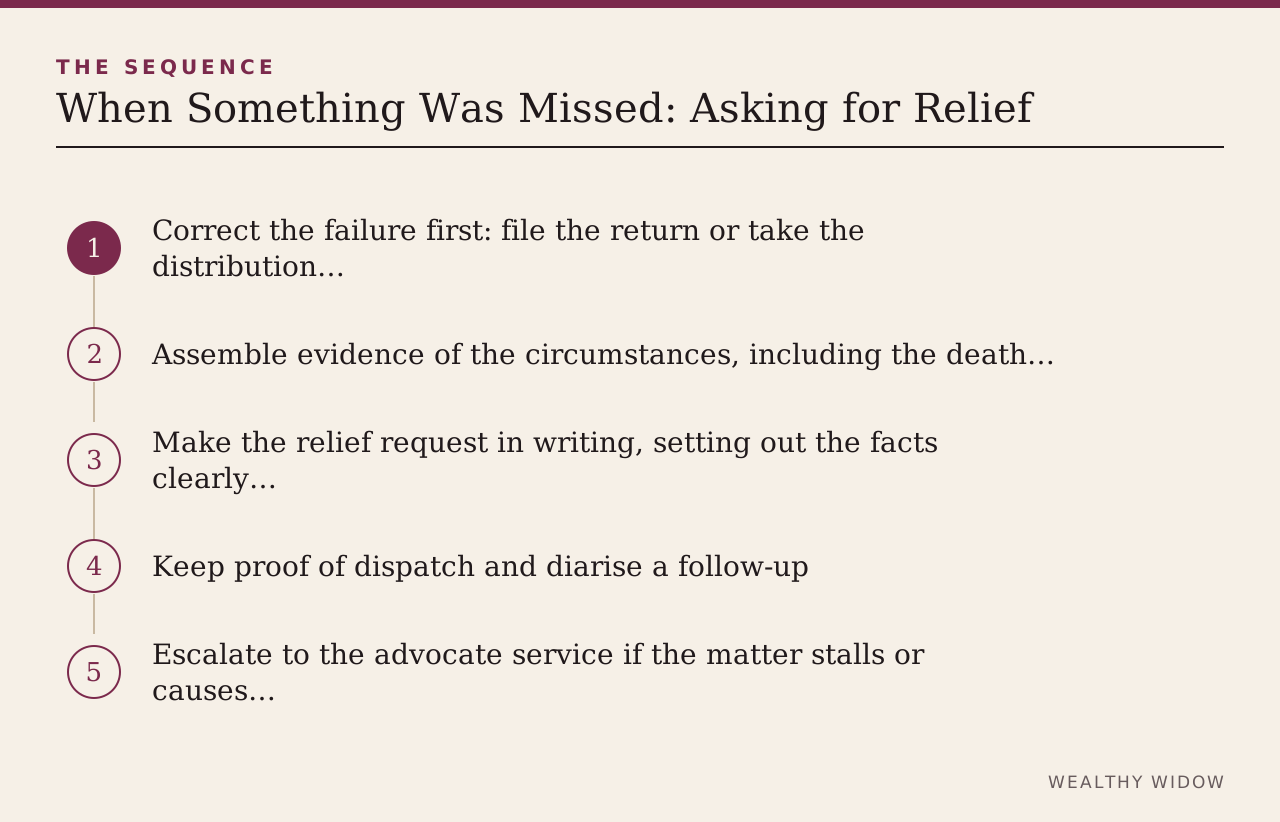
Sequence matters, because some steps close options that later steps need.
- Correct the failure first: file the return or take the distribution that was missed.
- Assemble evidence of the circumstances, including the death certificate and its timing.
- Make the relief request in writing, setting out the facts clearly and without argument.
- Keep proof of dispatch and diarise a follow-up.
- Escalate to the advocate service if the matter stalls or causes hardship.
The failure modes to plan around
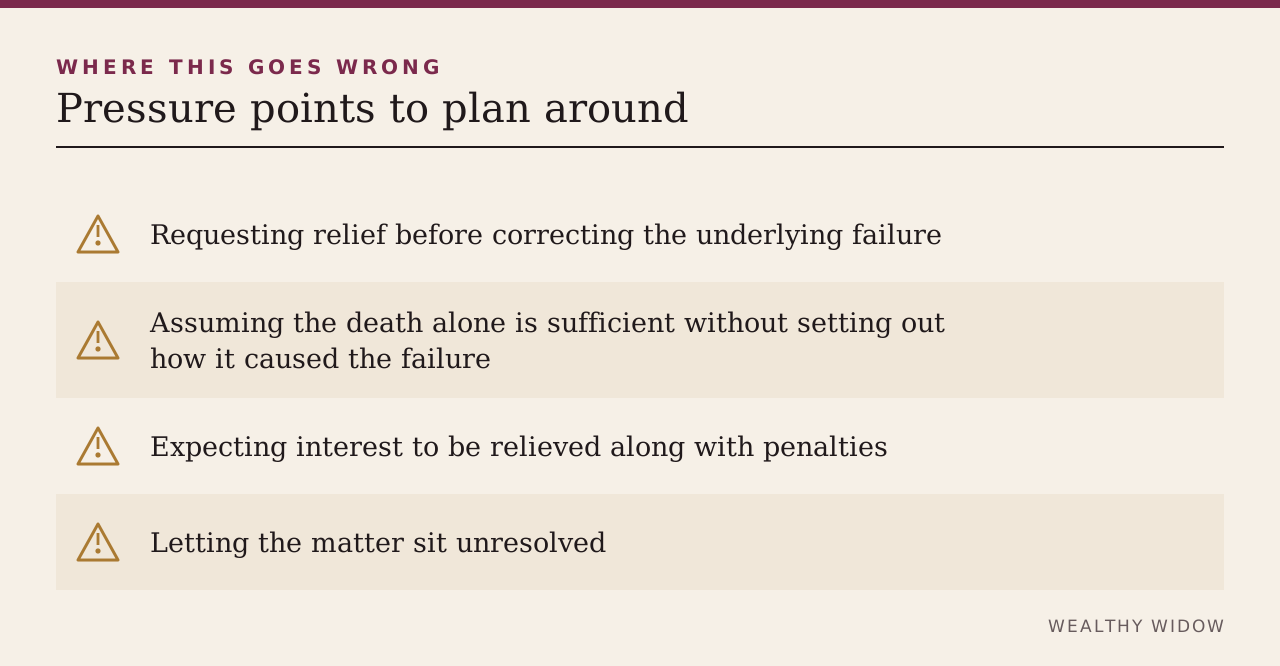
What follows is where readers most reliably lose ground. Requesting relief before correcting the underlying failure.
Assuming the death alone is sufficient without setting out how it caused the failure. Expecting interest to be relieved along with penalties. Letting the matter sit unresolved, which does not improve it.
The paperwork this actually requires
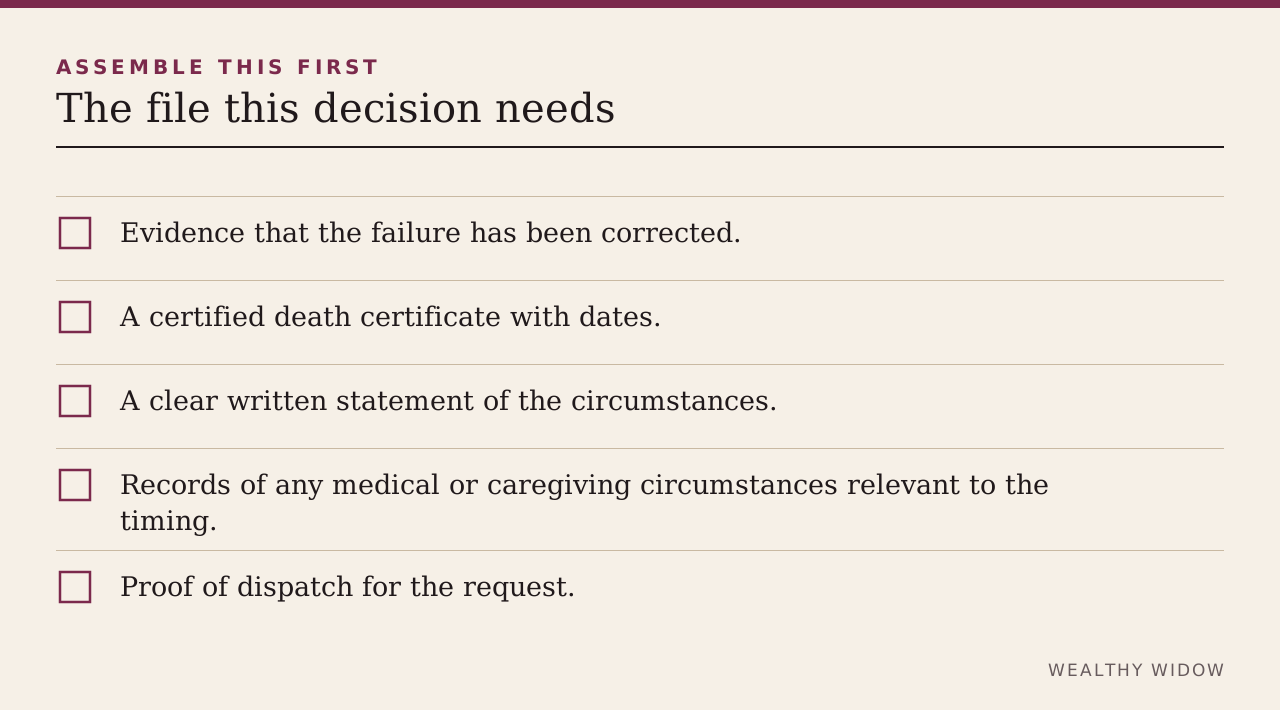
The file below does most of the work of establishing who you are.
- Evidence that the failure has been corrected.
- A certified death certificate with dates.
- A clear written statement of the circumstances.
- Records of any medical or caregiving circumstances relevant to the timing.
- Proof of dispatch for the request.
What to have documented
Put each of these in the file with a date against it.
- That the underlying failure has been corrected.
- What relief provisions may apply.
- What evidence supports reasonable cause.
- The expected response time and how to follow up.
What to ask before you sign
Ask these before an engagement letter is signed or a product is recommended.
- What relief provisions might apply in these circumstances?
- What evidence would support a reasonable cause request?
- Should I correct the failure before requesting relief?
- Is interest treated separately from penalties here?
The primary material
Each load-bearing point above traces to one of the following, and they are the versions that stay current.
- Taxpayer Advocate Service — An independent organization within the IRS
- Internal Revenue Service — Who may use the Taxpayer Advocate Service
- Internal Revenue Service — Payment plans and installment agreements
- Internal Revenue Service — About Publication 559, survivors, executors, and administrators
Where general guidance ends
Here is the line between what can usefully be written for a general readership and what cannot be written at all. It cannot state relief criteria or predict an outcome, and where the request is significant a professional should draft it.
What this comes down to
Correct first, then request in writing with the facts set out plainly. Relief is genuinely available in these circumstances, and it is far more likely where the failure has already been put right.
Read Reconstructing Records You Cannot Find next; the two decisions interact.
Primary sources
- Taxpayer Advocate Service — An independent organization within the IRS
- Internal Revenue Service — Who may use the Taxpayer Advocate Service
- Internal Revenue Service — Payment plans and installment agreements
- Internal Revenue Service — About Publication 559, survivors, executors, and administrators
This article provides general education, not individualized legal, tax, investment, insurance, or benefits advice. Rules and deadlines change; verify the current requirement with the agency and a qualified professional.