Money
Clearing Debts With a Settlement: Not Always the Right Instinct
The urge to be debt free with insurance proceeds is strong and sometimes wrong, particularly where liquidity is the scarcer resource.

The pressure to resolve this quickly usually comes from outside you. The urge to be debt free with insurance proceeds is strong and sometimes wrong, particularly where liquidity is the scarcer resource.
Paying off debt feels decisive and safe, and in many cases it is. The exceptions matter: cheap, long-dated debt against a thin cash reserve is exactly the wrong thing to clear first.
Cash you have spent clearing a low-cost debt is cash you cannot use for the emergency that arrives next year.
Getting the question right first
Begin with what can be said with confidence, and treat everything beyond it as still to be established. Not every debt of the person who died is your personal responsibility, so liability should be established before repayment. The interest rate on a debt, not its emotional weight, determines whether clearing it is efficient. Repaying a mortgage converts liquid money into property equity, which is far harder to access again.
Some debts carry early repayment charges that offset part of the saving. A debt cleared cannot be reinstated, so the decision is one-directional.
Where to start, and what follows
A workable order follows. Each step assumes the last one is done.
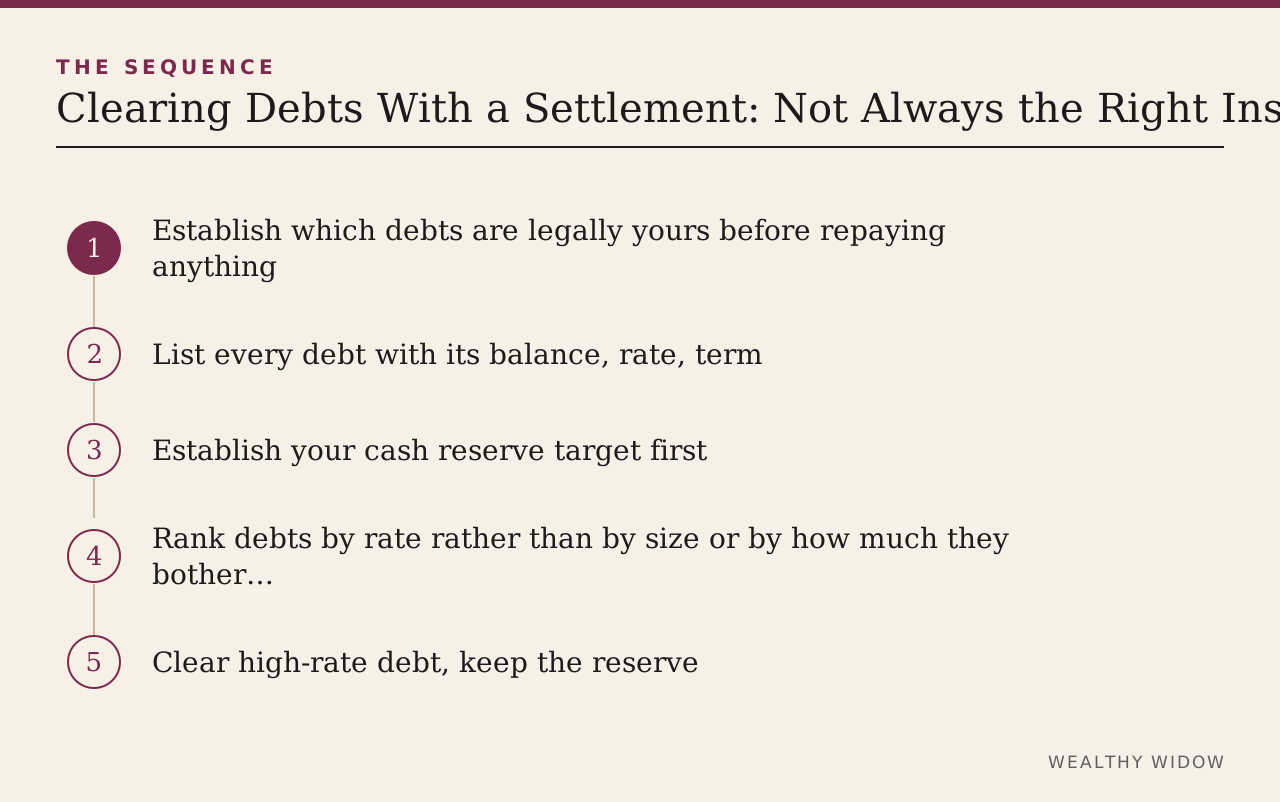
- Establish which debts are legally yours before repaying anything.
- List every debt with its balance, rate, term, and any early repayment charge.
- Establish your cash reserve target first, and treat it as untouchable.
- Rank debts by rate rather than by size or by how much they bother you.
- Clear high-rate debt, keep the reserve, and revisit the rest once income is stable.
Where this commonly goes wrong
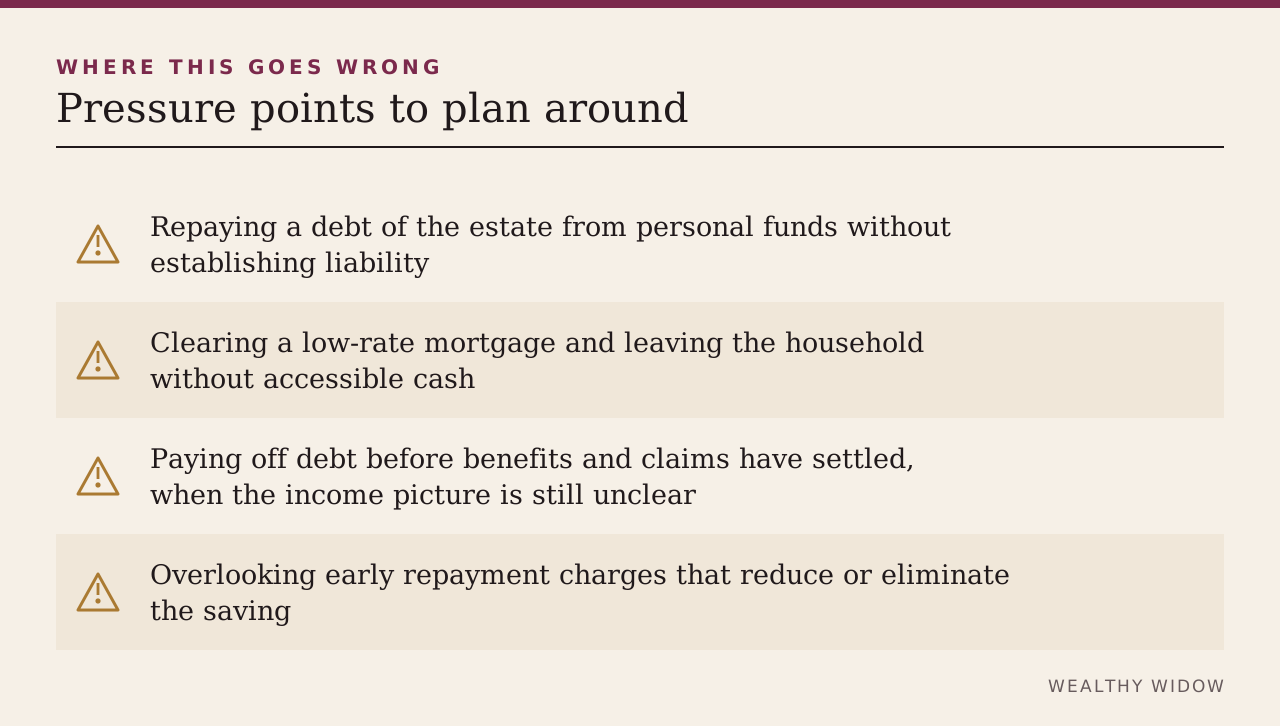
These are the places where readers most often lose ground. Repaying a debt of the estate from personal funds without establishing liability.
Clearing a low-rate mortgage and leaving the household without accessible cash. Paying off debt before benefits and claims have settled, when the income picture is still unclear. Overlooking early repayment charges that reduce or eliminate the saving.
Documents this decision needs
Organisations will ask for these repeatedly, so assemble them once and keep them together.
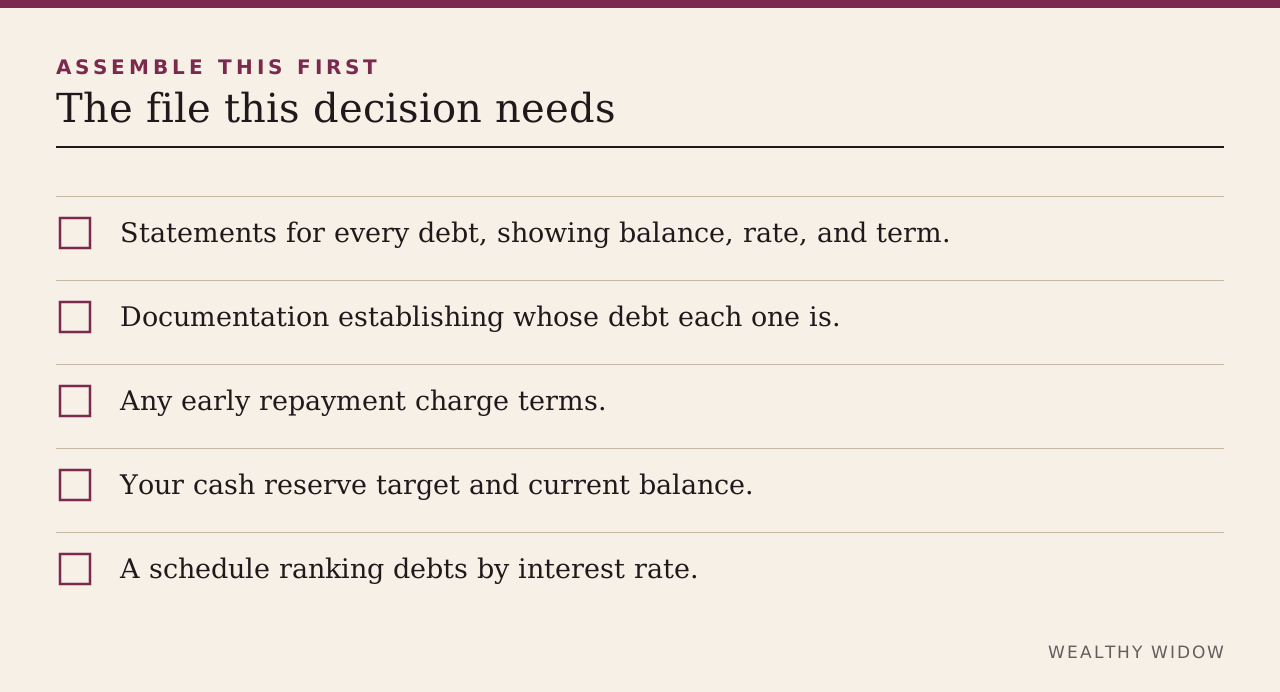
- Statements for every debt, showing balance, rate, and term.
- Documentation establishing whose debt each one is.
- Any early repayment charge terms.
- Your cash reserve target and current balance.
- A schedule ranking debts by interest rate.
What belongs in your decision log
Get each of the following documented rather than described.
- Which debts are legally your responsibility.
- The rate and any early repayment charge on each.
- Your cash reserve target, decided before any repayment.
- That income has stabilised sufficiently to commit the money.
Questions that reveal the answer
Each of the following is both a fair question and a revealing one, and no competent adviser will resent it.
- Which of these debts am I actually liable for?
- What early repayment charge applies to each?
- Given my reserve and my income, which debts would you clear and which would you keep?
- What would I do if I needed this money back in two years?
Sources worth reading yourself
Where this guide and a source disagree, the source is right.
- Federal Trade Commission — Credit and debt
- Consumer Financial Protection Bureau — Am I responsible for my spouse’s debts after they die?
- U.S. Securities and Exchange Commission — Compound interest calculator
- Consumer Financial Protection Bureau — Help for surviving spouses
The boundary of this guide
Be clear about the boundary; the wrong assumption here is expensive. It cannot rank your debts. That needs the rates, the terms, and a view of how secure your income has become.
Where this leaves you
Establish liability, protect the reserve, then rank by rate. Being debt free is a good outcome; being debt free and illiquid in the year after a bereavement is not.
If this raised a further question, Learning to Read the Statements Somebody Else Used to Open takes it further.
Primary sources
- Federal Trade Commission — Credit and debt
- Consumer Financial Protection Bureau — Am I responsible for my spouse’s debts after they die?
- U.S. Securities and Exchange Commission — Compound interest calculator
- Consumer Financial Protection Bureau — Help for surviving spouses
This article provides general education, not individualized legal, tax, investment, insurance, or benefits advice. Rules and deadlines change; verify the current requirement with the agency and a qualified professional.