Estate
The Estate Account: Never Mix Estate Money With Your Own
A separate account for estate funds is the single administrative decision that most reliably keeps a personal representative out of difficulty.

Institutions will describe this as routine. For you it is not routine, and the stakes are not symmetrical. A separate account for estate funds is the single administrative decision that most reliably keeps a personal representative out of difficulty.
Running estate funds through a personal account is common, understandable, and the origin of a large share of later disputes with beneficiaries. The fix is a single account opened at the outset.
Commingled money cannot be accounted for, and a representative who cannot account for money is the one who has a problem.
What you are really being asked
Take the ground facts first, because most of the difficulty here dissolves once they are stated plainly. An estate is a separate entity and generally needs its own tax identification number to open an account. Estate income earned after death may require a separate income tax return for the estate. Beneficiaries are generally entitled to an accounting, which is far easier from a dedicated account.
Deposit protection applies to the estate account according to its own ownership category. Expenses properly paid by a representative are usually reimbursable, but only if they are evidenced.
The sequence that keeps options open
Take these in order. Reversing them tends to create work rather than save it.
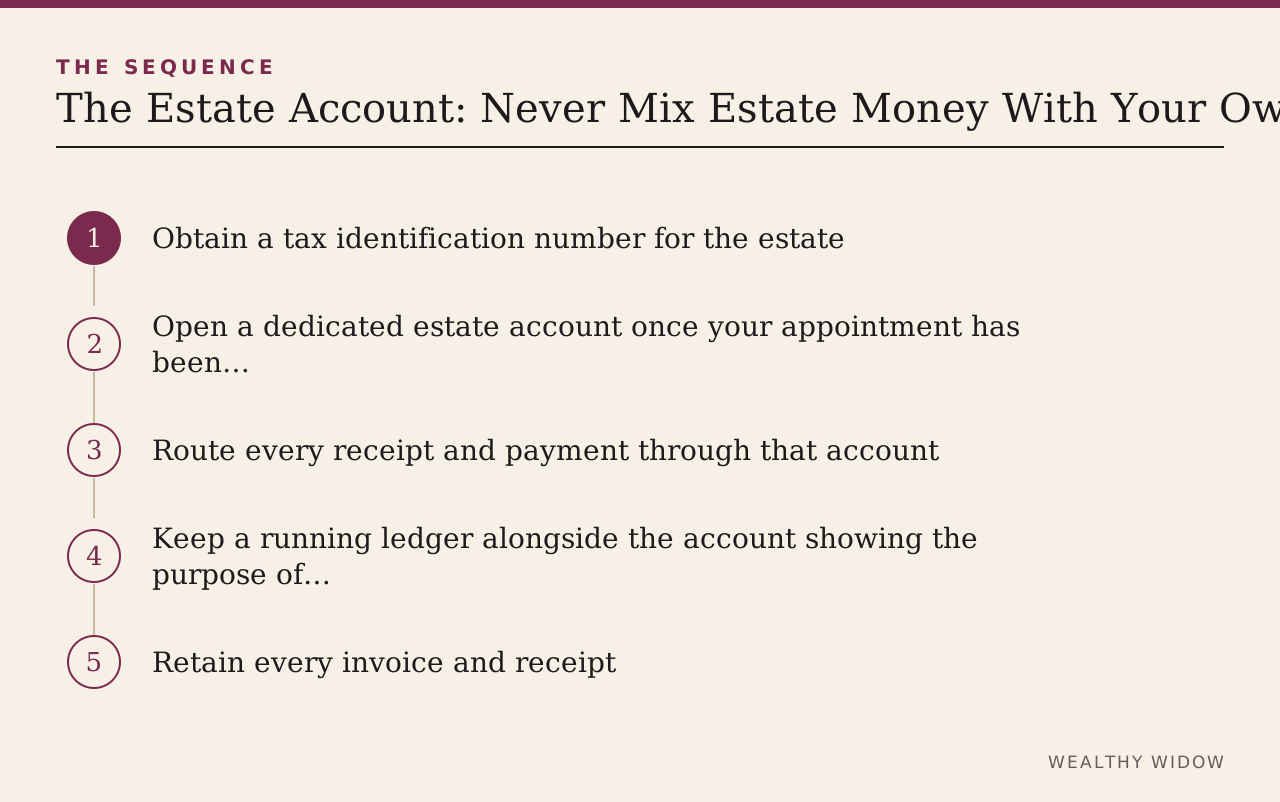
- Obtain a tax identification number for the estate.
- Open a dedicated estate account once your appointment has been issued.
- Route every receipt and payment through that account, without exception.
- Keep a running ledger alongside the account showing the purpose of every entry.
- Retain every invoice and receipt, since reimbursement depends on evidence.
The failure modes to plan around
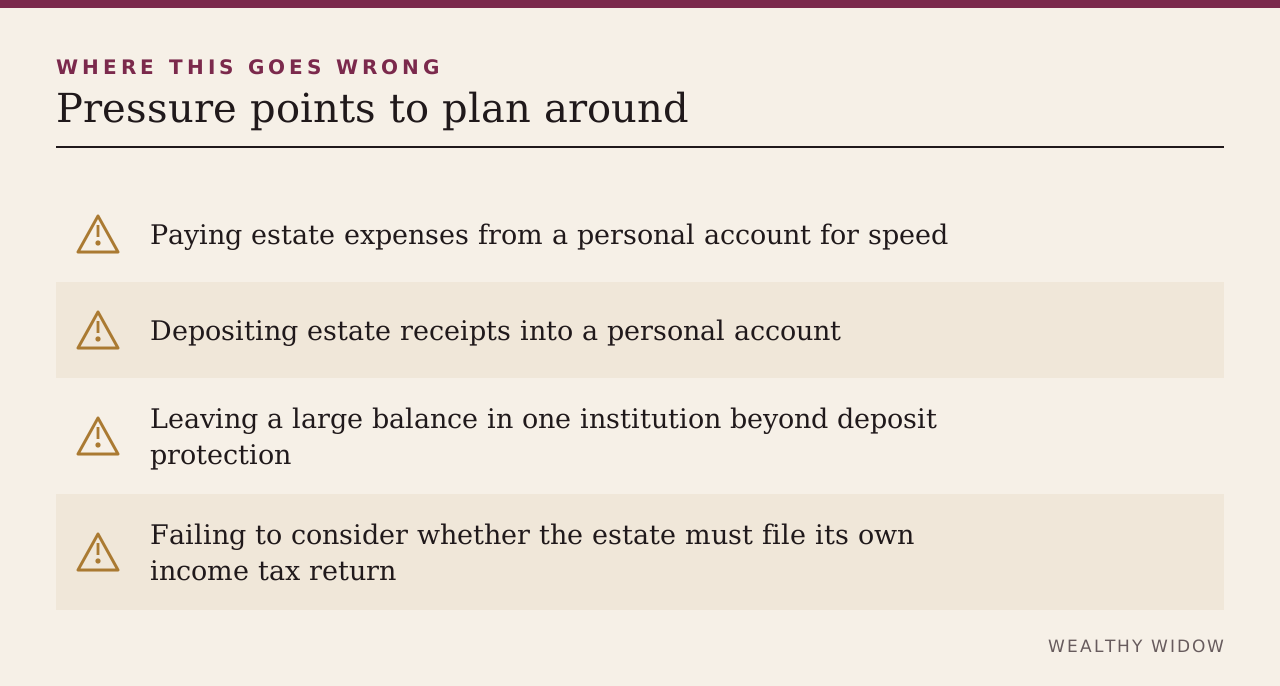
The failure modes below are predictable rather than unlucky, which is precisely what makes them avoidable. Paying estate expenses from a personal account for speed, then struggling to evidence reimbursement.
Depositing estate receipts into a personal account, which makes the accounting effectively unauditable. Leaving a large balance in one institution beyond deposit protection. Failing to consider whether the estate must file its own income tax return.
Gather these before the first call
Every organisation involved will want some combination of the following, and several will want it more than once.
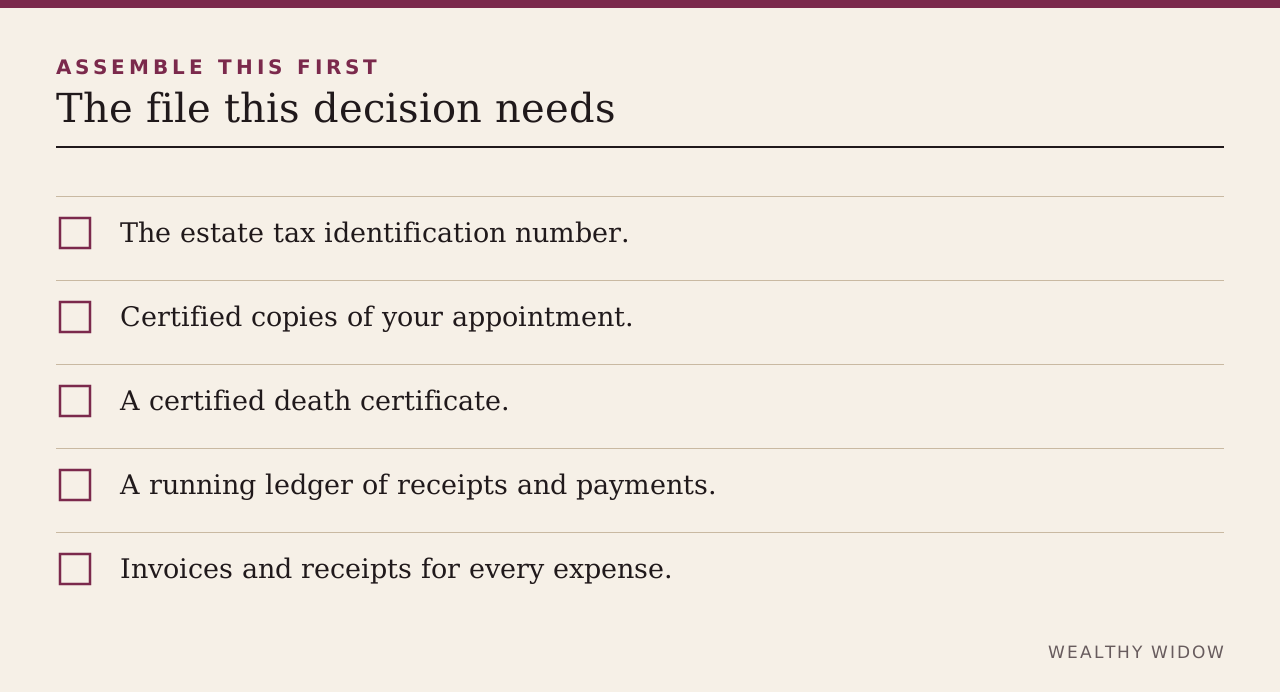
- The estate tax identification number.
- Certified copies of your appointment.
- A certified death certificate.
- A running ledger of receipts and payments.
- Invoices and receipts for every expense.
Get these in writing
Put each item below in your file with a date and a named source.
- That the account is in the name of the estate, not your own.
- Whether the estate must file its own income tax return.
- What expenses are properly reimbursable.
- The deposit protection position on the balance held.
The questions worth asking
These are the questions whose answers change what you decide, rather than merely confirming what you assumed.
- Does this estate need to file its own income tax return?
- Which of my expenses are properly reimbursable from the estate?
- What accounting will beneficiaries be entitled to, and when?
- How should income earned after the date of death be treated?
The primary material
Each load-bearing point above traces to one of the following, and they are the versions that stay current.
- Internal Revenue Service — Information for executors
- Internal Revenue Service — File an estate tax income tax return
- Federal Deposit Insurance Corporation — Deposit insurance
- Internal Revenue Service — About Publication 559, survivors, executors, and administrators
Where general guidance ends
Here is the line between what can usefully be written for a general readership and what cannot be written at all. It cannot advise on the estate’s tax filings, which depend on the income the estate earns and on the rules for the relevant year.
What this comes down to
One account, one ledger, every receipt kept. It is the least interesting decision in estate administration and the one that most reliably prevents the conversation you do not want to have with beneficiaries.
Read Estate Debts: Order of Payment Is Not a Matter of Preference next; the two decisions interact.
Primary sources
- Internal Revenue Service — Information for executors
- Internal Revenue Service — File an estate tax income tax return
- Federal Deposit Insurance Corporation — Deposit insurance
- Internal Revenue Service — About Publication 559, survivors, executors, and administrators
This article provides general education, not individualized legal, tax, investment, insurance, or benefits advice. Rules and deadlines change; verify the current requirement with the agency and a qualified professional.