Taxes
Medical Expenses in the Last Year of Life
Final-year medical costs are often substantial and frequently under-claimed, partly because the records are scattered across many providers.

You may be told this is simply a form to sign. It is a decision with consequences. Final-year medical costs are often substantial and frequently under-claimed, partly because the records are scattered across many providers.
A final illness generates costs across hospitals, specialists, pharmacies, transport, and equipment. Each is small enough to overlook and collectively they can be significant.
These are among the largest deductions available on a final return and among the most commonly missed, because assembling the records is tedious.
Getting the question right first
These are the points the rest of the decision rests on, so it is worth being sure of them before going further. Medical and dental expenses may be deductible where they exceed a stated proportion of adjusted gross income. The category is broader than most people assume and can include transport, equipment, and certain care costs. Special rules can apply to expenses paid by the estate shortly after death.
Amounts reimbursed by insurance are not deductible, so the net figure is what matters. Deductions are only useful where the return itemises rather than taking the standard deduction.
Where to start, and what follows
Take it in this sequence. Reversing the order tends to create work rather than save it, and occasionally forecloses a choice.
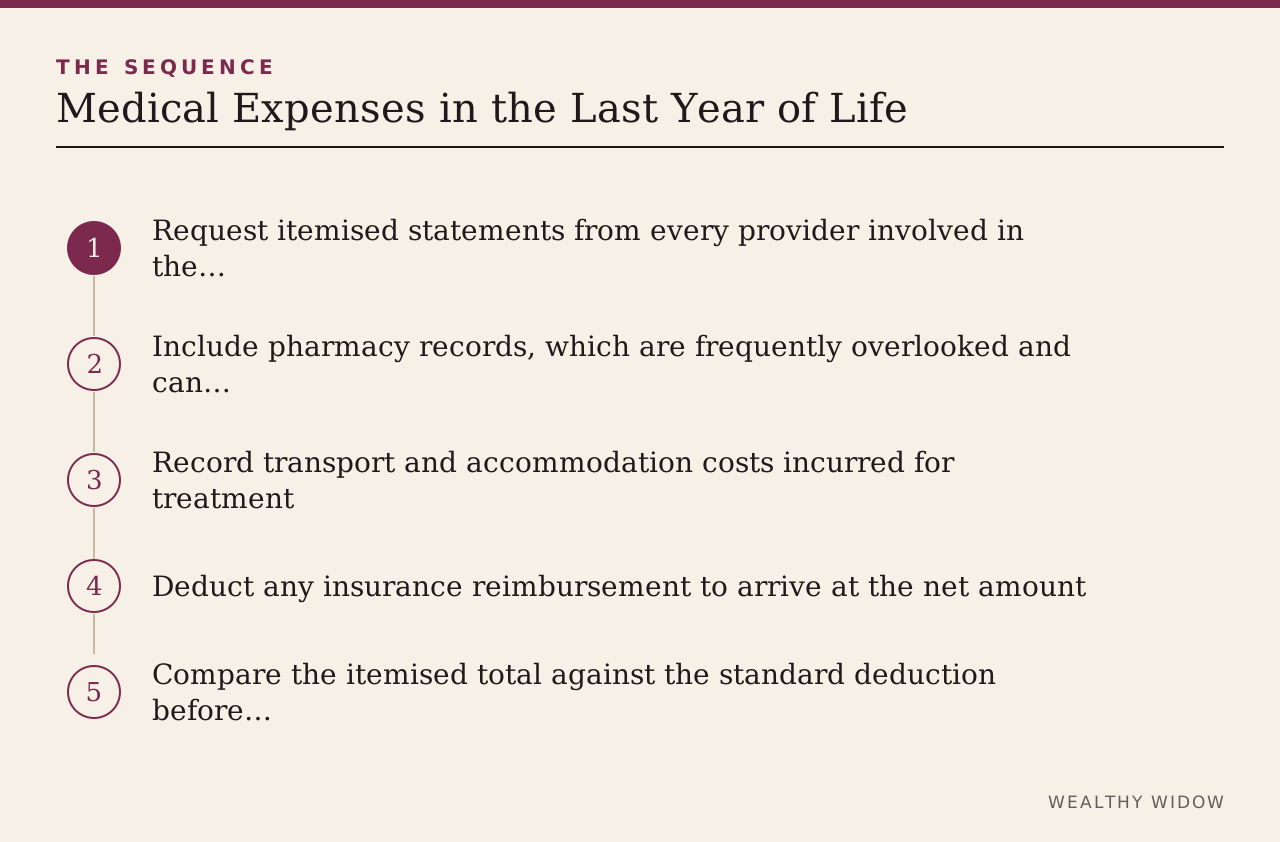
- Request itemised statements from every provider involved in the final year.
- Include pharmacy records, which are frequently overlooked and can be substantial.
- Record transport and accommodation costs incurred for treatment.
- Deduct any insurance reimbursement to arrive at the net amount.
- Compare the itemised total against the standard deduction before deciding how to file.
Where this commonly goes wrong
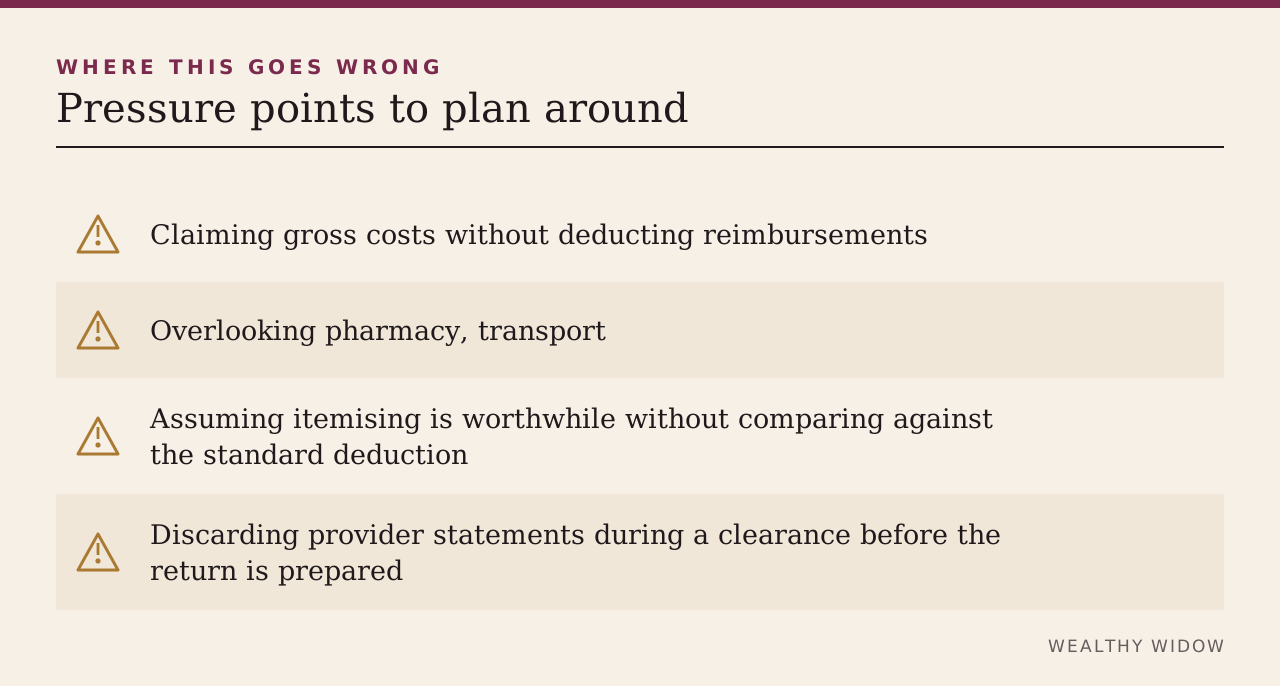
Watch for the following, and treat each as a reason to slow down. Claiming gross costs without deducting reimbursements.
Overlooking pharmacy, transport, and equipment costs, which are often the difference. Assuming itemising is worthwhile without comparing against the standard deduction. Discarding provider statements during a clearance before the return is prepared.
Assemble the file
Having the file complete before the first call removes most of the back and forth that follows.
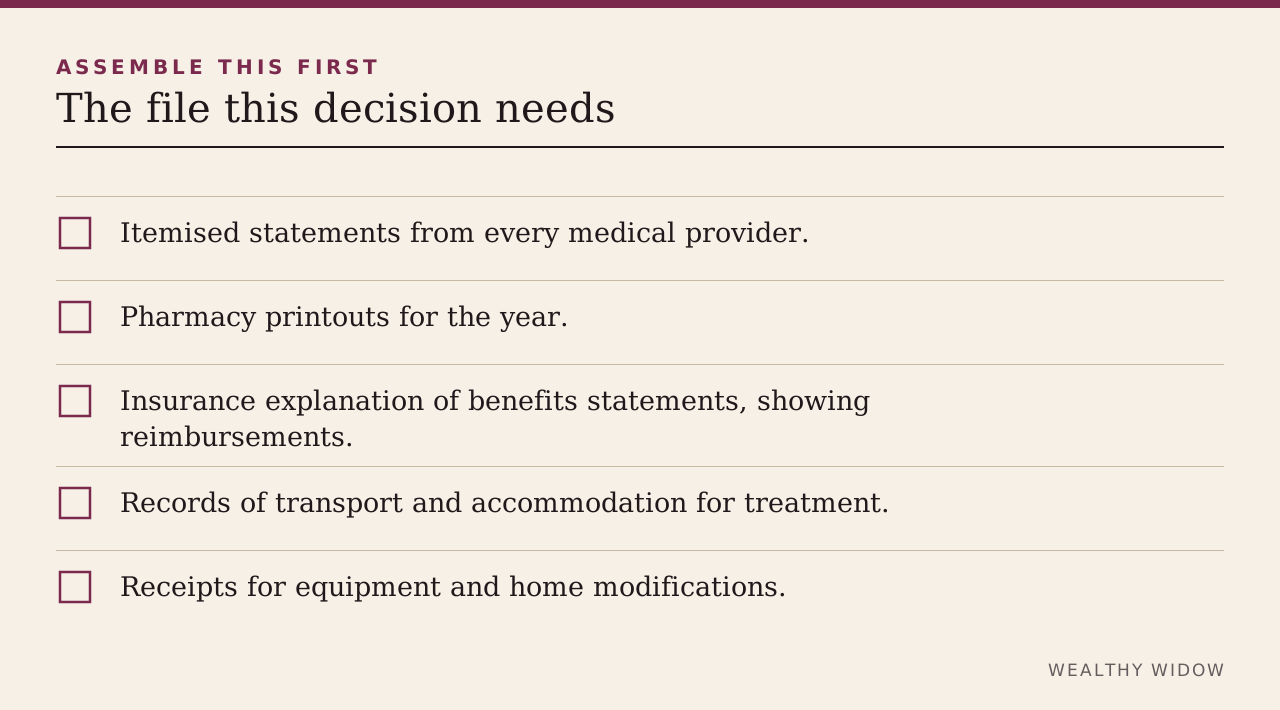
- Itemised statements from every medical provider.
- Pharmacy printouts for the year.
- Insurance explanation of benefits statements, showing reimbursements.
- Records of transport and accommodation for treatment.
- Receipts for equipment and home modifications.
Do not proceed on a verbal answer
Ask for each of these in a form you can save, date, and produce again months later if it is questioned.
- The net amount after reimbursement.
- Which costs qualify in this category.
- Whether itemising produces a better result than the standard deduction.
- The treatment of expenses paid by the estate after death.
Put these questions directly
A competent professional will welcome these questions. Hesitation is itself information.
- Which of these costs qualify, and which do not?
- How are expenses paid by the estate after the death treated?
- Does itemising beat the standard deduction on these figures?
- What records should I keep in case this is questioned?
Check this against the source
These are the primary sources behind this guide. They are the ones that change, and the ones worth checking before you act.
- Internal Revenue Service — About Publication 502, medical and dental expenses
- Internal Revenue Service — About Publication 559, survivors, executors, and administrators
- Internal Revenue Service — File the final income tax returns of a deceased person
- Internal Revenue Service — Topic no. 356, decedents
The questions this cannot reach
No account written for a general readership can reach the following, and it should not pretend to. It cannot state the applicable percentage threshold, which is set annually and should be taken from current guidance.
Taking it from here
Request itemised statements from every provider before anything is cleared out. This is tedious work with a direct financial return, and the records become much harder to obtain after a year has passed.
If this raised a further question, When Social Security Becomes Taxable Income takes it further.
Primary sources
- Internal Revenue Service — About Publication 502, medical and dental expenses
- Internal Revenue Service — About Publication 559, survivors, executors, and administrators
- Internal Revenue Service — File the final income tax returns of a deceased person
- Internal Revenue Service — Topic no. 356, decedents
This article provides general education, not individualized legal, tax, investment, insurance, or benefits advice. Rules and deadlines change; verify the current requirement with the agency and a qualified professional.