Taxes
Are Life Insurance Proceeds Taxable?
Death benefits are usually received free of income tax, but interest, retained accounts, and estate inclusion can each change the picture.

The pressure to resolve this quickly usually comes from outside you. Death benefits are usually received free of income tax, but interest, retained accounts, and estate inclusion can each change the picture.
Insurance proceeds are one of the few genuinely favourable items in this period, and the qualifications matter enough to be worth understanding before the money is received rather than after.
The death benefit and the interest earned on it are treated differently, and families frequently assume the whole payment is untaxed.
Name the decision before you make it
Take the ground facts first, because most of the difficulty here dissolves once they are stated plainly. Life insurance death benefits are generally not included in the beneficiary’s income. Interest paid on the proceeds, including in a retained asset account, is generally taxable. Proceeds may still be included in the estate for estate tax purposes depending on ownership of the policy.
Where proceeds are paid in instalments, part of each payment may be interest. Employer-provided cover may have its own reporting characteristics.
How to work through it
Take these in order. Reversing them tends to create work rather than save it.
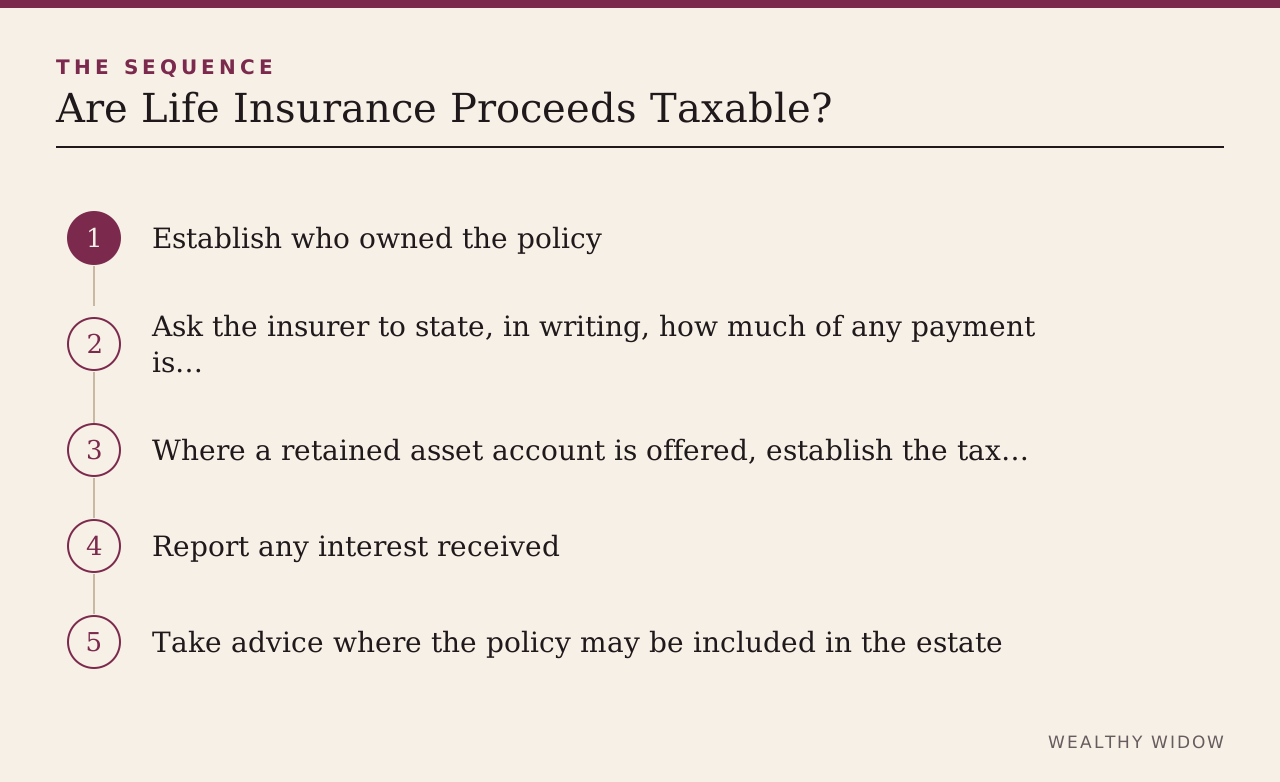
- Establish who owned the policy, since that affects estate inclusion.
- Ask the insurer to state, in writing, how much of any payment is interest.
- Where a retained asset account is offered, establish the tax treatment before accepting it.
- Report any interest received, and set aside for the tax on it.
- Take advice where the policy may be included in the estate.
Known hazards
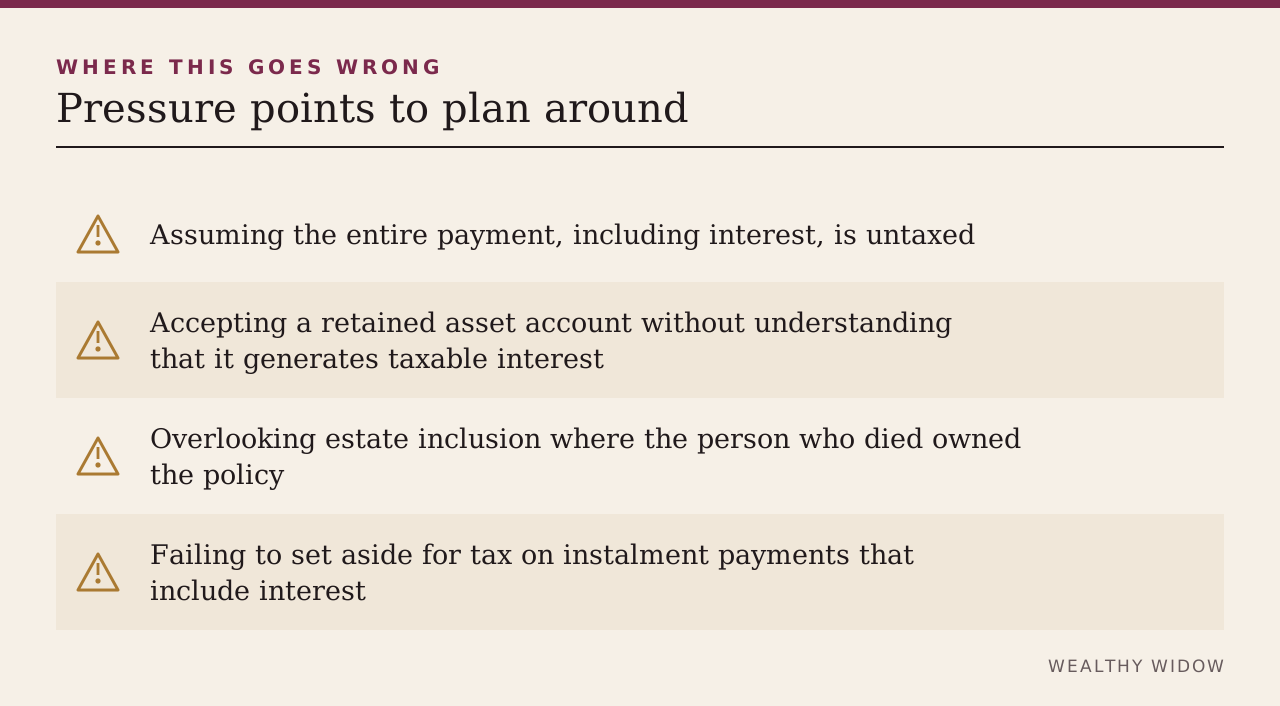
The failure modes below are predictable rather than unlucky, which is precisely what makes them avoidable. Assuming the entire payment, including interest, is untaxed.
Accepting a retained asset account without understanding that it generates taxable interest. Overlooking estate inclusion where the person who died owned the policy. Failing to set aside for tax on instalment payments that include interest.
Gather these before the first call
Every organisation involved will want some combination of the following, and several will want it more than once.
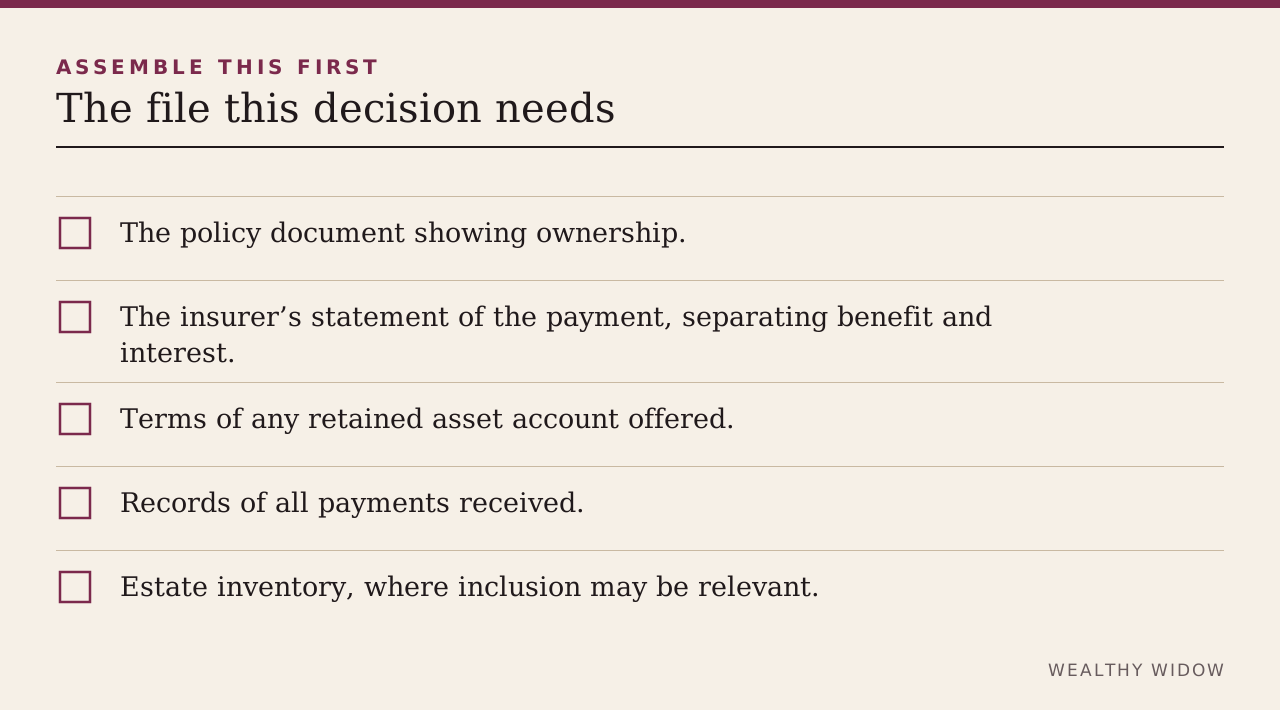
- The policy document showing ownership.
- The insurer’s statement of the payment, separating benefit and interest.
- Terms of any retained asset account offered.
- Records of all payments received.
- Estate inventory, where inclusion may be relevant.
Ask for this in writing
Each item below should exist somewhere other than your memory, because memory is not evidence in a dispute.
- How much of each payment is benefit and how much is interest.
- Who owned the policy.
- Whether the proceeds are included in the estate.
- The tax treatment of any retained account offered.
The questions to bring to the meeting
Take these to the attorney, tax professional, or planner handling this work.
- How much of this payment is interest, and how will it be reported?
- Who owned this policy, and does that affect the estate?
- What is the tax treatment of the retained account you are offering?
- Should I take a lump sum rather than instalments for tax reasons?
Sources worth reading yourself
Where this guide and a source disagree, the source is right.
- Internal Revenue Service — About Publication 559, survivors, executors, and administrators
- Internal Revenue Service — Publication 559, survivors, executors, and administrators
- Internal Revenue Service — Forms and publications, estate and gift tax
- Internal Revenue Service — Topic no. 409, capital gains and losses
The boundary of this guide
Be clear about the boundary; the wrong assumption here is expensive. It cannot advise on your policy, and ownership and estate inclusion are questions that need the policy document and professional advice.
Where this leaves you
Ask the insurer to split benefit from interest in writing, and understand the retained account before accepting it. The benefit itself is usually straightforward; the interest is where the tax is.
Our related guide Annuity Payments: Which Part Is Taxable covers the adjacent problem.
Primary sources
- Internal Revenue Service — About Publication 559, survivors, executors, and administrators
- Internal Revenue Service — Publication 559, survivors, executors, and administrators
- Internal Revenue Service — Forms and publications, estate and gift tax
- Internal Revenue Service — Topic no. 409, capital gains and losses
This article provides general education, not individualized legal, tax, investment, insurance, or benefits advice. Rules and deadlines change; verify the current requirement with the agency and a qualified professional.