Money
Lending to Family: The Decision That Is Never Only Financial
Requests for loans and gifts arrive early and often after a settlement. Structure protects the money and, more importantly, the relationship.

Institutions will describe this as routine. For you it is not routine, and the stakes are not symmetrical. Requests for loans and gifts arrive early and often after a settlement. Structure protects the money and, more importantly, the relationship.
This is where financial planning and family dynamics meet, and pretending otherwise helps nobody. The financial structure is straightforward; the difficulty is in agreeing it while everyone is grieving.
A loan to family that is not documented is a gift with a misunderstanding attached, and the misunderstanding usually surfaces at a funeral.
The shape of this decision
What follows is what is actually true, stripped of the anxiety around it. An undocumented family loan is difficult to enforce and frequently treated by everyone involved as a gift. Substantial gifts can have tax reporting consequences even where no tax is ultimately payable. Money lent from a portfolio has an opportunity cost that is easy to overlook and compounds over years.
Unequal support between children is a recurring source of dispute after a second death. Lending from funds you may need for your own care is a decision with a long tail.
Order of play
Do these in sequence, and do not skip ahead to the signature.
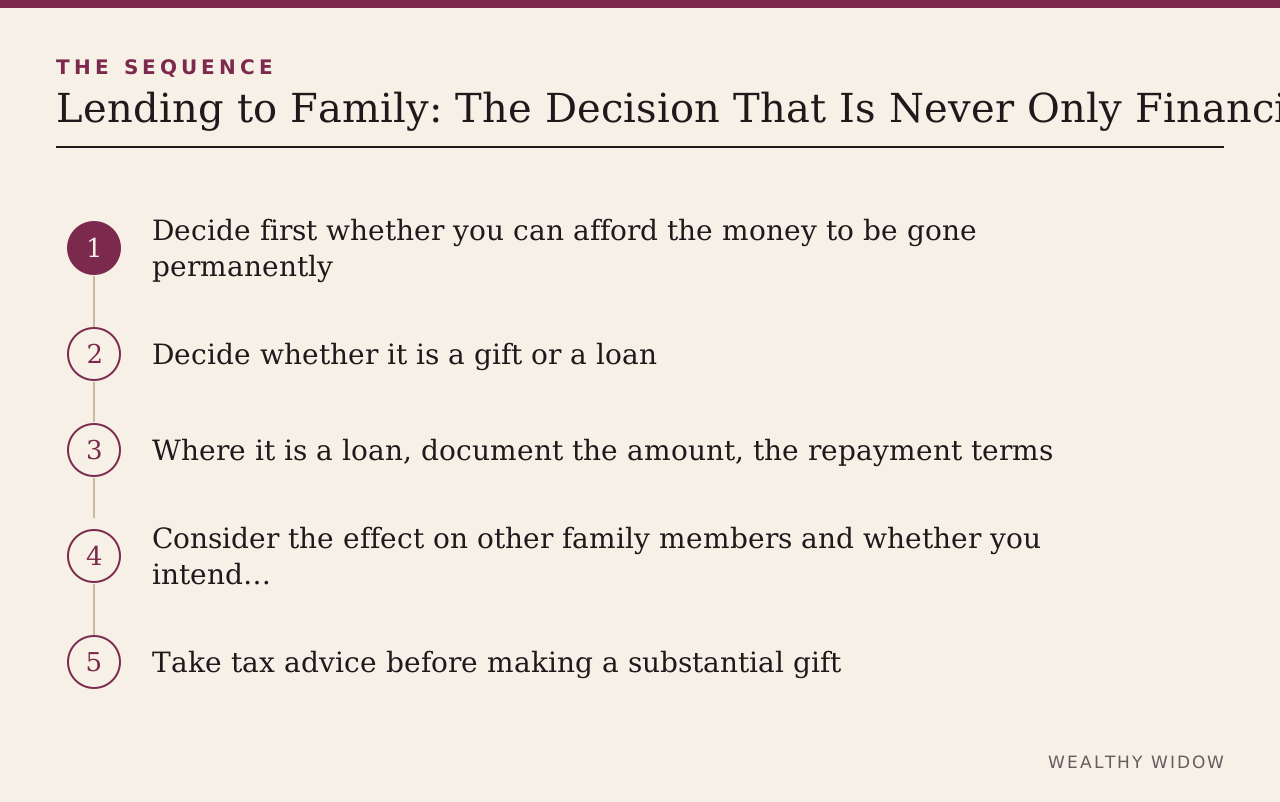
- Decide first whether you can afford the money to be gone permanently, and answer honestly.
- Decide whether it is a gift or a loan, and say so explicitly rather than leaving it ambiguous.
- Where it is a loan, document the amount, the repayment terms, and the consequence of non-payment.
- Consider the effect on other family members and whether you intend to treat them consistently.
- Take tax advice before making a substantial gift, since reporting obligations can apply.
The errors worth naming in advance
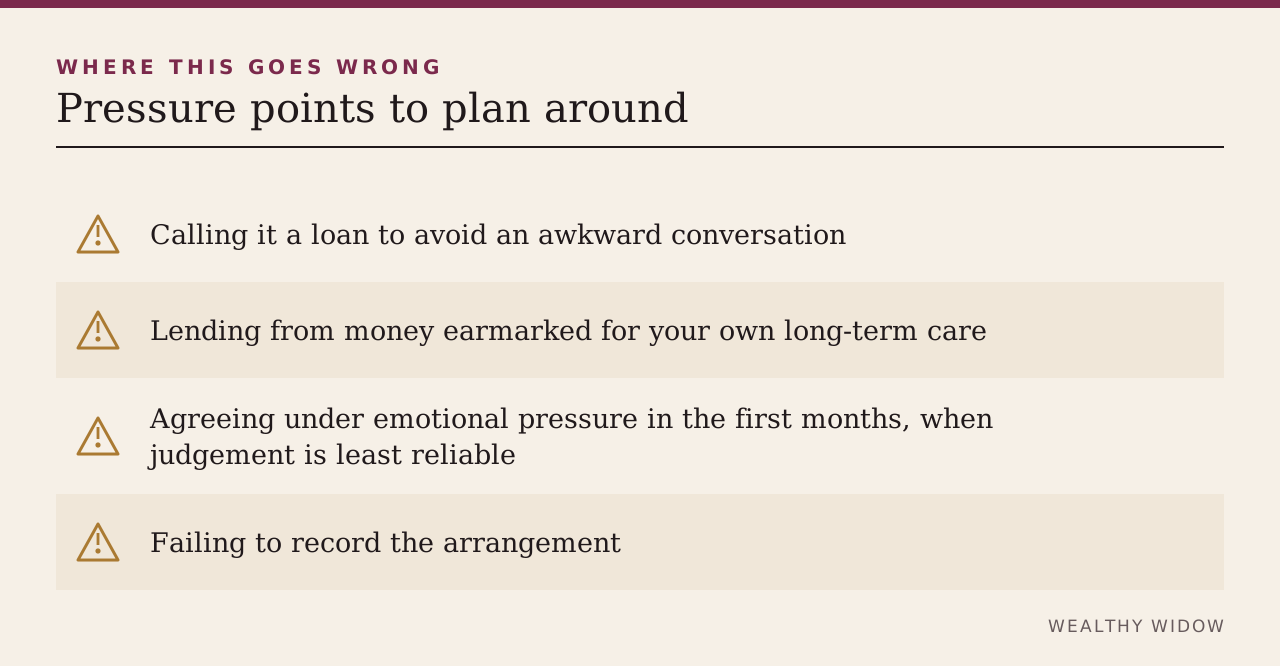
The failures here are predictable, which means they are avoidable. Calling it a loan to avoid an awkward conversation, while privately expecting never to see it again.
Lending from money earmarked for your own long-term care, which is the hardest position to recover from. Agreeing under emotional pressure in the first months, when judgement is least reliable. Failing to record the arrangement, which leaves your executor unable to account for it later.
What to have to hand
The paperwork below is what turns a long process into a short one.
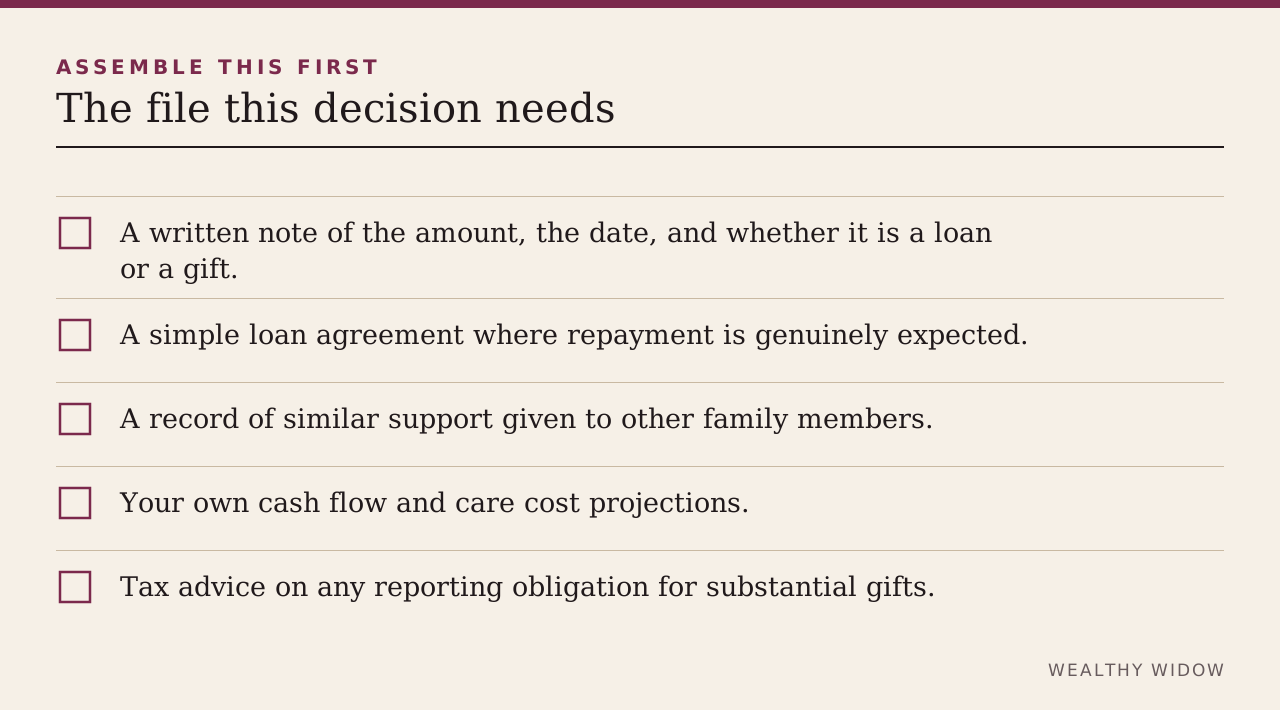
- A written note of the amount, the date, and whether it is a loan or a gift.
- A simple loan agreement where repayment is genuinely expected.
- A record of similar support given to other family members.
- Your own cash flow and care cost projections.
- Tax advice on any reporting obligation for substantial gifts.
What to have documented
Put each of these in the file with a date against it.
- Whether the transfer is a gift or a loan, in writing, signed by both parties.
- The repayment terms, if any.
- Any tax reporting obligation arising from the amount.
- How the arrangement should be recorded for your own estate.
What to ask before you sign
Ask these before an engagement letter is signed or a product is recommended.
- Does this amount create a tax reporting obligation for me?
- How should this be recorded so my executor can account for it?
- What does this do to my own long-term cash flow and care provision?
- If I intend to treat my children equally, how should that be documented?
Where to verify this
Every load-bearing point above traces to one of the following. Where a figure or deadline matters to you, read it there.
- Internal Revenue Service — Charitable contribution deductions
- Consumer Financial Protection Bureau — Help for surviving spouses
- U.S. Securities and Exchange Commission — Investor.gov
- Consumer Financial Protection Bureau — Taking control of your finances, help for surviving spouses
What a professional still has to decide
The limits of a guide matter as much as its content, because acting past them is where the cost sits. It cannot tell you whether to help. It can ensure that if you do, the arrangement is clear enough that nobody has to guess your intention later.
What good looks like here
Decide the amount you can genuinely afford to lose, then decide whether it is a gift or a loan and say so out loud. Ambiguity is what damages families, not the money itself.
A companion guide, Forgotten Accounts: Searching Rather Than Remembering, covers the decision that sits alongside this one.
Primary sources
- Internal Revenue Service — Charitable contribution deductions
- Consumer Financial Protection Bureau — Help for surviving spouses
- U.S. Securities and Exchange Commission — Investor.gov
- Consumer Financial Protection Bureau — Taking control of your finances, help for surviving spouses
This article provides general education, not individualized legal, tax, investment, insurance, or benefits advice. Rules and deadlines change; verify the current requirement with the agency and a qualified professional.